
Understanding seasons Normal Geography Worksheets for Ages 3-7
4 filtered results
Difficulty Level
Grade
Age
-
From - To
Subject
Activity
Standards
Our "Understanding Seasons" geography worksheets are designed for children aged 3-7 to introduce them to the four seasons in an engaging and educational way. These printable activities help young learners recognize the different seasons by focusing on natural changes, appropriate clothing, and seasonal activities. Each worksheet uses simple, age-appropriate tasks that bolster essential early learning skills such as observation, critical thinking, and fine motor development. Perfect for home or classroom use, our worksheets make learning about seasons a fun and interactive experience for your little ones. Download now and watch them explore the world of seasons!
Favorites
With answer key
Interactive
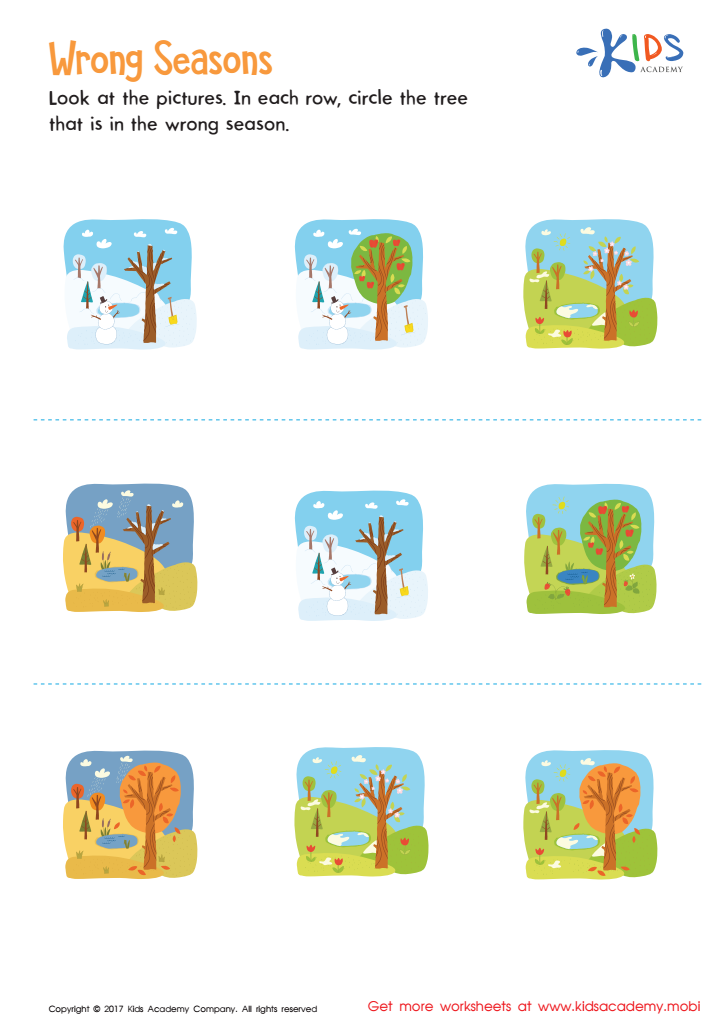
Wrong Seasons Worksheet
Uh oh! Trees are out of place in these vibrant pictures! Use this wrong seasons worksheet to help your child develop observation, analytical, and critical thinking skills. They'll learn about how the seasons change the surroundings, like trees. Print it out today to sharpen your child's eye for spotting the seasons!
 Assign to My Students
Wrong Seasons Worksheet
Worksheet
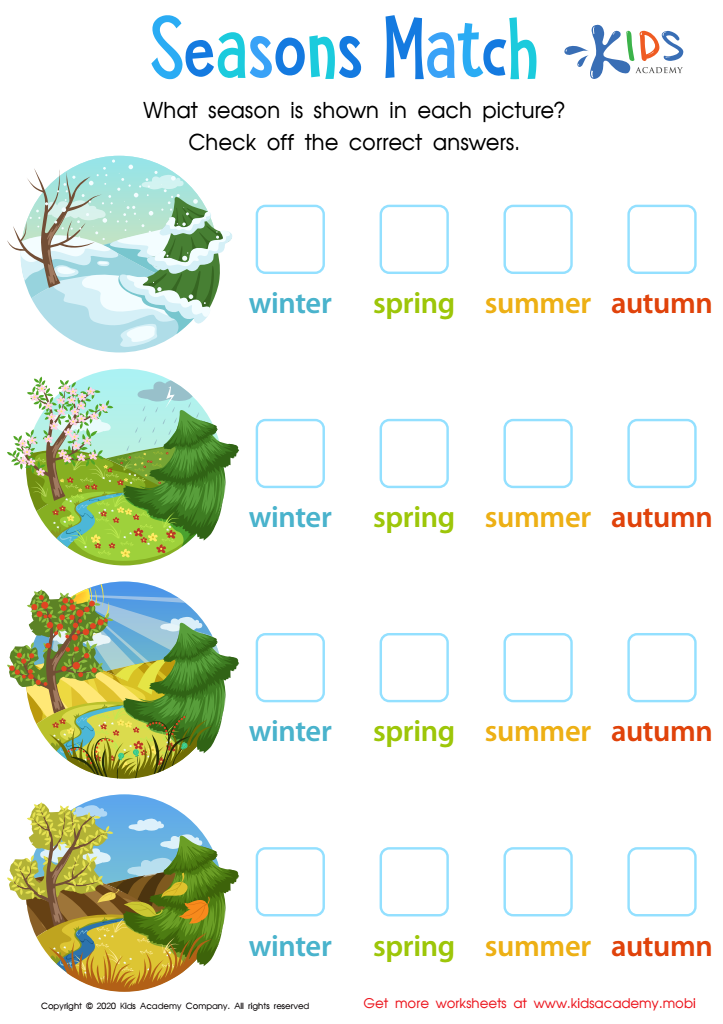
Seasons Match Worksheet
Preschoolers should begin learning about seasons and weather early. Most can tell what season it is by upcoming holidays or school activities. Test their knowledge with a printable PDF worksheet. It asks them to match each image with its corresponding season!
Seasons Match Worksheet
Worksheet
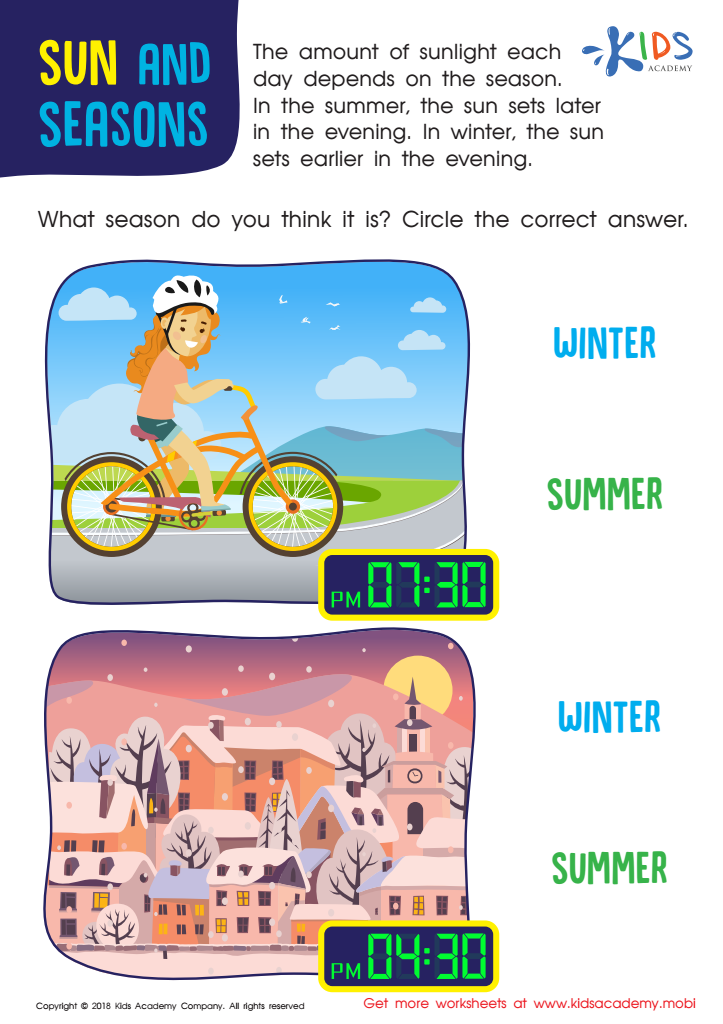
Sun and Seasons Worksheet
Help your child understand science and seasons with this Kids Academy worksheet! Discuss how the daylight varies in summer and winter with them. Guide them to note the digital clock on each page then circle the correct answers. With this sheet, your child will gain a better understanding of why days are longer in summer and shorter in winter!
Sun and Seasons Worksheet
Worksheet
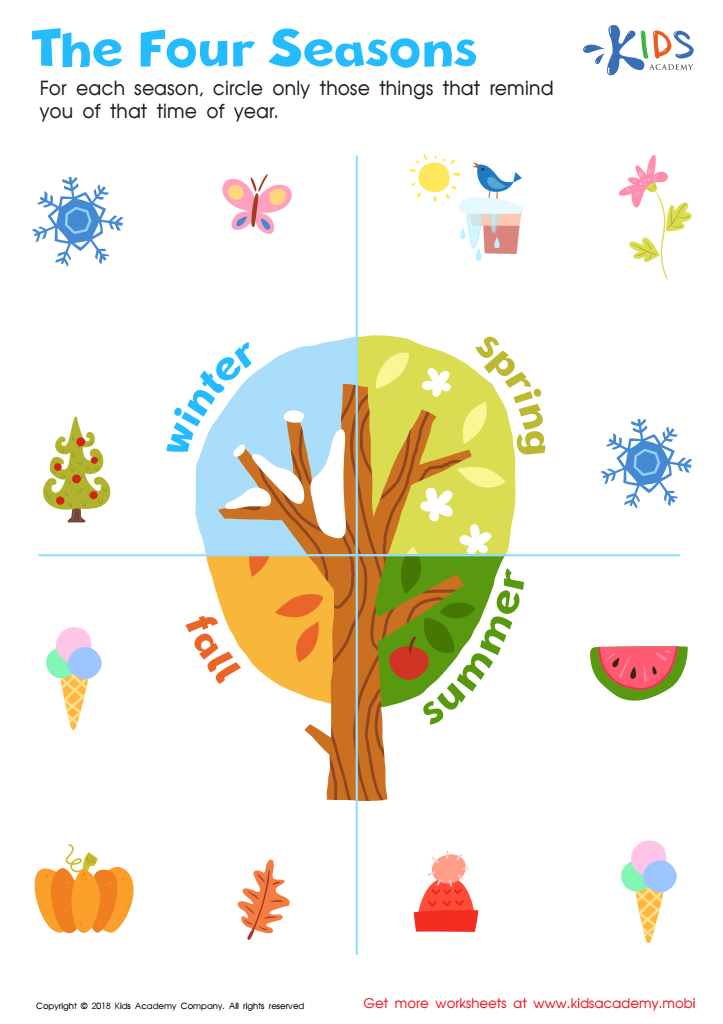
The Four Seasons Worksheet
Tell your child to circle things that remind them of each season. The tree has four squares, one for each season. Some things in each square match the season, others don't. Ask if any are out of place. Help them circle only items that remind them of that season.
The Four Seasons Worksheet
Worksheet
Join Kids Academy for Free
Who is primarily going to use this learning content?






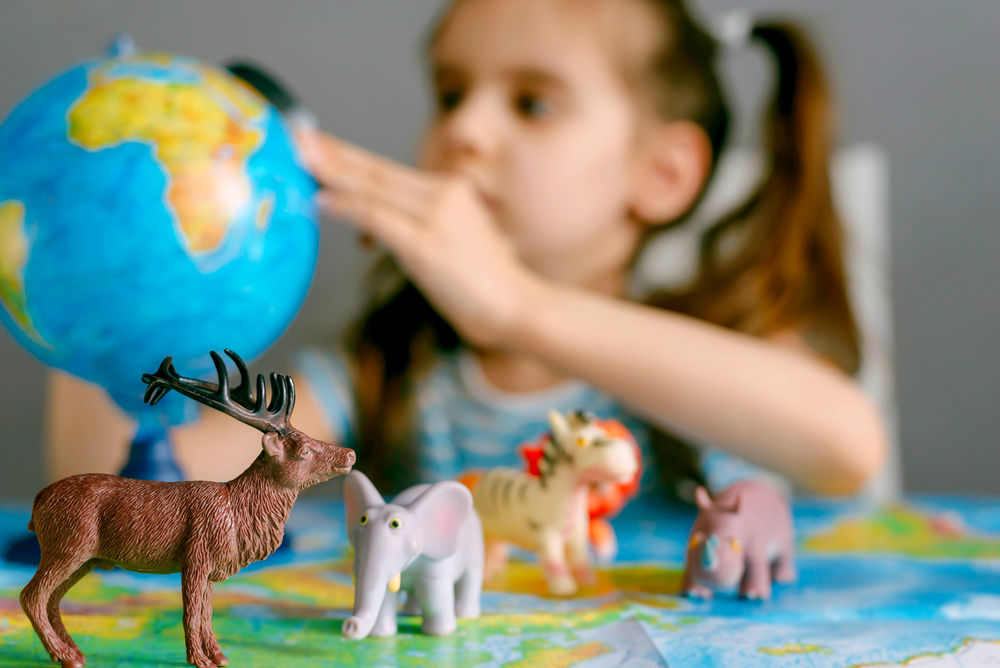
Understanding seasons and basic geography is vital for young children, both in educational and developmental terms. For parents and teachers, introducing these concepts early fosters a sense of curiosity and awareness about the world they live in. Comprehending the seasons helps children know about the cycles of nature, such as why flowers bloom in spring or leaves fall in autumn. This not only enriches their vocabulary but also enhances observational and critical thinking skills. Recognizing weather patterns and seasonal changes contributes to their sensory and cognitive development.
Geographic awareness builds a foundation for subjects like science, history, and social studies. It connects children to the earth and diverse cultures, fostering empathy and an appreciation for global diversity. Simple concepts like the locations of oceans, mountains, and familiar landmarks lay groundwork for more advanced geographic studies in later years.
Moreover, understanding seasons can teach children practical life skills. They learn to dress appropriately for different times of the year, and might even begin to appreciate the importance of seasonal activities and holidays.
Overall, this foundational knowledge equips children with the tools to better understand and engage with their environment, promoting lifelong curiosity and learning. Hence, it's essential that parents and teachers nurture this knowledge during early developmental stages.








