Spatial awareness Normal Social Studies Worksheets for Ages 3-7
5 filtered results
-
From - To
Enhance your little ones' spatial awareness skills with our engaging Normal Social Studies Worksheets, designed specifically for ages 3-7. These worksheets provide a fun and interactive way for young learners to develop their understanding of space, direction, and position. Through colorful illustrations and age-appropriate activities, children will explore concepts such as location, distance, and relationships between objects. Our worksheets are perfect for classroom or home use, fostering critical thinking and problem-solving skills. Encourage your child’s growth and curiosity about the world around them with these educational tools that promote learning through play and discovery. Access these valuable resources today!
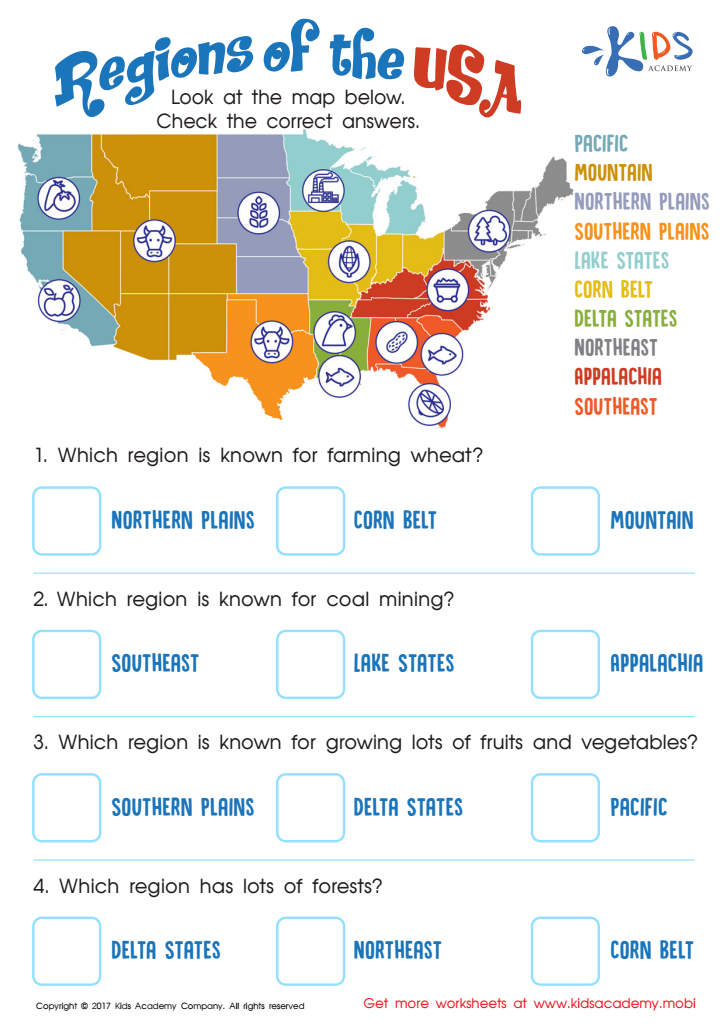
Regions of the USA Worksheet
 Assign to My Students
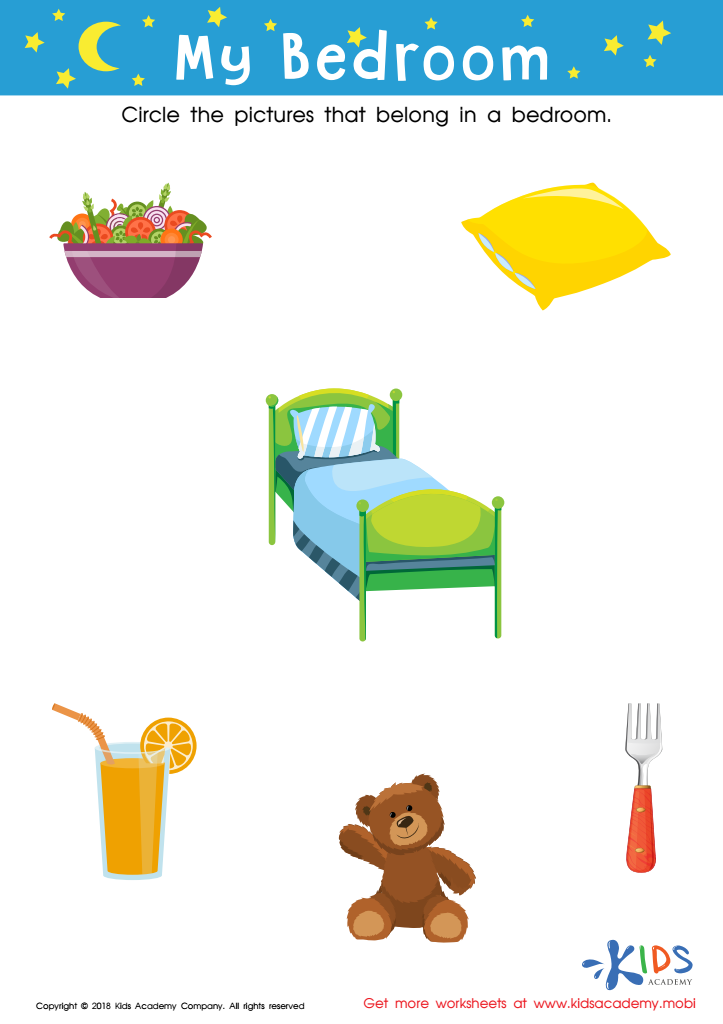
My Bedroom Worksheet
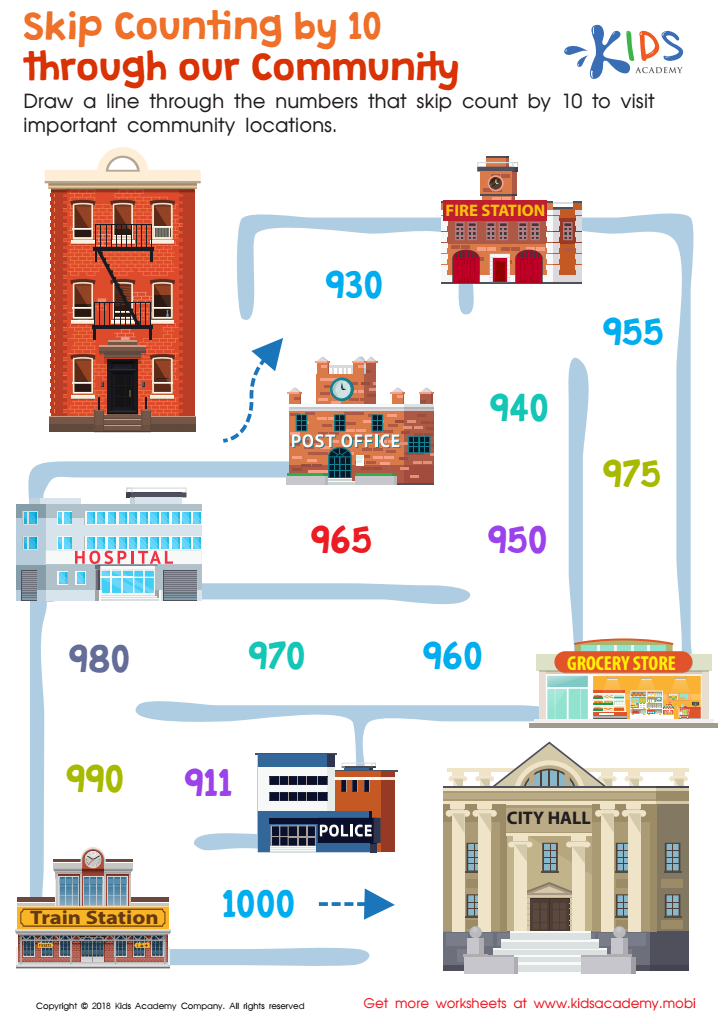
Skip Counting by 10 Through Our Community Worksheet
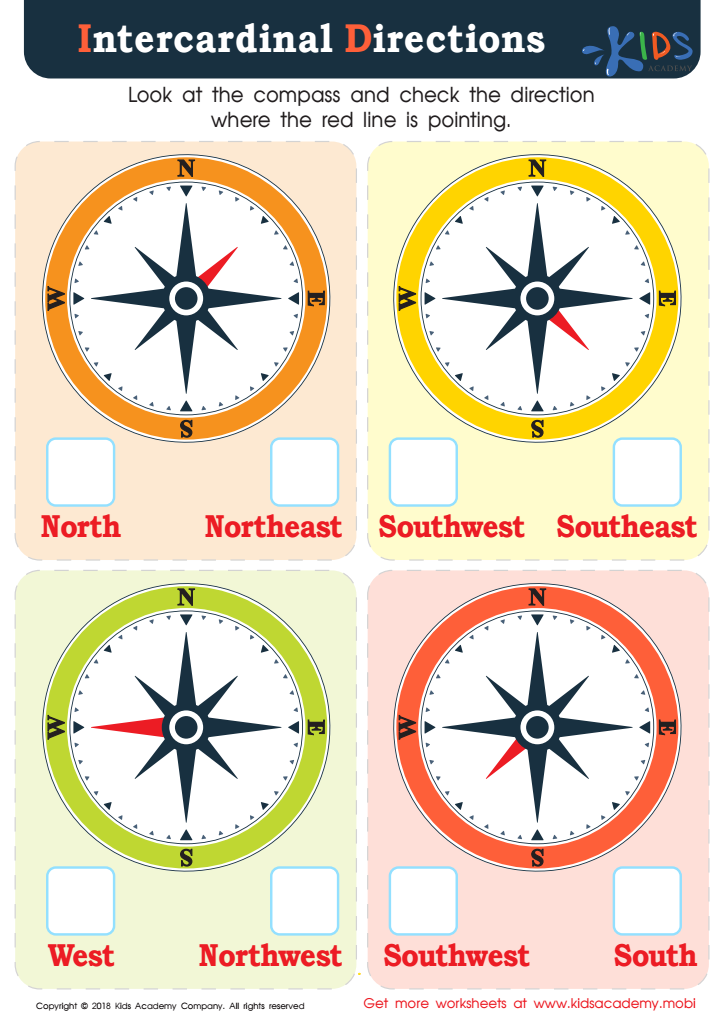
Intercardinal Directions Worksheet
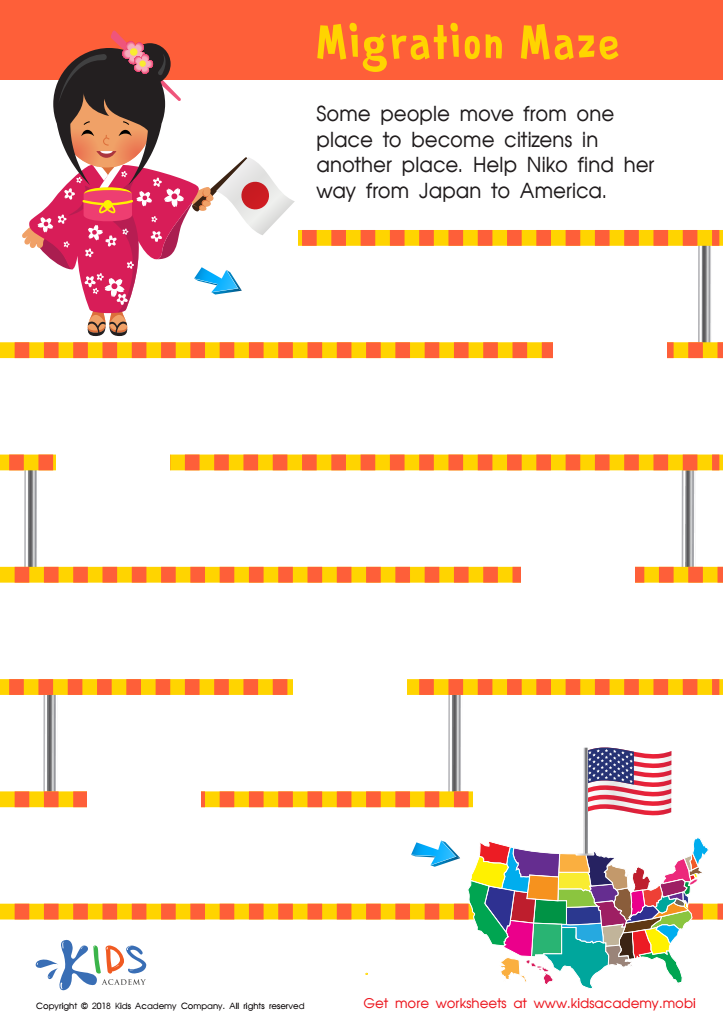
Migration Maze Worksheet





.jpg)


Spatial awareness is a crucial skill for young children, especially in a Social Studies context for ages 3-7. This foundational ability helps children understand their environment regarding space and relationships with objects and people. Developing spatial awareness enhances children's problem-solving skills, critical thinking, and creativity, all of which are vital in a Social Studies curriculum.
For parents and teachers, fostering spatial awareness offers several benefits. It allows children to better comprehend maps, charts, and diagrams, which are increasingly prevalent in Social Studies lessons. As they learn about their communities and the broader world, spatial skills help them visualize where places are situated, understand distances, and identify relationships between various elements of social structures.
Additionally, engaging in spatial awareness activities such as building blocks, puzzles, or outdoor exploration encourages collaboration and communication. This enhances social skills and promotes child interactions.
Moreover, strong spatial skills correlate with improved mathematical abilities in later years, marking a critical connection between different subjects. By prioritizing spatial awareness, parents and teachers support not only cognitive development but also social and emotional growth, preparing children for future academic success and active citizenship. Investing in these skills early can significantly shape a child's learning journey.