Understanding communities Normal Social Studies Worksheets for Ages 3-7
4 filtered results
-
From - To
Explore our engaging "Understanding Communities" Normal Social Studies Worksheets, designed specifically for children aged 3-7! These worksheets introduce young learners to the concept of communities, helping them recognize different roles, landmarks, and everyday activities within their neighborhoods. Through fun and interactive exercises, kids can develop important social skills and a sense of belonging. Our materials stimulate curiosity and promote discussions about diversity, collaboration, and cultural awareness. With vibrant illustrations and age-appropriate content, these worksheets provide a valuable opportunity for children to learn about the world around them in a playful and informative way. Start building a strong foundation in social studies today!
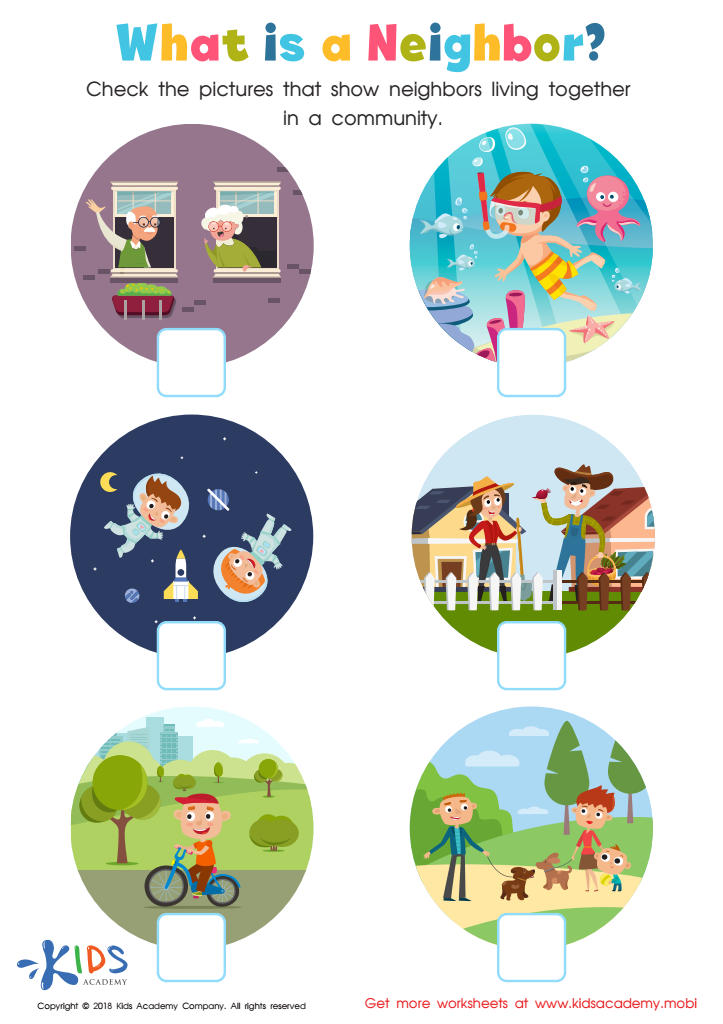
What is a neighbor Worksheet
 Assign to My Students
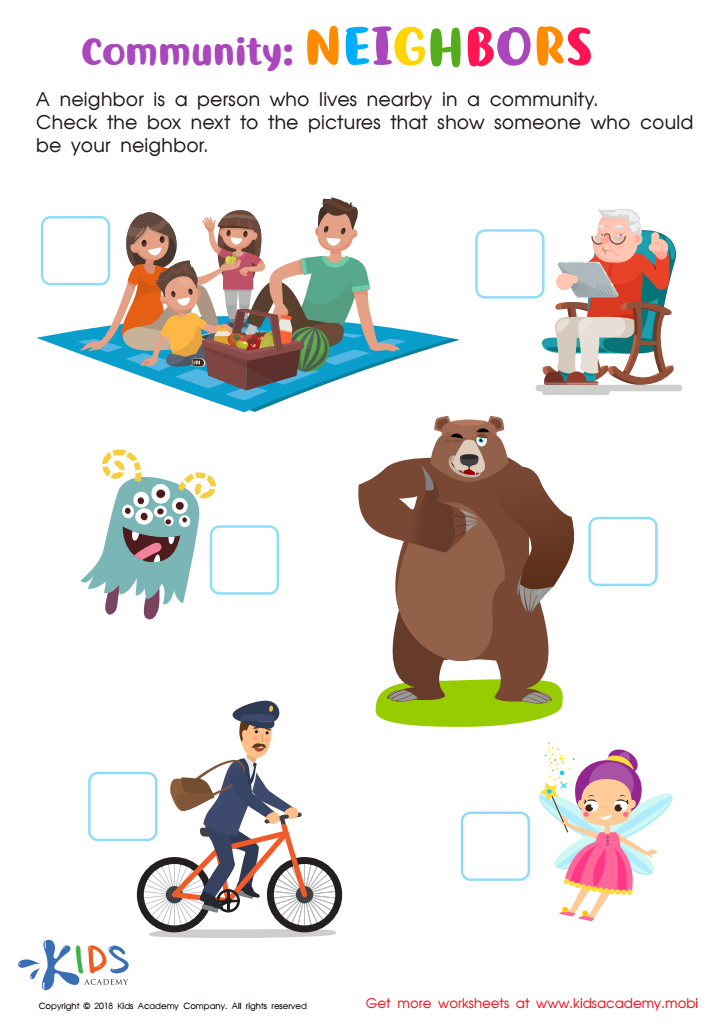
Community: Neighbors Worksheet
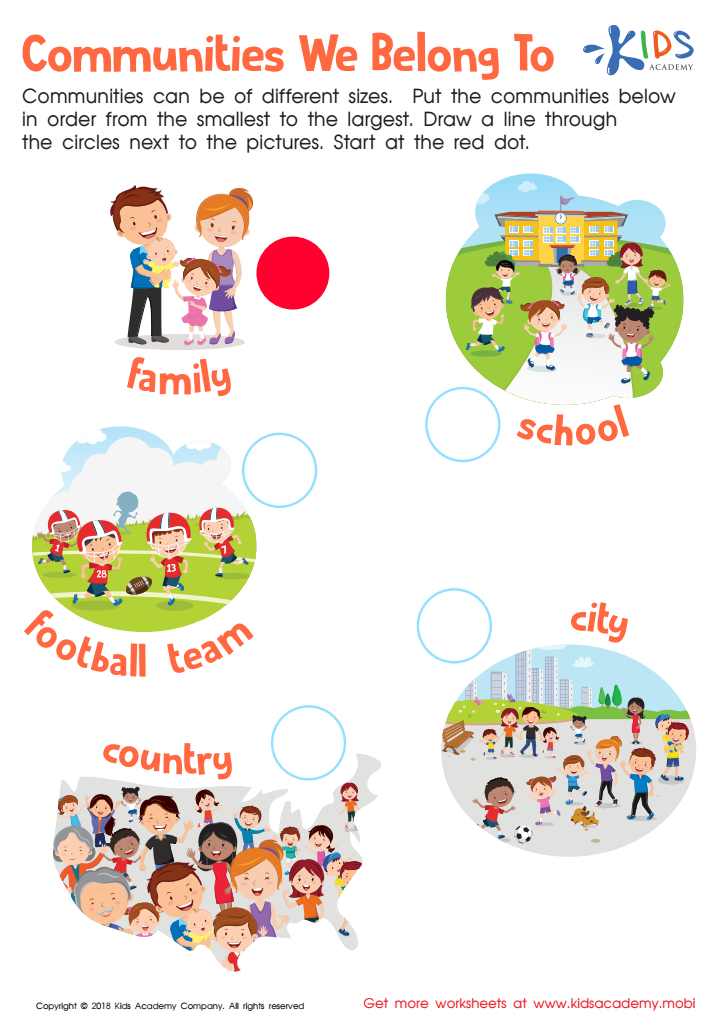
Communities We Belong to Worksheet
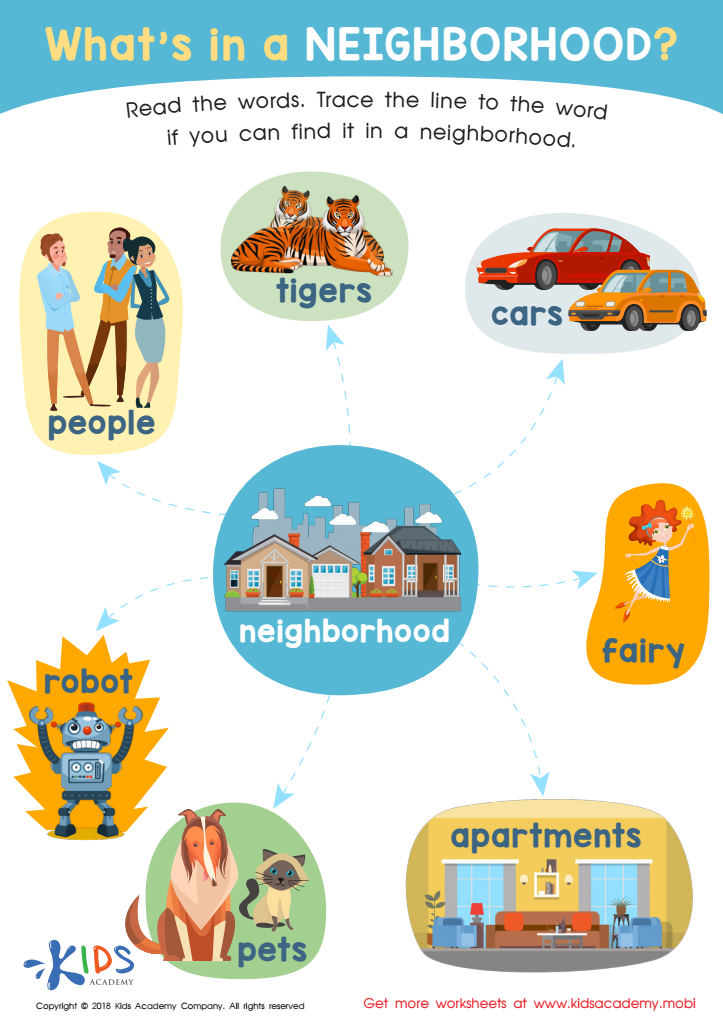
What's in a Neighborhood? Worksheet





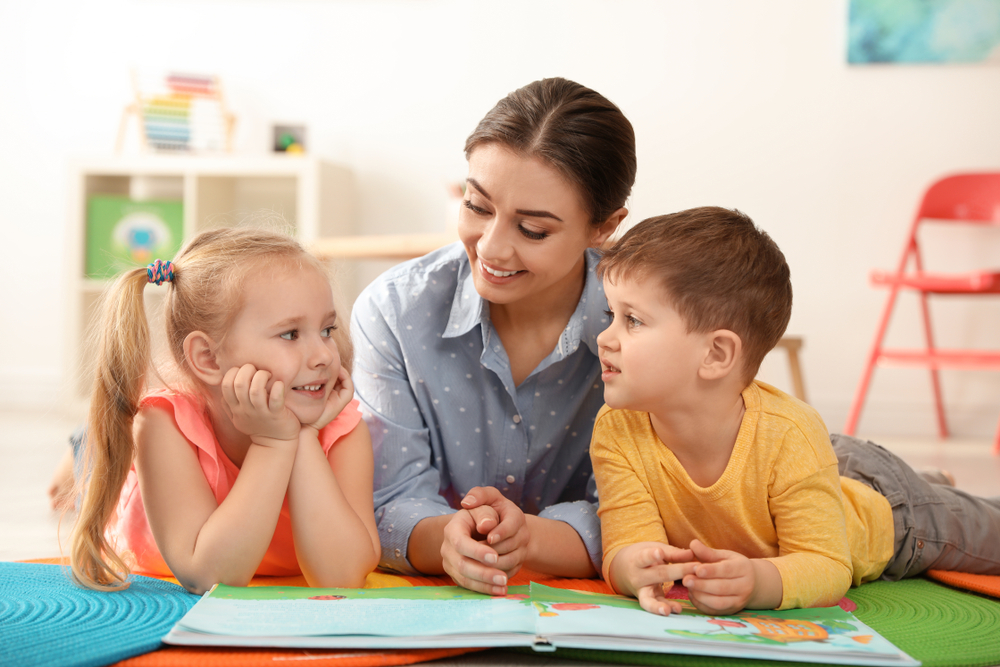


Understanding communities is vital for children aged 3-7, as it lays the groundwork for their social, emotional, and cognitive development. At this formative stage, children begin to navigate their surroundings and form connections with others. Teaching them about communities helps foster a sense of belonging, teaching them the values of cooperation, empathy, and respect.
Parents and teachers should care about this topic because comprehension of community structures—from families and neighborhoods to schools—enables children to develop a broader worldview. Learning about diverse cultures, roles, and responsibilities can enhance their ability to communicate and collaborate with peers, promoting social skills essential for their future interactions.
Moreover, introducing concepts of community can boost children's curiosity and engagement. They can explore roles within their community, leading to a practical understanding of social responsibility. This foundation helps cultivate observant, thoughtful citizens who appreciate diversity and understand the significance of contributing positively to their communities.
By focusing on social studies at such a young age, parents and educators can support children in becoming more informed, compassionate individuals, equipped with the skills to navigate and appreciate their complex world. Understanding communities is not just a subject; it’s a vital component of nurturing well-rounded, socially aware individuals.