Weather identification Normal Weather Worksheets for Ages 3-7
3 filtered results
-
From - To
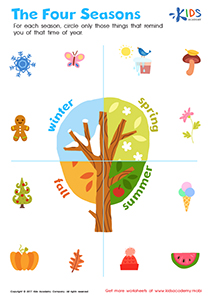
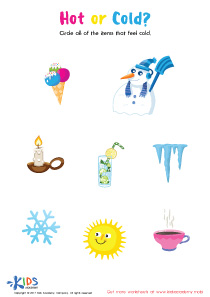
Explore our engaging "Weather Identification Normal Weather Worksheets" designed for children ages 3-7! These interactive worksheets help young learners recognize various weather types such as sunny, rainy, snowy, and windy. Tailored to enhance their observational skills, our activities encourage children to observe and identify weather patterns in their environment. Each worksheet features vibrant illustrations and easy-to-follow instructions, making learning fun and accessible. Whether used at home or in a classroom, these resources are perfect for developing essential vocabulary and understanding of the world around us. Grab your worksheets now and give your child a joyful educational experience about weather!
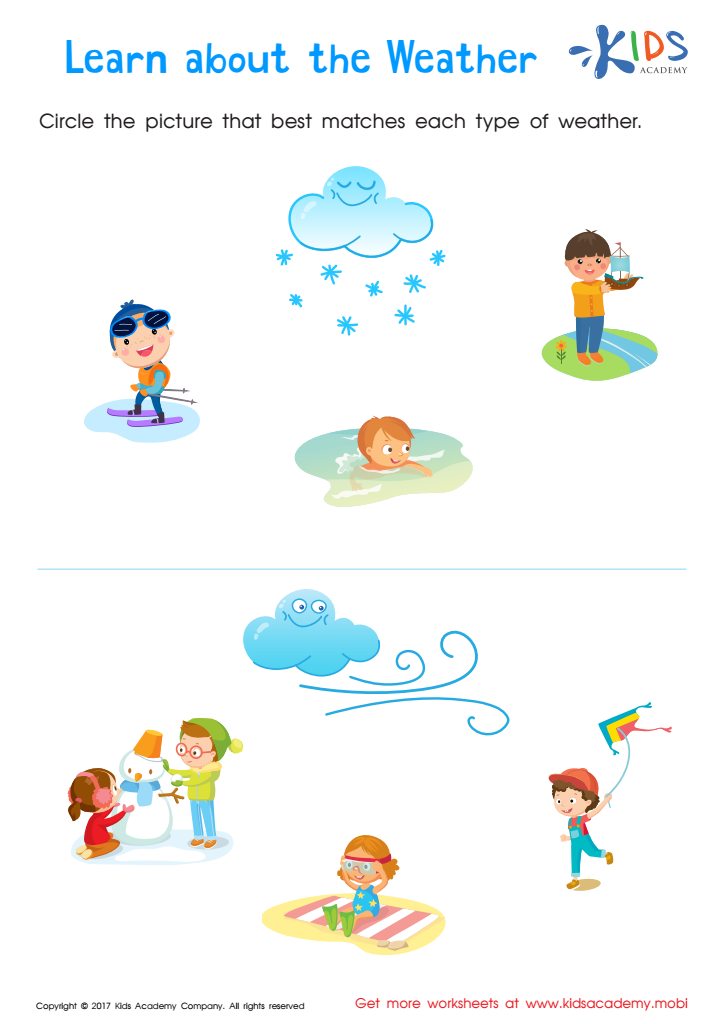
About the Weather Printable
 Assign to My Students
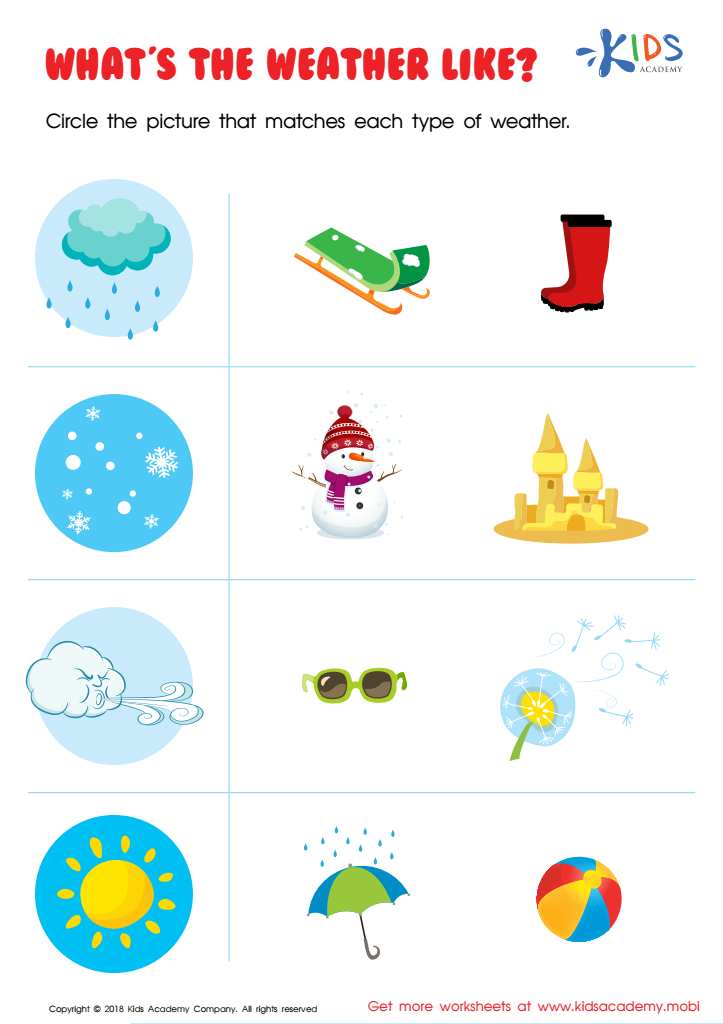
What's the Weather Like? Worksheet








Teaching young children about normal weather is crucial for several reasons. First, early exposure to weather concepts helps children understand their environment, promoting cognitive development. At ages 3-7, children are naturally curious, and discussing weather phenomena can satisfy their curiosity and enhance their observational skills. Recognizing sun, rain, snow, and wind equips them to describe their surroundings, fostering language and communication abilities.
Additionally, understanding normal weather patterns helps children make informed choices about their daily activities. For instance, when kids learn to identify sunny or rainy days, they can dress appropriately or decide when to play outside, enhancing their independence and decision-making skills.
Furthermore, weather education can support social-emotional learning. Discussing how different weather affects mood and outdoor experiences encourages children to express their feelings and develop empathy for others, as they see how weather might impact friends and family.
Finally, teaching weather can motivate a child’s interest in science. It can spark their curiosity in nature and exploration, laying a foundation for lifelong learning. Overall, understanding normal weather empowers children to engage with and appreciate their environment, making it an essential part of early education.