Grammar practice Normal Grammar Worksheets for Ages 3-7
6 filtered results
Difficulty Level
Grade
Age
-
From - To
Subject
Activity
Standards
Discover our engaging Normal Grammar Worksheets designed specifically for children aged 3-7 to enhance their grammar skills! These worksheets offer a fun and interactive way for young learners to practice essential grammar concepts, such as nouns, verbs, and sentence structure, in a variety of playful formats. Ideal for both classroom and home settings, these resources cater to diverse learning styles, encouraging creativity and comprehension through thoughtful activities. Each worksheet is meticulously crafted to foster a love for language while bolstering confidence in writing. Explore our collection today and support your child's journey to becoming a proficient communicator!
Favorites
With answer key
Interactive
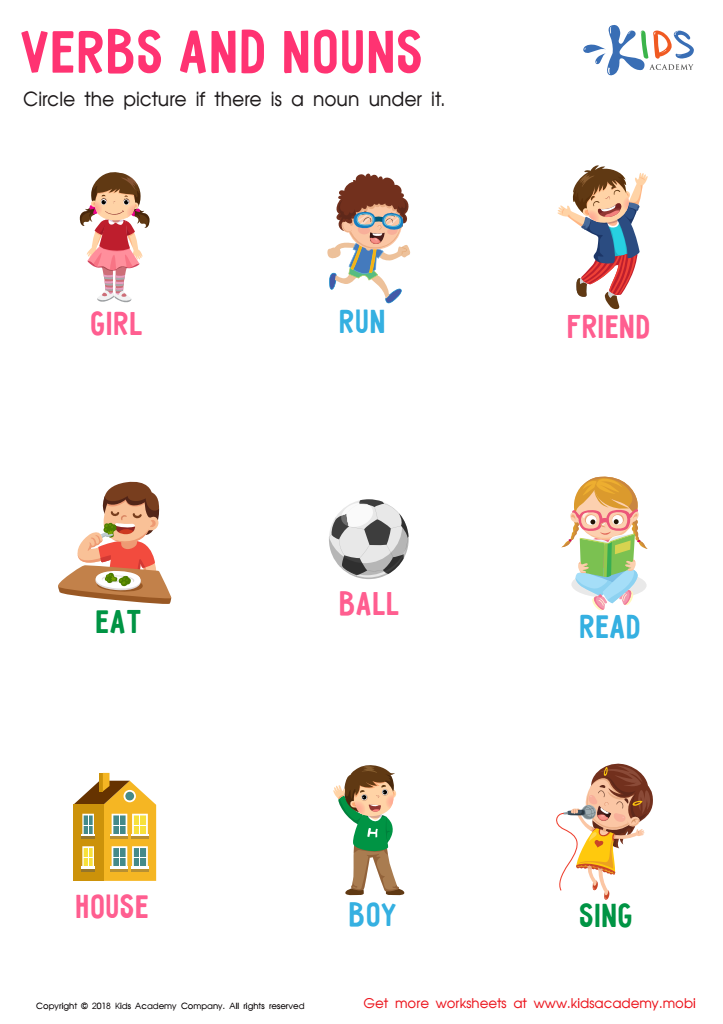
Verbs and Nouns Worksheet
Your child should have basic knowledge of verbs and nouns before starting this worksheet. Go through it with them and ask them to circle the pictures with nouns under them. This way, they'll become more familiar with parts of speech.
 Assign to My Students
Verbs and Nouns Worksheet
Worksheet
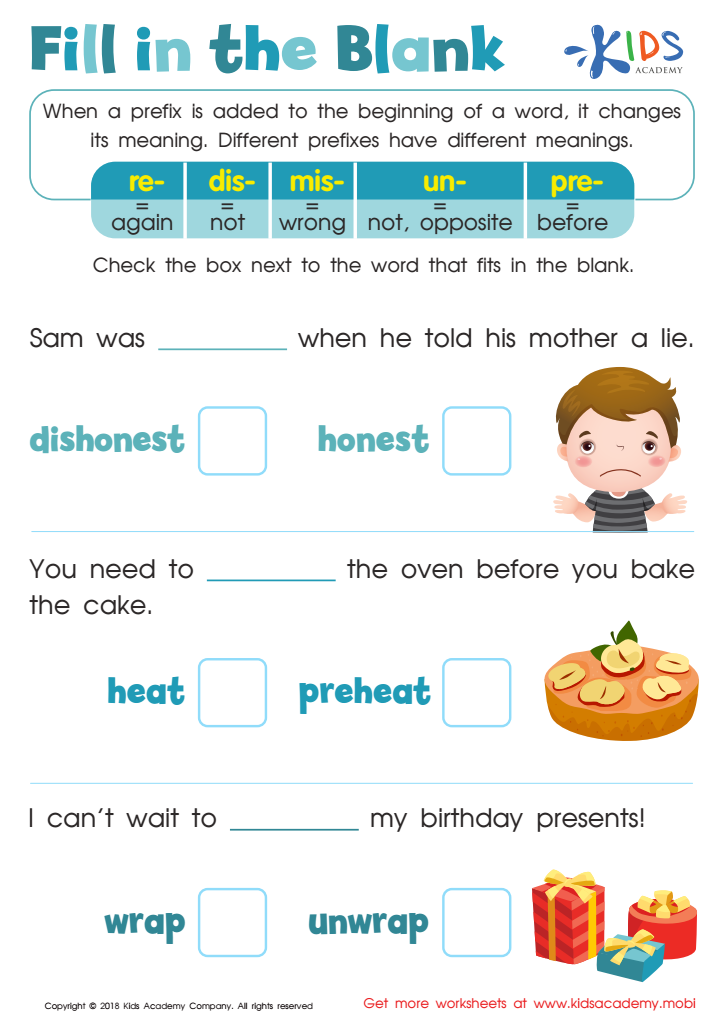
Reading: Fill in the Blank Worksheet
Students can practice understanding the meaning of common prefixes with this worksheet. They read sentences and pick the correct word with the appropriate prefix to complete it. Downloadable and a great addition to reading and vocabulary resources, this helps improve comprehension with mastery of the skill!
Reading: Fill in the Blank Worksheet
Worksheet
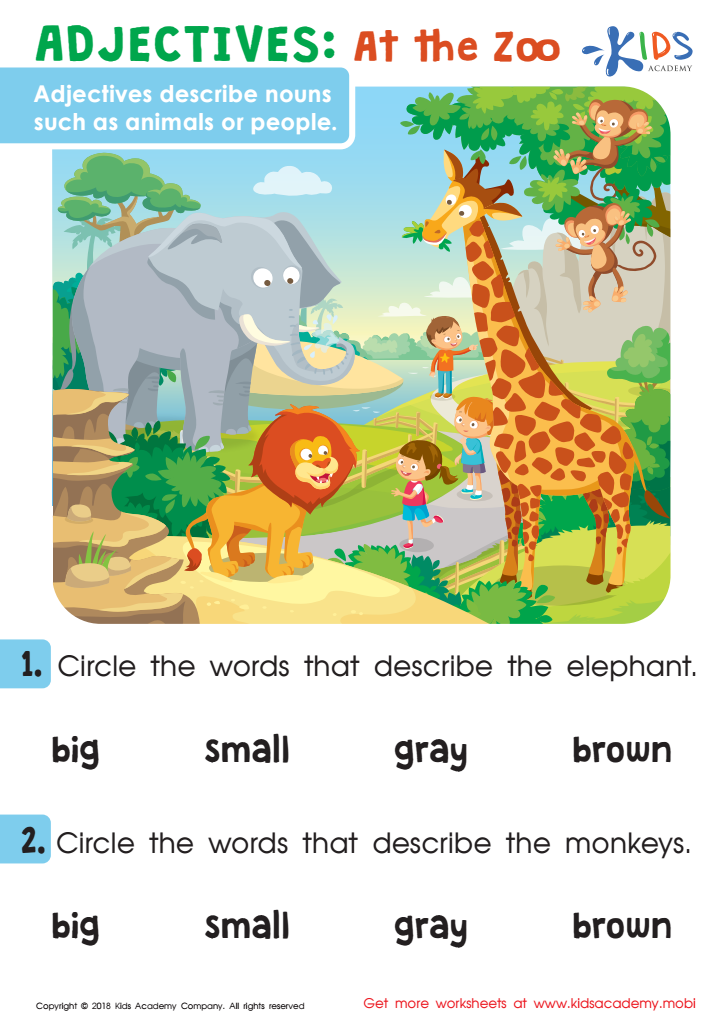
Adjectives: At The Zoo Worksheet
Take your kids to the zoo and ask them about their favorite activities and animals. This worksheet is a great way for kids to learn about adjectives. Explain that adjectives describe nouns like people or animals (e.g. big, tall, dark). Look at the printout with your kids and help them circle words that describe the animals in the picture.
Adjectives: At The Zoo Worksheet
Worksheet
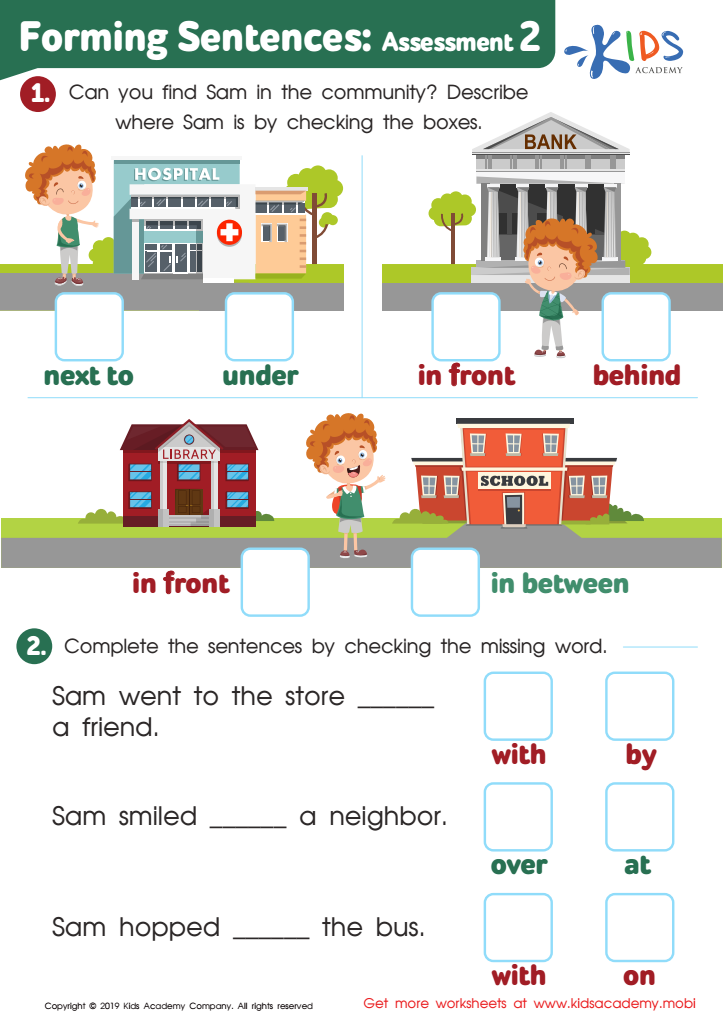
Forming Sentences: Assessment 2 Worksheet
A community is an area with different people, buildings and professionals. Ask students to list buildings in their area, then help find Sam. Describe where he is and check the boxes in the worksheet. At the bottom, help complete the sentences by checking the missing word.
Forming Sentences: Assessment 2 Worksheet
Worksheet
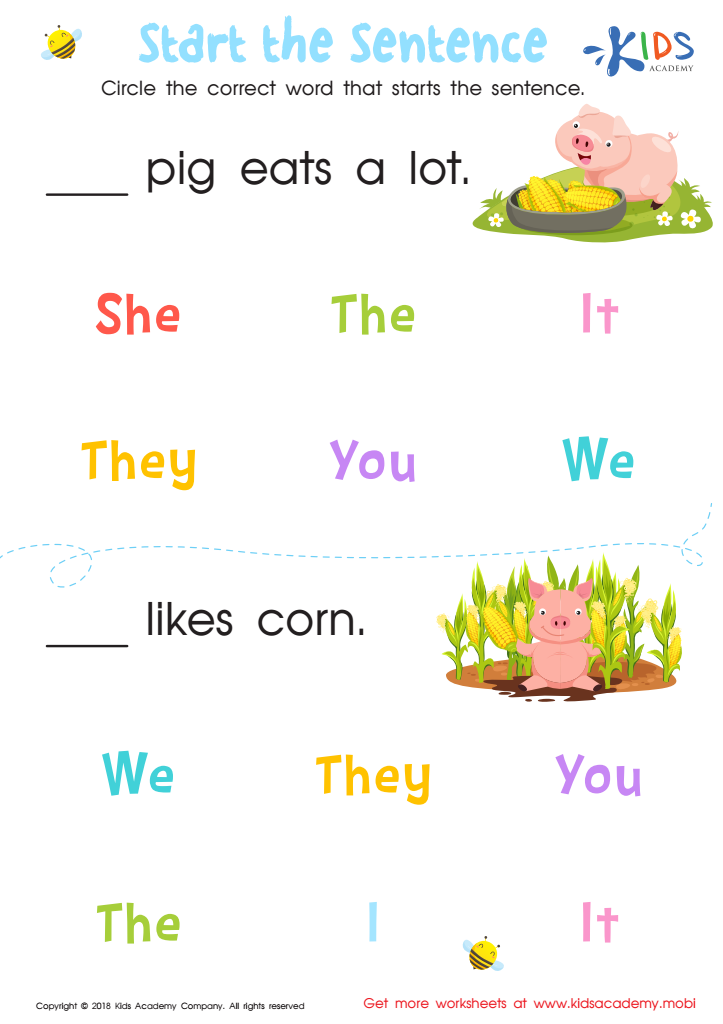
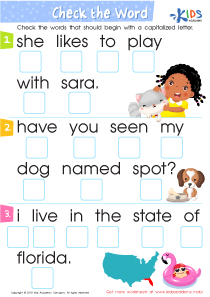
Start the Sentence Worksheet
Test your students' understanding of sentences with this easy worksheet. Ask them to read the sentences and circle the correct word that starts each. This will show how well their lessons have paid off and if they can construct short simple sentences.
Start the Sentence Worksheet
Worksheet
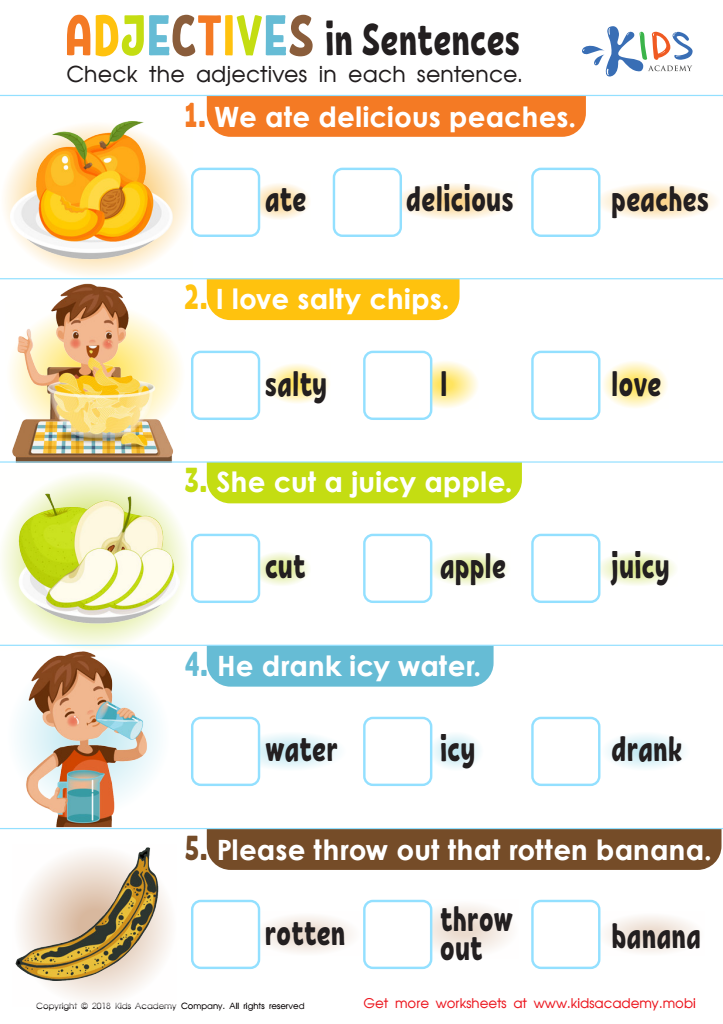
Adjectives in Sentences Worksheet
Our learners can find it hard to use writing to add detail, but adjectives can help. With this fun worksheet, kids can identify adjectives that describe food and drink. Guide them through each sentence, discussing the words and having them choose the one that gives information about the food/drink.
Adjectives in Sentences Worksheet
Worksheet
Join Kids Academy for Free
Who is primarily going to use this learning content?





.jpg)

Grammar practice at an early age is essential for the holistic development of children ages 3 to 7. During these formative years, children are laying the foundation for their language skills, which will impact their communication, reading, and writing abilities later in life. Understanding basic grammar concepts, such as nouns, verbs, and sentence structure, equips children to express their thoughts clearly and effectively.
Additionally, early grammar practice encourages critical thinking and cognitive development as children learn to categorize words and construct sentences. This early exposure enhances their listening and oral skills, fostering effective conversations and interactions with peers and adults.
Furthermore, engaging in grammar activities cultivates a love for language and literacy, which is crucial when they begin formal education. Children who grasp fundamental grammar principles are often more confident in their writing, enabling them to articulate ideas in schoolwork and beyond.
For parents and teachers, incorporating grammar practice into daily routines translates to long-term academic success for children. By nurturing these skills early on, we provide a strong language foundation that will serve children throughout their educational journey and equip them for future challenges in communication.