Discover our engaging Grammar Practice Normal Writing Worksheets designed specifically for children aged 3-7! These worksheets provide an excellent opportunity for young learners to develop essential grammar skills while having fun. Each activity is crafted to promote early literacy, guiding children through basic concepts such as sentence structure, punctuation, and parts of speech. With colorful illustrations and interactive tasks, kids will enjoy practicing their writing abilities in a supportive environment. Perfect for classrooms or home learning, our worksheets make grammar exciting and accessible. Start fostering a love for language with our delightful and effective grammar practice resources today!

Check out this FREE Trial Lesson on Writing for age 3-7!

Determine the Meaning of Words with Common Prefixes

Favorites
With answer key
Interactive
  • 3-7
  • Grammar practice
  • Writing
  • Normal
Verbs and Nouns Worksheet

Verbs and Nouns Worksheet

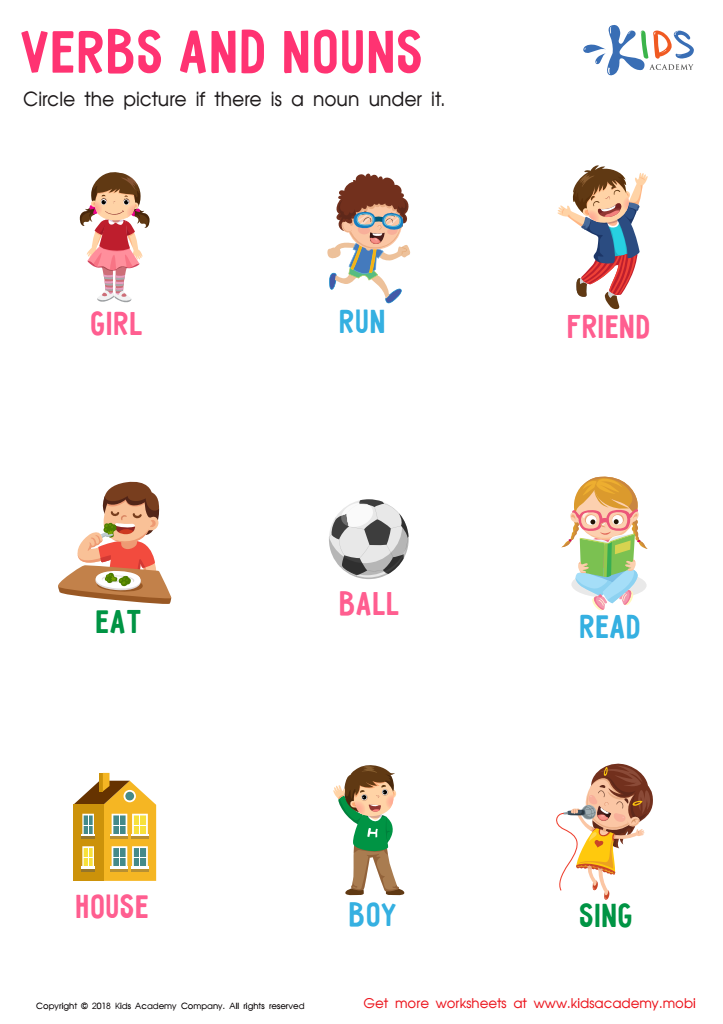
Your child should have basic knowledge of verbs and nouns before starting this worksheet. Go through it with them and ask them to circle the pictures with nouns under them. This way, they'll become more familiar with parts of speech.
Verbs and Nouns Worksheet
Worksheet
Reading: Fill in the Blank Worksheet

Reading: Fill in the Blank Worksheet

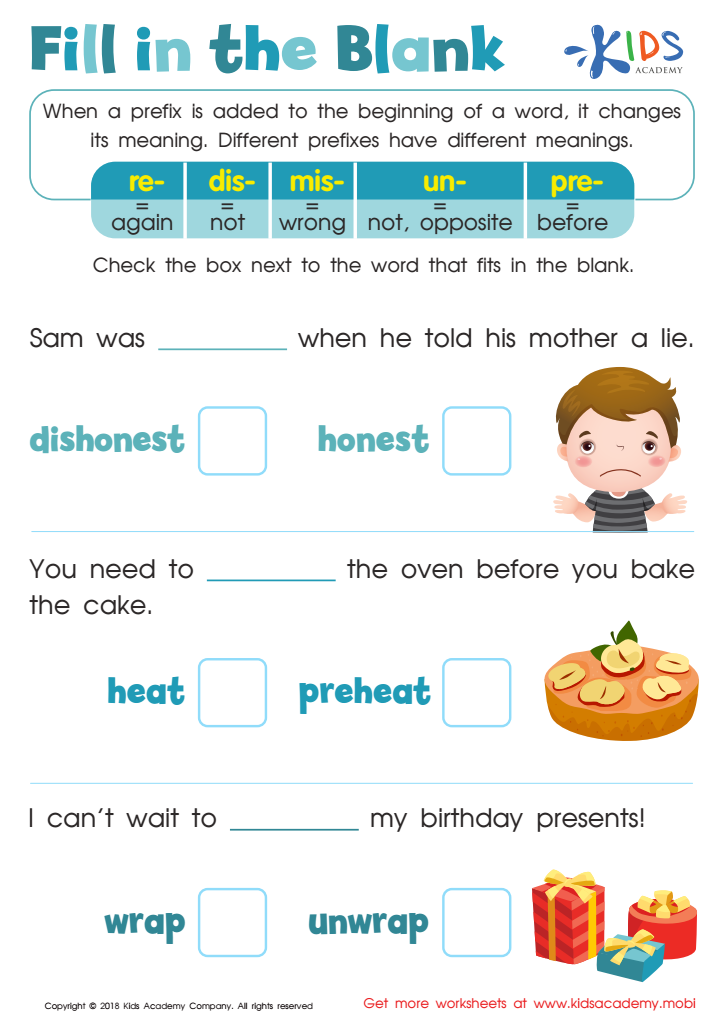
Students can practice understanding the meaning of common prefixes with this worksheet. They read sentences and pick the correct word with the appropriate prefix to complete it. Downloadable and a great addition to reading and vocabulary resources, this helps improve comprehension with mastery of the skill!
Reading: Fill in the Blank Worksheet
Worksheet
Adjectives: At The Zoo Worksheet

Adjectives: At The Zoo Worksheet

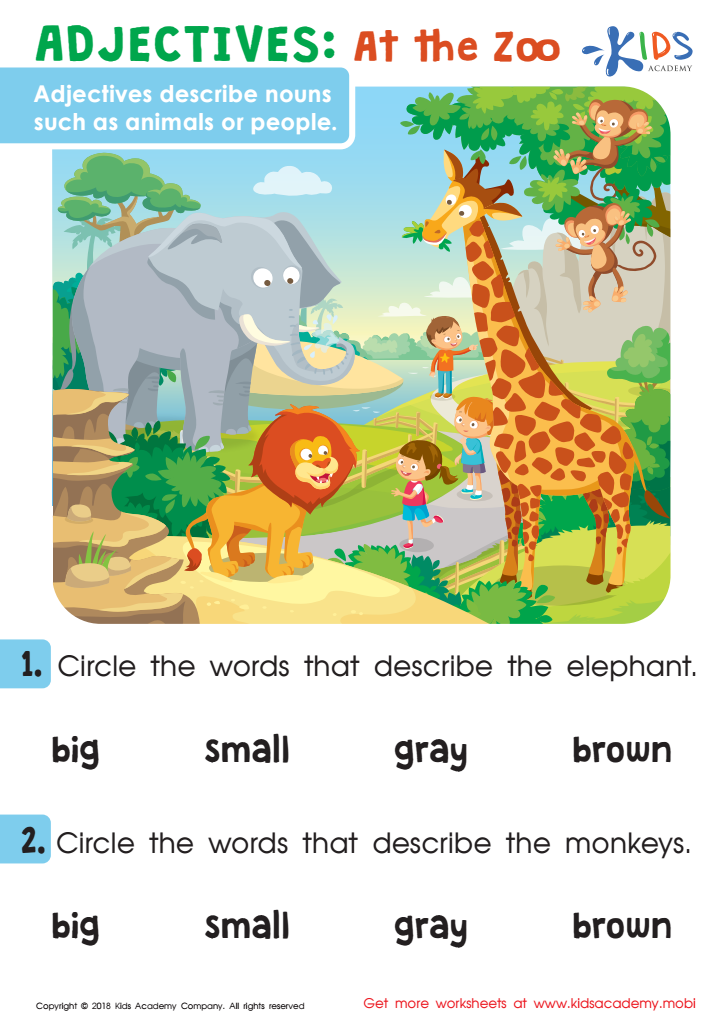
Take your kids to the zoo and ask them about their favorite activities and animals. This worksheet is a great way for kids to learn about adjectives. Explain that adjectives describe nouns like people or animals (e.g. big, tall, dark). Look at the printout with your kids and help them circle words that describe the animals in the picture.
Adjectives: At The Zoo Worksheet
Worksheet
Forming Sentences: Assessment 2 Worksheet

Forming Sentences: Assessment 2 Worksheet

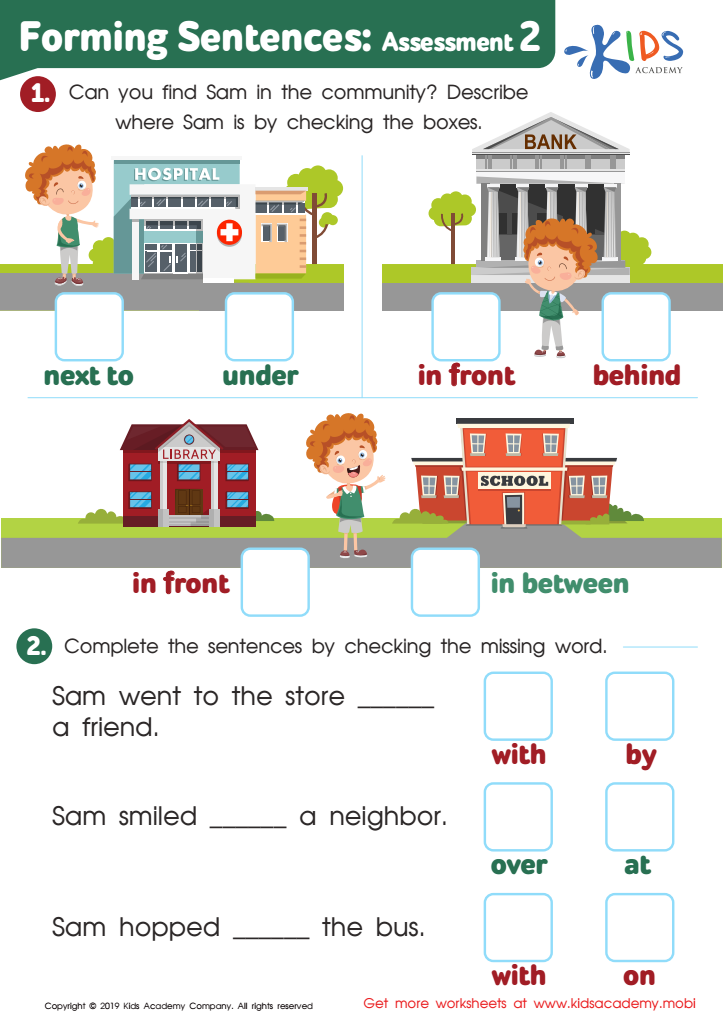
A community is an area with different people, buildings and professionals. Ask students to list buildings in their area, then help find Sam. Describe where he is and check the boxes in the worksheet. At the bottom, help complete the sentences by checking the missing word.
Forming Sentences: Assessment 2 Worksheet
Worksheet
Finish the Sentence Worksheet

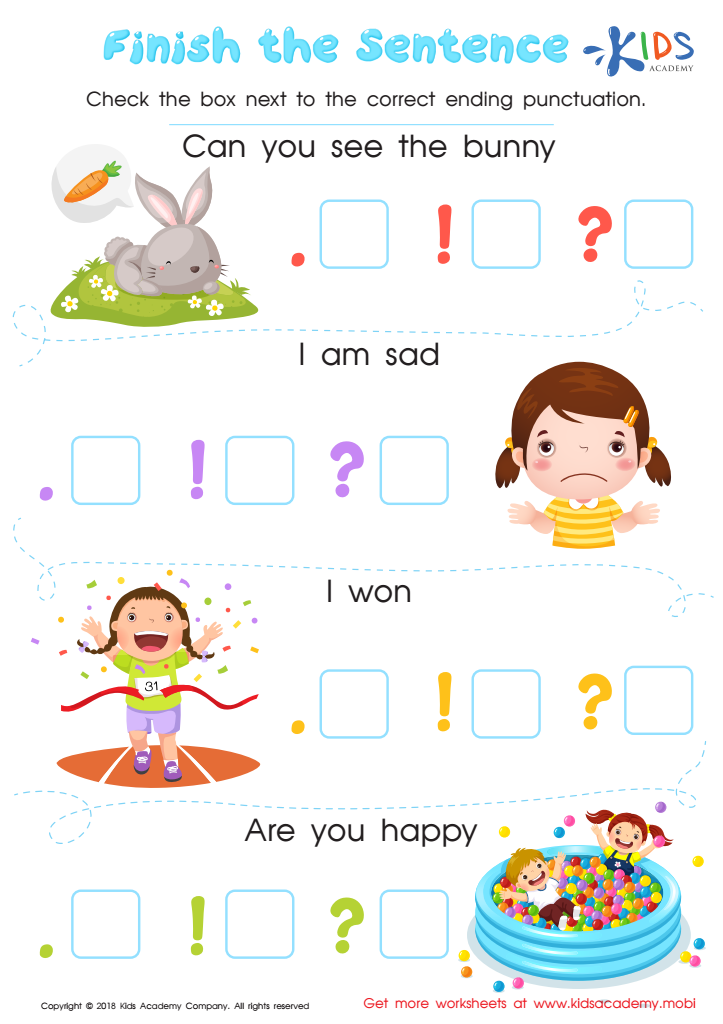
Finish the Sentence Worksheet

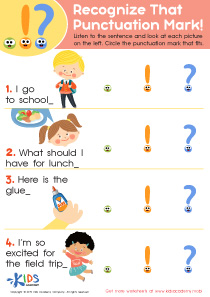
If your students have difficulty with punctuation, have them read sentences aloud and check the box next to the correct ending punctuation with this simple worksheet. Punctuation signals the tone and meaning of sentences. It helps students understand what is being communicated.
Finish the Sentence Worksheet
Worksheet
Start the Sentence Worksheet

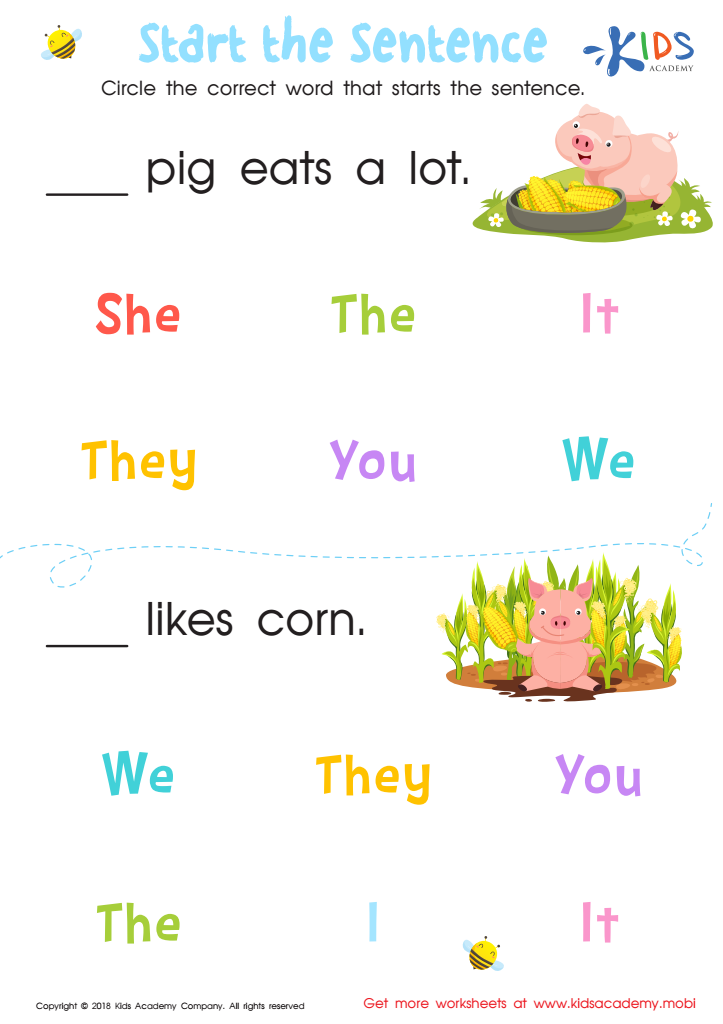
Start the Sentence Worksheet

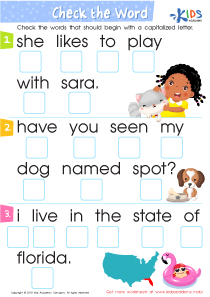
Test your students' understanding of sentences with this easy worksheet. Ask them to read the sentences and circle the correct word that starts each. This will show how well their lessons have paid off and if they can construct short simple sentences.
Start the Sentence Worksheet
Worksheet
Adjectives in Sentences Worksheet


Adjectives in Sentences Worksheet
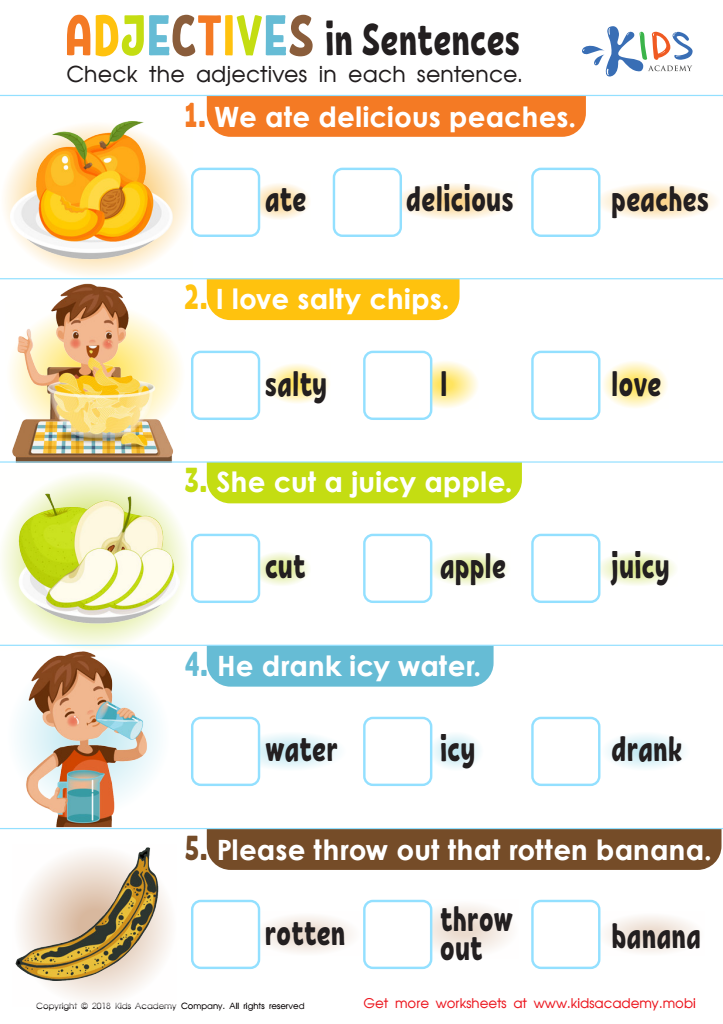
Our learners can find it hard to use writing to add detail, but adjectives can help. With this fun worksheet, kids can identify adjectives that describe food and drink. Guide them through each sentence, discussing the words and having them choose the one that gives information about the food/drink.
Adjectives in Sentences Worksheet
Worksheet


Grammar practice is crucial for children aged 3-7 as it lays the foundation for effective communication and literacy skills. At this stage, children are exploring language and honing their abilities to express themselves clearly. Practicing grammar helps them understand sentence structure, the role of words, and how to convey their thoughts coherently.

For parents and teachers, fostering good grammar habits is essential because it boosts children's confidence in their writing and speaking skills. When children learn correct grammar at an early age, they are more likely to grow into articulate individuals, equipped for school and social interactions. Furthermore, proper grammar practice encourages critical thinking and analytical skills as children learn to construct and deconstruct sentences.

Engaging in normal writing exercises, such as storytelling or daily journals, allows young learners to apply grammar in a fun and relatable way. Parents and teachers can promote an enriching learning environment by integrating grammar practice into daily activities, making it more enjoyable.

Ultimately, nurturing strong grammar skills in early childhood not only contributes to academic success but also empowers children to express their creativity and ideas effectively, paving the way for lifelong communication skills.