Filters

8 filtered results

Clear all filters
Favorites
With answer key
Interactive

8 filtered results

Difficulty Level

Grade


Enhance your child's literacy skills with our "Alphabet Recognition Normal ABC Order Worksheets" designed for ages 3–8. These fun and engaging worksheets focus on helping young learners recognize letters in a structured ABC format, promoting essential early reading skills. Interactive activities make it easy for kids to identify and arrange letters, while colorful illustrations capture their attention. Perfect for both classroom and home use, these worksheets are an excellent resource for reinforcing classroom learning. Help your child build a solid foundation in phonics and letter recognition, setting them up for future academic success. Start your child’s journey to reading today!

Check out this FREE Trial Lesson on ABC Order for age 3-8!

J

Favorites
With answer key
Interactive
  • 3-8
  • Alphabet Recognition
  • ABC Order
  • Normal
Letter O worksheets
Letter O worksheets

Letter O Tracing Page

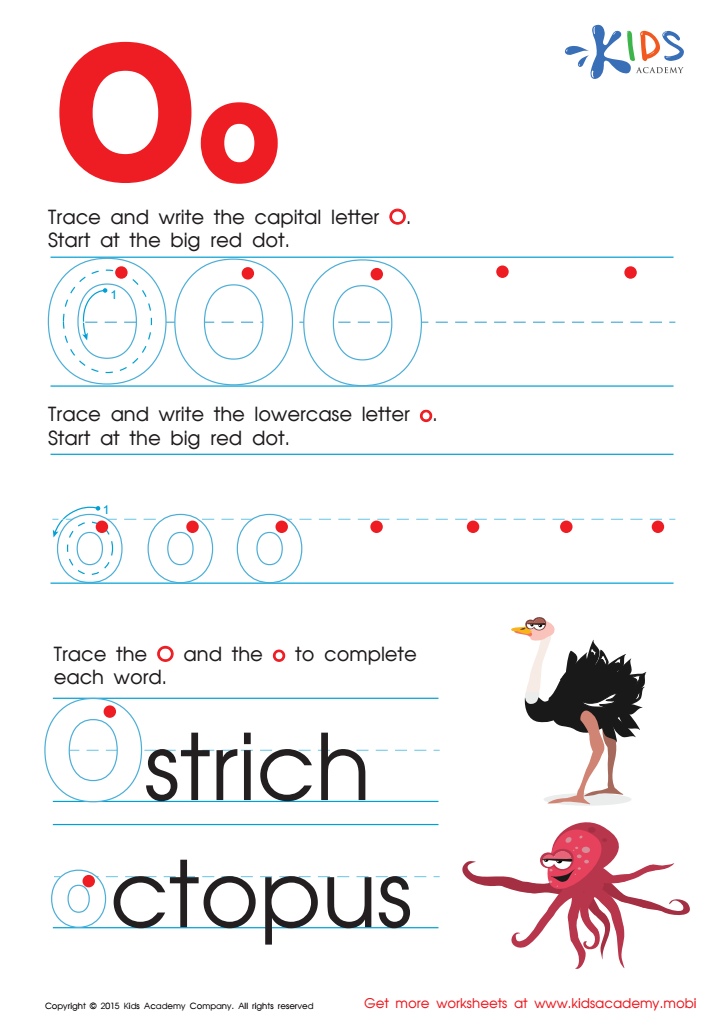
Practice writing the letter "O" with our new worksheet. Trace and write the letter several times, starting at the red dot. First do the uppercase letter, then the lowercase. Use the pictures to complete the words "Ostrich" and "octopus". Kids Academy offers more fun alphabet worksheets.
Letter O Tracing Page
Worksheet
Letter I worksheets
Letter I worksheets

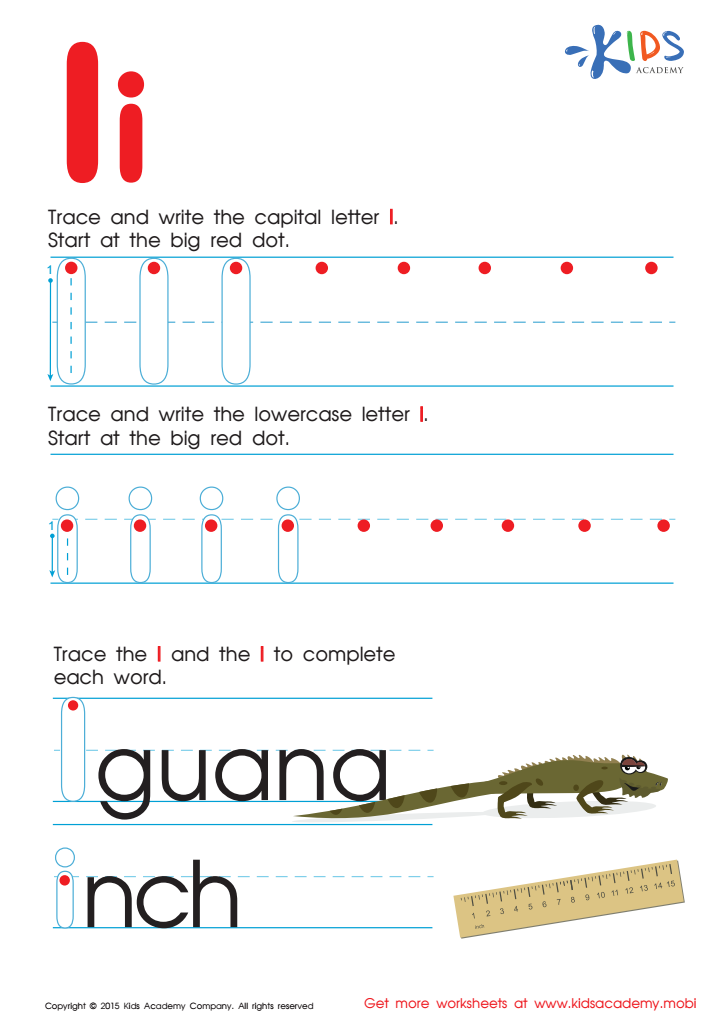
Letter I Tracing Page

Trace and write "I" uppercase and lowercase. An iguana's tail looks like the uppercase "I" and the lowercase "i" is as small as an inch. Make learning fun with Kids Academy worksheets.
Letter I Tracing Page
Worksheet
letter C worksheets
letter C worksheets

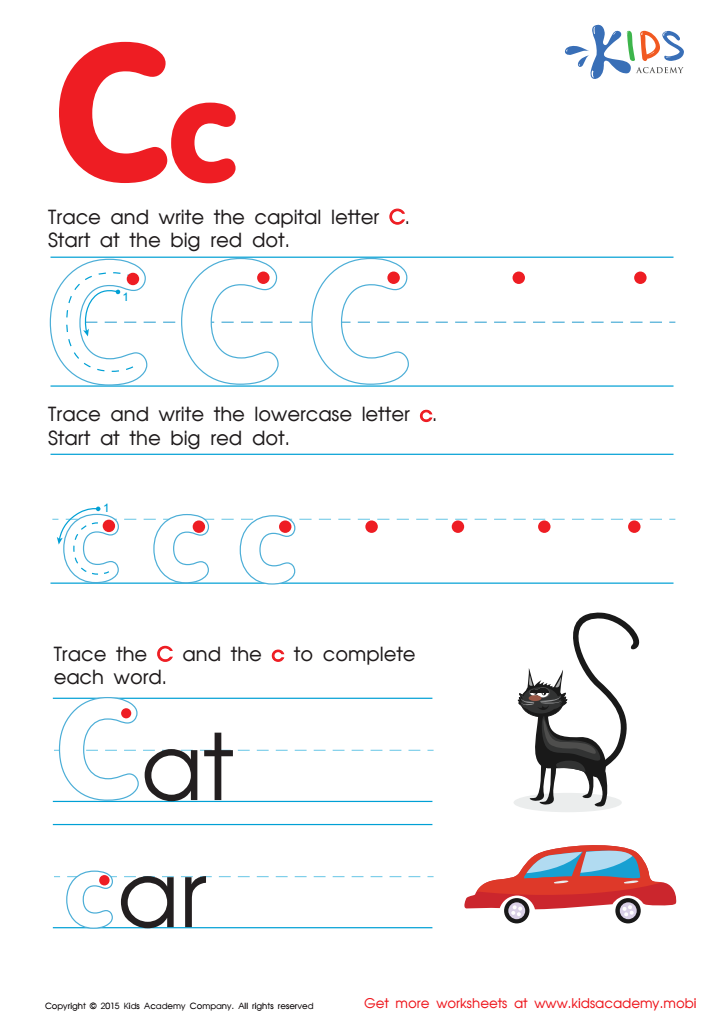
Letter C Tracing Page

Trace and write the letter 'C'! Put the pencil at the red dot then follow the lines – the capital letter first then the lowercase one. Cats love it and so will you! Get more free printables to practice tracing and writing.
Letter C Tracing Page
Worksheet
Letter М worksheets
Letter М worksheets

Letter M Tracing Page

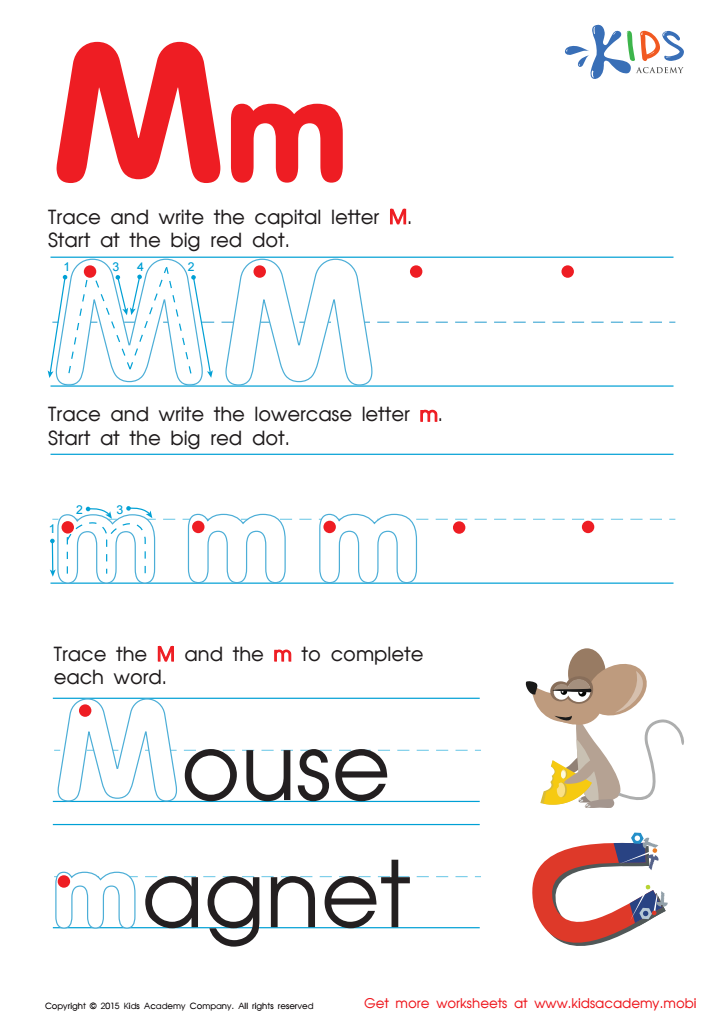
Trace and write the letter "M" to help kids learn the alphabet. Start at the red dot and practice several times. Trace the capital letter first, then move on to the lowercase. Complete words like "mouse" and "magnet" in the further exercise. Get more free printables here.
Letter M Tracing Page
Worksheet
Letter J worksheets
Letter J worksheets

Letter J Tracing Page

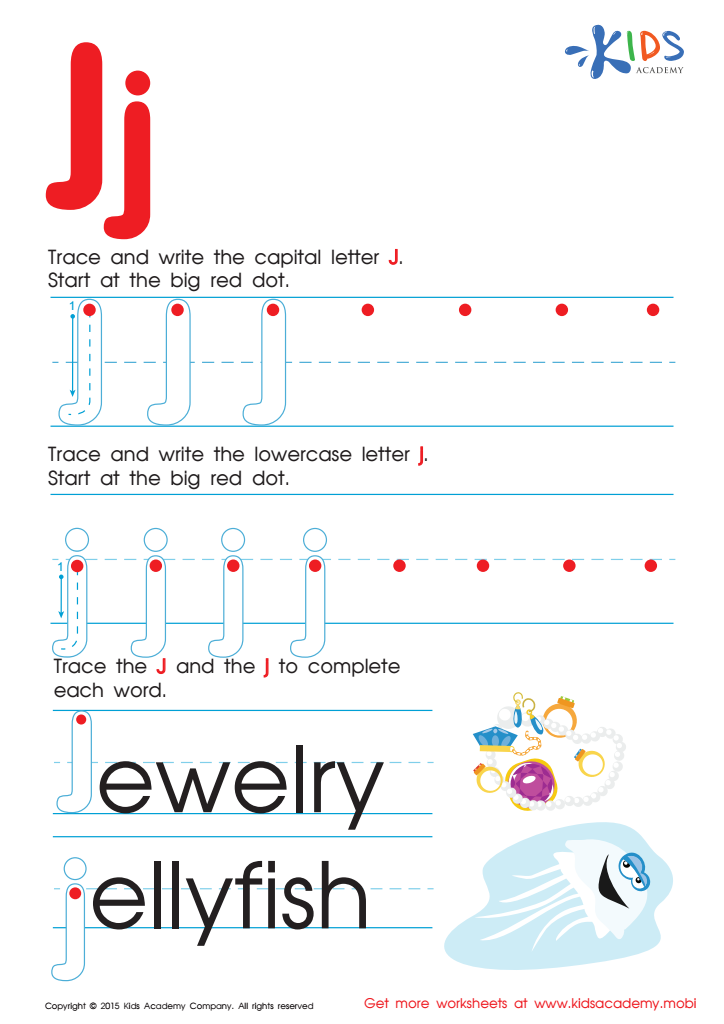
Trace and write the letter "J" with our ABC worksheet - start at the big red dot! Have fun completing words like jewelry, jellyfish and more. Check out our kindergarten activities for more alphabet practice.
Letter J Tracing Page
Worksheet
Letter N worksheets
Letter N worksheets

Letter N Tracing Page

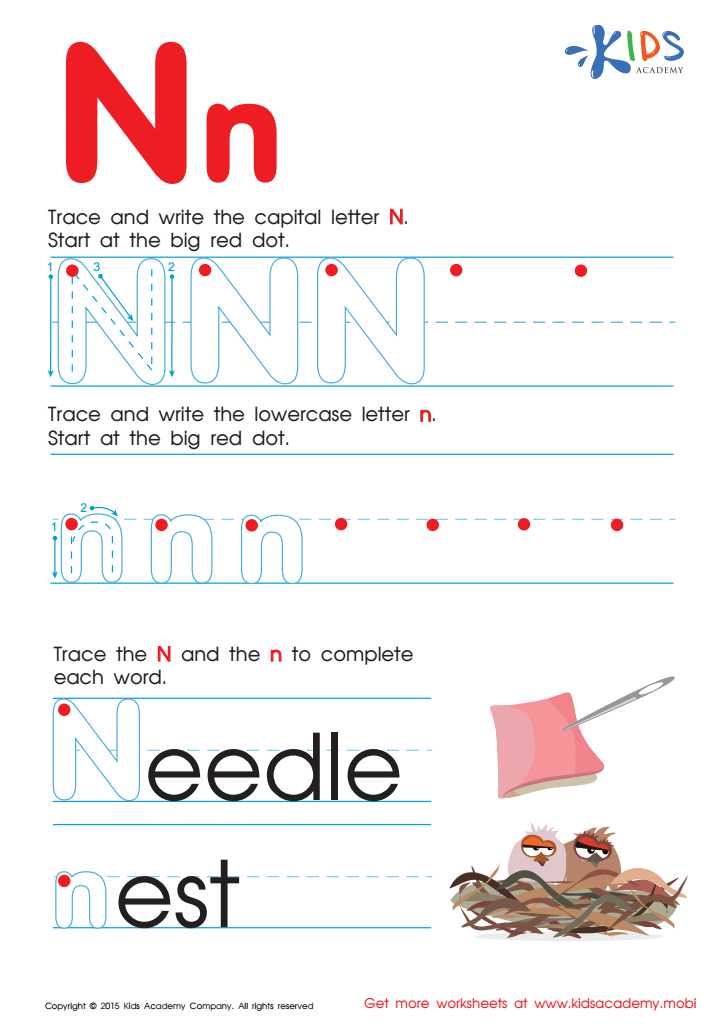
Trace and write capital "N" and lowercase "n" several times. Then try forming words like "needle" and "nest". Master letter writing with Kids Academy's collection of ABC worksheets for kindergarten.
Letter N Tracing Page
Worksheet
letter b worksheets
letter b worksheets

Letter B Tracing Page

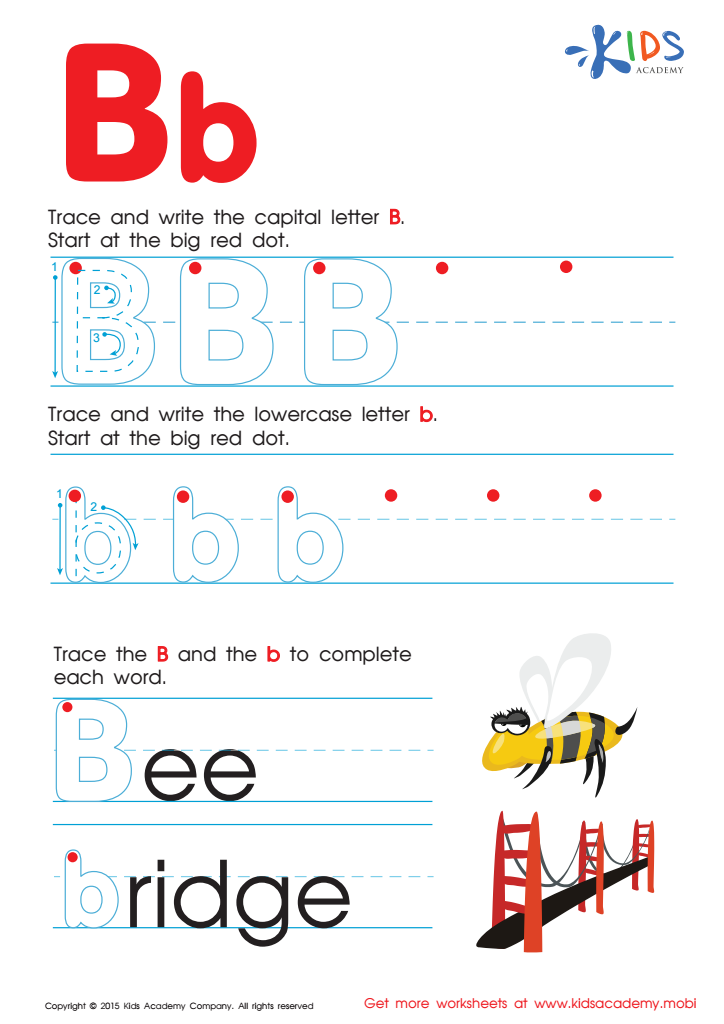
Ready to learn the Alphabet? Put your pencil on the red dot and trace & write both capital & lowercase "B". Then have a look at the pictures. Catch the bee, cross the bridge & write the letters to complete the words. More ABC worksheets for kindergarten available!
Letter B Tracing Page
Worksheet
letter e worksheets
letter e worksheets

Letter E Tracing Page

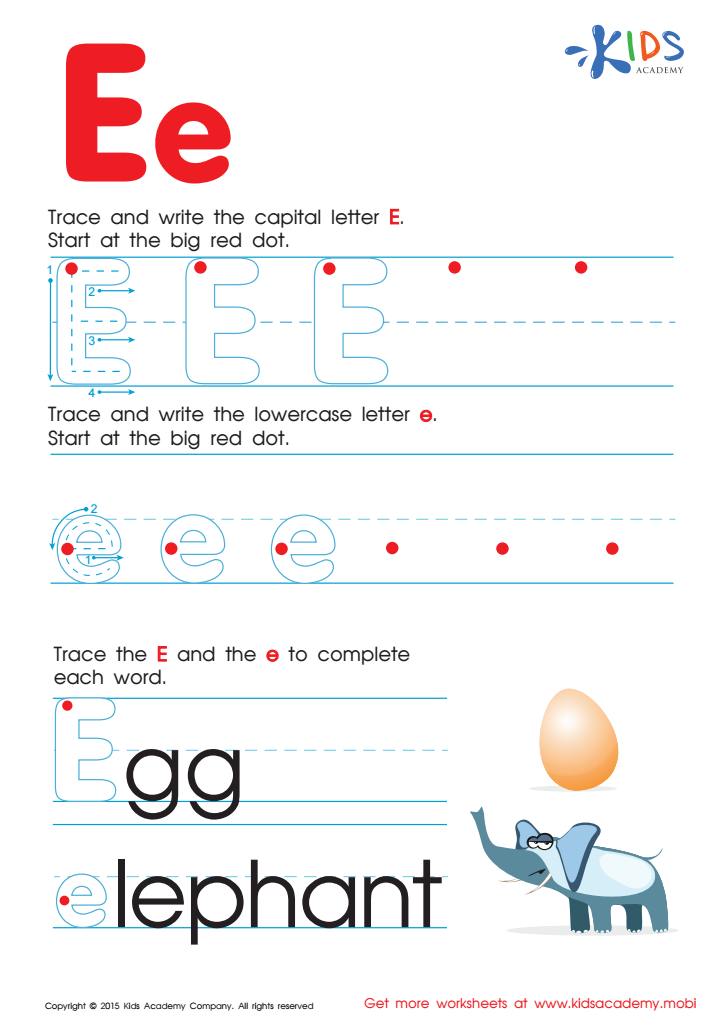
Trace and write the uppercase and lowercase "E" starting at the big red dot. Complete words to perfect letter writing. Egg and Elephant must be written carefully. More alphabet worksheets for kindergarten are available for download to spend more time with your children learning.
Letter E Tracing Page
Worksheet


Alphabet recognition in normal ABC order is a fundamental milestone in children’s early literacy development, particularly for those aged 3 to 8. Understanding the alphabet is crucial for reading readiness, and early mastery can significantly influence a child's future academic success. When children recognize letters in the correct order, they develop the ability to formulate and sound out words, which is essential for reading proficiency.

Parents and teachers should care deeply about this skill because strong alphabet recognition fosters confidence in children when tackling reading and writing tasks. It serves as a foundation for phonics instruction, sailing into more complex literacy skills as they grow. Children who learn the alphabet early are more likely to engage in reading, which promotes vocabulary growth, comprehension, and critical thinking skills.

Additionally, recognizing letters helps in organizing thoughts and ideas. Using twists on the traditional ABC song can make learning enjoyable and meaningful, enhancing memory retention. Finally, by prioritizing alphabet recognition, adults are investing in their children's educational journey, setting them up for success not just in language arts but across all subjects. Supporting engagement with the alphabet at home or in the classroom is a vital step toward fostering lifelong learners.