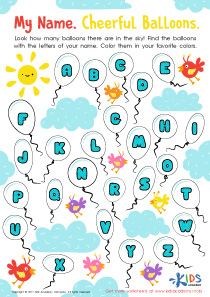
Alphabet tracing Normal ABC Order Worksheets for Ages 3-8
4 filtered results
-
From - To
Help your child master the ABCs with our Alphabet Tracing Normal ABC Order Worksheets, designed for ages 3-8! These fun and engaging printable worksheets guide young learners through the process of tracing each letter of the alphabet, reinforcing letter recognition, fine motor skills, and early writing abilities. Featuring clear instructions and kid-friendly designs, these activities make learning enjoyable and effective. Ideal for preschool, kindergarten, and early elementary students, they provide a solid foundation in handwriting and early literacy. Download now and watch your little one progress as they confidently learn the alphabet in its correct sequence!

Letter P Tracing Page
 Assign to My Students







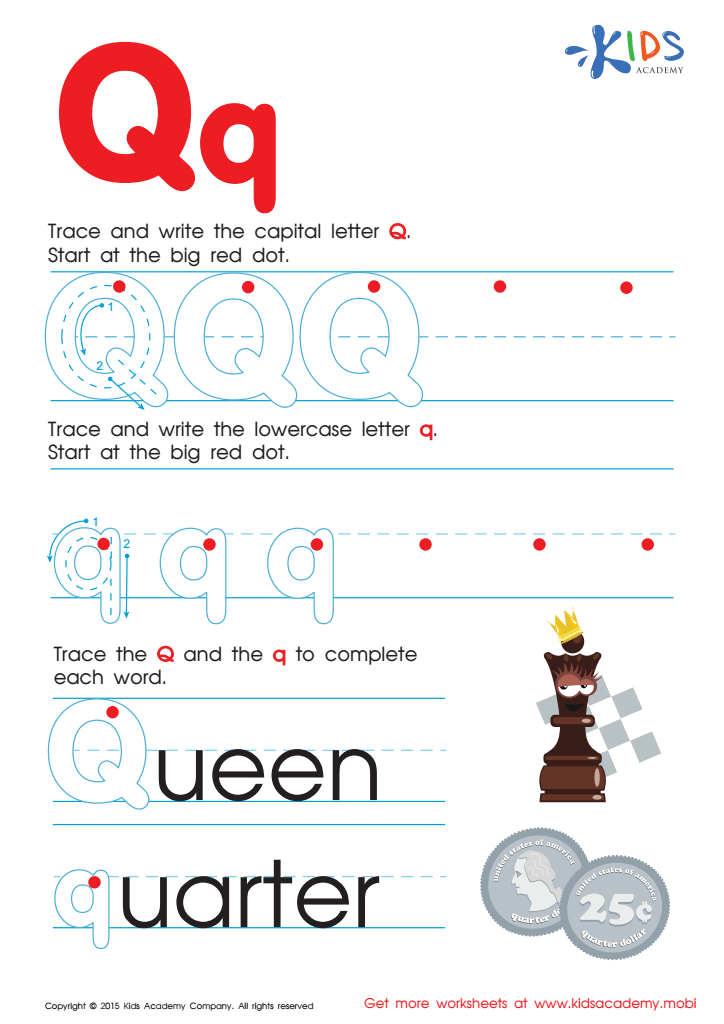
Letter Q Tracing Page

Letter H Tracing Page

Letter D Tracing Page







Alphabet tracing in normal ABC order for ages 3-8 is an essential foundation for early literacy skills. At this age, children are in a critical period where they are rapidly developing their fine motor skills, cognitive abilities, and language acquisition. Engaging in alphabet tracing helps to strengthen these areas.
Firstly, tracing the alphabet boosts hand-eye coordination and fine motor skills by teaching children how to control a pencil or crayon, which is a prerequisite for writing. The repetitive motion needed to trace letters helps solidify their understanding of letter shapes and provides muscle memory that translates into better handwriting in the future.
Secondly, learning the alphabet in the standard ABC order instills a basic understanding and recall of the order of letters, which is fundamental for alphabetizing activities and for learning other academic content organized linearly, such as numbers and days of the week.
Additionally, tracing helps in the recognition of both uppercase and lowercase forms of each letter, which is crucial for reading. It allows children to identify letters in different texts and context, aiding in their early reading development.
Involving parents or teachers in this process fosters a supportive learning environment. Children benefit from the encouragement and reinforcement they receive from adults, creating positive emotional associations with learning.
Thus, alphabet tracing is not merely an exercise in drawing but a crucial step in forming the educational bedrock needed for more complex learning activities.