
Phonics Skills Normal Elementary Phonics Worksheets for Ages 3-8
4 filtered results
Difficulty Level
Grade
Age
-
From - To
Subject
Activity
Standards
Boost your child’s reading foundation with our Phonics Skills Normal Elementary Phonics Worksheets, designed specifically for ages 3-8. These engaging and educational worksheets cover essential phonics skills, promoting letter recognition, sound blending, and word formation. Perfect for early readers, these activities transform learning into a fun and interactive process. From alphabet mastery to sound patterns, our worksheets make phonics accessible and enjoyable, paving the path for strong reading abilities. Ideal for both classroom use and at-home practice, our resources support young learners in achieving reading success through structured, age-appropriate exercises they’ll love. Start your child's phonics journey today!
Favorites
With answer key
Interactive
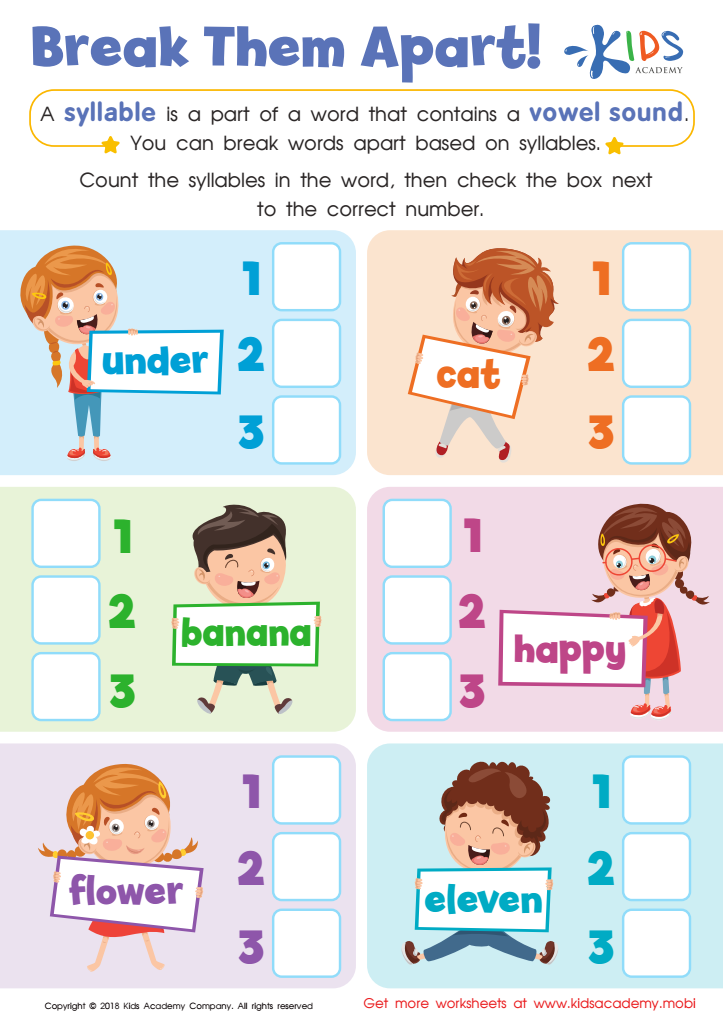
Reading: Break Them Apart Worksheet
See if students understand syllables with this fun worksheet. It teaches them that a syllable is a word part with a vowel sound. Kids read each word and choose how many parts it has. Doing this often helps them decode new words and gain confidence.
Reading: Break Them Apart Worksheet
Worksheet
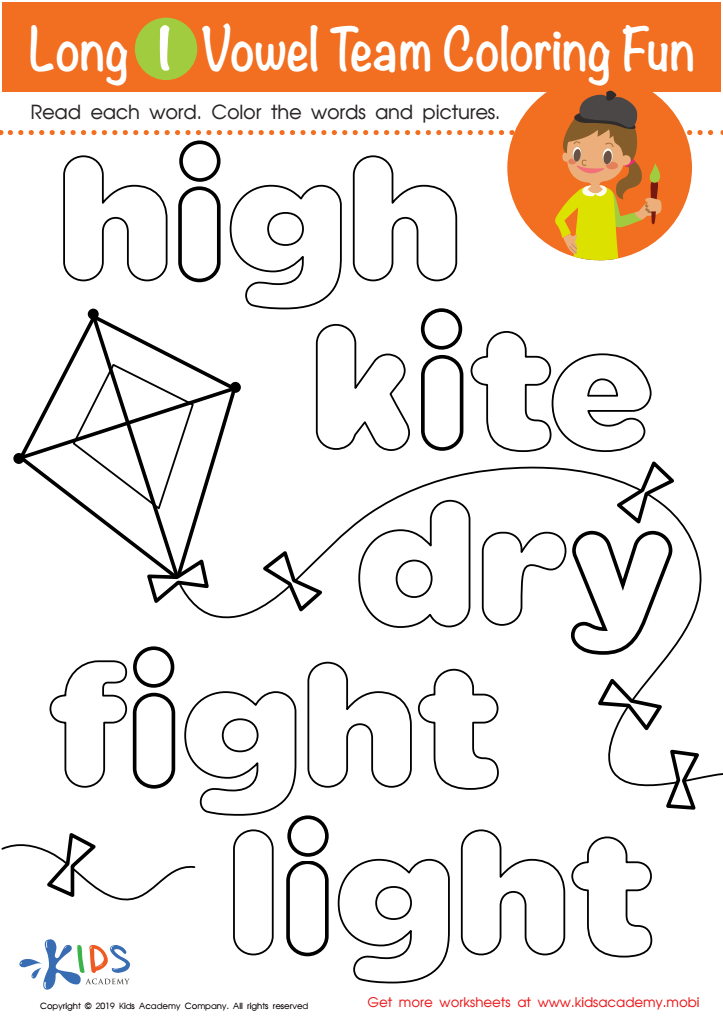
Long I Vowel Team Coloring Worksheet
This worksheet provides practice with letter combinations that make the long "i" sound while enhancing creativity and motor skills with a fun coloring activity. Unknowingly, new readers learn key phonics skills while having fun!
Download (PDF)
 Assign to My Students
Assign to My Students
Long I Vowel Team Coloring Worksheet
Worksheet
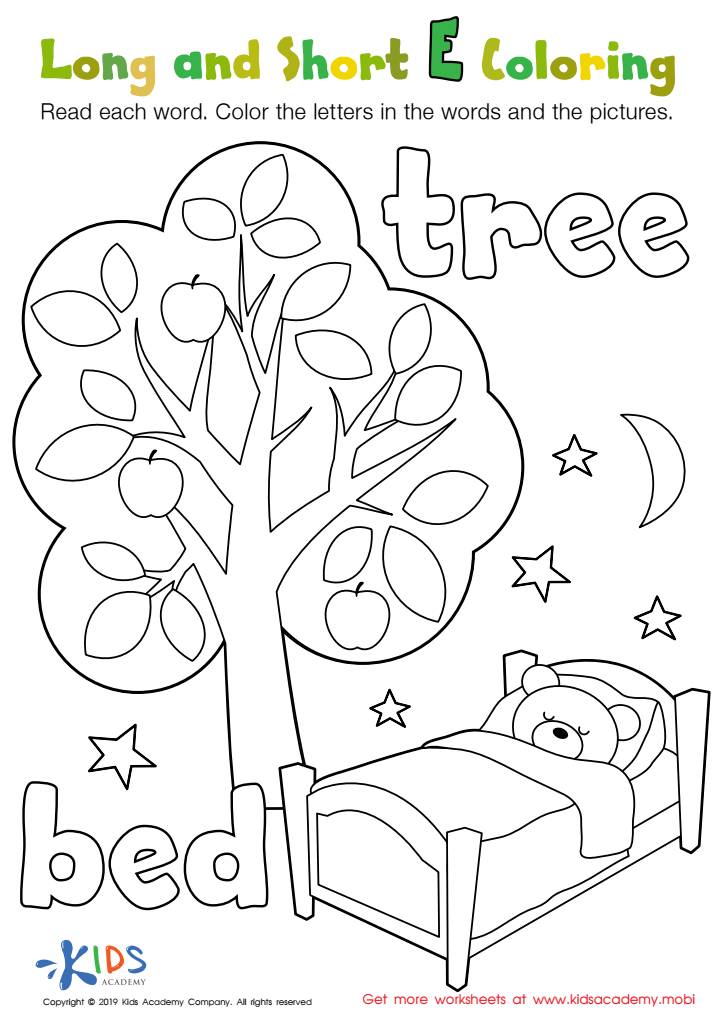
Long and Short E Worksheet
This fun printout makes learning phonics enjoyable for Grade 3 students. Get them to read the words “tree” and “bed” to recognize the different sounds of the letter “E”. After hearing the words they can color the words and the pictures to understand differences between long and short vowels.
Download (PDF)
Assign to My Students
Assign to My Students
Long and Short E Worksheet
Worksheet
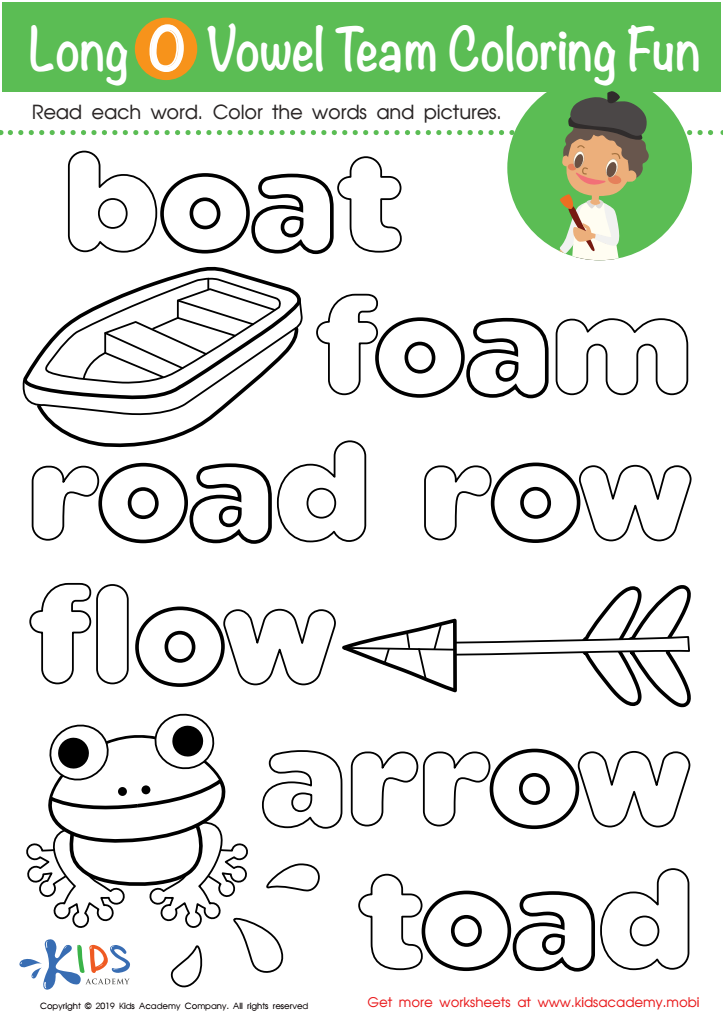
Long O Vowel Team Coloring Worksheet
Divide your class into teams and have them work together to identify and pronounce the long O sound in words like "boat" and "flow". As they read aloud, have the rest of the class listen attentively. Then let teams color in the words and matching pictures, reinforcing the lesson. This simple printout is perfect for phonics lessons and a fun way to energize your class.
Download (PDF)
Assign to My Students
Assign to My Students
Long O Vowel Team Coloring Worksheet
Worksheet
Join Kids Academy for Free
Who is primarily going to use this learning content?




Parents and teachers should prioritize phonics skills for children aged 3-8 because these foundational skills are crucial for early reading and language acquisition. Phonics education focuses on the relationships between sounds and their corresponding letters, enabling children to decode new words efficiently. This is essential for developing proficient reading abilities, which directly impact overall academic success.
Young children are in a critical period for language development, and a strong grasp of phonics lays the groundwork for later literacy skills. By mastering phonics, children can sound out words, recognize patterns, and ultimately read more fluently and comprehend texts better. This boosts their confidence and fosters a love for reading, which is linked to lifelong learning and cognitive development.
Moreover, early phonics instruction supports children in learning to spell and write, creating a well-rounded language skill set. When parents and teachers focus on phonics during these formative years, they help children build a robust vocabulary and improve their listening and speaking skills.
Ignoring this essential aspect of early education can lead to reading difficulties, frustration, and a lack of enthusiasm for learning. Hence, investing time and resources into teaching phonics from an early age ensures that children have the necessary tools to succeed academically and beyond.






