
Letter-sound correlation Normal Alphabet Worksheets for Ages 3-8
3 filtered results
Difficulty Level
Grade
Age
-
From - To
Subject
Activity
Standards
Discover engaging and educational letter-sound correlation worksheets designed for children ages 3-8. These worksheets introduce young learners to the relationship between letters and their sounds, fostering early literacy skills. Each worksheet uses fun activities, colorful images, and playful exercises to make learning the alphabet an enjoyable experience. Perfect for classrooms or at-home practice, they help children build a strong foundation in phonics. Encourage your child's development with our carefully crafted resources that support both individual and guided learning. Boost their confidence and watch them master the fundamentals of reading and writing!
Favorites
With answer key
Interactive
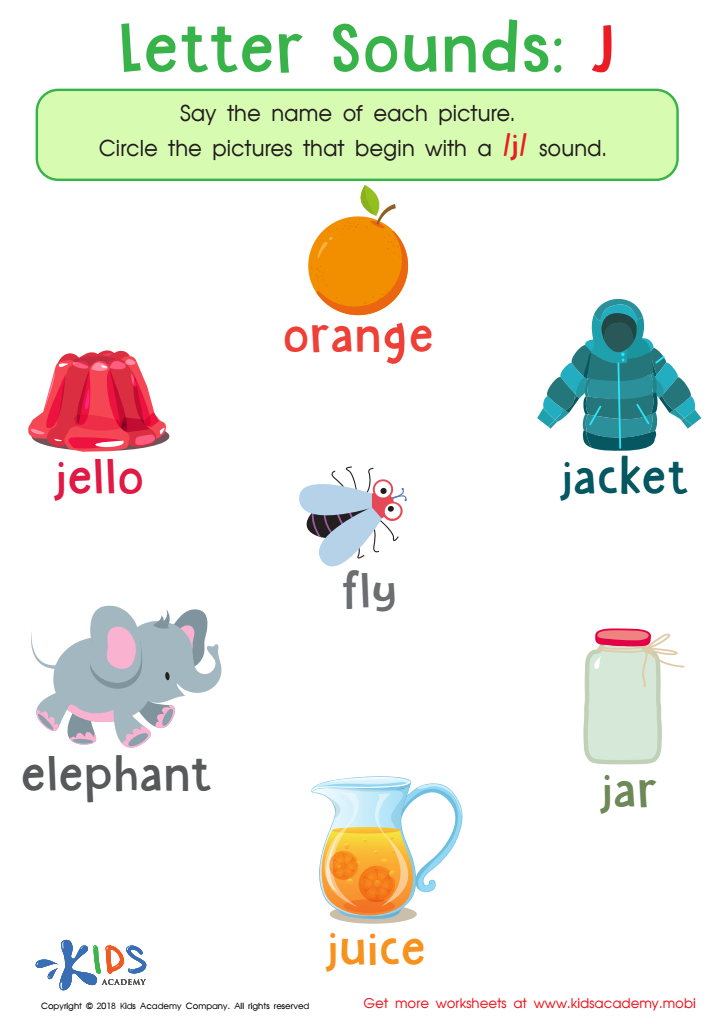
Letter Sounds: J Printable Worksheet
Preschoolers can learn to identify letter sounds by focusing on beginning sounds. This cute and colorful worksheet reviews the hard “j” sound. Kids can point it out by naming the words and circling only those starting with the “j” sound. Read the text out loud and listen closely!
 Assign to My Students
Letter Sounds: J Printable Worksheet
Worksheet
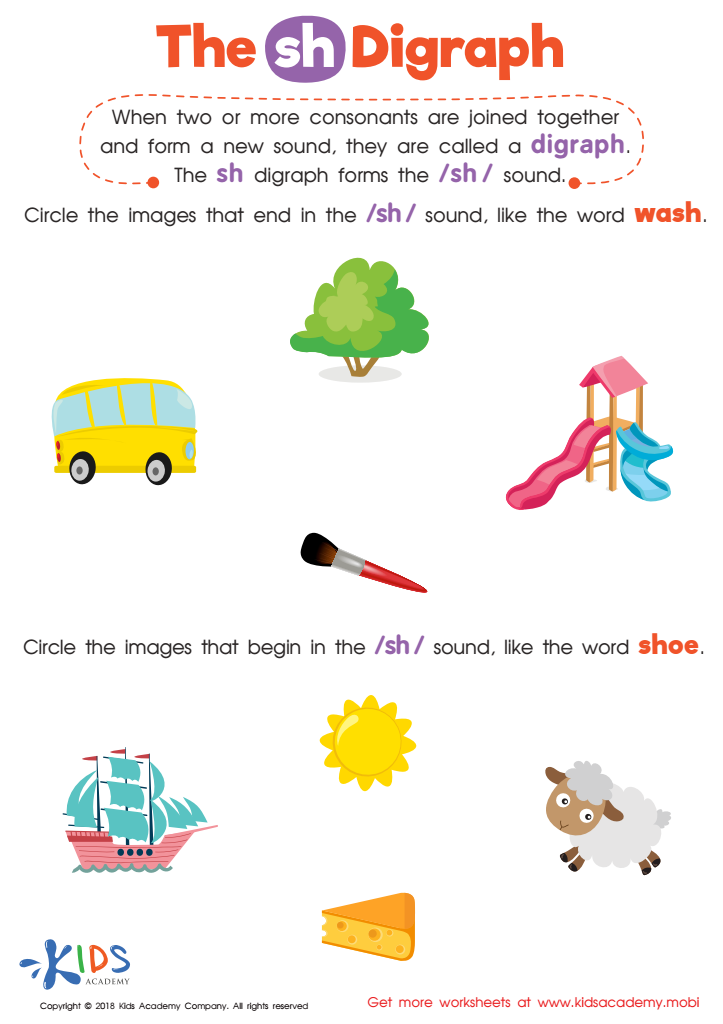
The SH Digraph Worksheet
There are many phonetic sounds, each with its own unique sound. When two or more consonants are combined to create a new sound, it's called a digraph. Example: the sh digraph creates the /sh/ sound. Have kids look at the pictures and say the words aloud. Help them circle the images ending with /sh/, like 'wash'.
The SH Digraph Worksheet
Worksheet
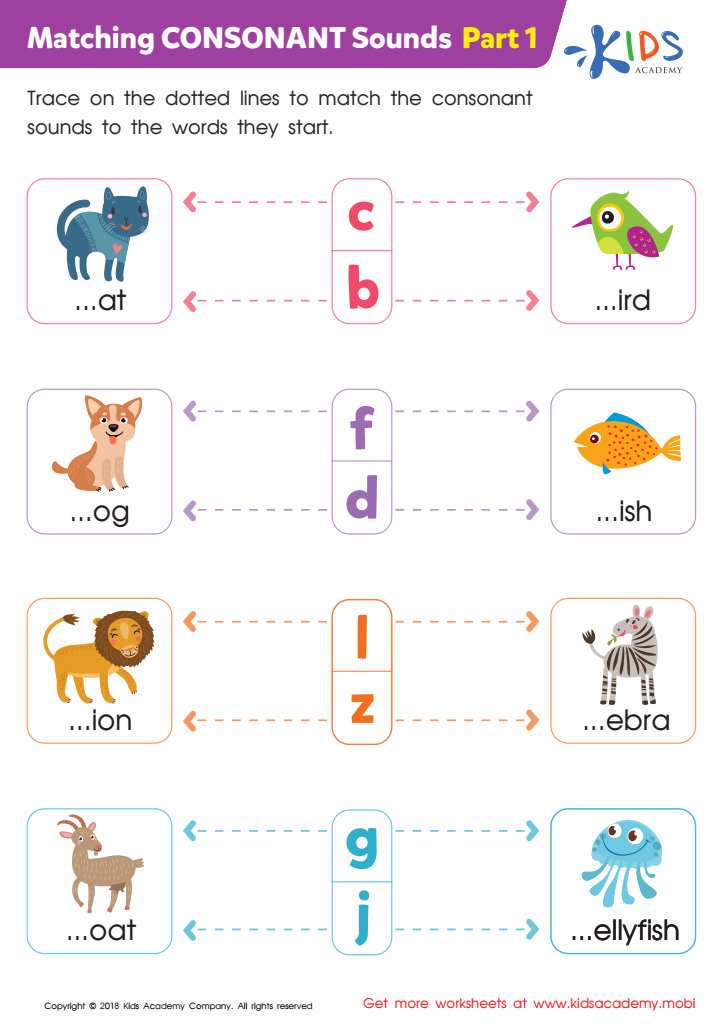
Matching Consonant Sounds: Part 1 Worksheet
Decide which letter matches each word and picture in this fun phonics worksheet. Slide your finger over each word, trying out each letter to check for matches. Once each pair is solved, trace the dotted lines with pencil to complete the printable. Who knew learning could be so enjoyable?
Matching Consonant Sounds: Part 1 Worksheet
Worksheet
Join Kids Academy for Free
Who is primarily going to use this learning content?







Letter-sound correlation, or phonics, refers to the ability to recognize the relationship between written letters and their corresponding sounds. This foundational skill is crucial for early reading success and has lasting impacts on literacy development. For children ages 3-8, who are in their prime learning years, mastery of these correlations is essential.
Firstly, understanding letter-sound relationships helps children decode new words, enabling them to read independently and confidently. Without this skill, children may struggle with reading, leading to frustration and a potential disinterest in learning. When parents and teachers emphasize phonics, children are better prepared to tackle more complex reading and writing tasks in the future.
Secondly, strong phonics skills enhance spelling abilities. When children know how sounds correspond to letters, they are better equipped to spell words phonetically. This not only supports literacy but also boosts their confidence in written communication.
Lastly, early mastery of phonics fosters a positive learning environment. Success in reading at a young age encourages children to be inquisitive and motivated learners. By providing adequate support in letter-sound correlation, parents and teachers lay a strong foundation for a child's lifelong educational journey, ensuring they are well-equipped for future academic challenges.







