Letter-sound recognition Normal Alphabet Worksheets for Ages 3-8
4 filtered results
-
From - To
Enhance your child's reading skills with our "Letter-Sound Recognition Normal Alphabet Worksheets for Ages 3-8". Designed specifically for preschool and early grade students, these engaging worksheets focus on identifying each letter and its corresponding sound. Our colorful, kid-friendly activities allow children to practice and master the basics of phonics, ensuring a solid foundation for reading and writing. Perfect for both classroom and home use, these sheets offer a fun and effective way to strengthen early literacy skills, preparing students for future academic success. Download today and watch your child's confidence soar!
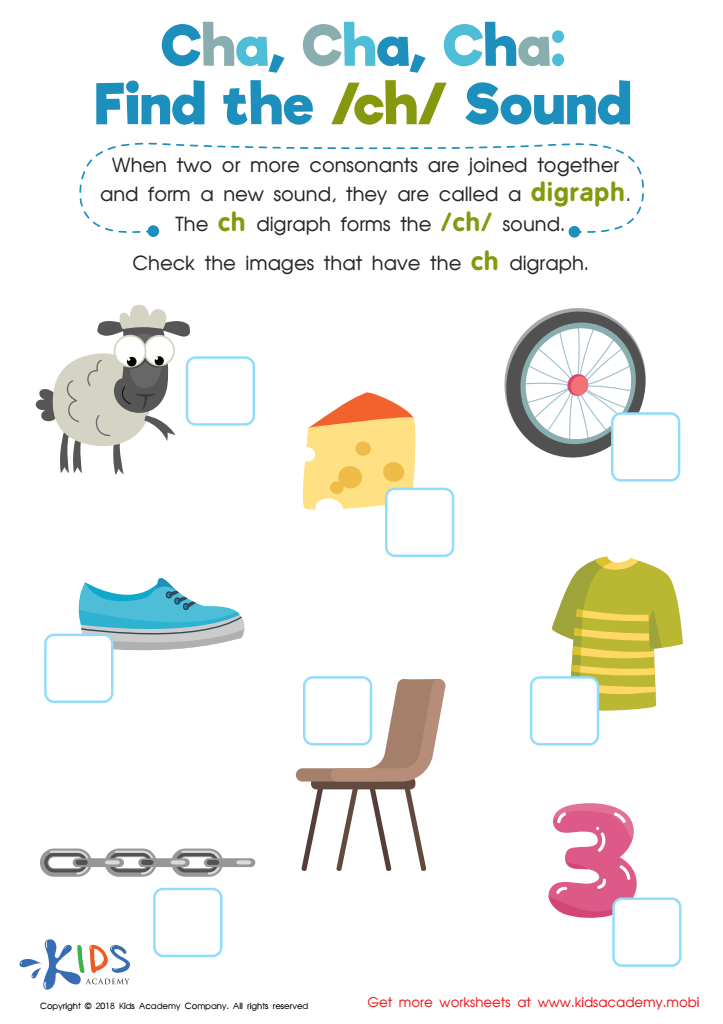
Cha, Cha, Cha: Find the /Ch/ Sound Worksheet
 Assign to My Students
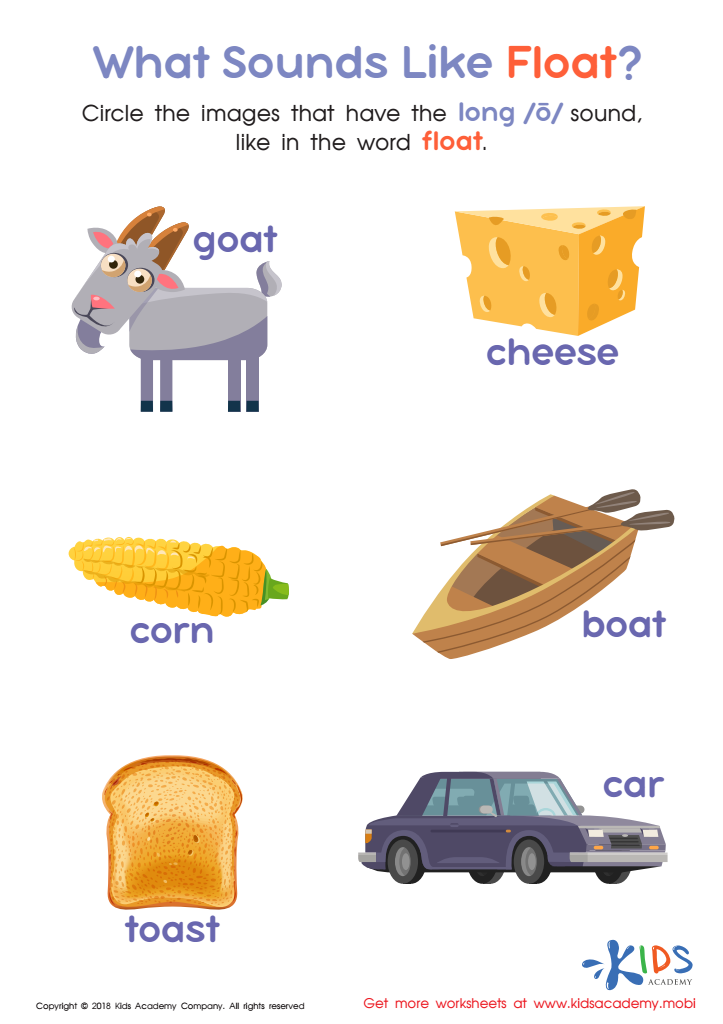
What Sounds Like Float? Worksheet
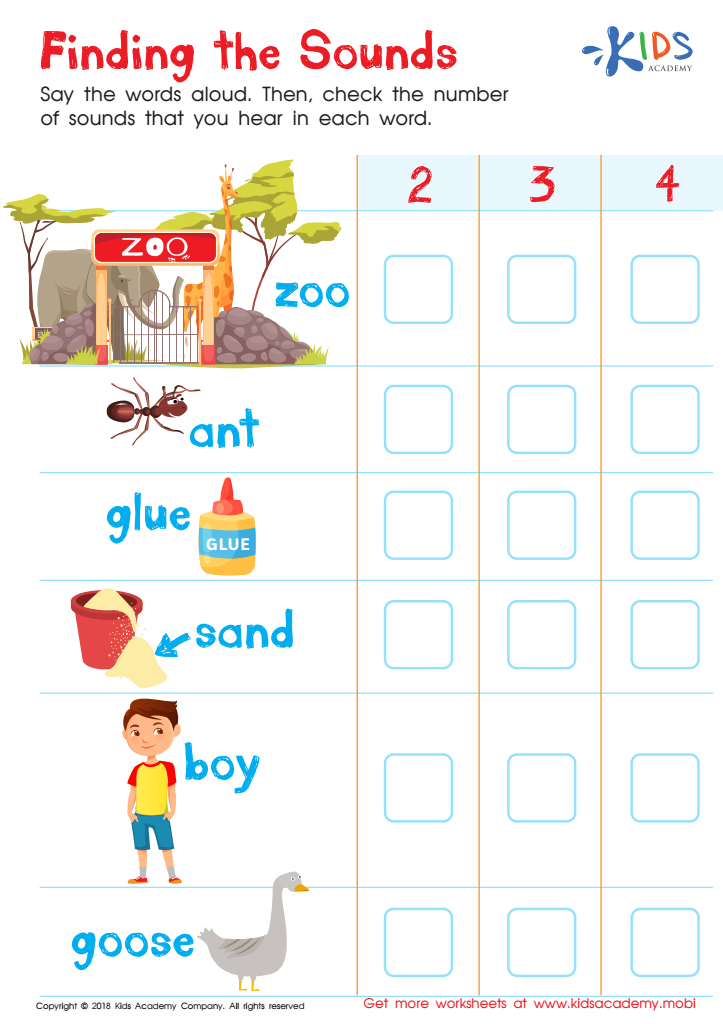
Finding the Sounds Worksheet
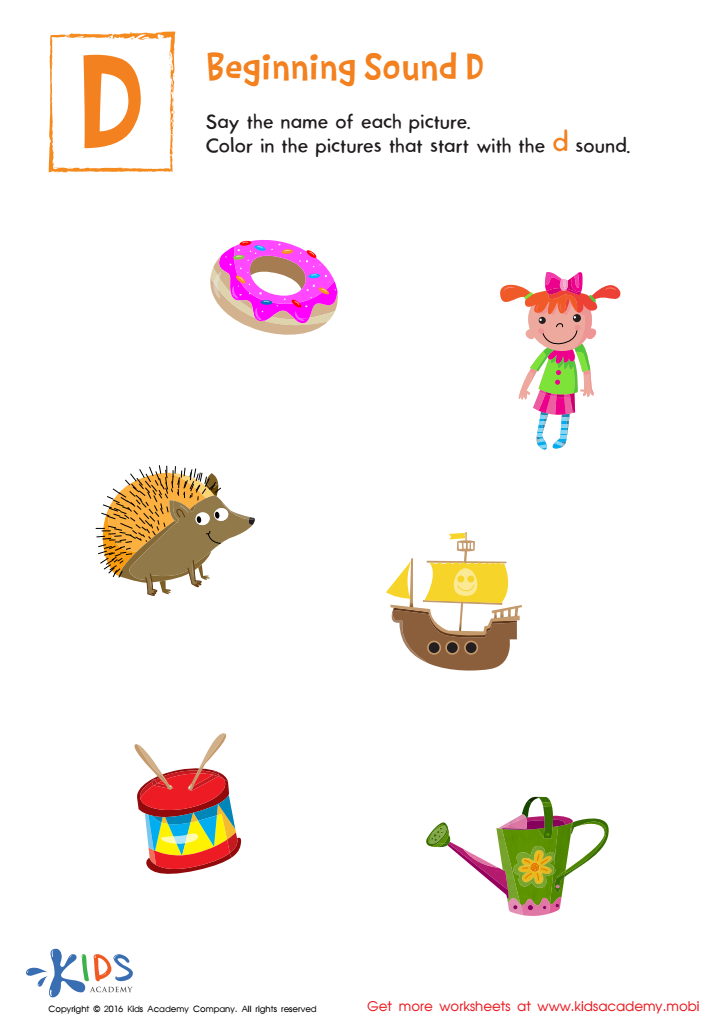
Beginning Sound D Worksheet








Letter-sound recognition is a fundamental building block for literacy, especially in early childhood education for ages 3-8. This skill helps young learners understand that written letters correspond to specific sounds, a concept crucial for developing reading and writing abilities.
First, mastering letter-sound recognition enables children to decode words, which is the process of converting text into speech by sounding out letters and blending them together. This is essential for reading fluency and comprehension. Without a strong grasp of how letters correlate to sounds, children may struggle with reading, which can impact their overall academic achievement.
Second, recognizing letter sounds lays the foundation for spelling. By connecting sounds to their corresponding letters, children learn to spell words phonetically, which is a key step in writing correctly and effectively. This phonetic awareness supports not only spelling but also vocabulary development, as children become more adept at generating and understanding new words.
Third, early literacy skills such as letter-sound recognition are linked to future educational success. Strong early reading skills pave the way for continued learning, critical thinking, and problem-solving abilities. For parents and teachers, fostering these skills helps set children on a path toward lifelong learning and academic confidence.
Overall, ensuring children ages 3-8 master letter-sound recognition fosters literacy development, academic success, and a love for reading and writing, making it a priority for anyone invested in a child's education.







