Phonological awareness Normal Alphabet Worksheets for Ages 3-8
3 filtered results
-
From - To
Introduce your child to the world of letters with our Phonological Awareness Normal Alphabet Worksheets designed for ages 3-8. These engaging and educational worksheets help young learners understand the foundational sound structures that form words, fostering early reading skills. Our expertly crafted activities cater to various learning stages, making it easy for children to grasp each letter’s sound and perception. Perfect for both classroom and home use, these captivating worksheets make learning the alphabet fun and interactive. Visit our website to download these beneficial resources and provide your child with an excellent start to their literacy journey.
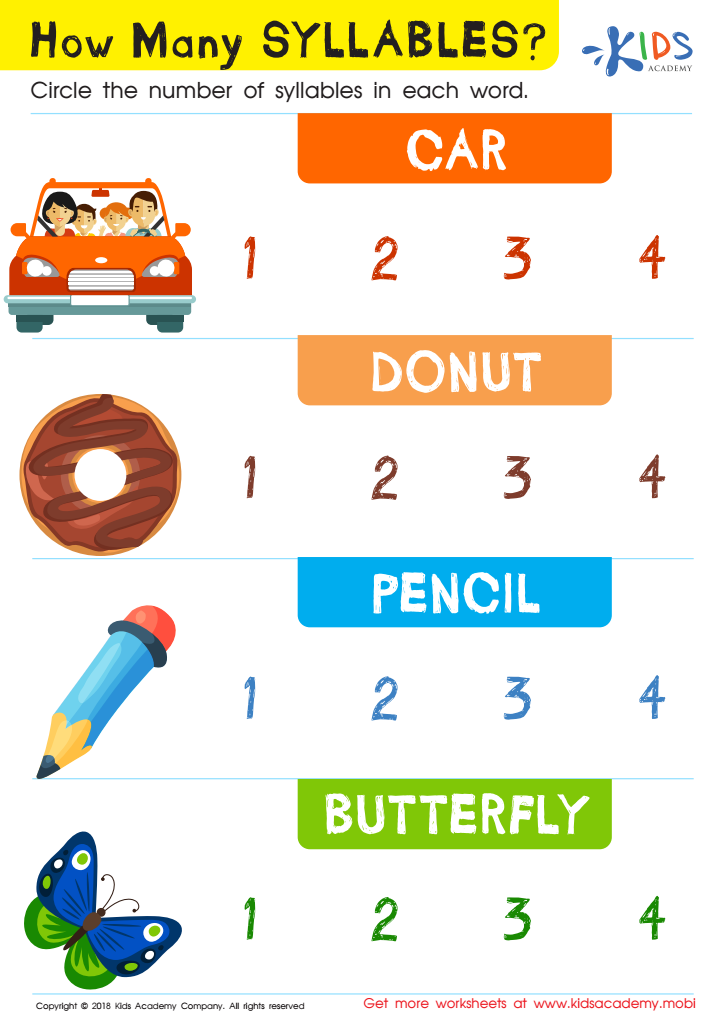
How Many Syllables? Worksheet
 Assign to My Students
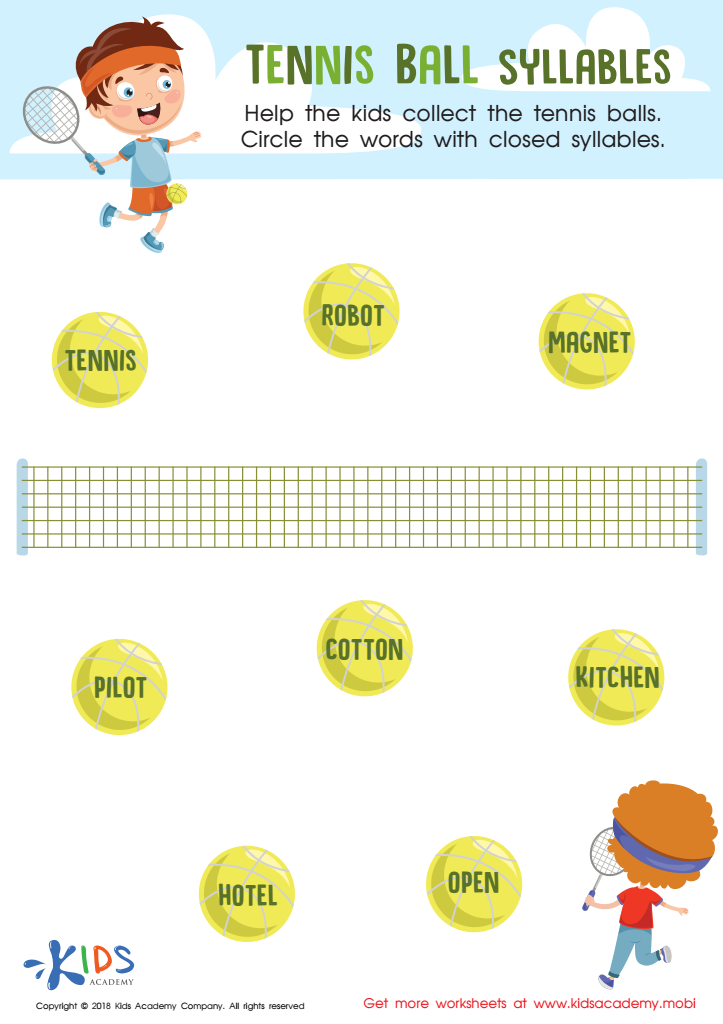
Tennis Ball Syllables Worksheet
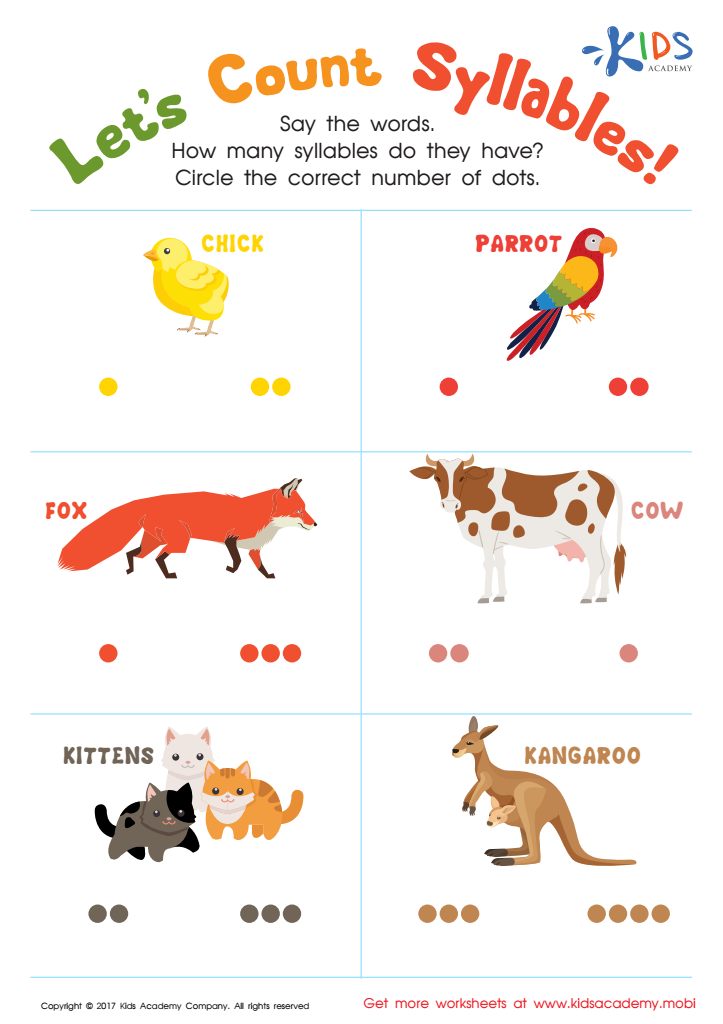
Lets Count Syllables Worksheet





Phonological awareness is critical for young children as it lays the groundwork for their reading and writing skills. For ages 3-8, this early literacy skill enables children to recognize and manipulate sounds in spoken language. Parents and teachers should prioritize phonological awareness because it directly impacts a child's ability to decode words, an essential step in learning to read. Understanding and identifying the sounds in words, such as rhyming and recognizing beginning sounds, help children link sounds to their corresponding letters in the normal alphabet. Without this foundation, children can struggle with more complex literacy skills later on, such as reading fluency and comprehension.
Moreover, phonological awareness contributes to a child's overall language development, enhancing their ability to speak clearly and understand spoken language. For teachers, integrating activities that develop these skills into their curriculum can create a more robust and engaging learning environment. Parents can support their child's development at home through playful activities like nursery rhymes, clapping syllables, or reading aloud. Early intervention and support in these formative years ensure children are on the path to becoming confident, independent readers and communicators, bolstering their academic success and boosting their self-esteem. Thus, attention to phonological awareness ensures foundational literacy skills are well established.







