Rhyming skills development Normal Alphabet Worksheets for Ages 3-8
4 filtered results
-
From - To
Enhance your child's literacy journey with our "Rhyming Skills Development Worksheets" designed for ages 3-8. These thoughtfully crafted worksheets use the normal alphabet to help young learners grasp essential rhyming concepts through engaging activities. Perfect for early grade students, each worksheet blends fun and education, fostering phonemic awareness and vocabulary growth. With age-appropriate exercises tailored to different learning stages, our resources meet the needs of all children. Spark creativity and boost their reading skills as they delight in rhyming challenges. Explore our collection today to give your child a head start in mastering the magic of rhymes!

Rhyming Words Rhyming Worksheet
 Assign to My Students
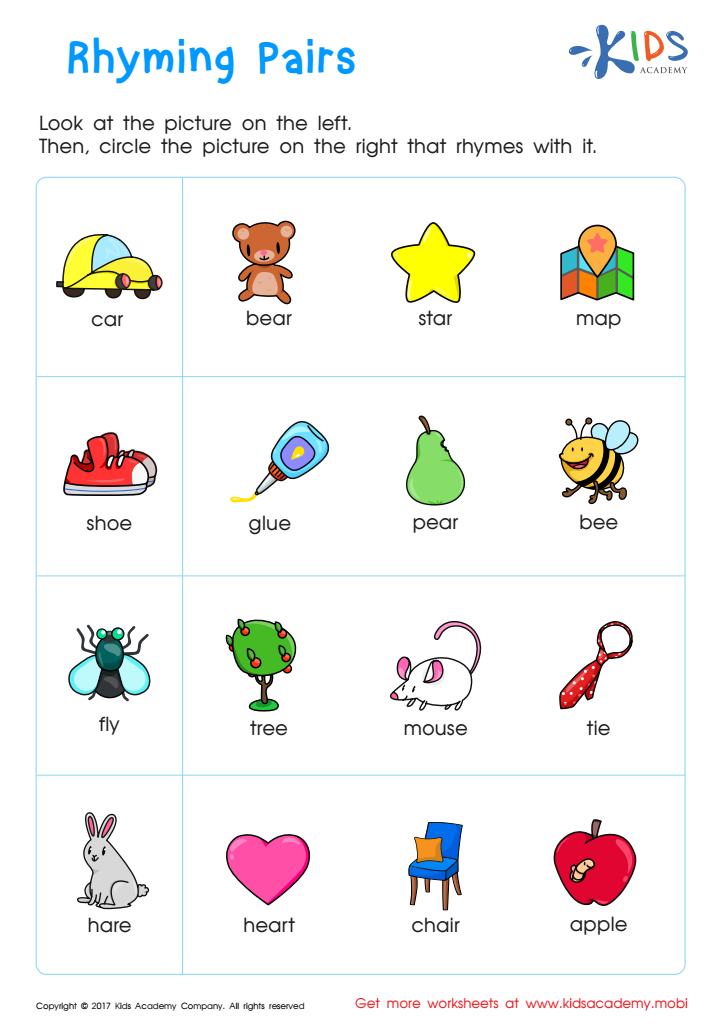
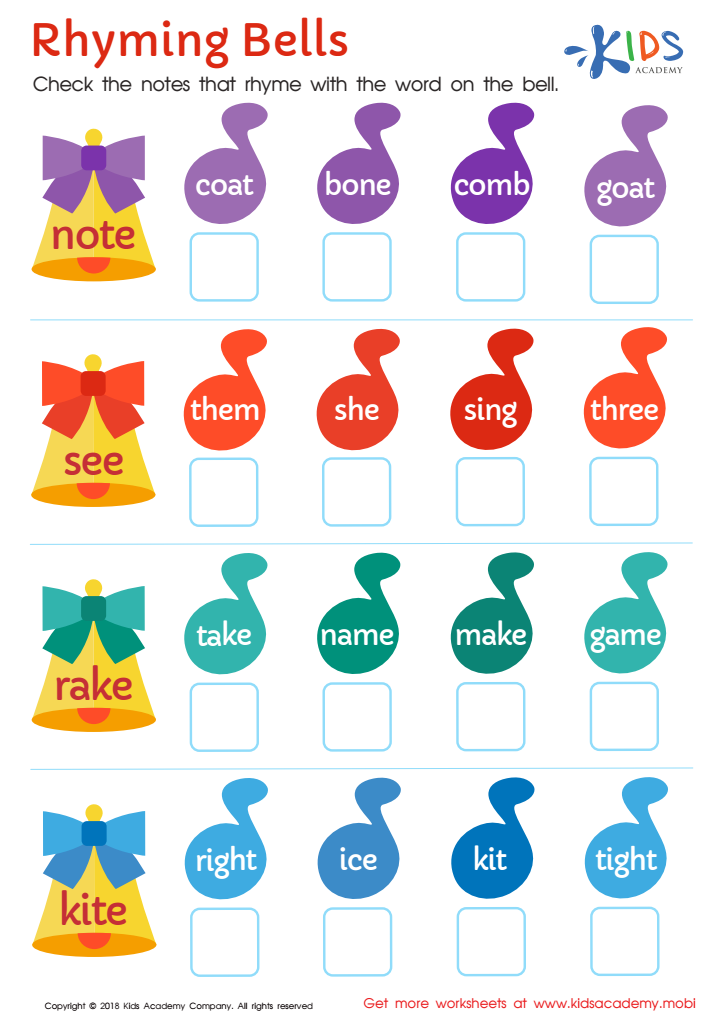
Rhyming Bells Worksheet

First Words: Picture Rhymes Worksheet







Rhyming skills are crucial for the early literacy development of children ages 3-8. When parents and teachers prioritize rhyming, they're laying a foundation for strong phonological awareness, which is vital for reading success. Phonological awareness is the ability to recognize and manipulate the sounds of spoken language, and rhyming is one of its fundamental components.
Firstly, rhyming helps children recognize sound patterns in words, making it easier for them to decode new words when they start reading. It enhances their ability to hear, identify, and manipulate phonemes, which are the smallest units of sound. This skill is directly linked to their ability to spell, read, and write effectively.
Secondly, engaging in rhyming activities boosts children's listening and speaking skills. Reciting nursery rhymes, singing songs, and playing rhyming games encourages interactive and enjoyable learning experiences. These activities also enhance vocabulary and language skills by exposing children to new words and their meanings.
Finally, rhyming fosters a sense of rhythm and auditory discrimination. It helps kids distinguish between similar sounds, improving their overall cognitive and linguistic abilities. Therefore, ensuring that children develop strong rhyming skills sets the stage for continued academic achievement and a lifelong love of reading.







