
Letter recognition Normal Letter Recognition Worksheets for Ages 3-8 - Page 2
37 filtered results
Difficulty Level
Grade
Age
-
From - To
Subject
Activity
Standards
Favorites
With answer key
Interactive
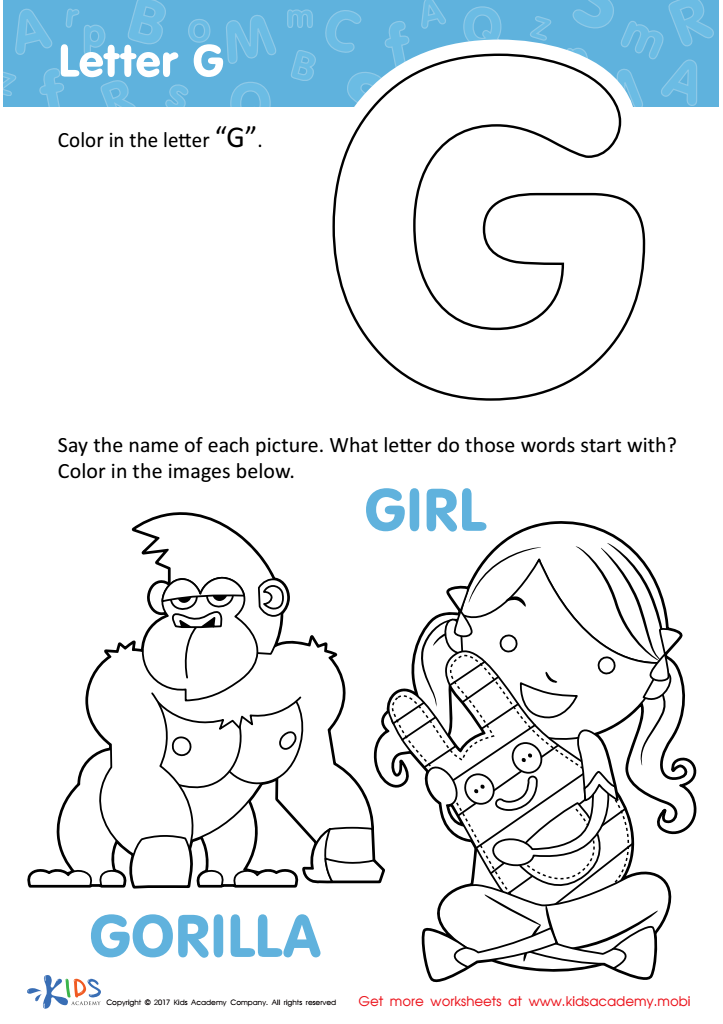
Letter G Coloring Sheet
This "G" coloring page encourages creativity and teaches kids the letter "G" sound. With its fun visuals and familiar words, it's sure to excite your child. Plus, you can talk about the letter’s sound with the pictures given.
Download (PDF)
 Assign to My Students
Assign to My Students
Letter G Coloring Sheet
Worksheet
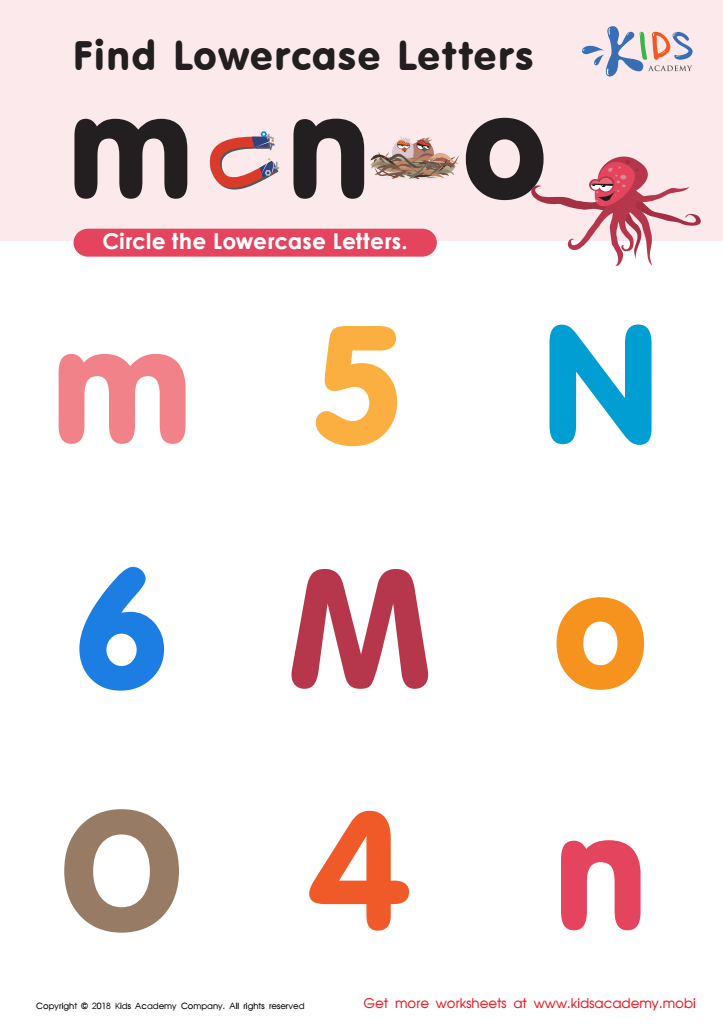
Find Lowercase Letters m n o Worksheet
Help your child find and circle the lowercase letters m, n, and o in this printable worksheet. With colorful texts and fun pictures, this exercise is sure to engage and entertain your child. Guide them in correctly identifying the lowercase letters m, n, and o in the free PDF.
Find Lowercase Letters m n o Worksheet
Worksheet
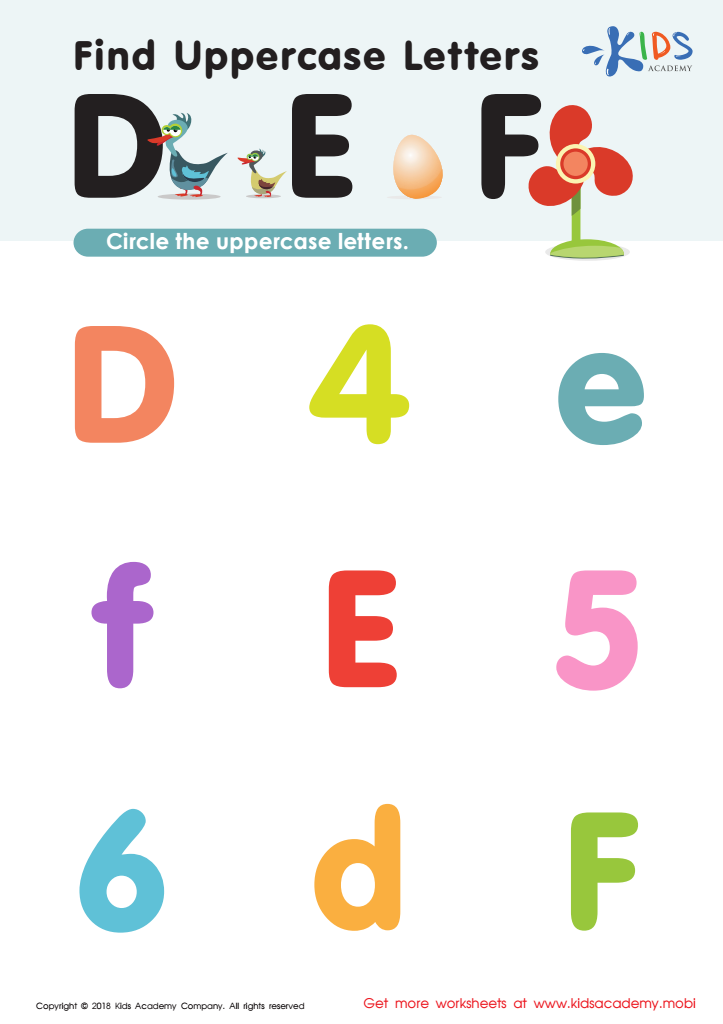
Find Uppercase Letters D, E, and F Worksheet
Follow the duckling and mom to find the capital letters D, E and F on this fun alphabet worksheet! Kids learn to read and recognize letters, while differentiating them from numbers. For extra challenge, don't let the numbers fool them. The pictures above remind them of each letter's sound. Have fun and get letter-savvy!
Find Uppercase Letters D, E, and F Worksheet
Worksheet
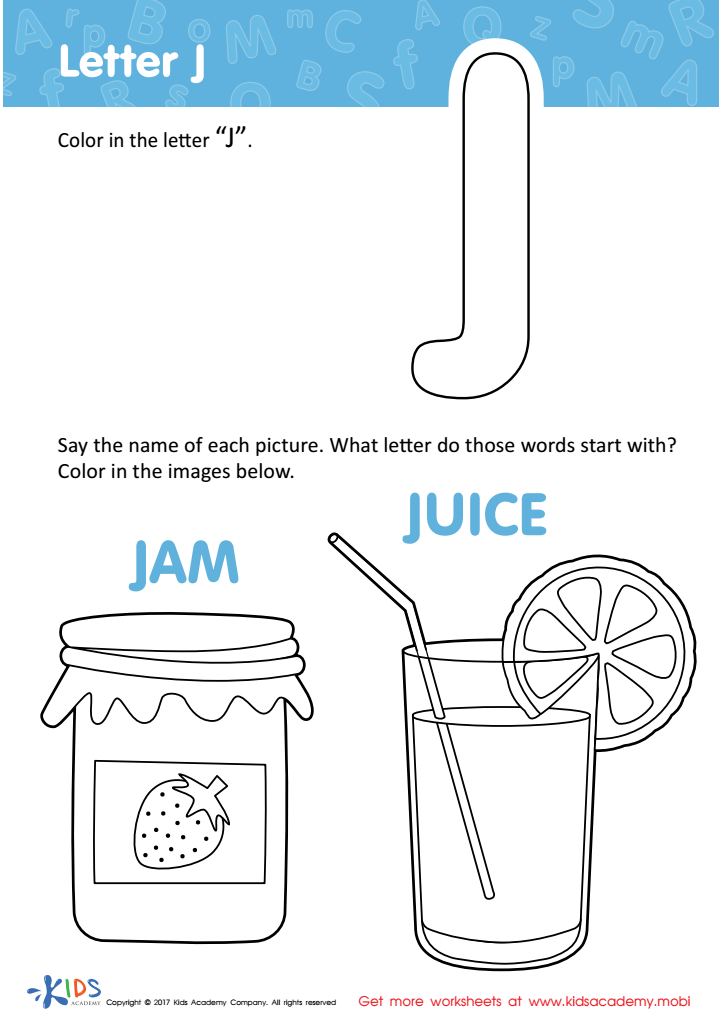
Letter J Coloring Sheet
Practice the letter 'J' with your little one with this fun coloring page! Pictures of jar, juice, jam and jelly make it an enjoyable experience for kids. Learning the letter and coloring is fun for even the youngest learners.
Download (PDF)
Assign to My Students
Assign to My Students
Letter J Coloring Sheet
Worksheet
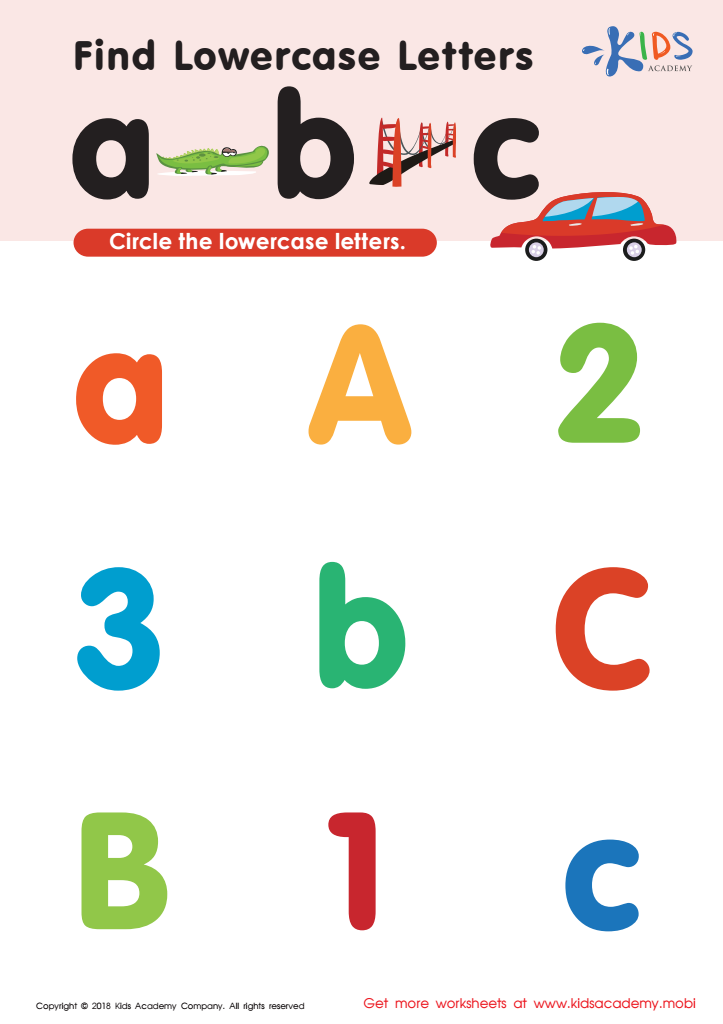
Find lowercase letters a b c Worksheet
Help your child identify lowercase letters with this worksheet. Carefully look at each letter and have your child circle the lowercase ones. This exercise is vital in helping them understand the alphabet and the difference between lower and uppercase letters.
Find lowercase letters a b c Worksheet
Worksheet
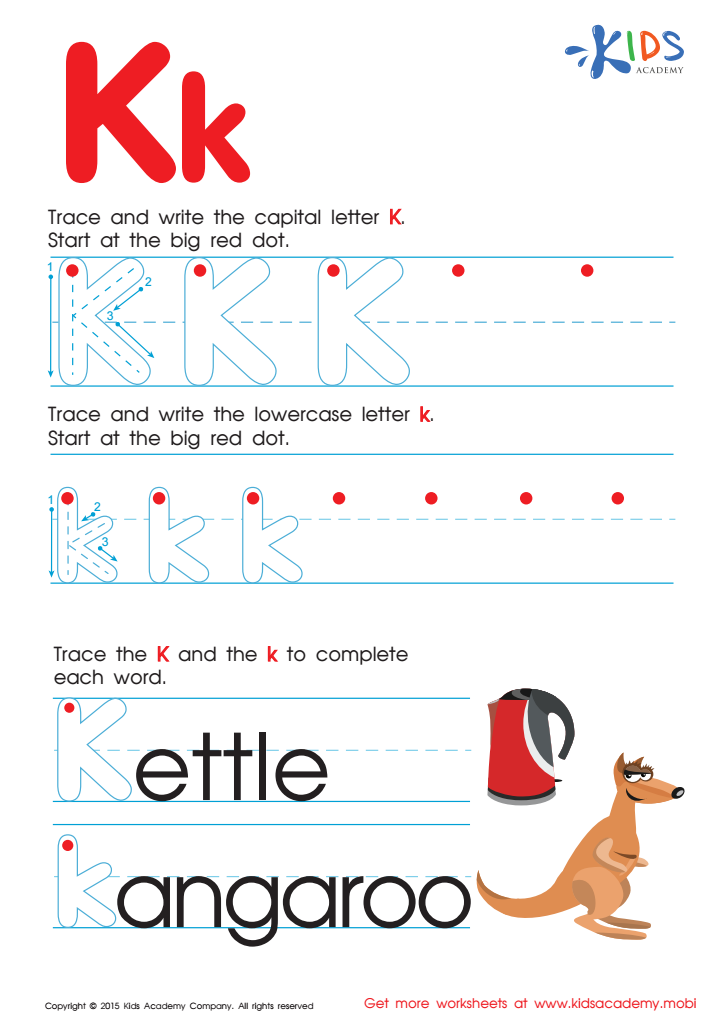
Letter K Tracing Page
Trace and write the letter K; start at the big red dot. Use it to complete words like "Kettle" and "Kangaroo". Visit Kids Academy for more free alphabet worksheets for kindergarten.
Letter K Tracing Page
Worksheet

Find Lowercase Letters v w x Worksheet
If your child doesn't know the alphabet, get them this helpful worksheet. It's an easy exercise to build their understanding of the alphabet and lowercase letters. Find the letters v, w, and x among other uppercase letters and numbers in the downloadable PDF.
Find Lowercase Letters v w x Worksheet
Worksheet
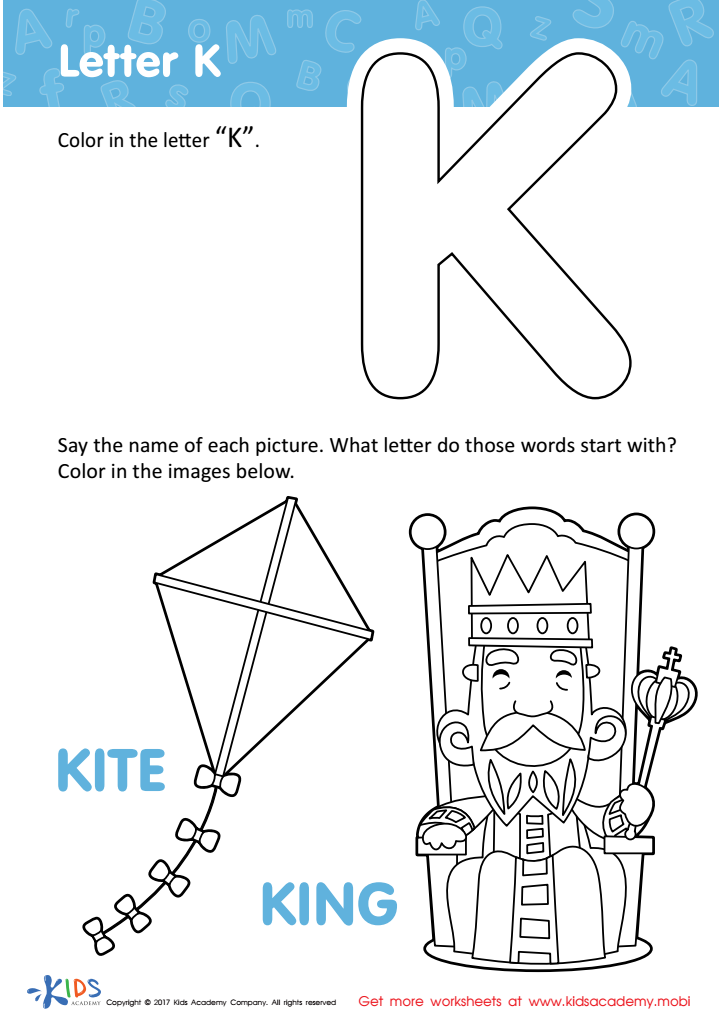
Letter K Coloring Sheet
This letter K coloring page captivates your child's creativity while learning the letter! Showcasing a king and kite, common words for their age group, it's sure to spark their imagination.
Download (PDF)
Assign to My Students
Assign to My Students
Letter K Coloring Sheet
Worksheet
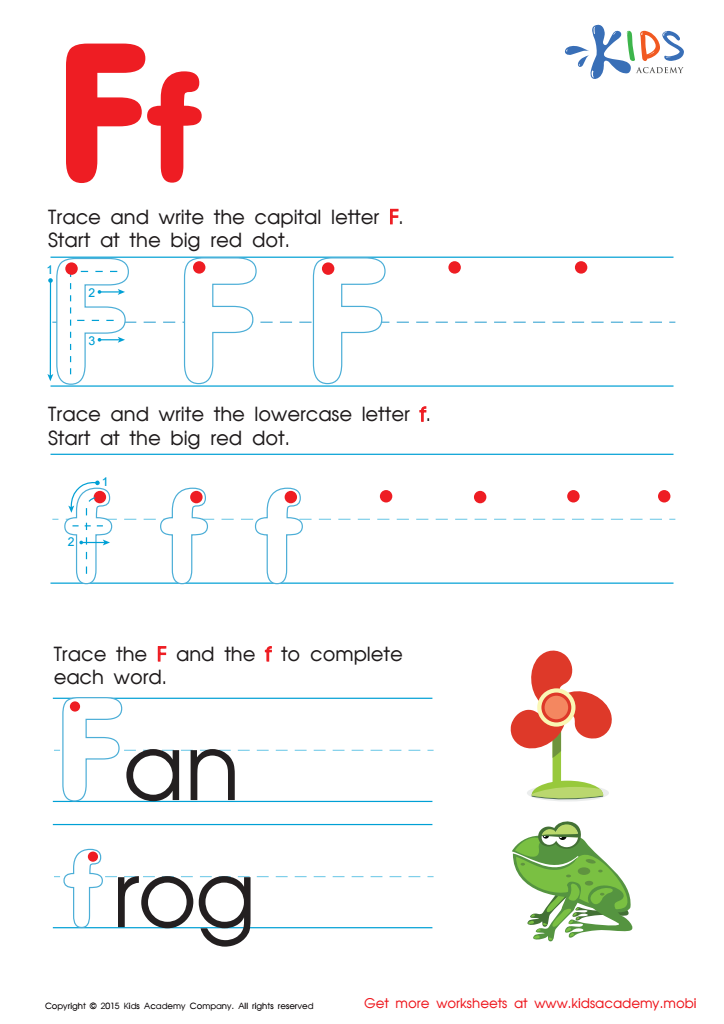
Letter F Tracing Page
Trace "F" with your pencil! Start at the red dot and draw lines — it's fun! Check it out — it looks great! Keep practicing to make it even better. Then, try completing words. Help out the broken fan and funny frog! Get free alphabet worksheets and activities for your kids. Come see our new tracing pages!
Letter F Tracing Page
Worksheet
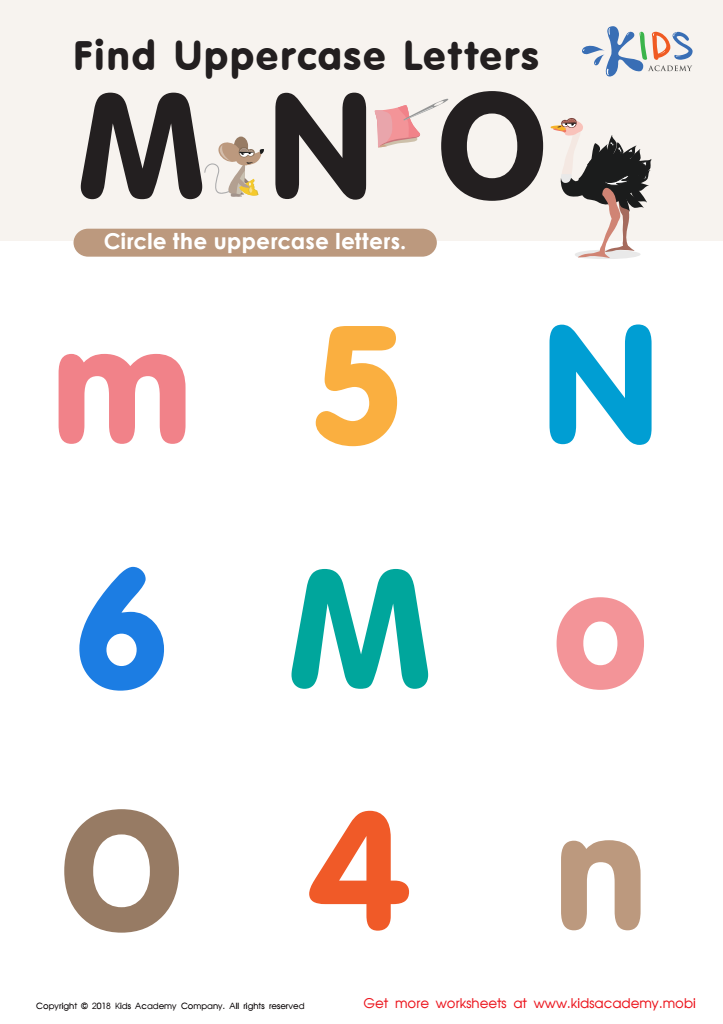
Find Uppercase Letters M, N, and O Worksheet
Kids love puzzles! This one scrambles up letters and numbers. Help your learner spot the capital letters, then search for the uppercase M, N, and O. For an extra challenge, cover the large letters and have kids circle the capitals using only beginning letter sounds.
Find Uppercase Letters M, N, and O Worksheet
Worksheet
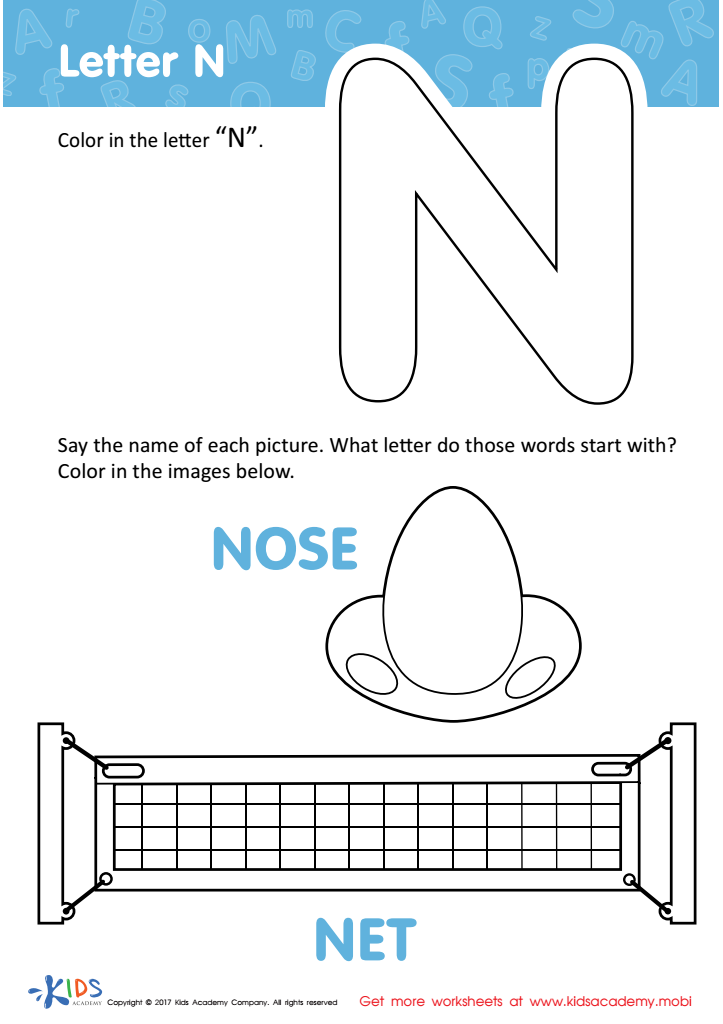
Letter N Coloring Sheet
Let your child get creative and learn the alphabet with this letter "N" coloring page! It's a fun way to recognize the letter, featuring a body part all kids know. Coloring and reinforcing recognition of "N" will help your child have fun while learning!
Download (PDF)
Assign to My Students
Assign to My Students
Letter N Coloring Sheet
Worksheet

Letter D Tracing Page
Trace and write capital and lowercase letter "D" with our free printable alphabet worksheet! Be careful not to mix up "b" and "d" - just look at the ducks and write their first letter. The dolphin wants to join the fun too - do you like dolphins? Get more fun worksheets and activities at Kids Academy!
Letter D Tracing Page
Worksheet
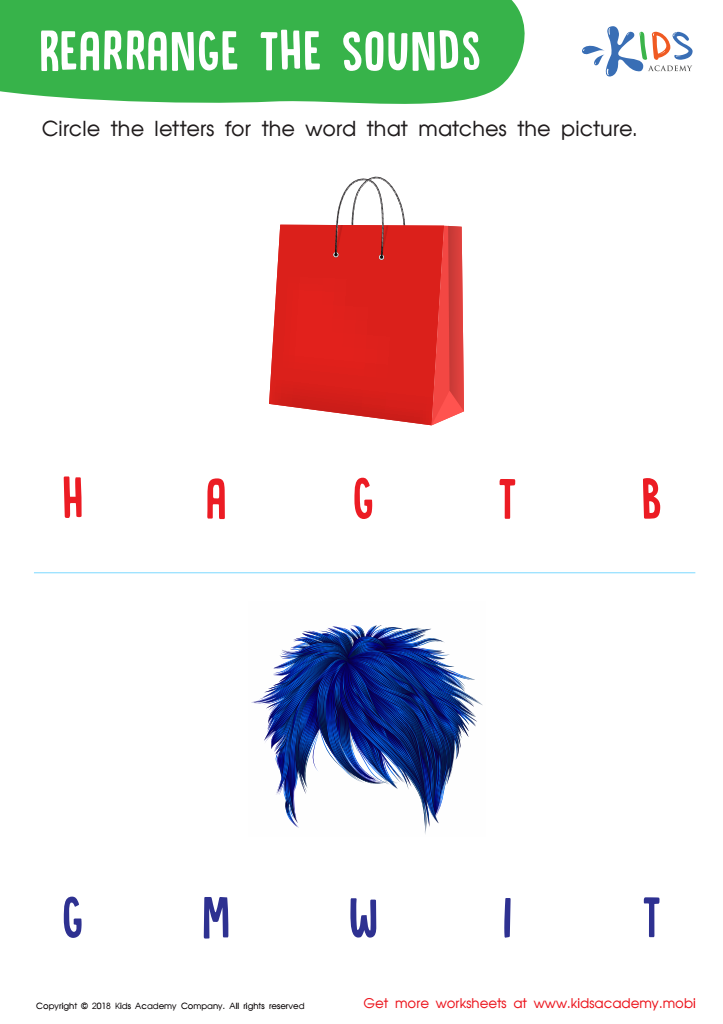
Rearrange the Sounds Worksheet
Ask students if they can identify the objects in the worksheet and spell the words. Guide them to find and circle the letters that match the picture. This exercise should be easy-peasy for advanced spellers.
Rearrange the Sounds Worksheet
Worksheet
Join Kids Academy for Free
Who is primarily going to use this learning content?








Letter recognition is a foundational skill for early literacy development, making it crucial for parents and teachers to prioritize this in children ages 3-8. Understanding letters is the first step in reading and writing. When children can recognize both uppercase and lowercase letters, they build the foundational skills necessary for phonemic awareness, spelling, and vocabulary development. This skill is not just about memorizing letters; it enhances a child's ability to associate letters with sounds, essential for reading fluency later on.
Moreover, letter recognition affects a child's confidence and motivation in learning. Children who feel competent in identifying letters are more likely to engage with books and reading activities, fostering a love for literacy that can last a lifetime. Additionally, early letter knowledge supports academic achievement across various subjects, as literacy skills are intertwined with overall learning.
Engaging activities, such as interactive games and storytelling, can make learning letter recognition enjoyable and effective. By fostering this skill in young learners, parents and teachers play a pivotal role in shaping not only a child’s academic abilities but also their enthusiasm for learning. Ultimately, strong letter recognition skills lay the groundwork for future educational success.








