Vocabulary development Normal Letter Sounds Worksheets for Ages 3-8
6 filtered results
-
From - To
Enhance your child's vocabulary with our engaging Normal Letter Sounds Worksheets designed specifically for ages 3-8! These worksheets focus on phonetic awareness, helping young learners connect letters with their corresponding sounds. By incorporating fun and interactive exercises, children will develop a stronger understanding of vocabulary through distinct activities that promote reading and language skills. Our worksheets encourage effective learning through pictures and simple words, making it easy for kids to recognize and recall new vocabulary. Ideal for home or classroom use, these resources support early literacy and lay the foundation for a lifelong love of reading. Download and start learning today!
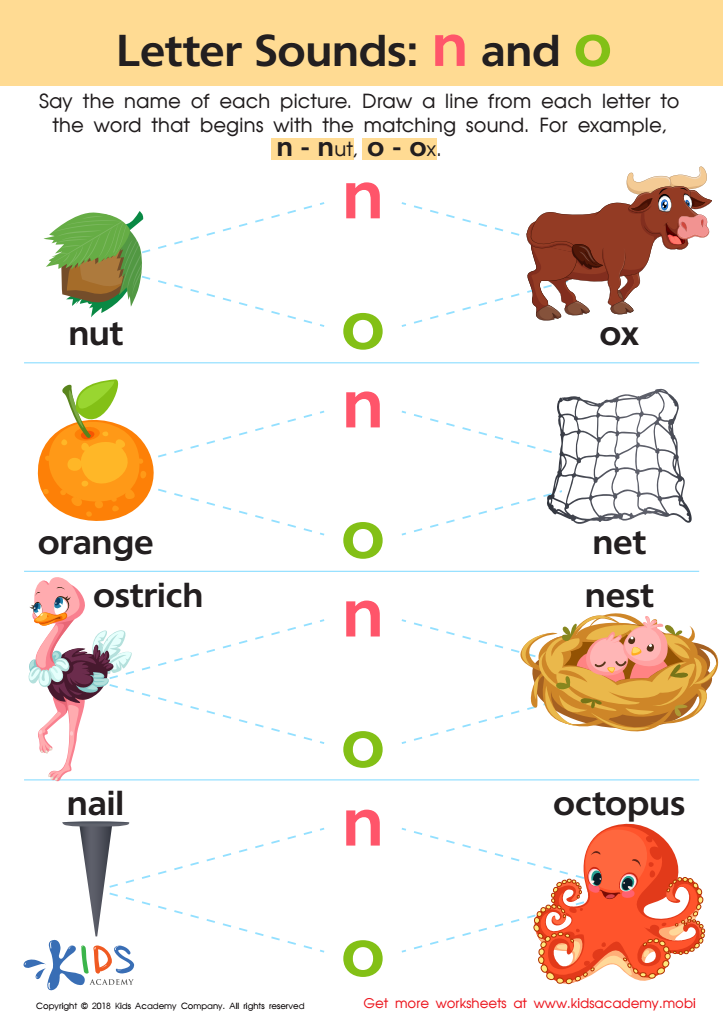
Letter N and O Sounds Worksheet
 Assign to My Students
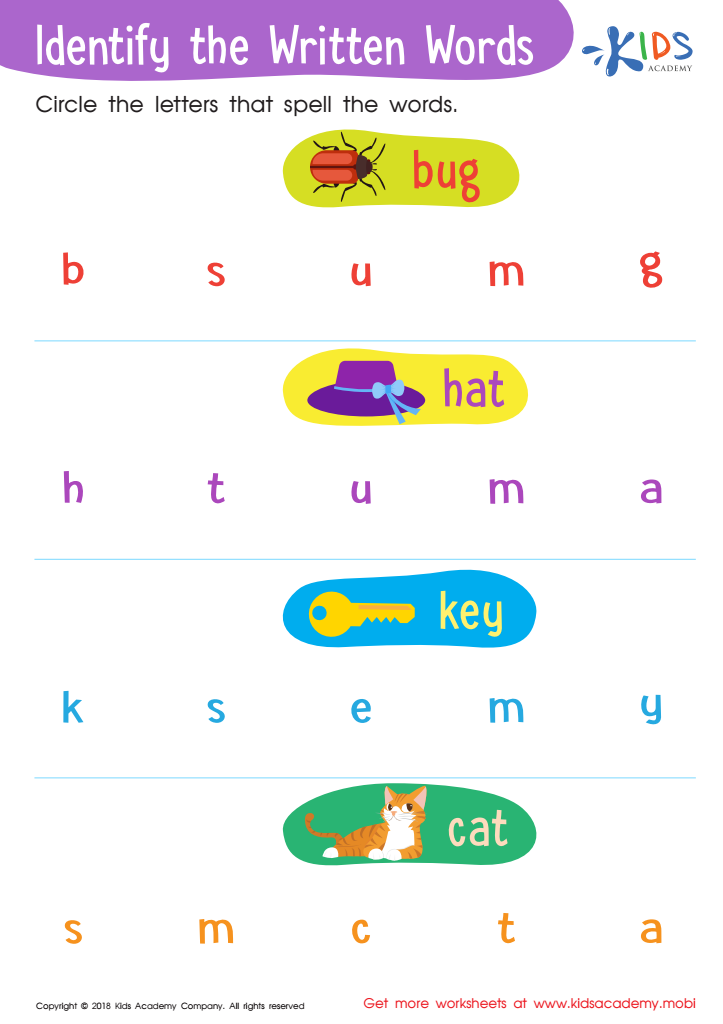
Identify the Written Words Worksheet
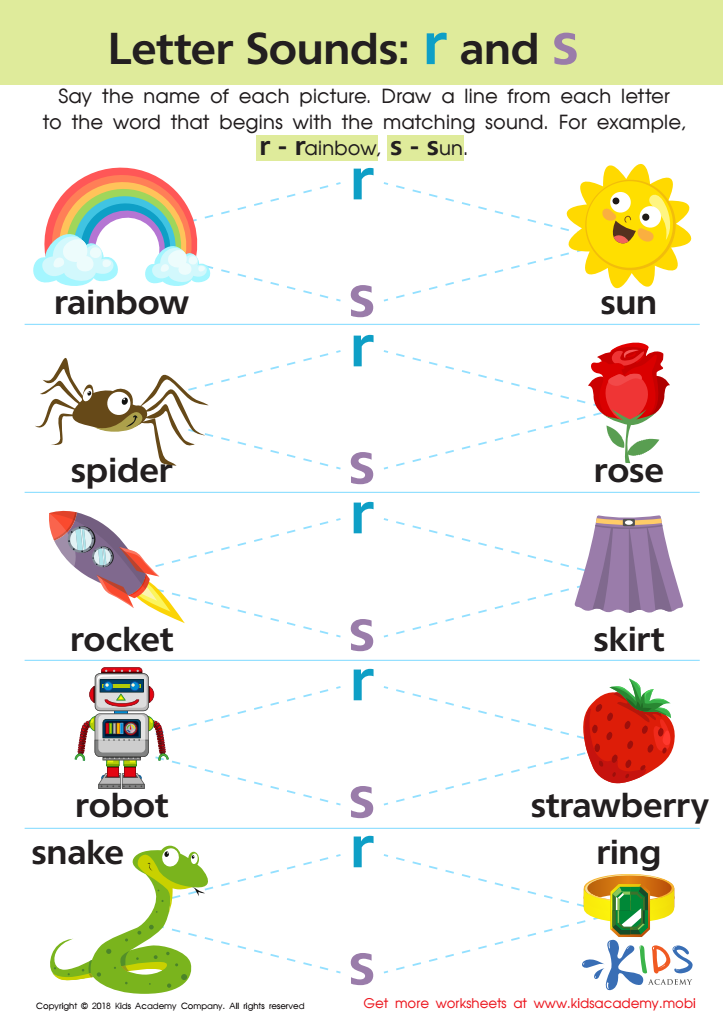
Letter R and S Sounds Worksheet
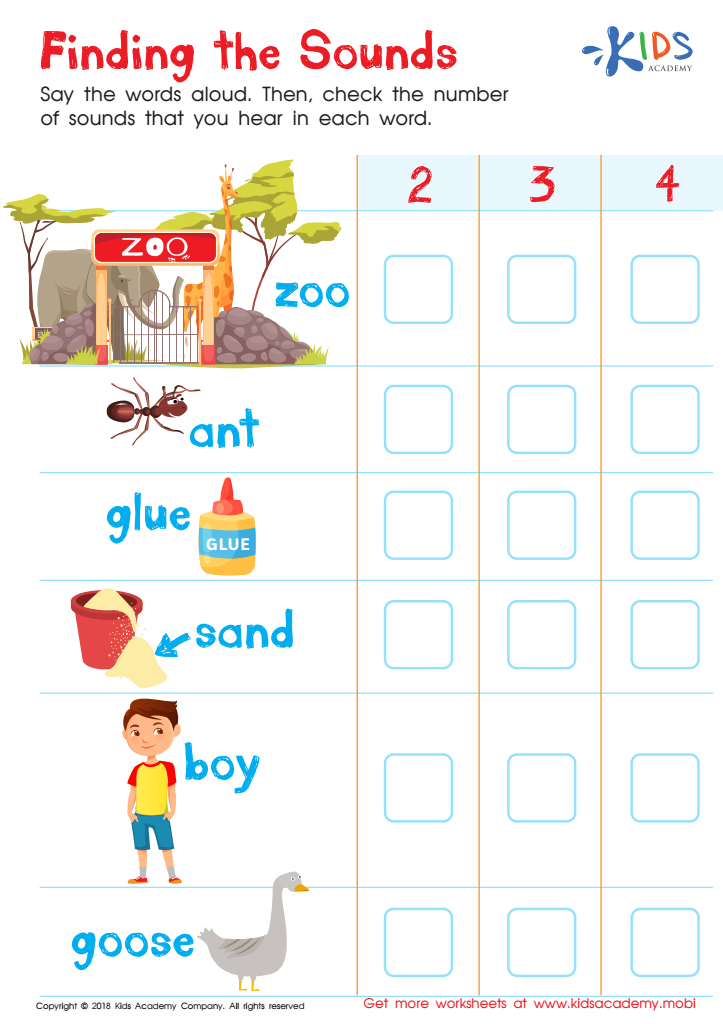
Finding the Sounds Worksheet
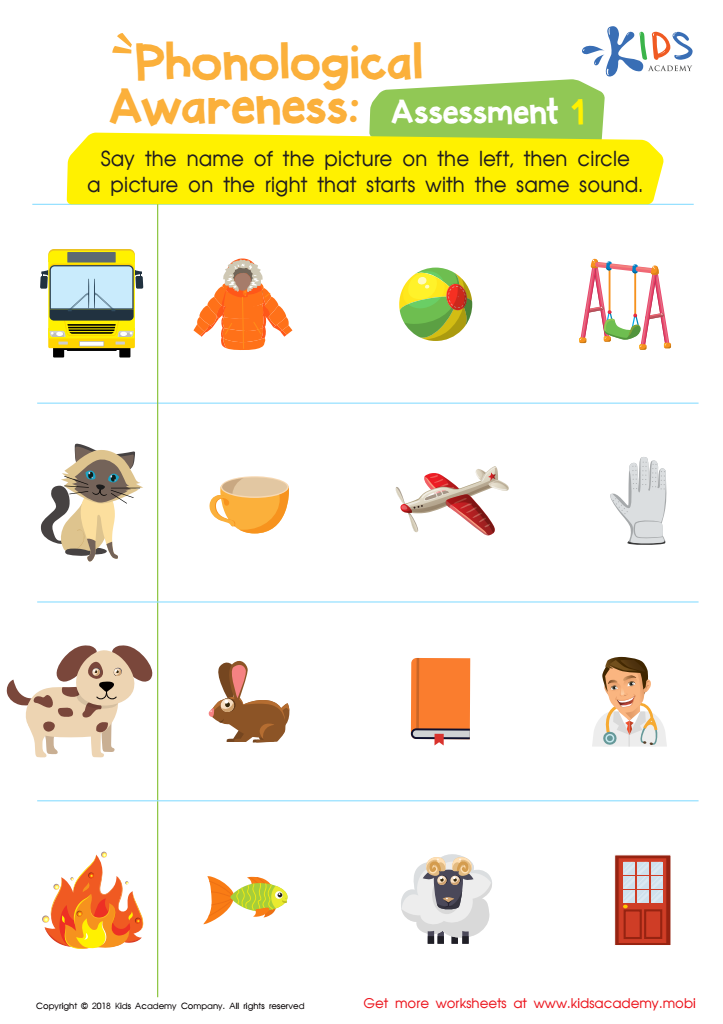
Phonological Awareness: Assessment 1 Worksheet
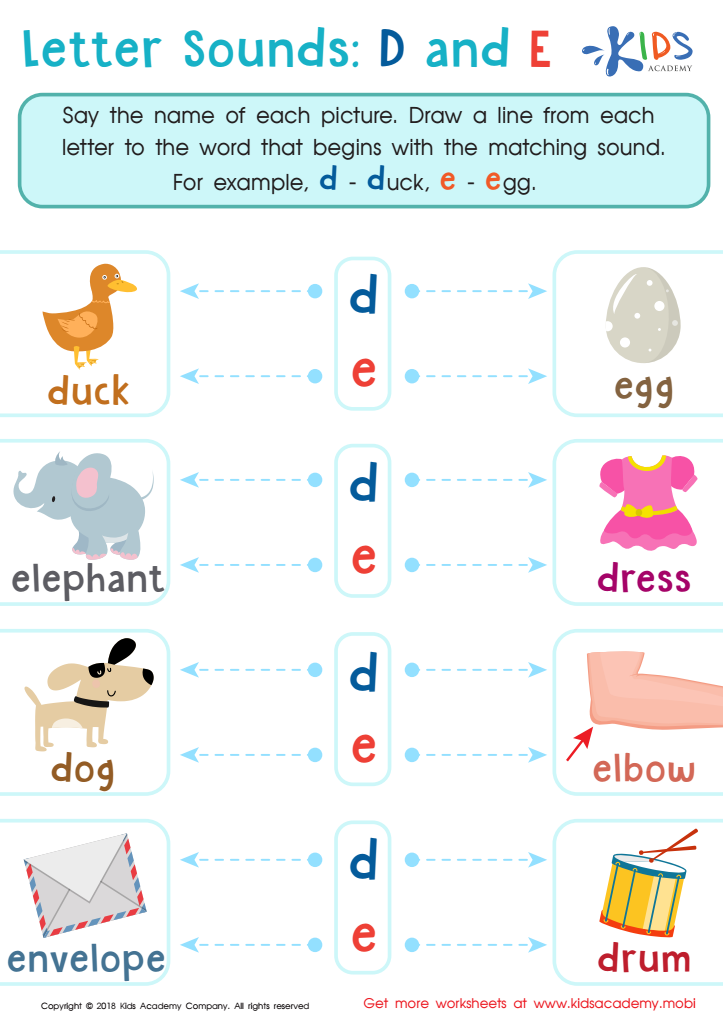
Letter D and E Sounds Worksheet








Vocabulary development and understanding normal letter sounds are crucial for children aged 3-8, as these are foundational skills for literacy, communication, and overall cognitive development. During these formative years, children are rapidly acquiring language skills that shape their ability to express thoughts, engage in conversations, and comprehend the world around them.
Parents and teachers should care about vocabulary development because a rich vocabulary enhances reading comprehension, which is essential for academic success. Children who are well-versed in different words can better understand themes, ideas, and content across subjects, making learning more meaningful. Additionally, exposure to a diverse range of words improves children's ability to articulate ideas clearly, thereby boosting their confidence in both spoken and written communication.
Understanding normal letter sounds (phonics) is equally important, as it forms the bedrock for reading fluency. As children learn to associate sounds with letters, they develop the skills necessary to decode and read words independently. Mastery in this area lays the groundwork for a lifelong love of reading and learning.
In summary, a strong focus on vocabulary and phonics fosters not only literacy but also critical thinking, creativity, and effective communication skills, all of which are essential for success in life.






