Sound differentiation Normal Phonics Worksheets for Ages 3-8
3 filtered results
-
From - To
Unlock your child's reading potential with our Sound Differentiation Normal Phonics Worksheets designed for ages 3-8. These engaging worksheets make phonics exciting, featuring lively illustrations and interactive exercises that enhance sound recognition. Tailored for early learners, our resources help children distinguish sounds through playful activities that reinforce fundamental phonics skills. By mastering sound differentiation, kids will build a strong foundation for reading and writing. Perfect for home or classroom use, our worksheets foster independent learning while ensuring skill development in a fun way. Explore our collection today and watch your child thrive as they embark on their phonics journey!
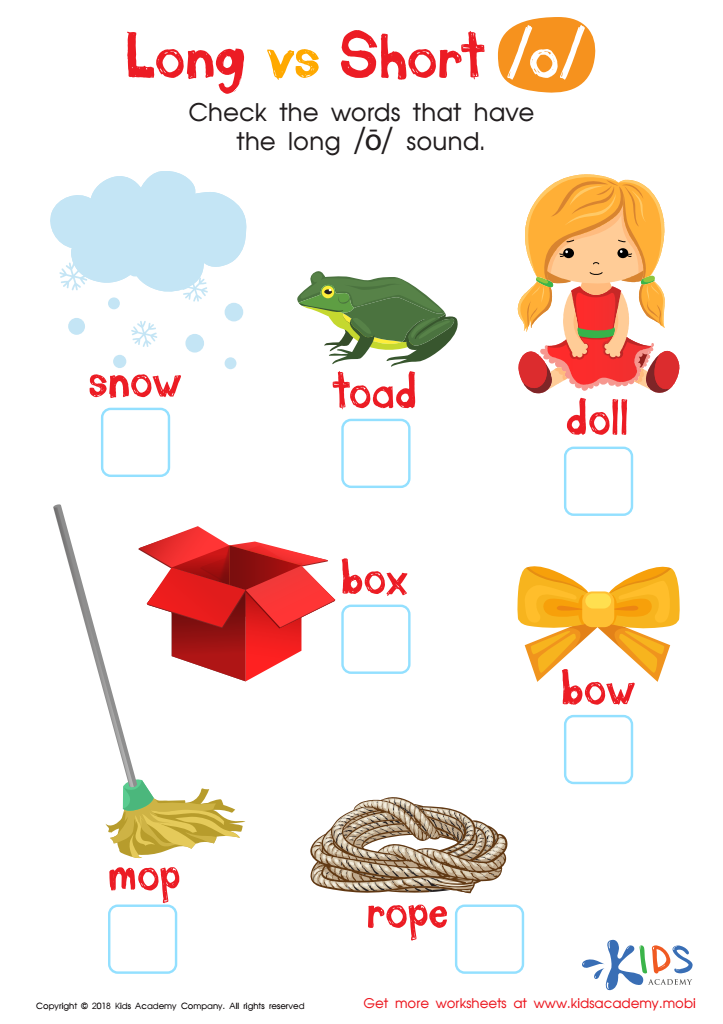
Long vs Short O Reading Worksheet
 Assign to My Students
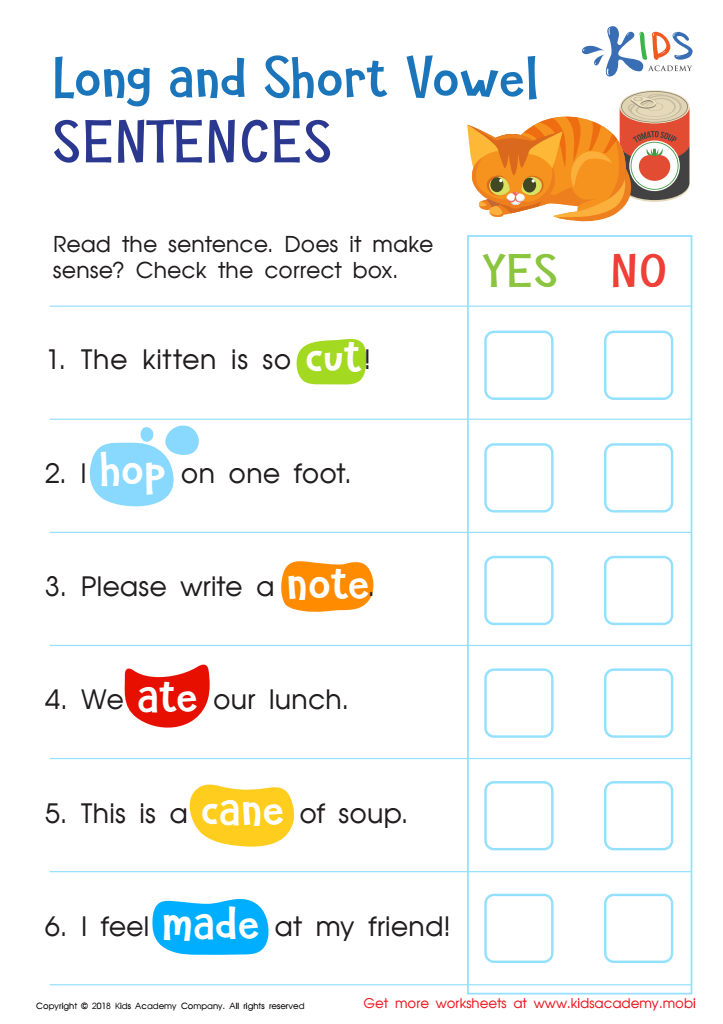
Long and Short Vowel Sentences: Assessment Worksheet
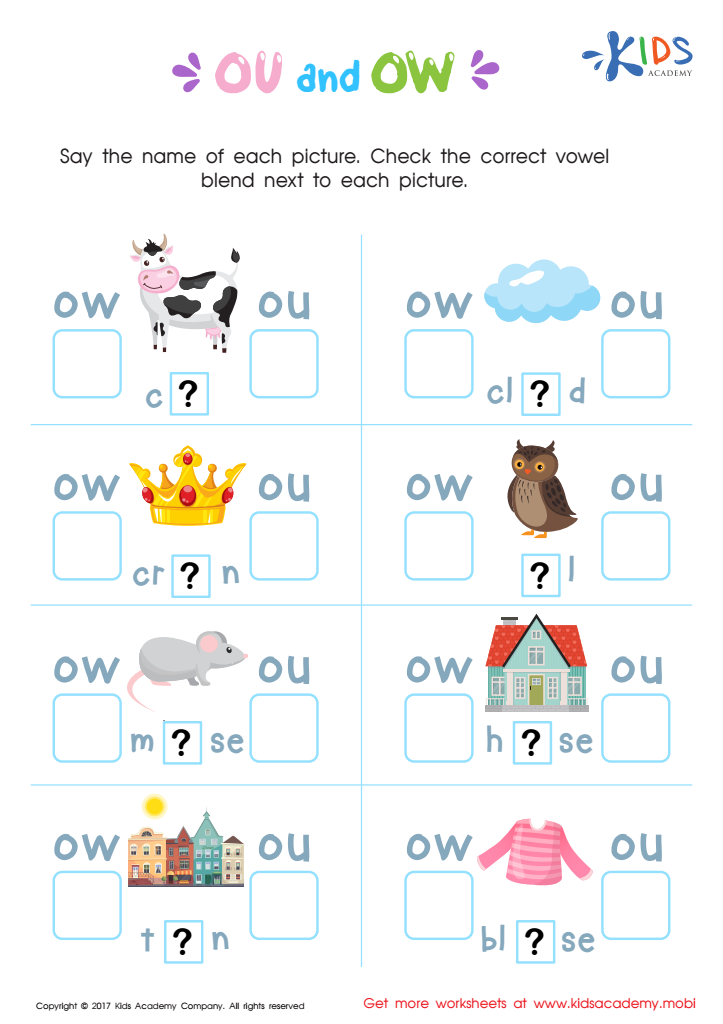
OU and OW Words Worksheet








Sound differentiation and Normal Phonics are crucial for early childhood literacy development, particularly for children aged 3-8. During these formative years, children are actively developing their language skills and phonemic awareness. Understanding sound differentiation helps them differentiate between similar sounds, an essential skill for reading and spelling.
When parents or teachers prioritize sound differentiation in conjunction with Normal Phonics, they create a strong foundation for children to decode words effectively. This foundation supports their ability to recognize letters and the sounds they represent, facilitating smoother reading experiences as they progress. Furthermore, engaging with phonics in an inclusive manner caters to diverse learner needs, allowing children at various developmental stages to thrive.
Additionally, intervention at this stage can significantly reduce the risk of reading difficulties later on, ensuring children develop confidence and a love for reading. Encouraging activities that promote sound differentiation—like rhyming games and phonics-based songs—enlivens the learning process.
In summary, investing time and resources into sound differentiation and Normal Phonics strengthens literacy skills, ensuring children are better equipped for future academic challenges and lifelong learning. Early support in these areas lays the groundwork for future educational success and personal growth.







