
Spelling improvement Normal Phonics Worksheets for Ages 3-8
6 filtered results
Difficulty Level
Grade
Age
-
From - To
Subject
Activity
Standards
Enhance your child’s spelling skills with our Spelling Improvement Normal Phonics Worksheets, designed specifically for ages 3-8. These engaging and effective worksheets complement early education by focusing on fundamental phonics concepts. Each activity helps kids recognize letters, decode words, and apply phonetic principles in a fun, interactive way. Whether they're just starting to learn the alphabet or advancing in their reading journey, our phonics worksheets cater to every learning level, boosting their confidence and competence in spelling. Perfect for both classroom use and homeschooling, empower your young learner with essential spelling skills today.
Favorites
With answer key
Interactive
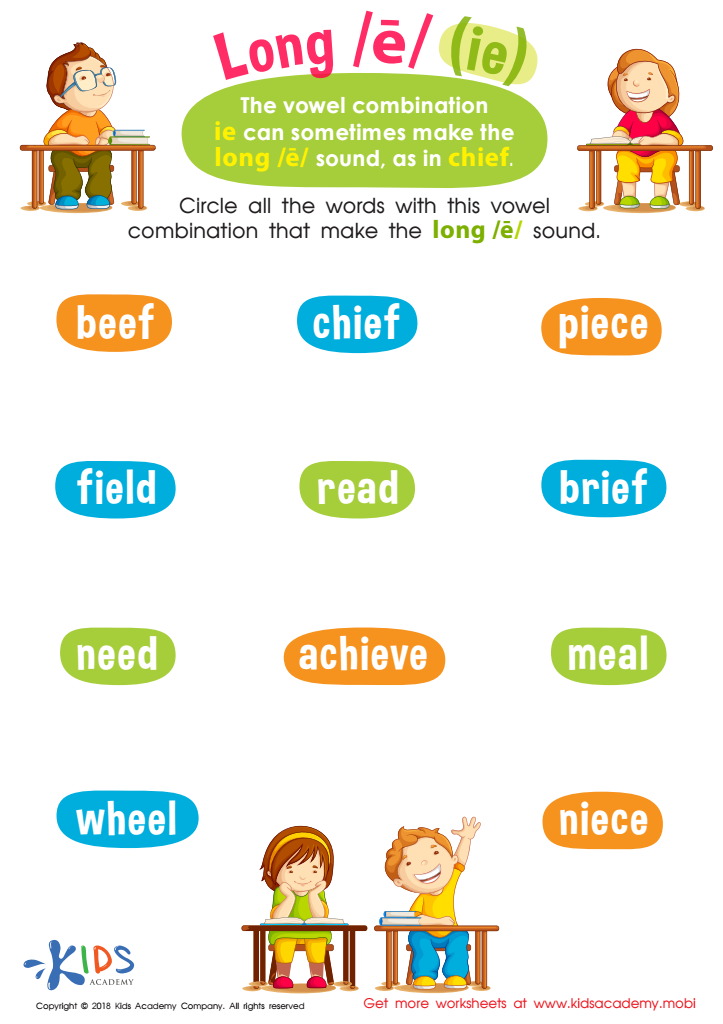
Reading: Long E and IE Worksheet
Ask your child to name some words with the long /e/ sound they hear every day. Then, read aloud all the words in the worksheet with them. Ask them to circle the words containing ie that make this sound.
Reading: Long E and IE Worksheet
Worksheet
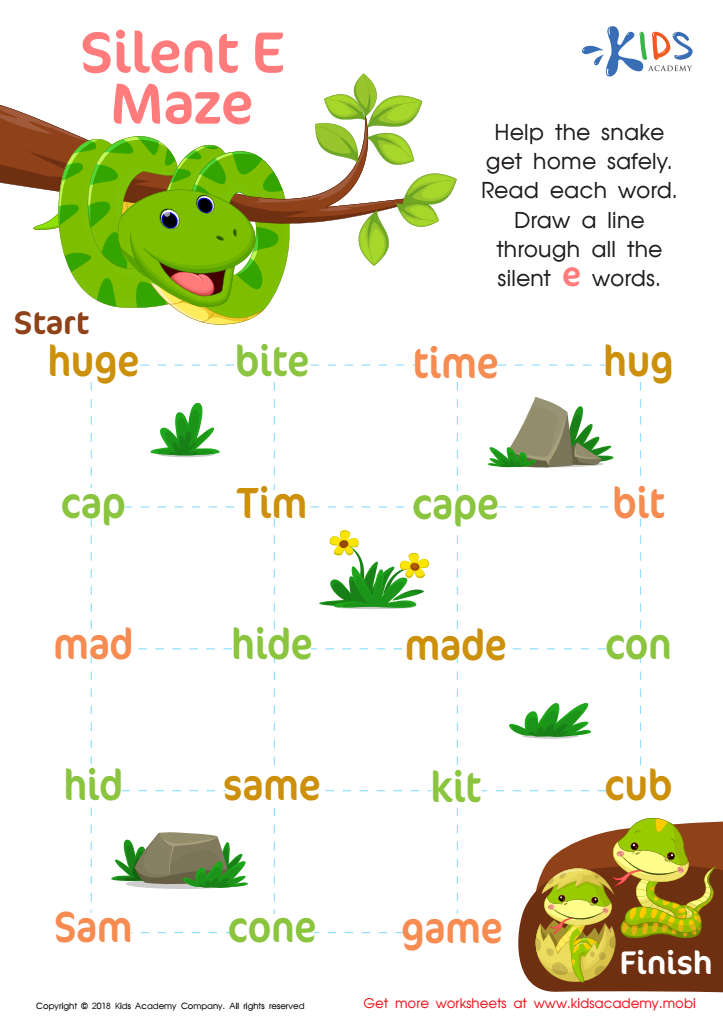
Silent E Maze Worksheet
Kids love mazes! This fun printable worksheet lets them help a mama snake get home to her babies, using Silent E words. They'll practice fine motor skills, while they draw lines through words that have Silent E and words with closed syllables that don't. It's a great way to help them recognize Silent E words!
Silent E Maze Worksheet
Worksheet
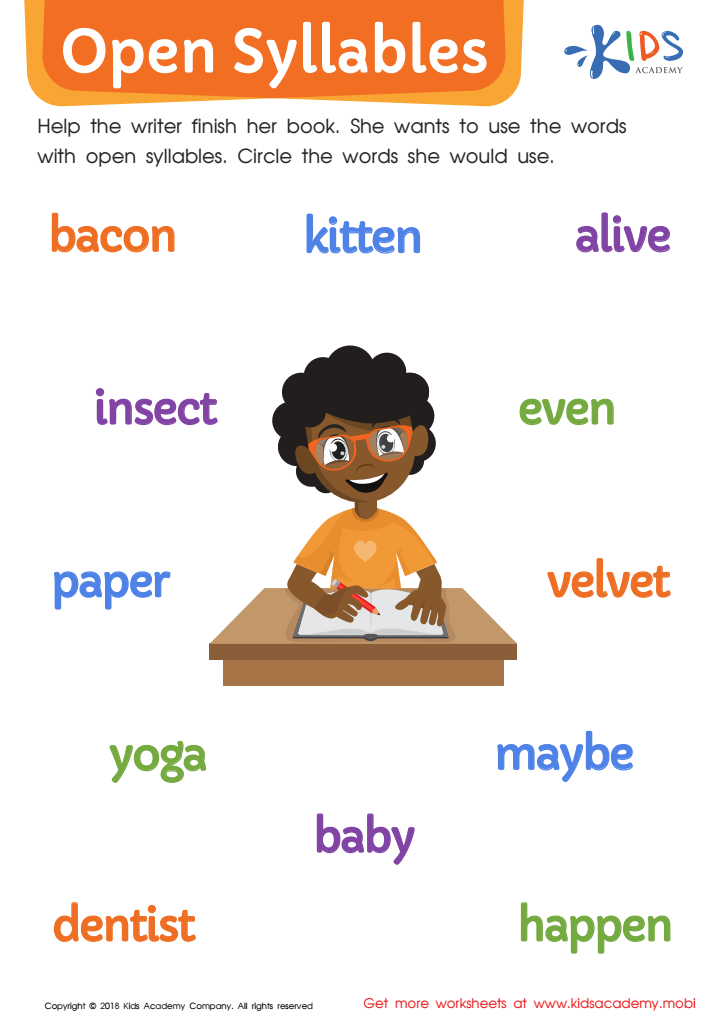
Open Syllables Worksheet
Before beginning this worksheet, make sure your child knows what open syllables are. If not, take time to teach them with examples. Then, help the writer finish her book by circling words with open syllables. She needs your child's help!
Open Syllables Worksheet
Worksheet
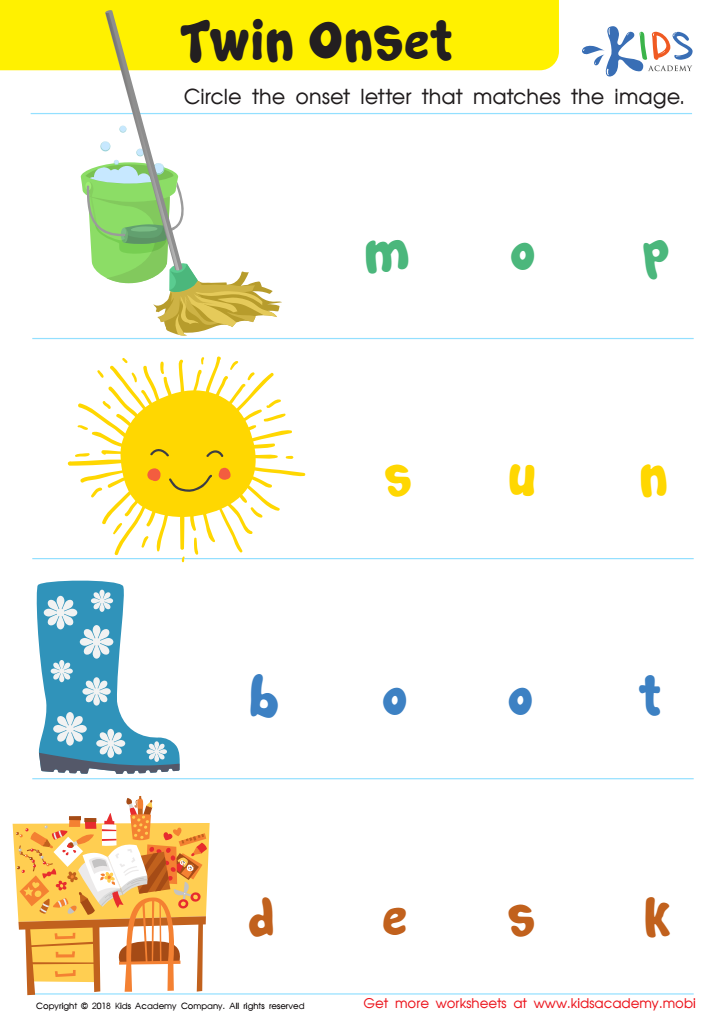
Twin Onset Worksheet
Children's phonological skills and reading/spelling strategies are strengthened by isolating initial consonants. This fun PDF worksheet encourages kids to trace the correct onset letter and hone fine motor skills. It's a great way to introduce early reading and spelling.
Twin Onset Worksheet
Worksheet
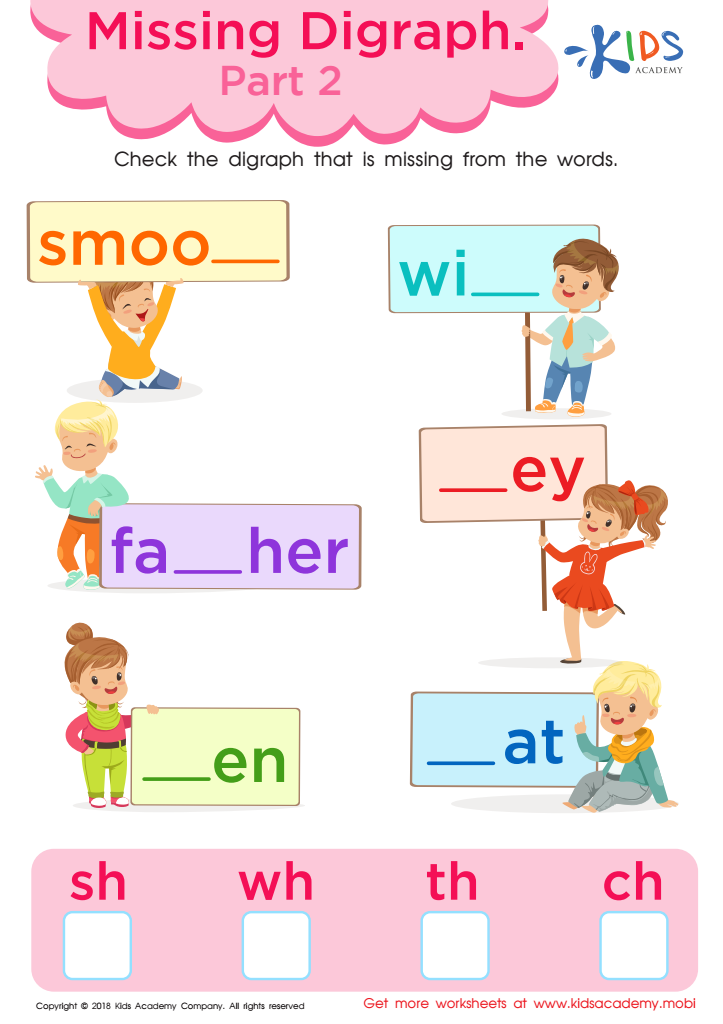
Missing Digraph: Part 2 Worksheet
Practice the "th" digraph with this fun worksheet from Kids Academy! See how it appears at the beginning, middle, or end of words and help learners fill in the blanks. Check if they got it right by finding the th digraph at the bottom!
Missing Digraph: Part 2 Worksheet
Worksheet
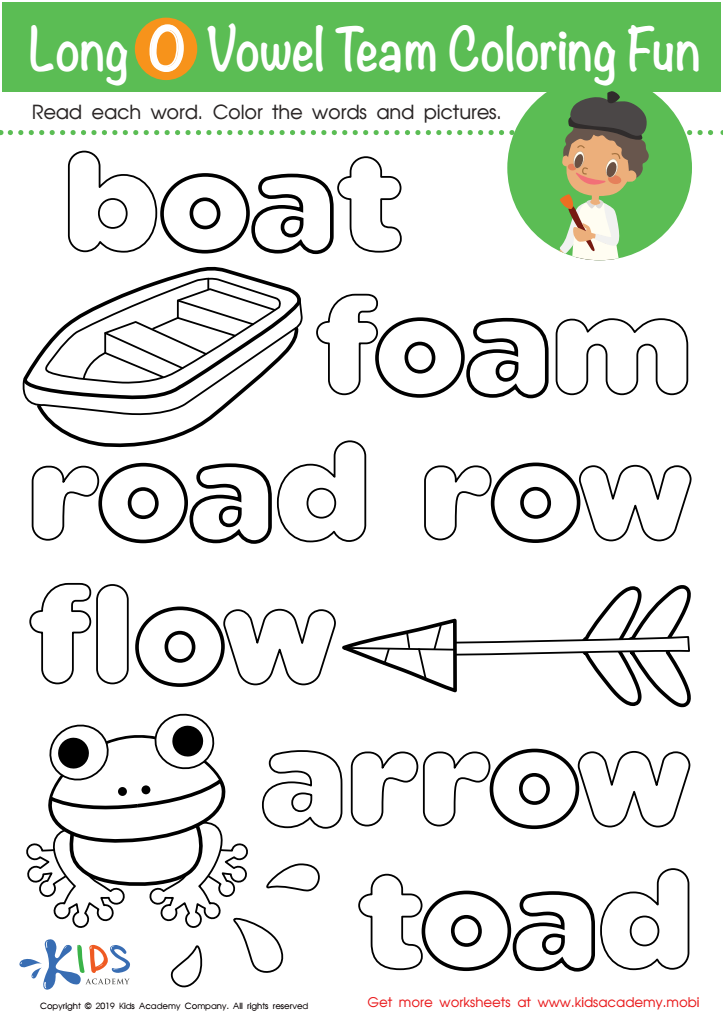
Long O Vowel Team Coloring Worksheet
Divide your class into teams and have them work together to identify and pronounce the long O sound in words like "boat" and "flow". As they read aloud, have the rest of the class listen attentively. Then let teams color in the words and matching pictures, reinforcing the lesson. This simple printout is perfect for phonics lessons and a fun way to energize your class.
Download (PDF)
 Assign to My Students
Assign to My Students
Long O Vowel Team Coloring Worksheet
Worksheet
Join Kids Academy for Free
Who is primarily going to use this learning content?








Parents and teachers should prioritize spelling improvement and normal phonics for children aged 3-8 as these are foundational skills crucial for literacy development. Early mastery in these areas equips children with the tools necessary to understand and recreate language patterns, promoting efficient reading and writing abilities.
Firstly, phonics—the relationship between letters and sounds—enables children to decode new words with ease, bolstering their reading fluency. This decoding skill gives them access to a wider range of vocabulary, enriching their communication abilities and setting a solid groundwork for advanced literacy skills.
Spelling improvement is equally vital; it reinforces phonetic knowledge and contributes to better reading comprehension. When children can spell words correctly, they can write more accurately and convey their thoughts effectively. Accurate spelling reduces cognitive load, allowing young learners to focus more on content than on the mechanics of writing.
Moreover, early proficiency in these literacy components fosters self-confidence in learning environments. Children who can read, write, and spell proficiently are more likely to engage actively in classroom activities, participate in discussions, and perform better academically.
Thus, prioritizing spelling and phonics during early childhood not only supports immediate educational goals but also sets the stage for lifelong learning and effective communication.







