Word identification Normal Phonics Worksheets for Ages 3-8
6 filtered results
-
From - To
Enhance your child's literacy skills with our engaging Word Identification Normal Phonics Worksheets, designed specifically for ages 3-8. These worksheets focus on helping young learners recognize words and develop their reading abilities through fun and interactive activities. By reinforcing phonetic sounds and word associations, children will build a strong foundation in reading. Our user-friendly printables feature colorful illustrations and age-appropriate exercises that make learning enjoyable and effective. Ideal for both classroom and home settings, these worksheets encourage independent learning and boost confidence. Dive into the world of phonics today and watch your child's reading skills flourish!
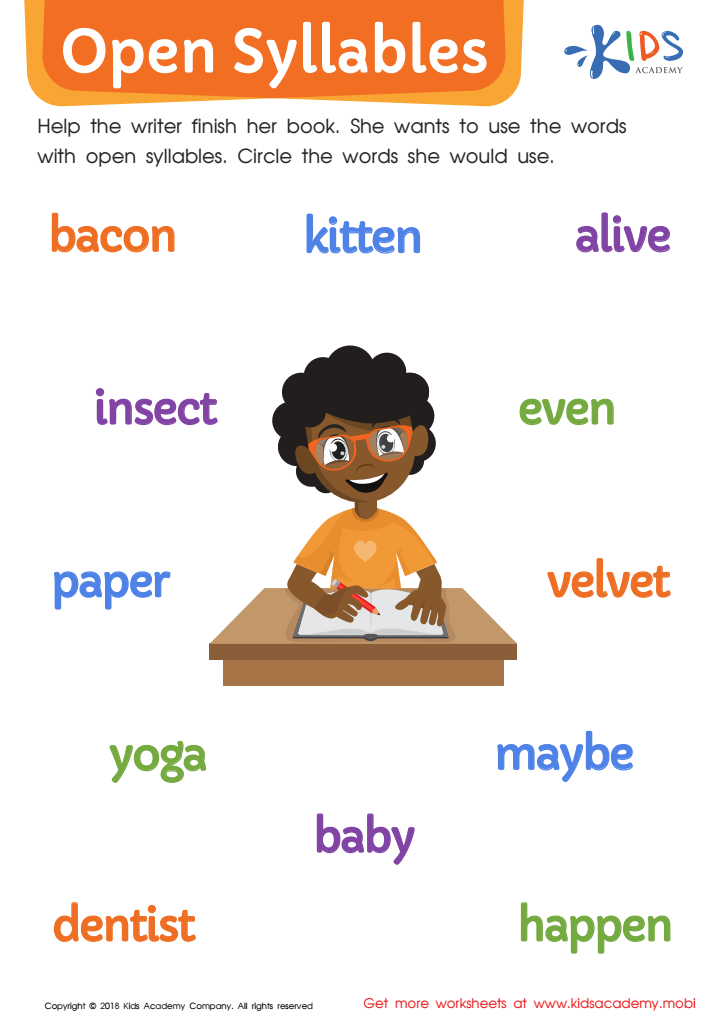
Open Syllables Worksheet
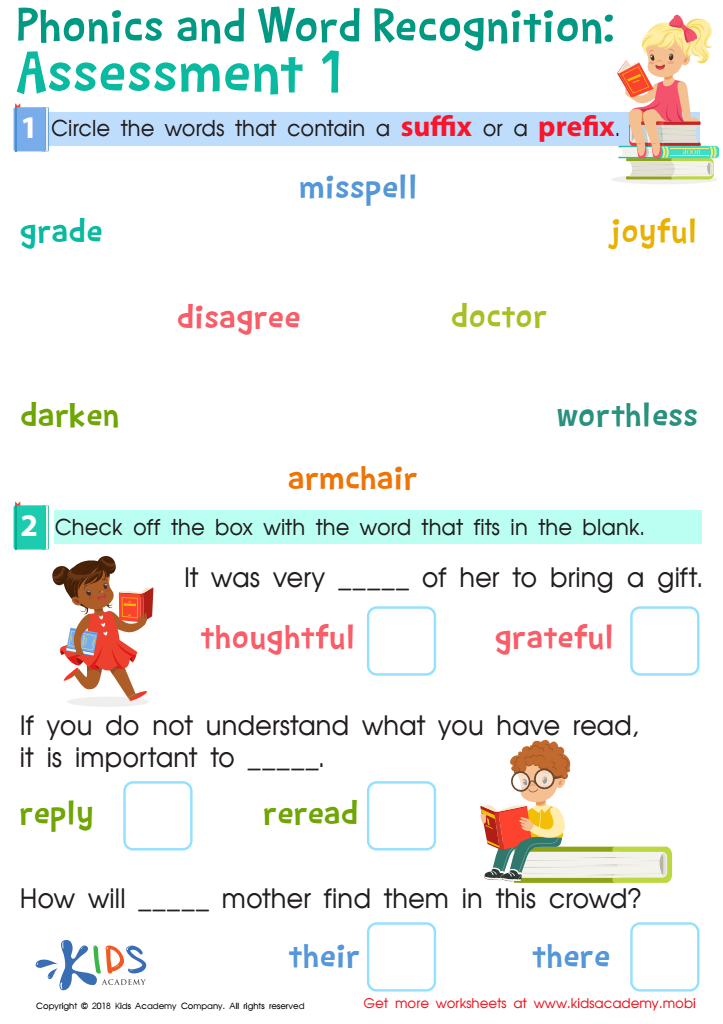
Phonics and Word Recognition: Assessment 1 Worksheet
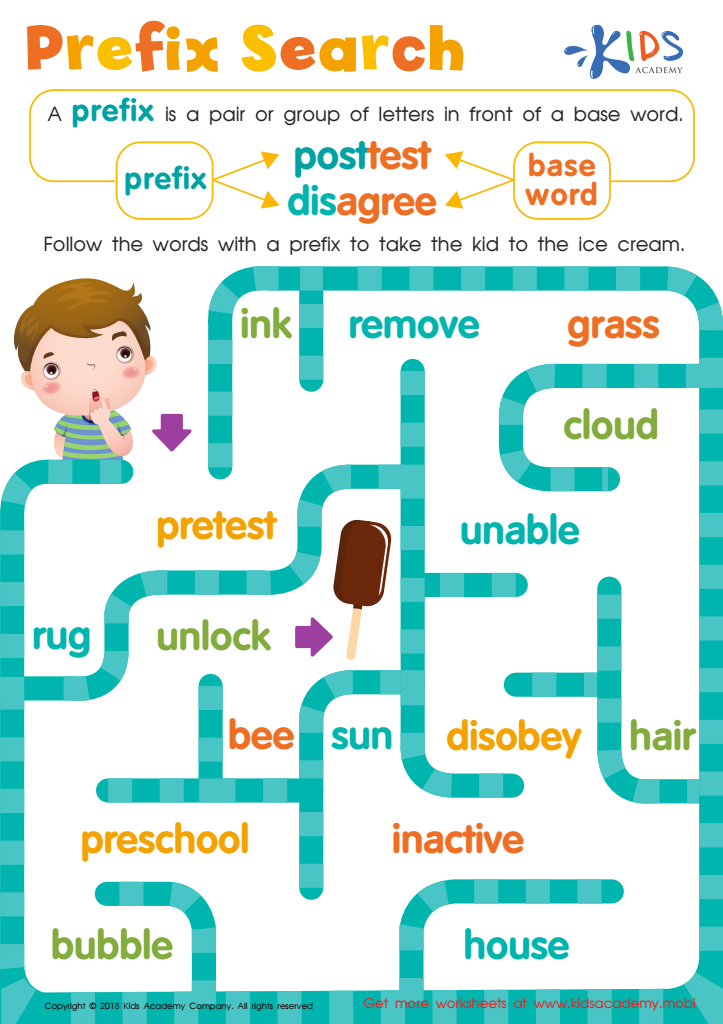
Reading: Prefix Search Worksheet
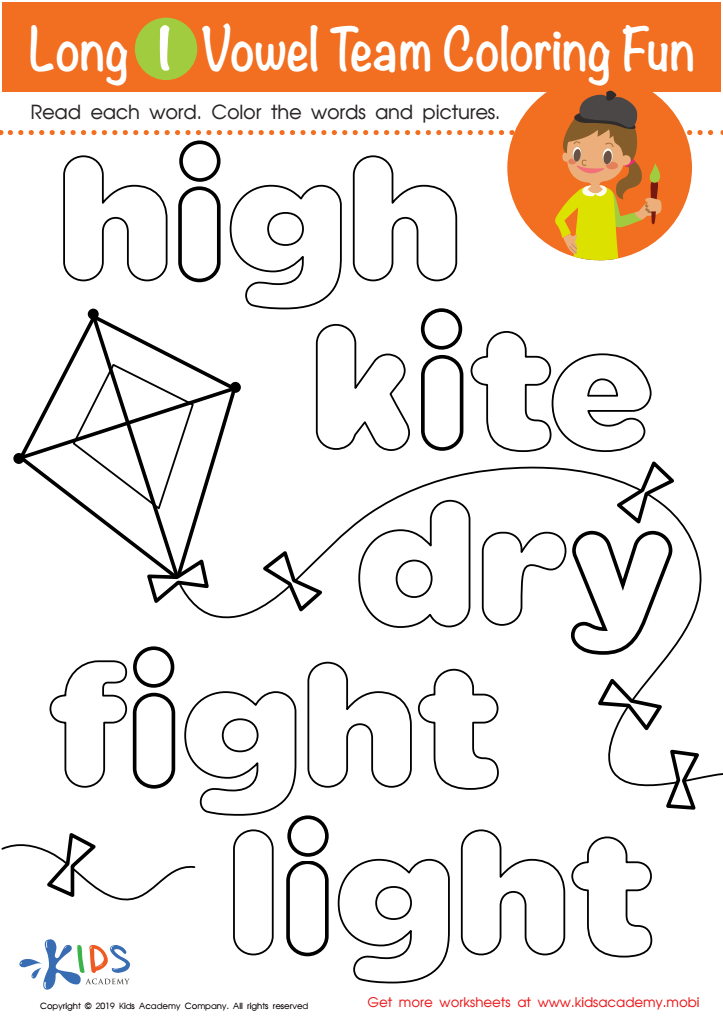
Long I Vowel Team Coloring Worksheet
 Assign to My Students
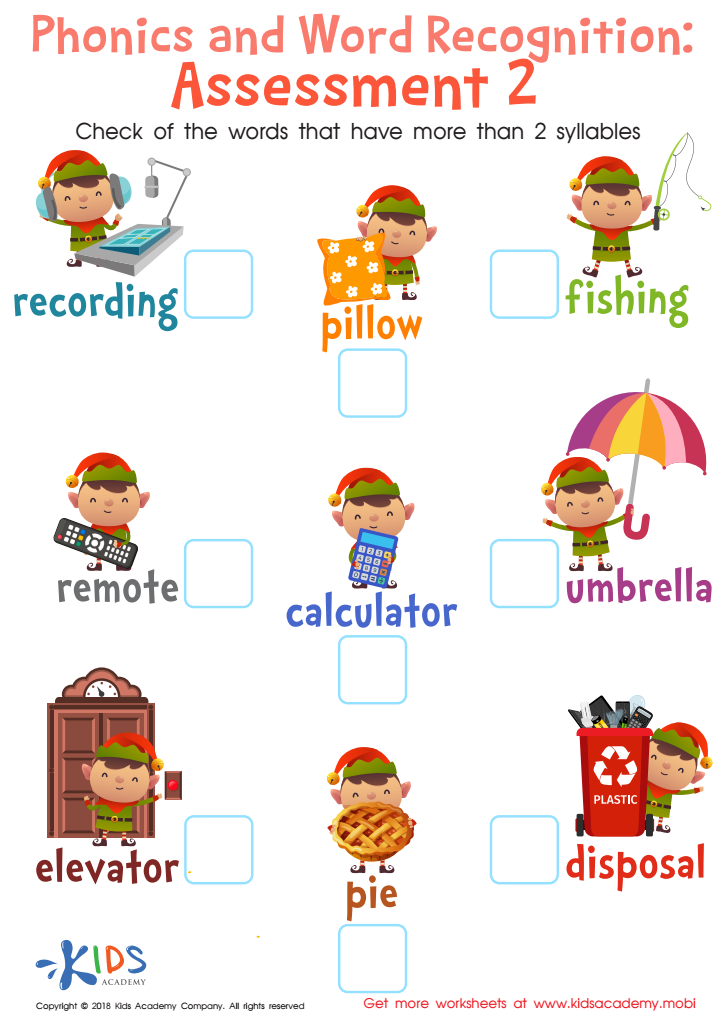
Phonics and Word Recognition: Assessment 2 Worksheet
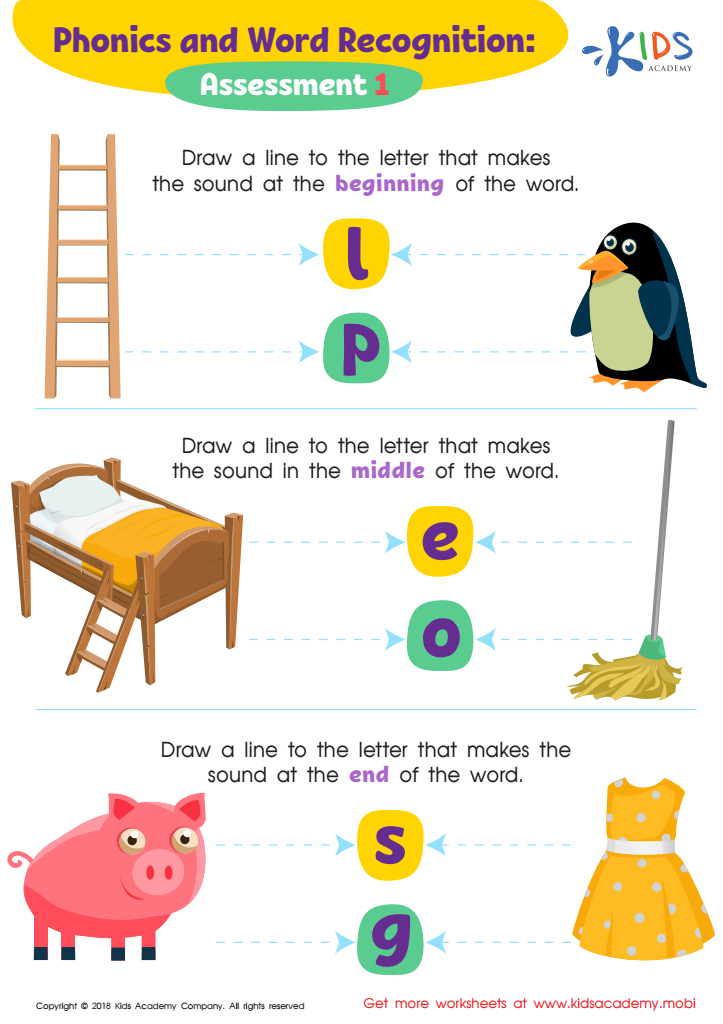
Phonics and Word Recognition: Assessment 1 ELA Worksheet








Word identification through phonics is essential for children aged 3-8, forming the foundation for literacy development. This critical skill enables early readers to decode written text by understanding the relationship between letters and sounds, promoting phonemic awareness. When parents and teachers prioritize phonics instruction, they help children recognize and manipulate sounds, enhancing their ability to read and write effectively.
Phonemic awareness and word identification skills not only improve reading fluency but also foster comprehension, as children learn to connect letters with their meanings. The ability to decode words independently boosts children's confidence, making them more enthusiastic about learning. Additionally, strong phonics skills provide the tools necessary for understanding more complex texts as they progress, setting the stage for lifelong learning.
Moreover, early intervention in phonics can address potential reading difficulties before they escalate. Engaging with phonics through fun activities and games can make the learning process enjoyable, further motivating children. By supporting phonics development, parents and teachers play a crucial role in ensuring students build solid literacy skills, which are vital for academic success and personal growth. Understanding and prioritizing Normal Phonics in this age group leads to better prepared learners who are ready to navigate the world of written language effectively.







