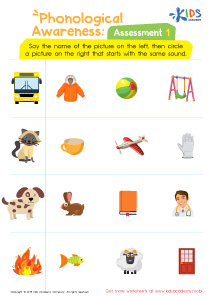
Phonics practice Normal Vowels Worksheets for Ages 3-8
9 filtered results
-
From - To
Introduce your child to the wonderful world of phonics with our engaging Normal Vowels Worksheets, designed specifically for ages 3-8! These interactive worksheets promote essential literacy skills, focusing on vowel recognition and sound differentiation. Crafted with fun activities and vibrant illustrations, they captivate young minds while fostering learning and retention. Your little learner will enjoy practicing vowels through exercises that include tracing, matching, and fun games, ensuring a holistic approach to phonics education. Perfect for home or classroom use, these worksheets set a strong foundation for reading and writing, making learning both enjoyable and effective. Start their phonics journey today!
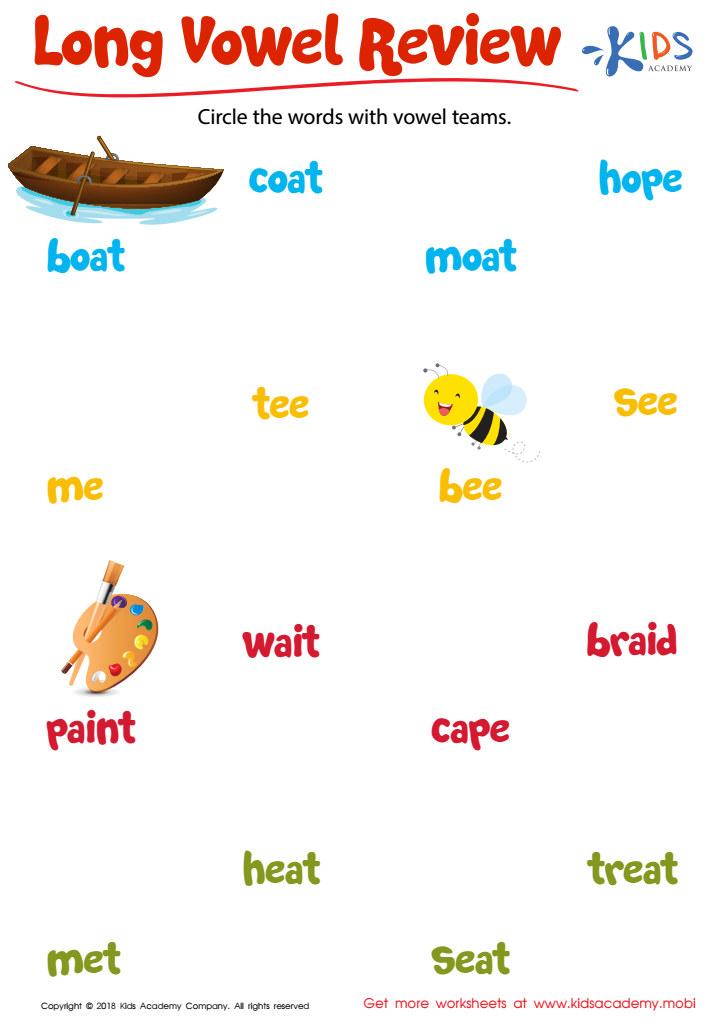
Long Vowel Review Worksheet
 Assign to My Students
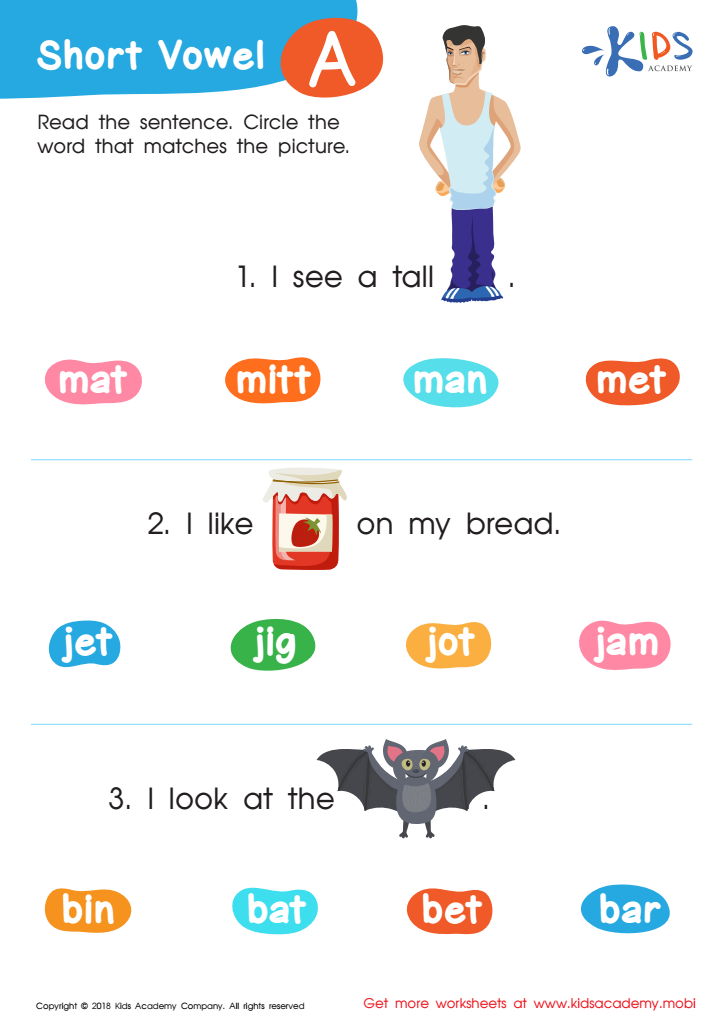
Short Vowel /a/ Worksheet
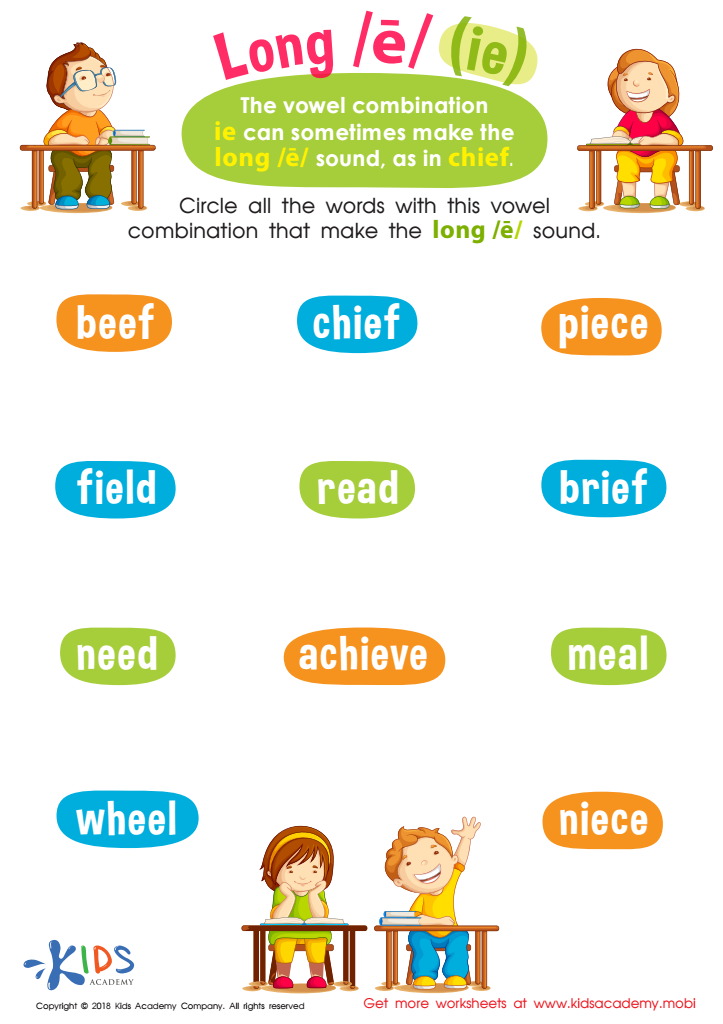
Reading: Long E and IE Worksheet
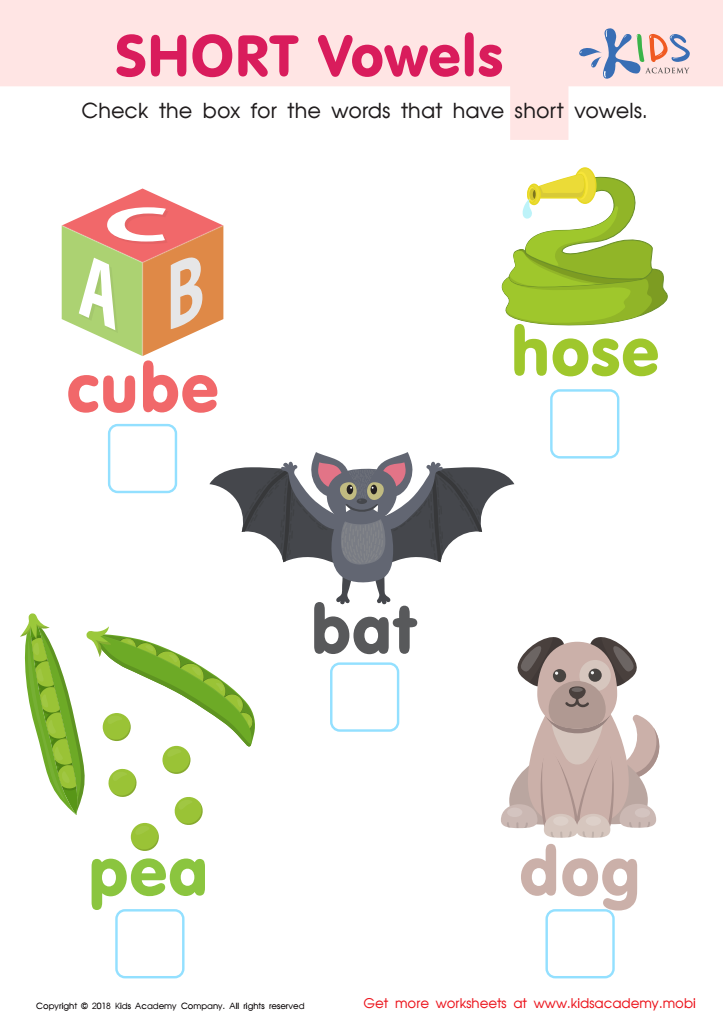
short vowels Worksheet
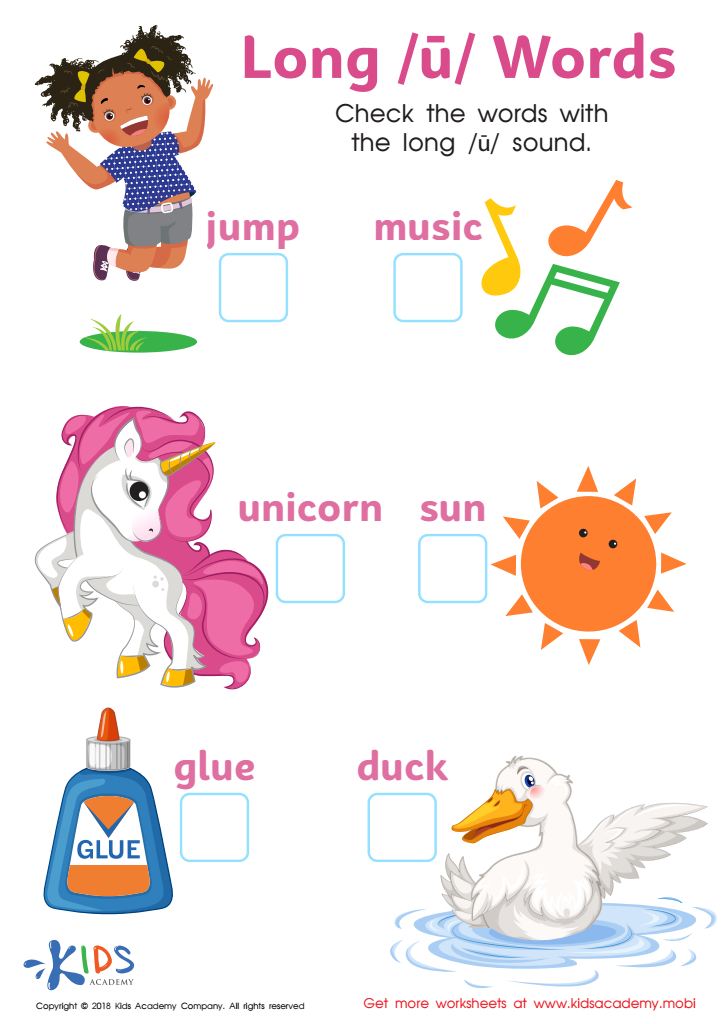
Long U Words Reading Worksheet
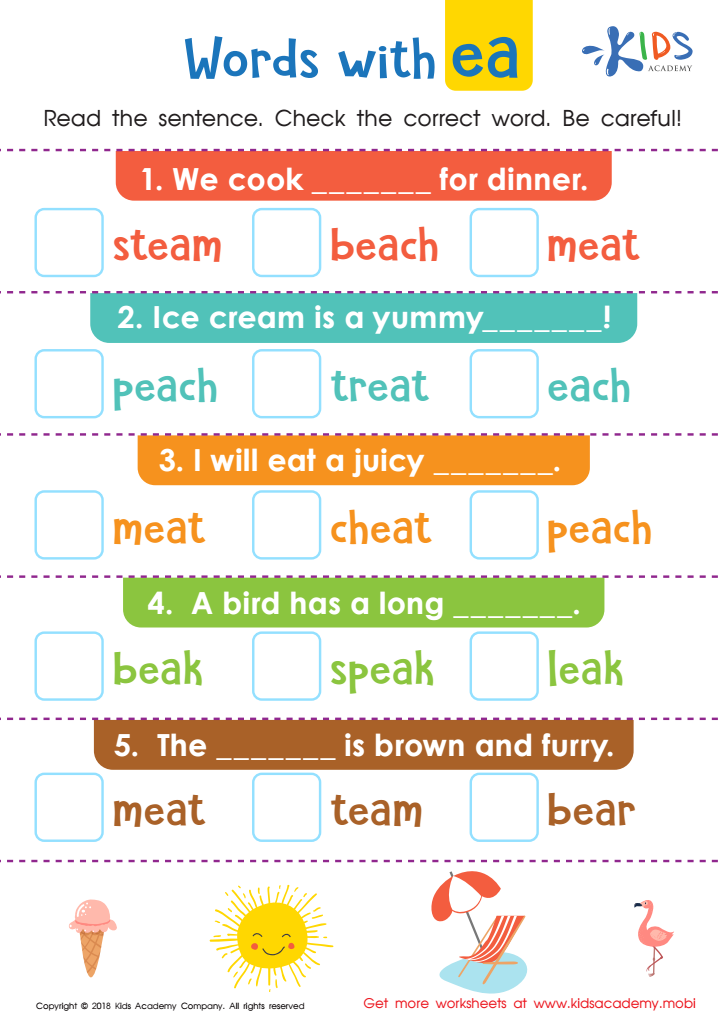
Words with ea Worksheet
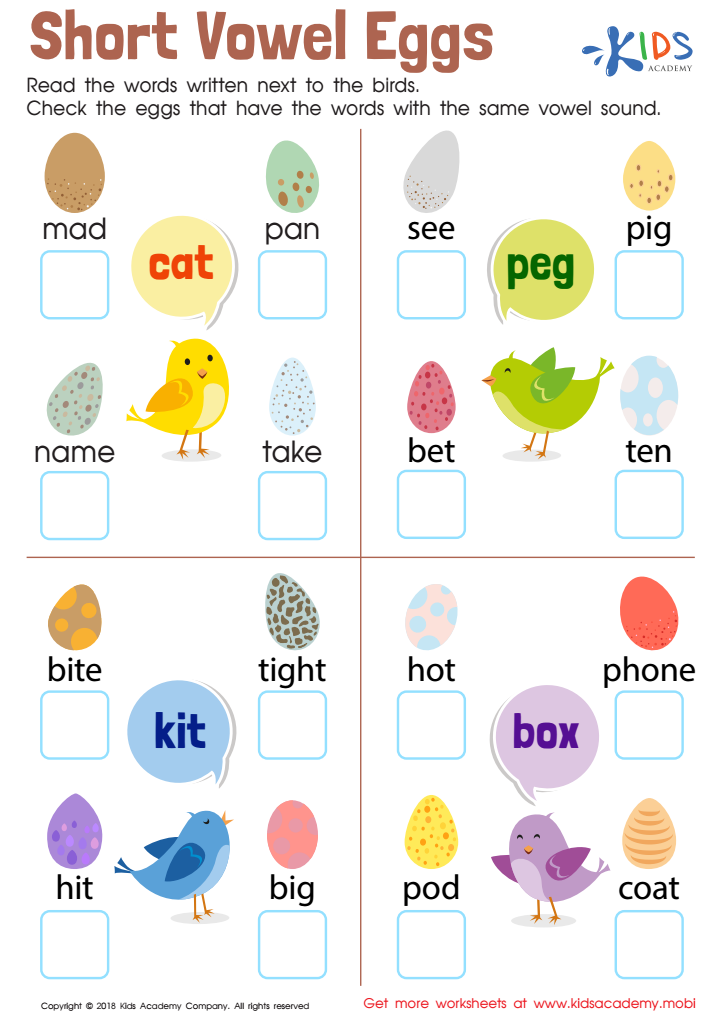
Short Vowel Eggs Worksheet
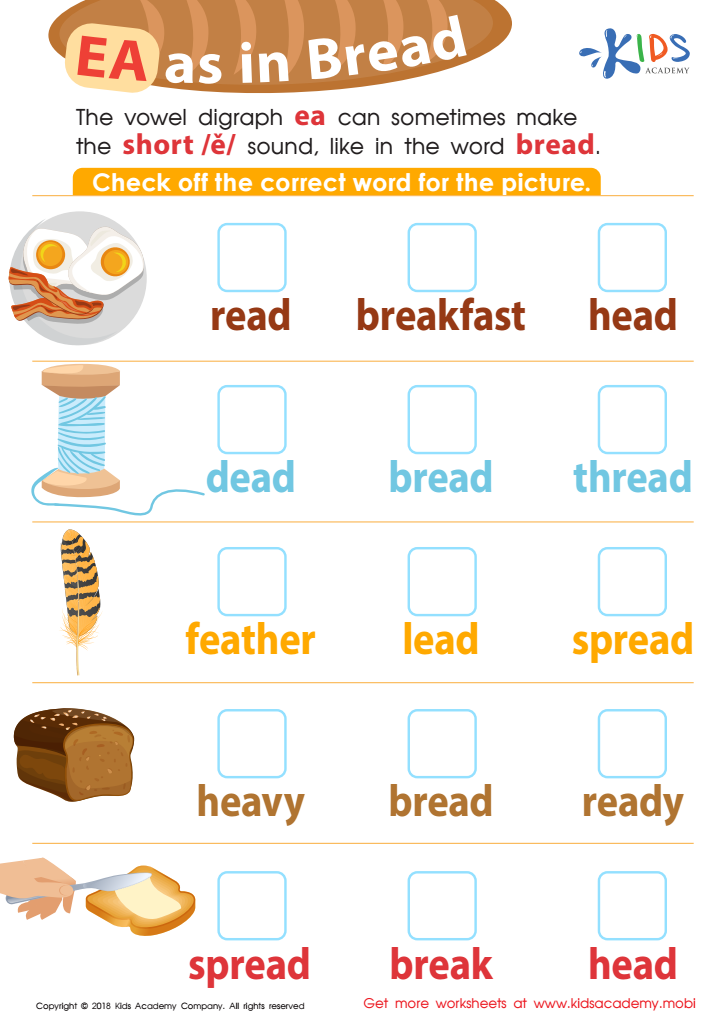
Reading: EA as in Bread Worksheet
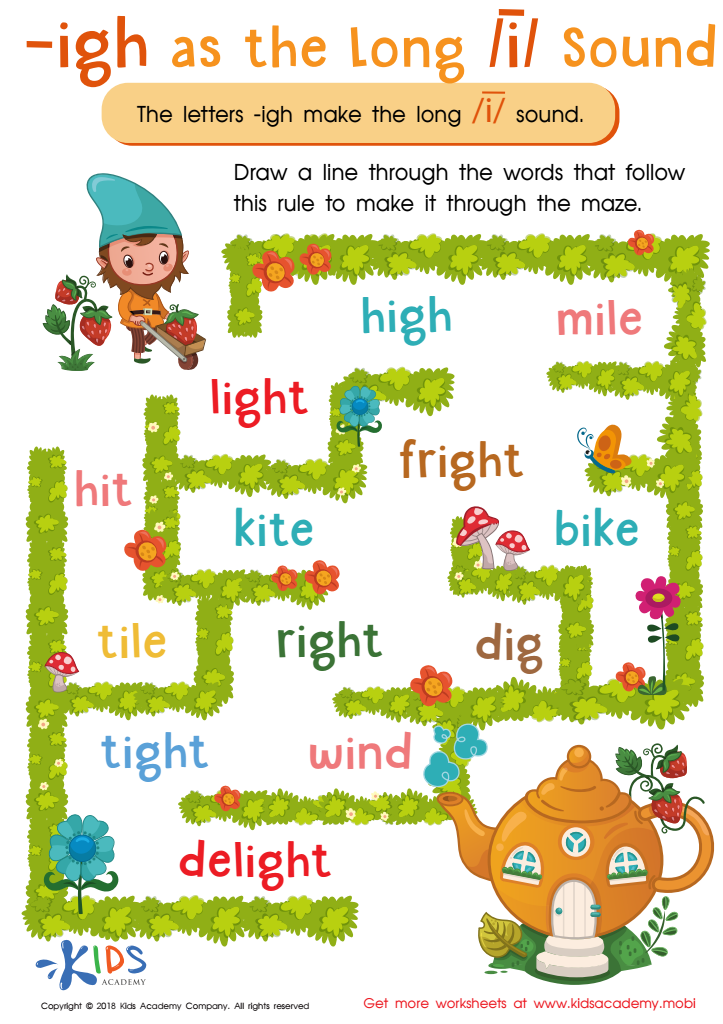
Reading: IGH as Long I Worksheet





Phonics practice, specifically focusing on normal vowels, is essential for children aged 3-8 for several reasons. First and foremost, mastering vowels helps young learners establish a solid foundation in reading and writing. Vowels are the building blocks of words, and understanding their sounds enhances phonemic awareness, a critical skill for developing literacy.
Engaging in phonics practice helps improve a child's ability to decode words, which fosters greater confidence and encouragement to read independently. Early exposure to vowel sounds also aids in spelling, assisting children in understanding how words are constructed, which is vital in both reading and writing.
Moreover, consistent phonics practice cultivates language skills and vocabulary, enabling children to express their thoughts and ideas more effectively. It also acts as a channel for social interaction, as children learn to communicate better through reading aloud and engaging with peers.
Lastly, the skills learned through phonics enrich cognitive development. They enhance critical thinking and problem-solving skills as children begin to make connections between sounds and meaning. In short, an emphasis on phonics practice lays the groundwork for lifelong literacy, fostering a love for learning that can impact a child's future positively. Thus, both parents and teachers should prioritize this vital aspect of early education.