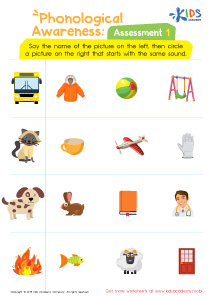
Phonics skills improvement Normal Vowels Worksheets for Ages 3-8
5 filtered results
-
From - To
Discover our engaging "Phonics Skills Improvement Normal Vowels Worksheets," designed for children aged 3-8! These thoughtfully crafted worksheets focus on enhancing phonics skills by reinforcing the understanding of normal vowels. With colorful illustrations and interactive exercises, young learners will build their phonemic awareness, improve reading fluency, and develop foundational literacy skills. Our worksheets are perfect for teachers and parents looking to support early childhood education in a fun, effective way. Whether used in the classroom or at home, these resources will inspire confidence in young readers as they embark on their phonics journey. Explore our collection to boost learning today!
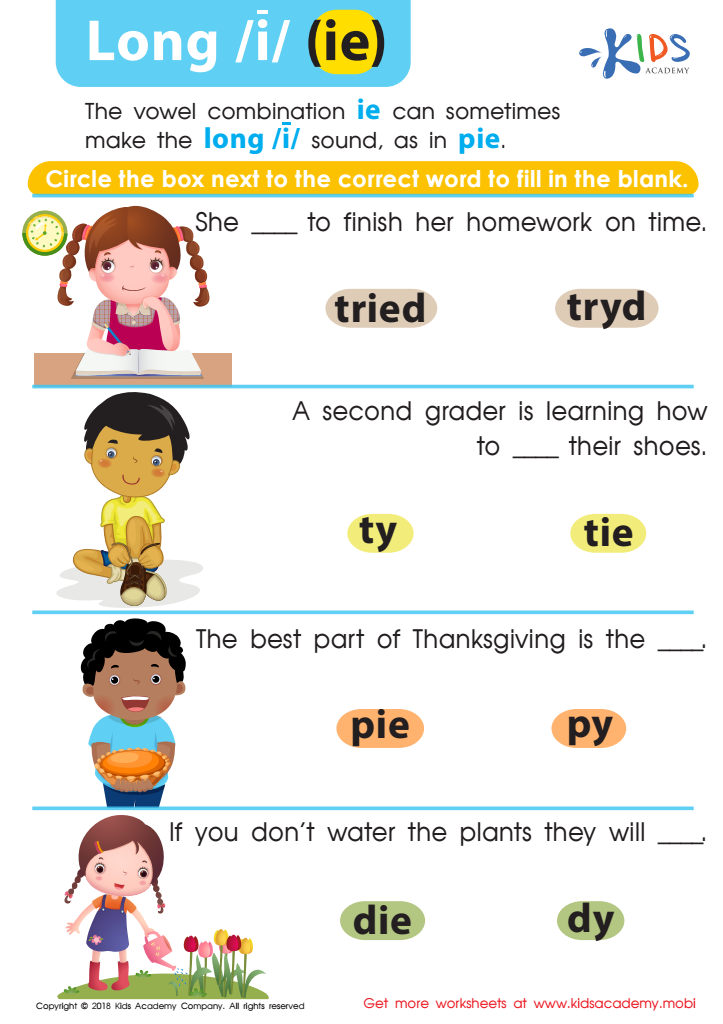
Reading: Long I and IE Worksheet
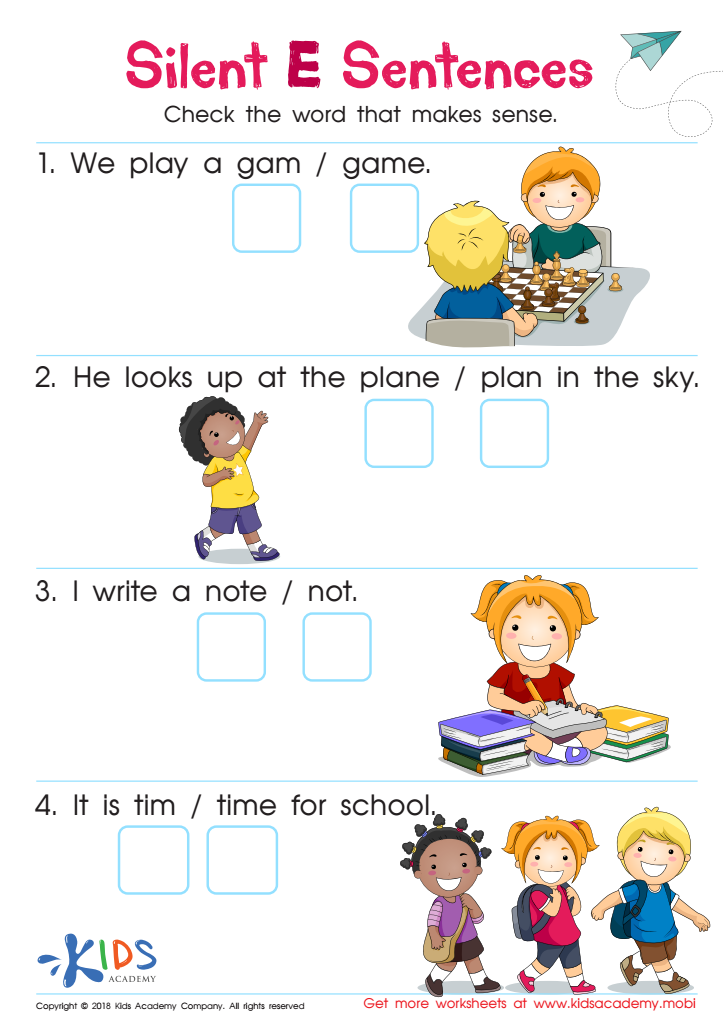
Silent E Sentences Worksheet

Long and Short U Worksheet
 Assign to My Students
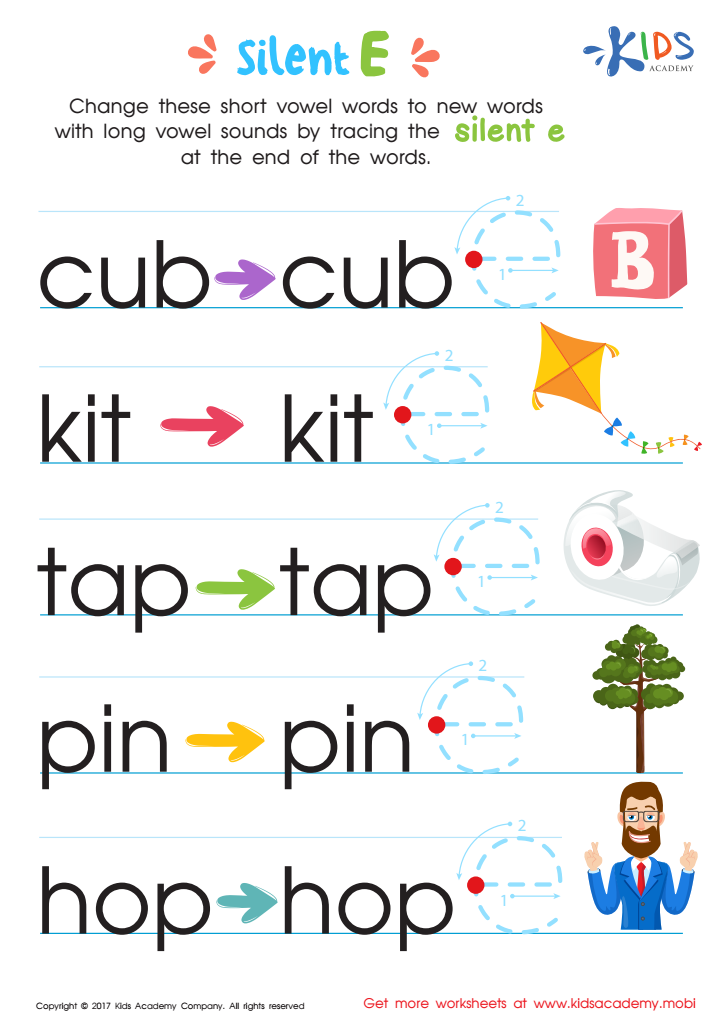
Silent E Words Worksheet
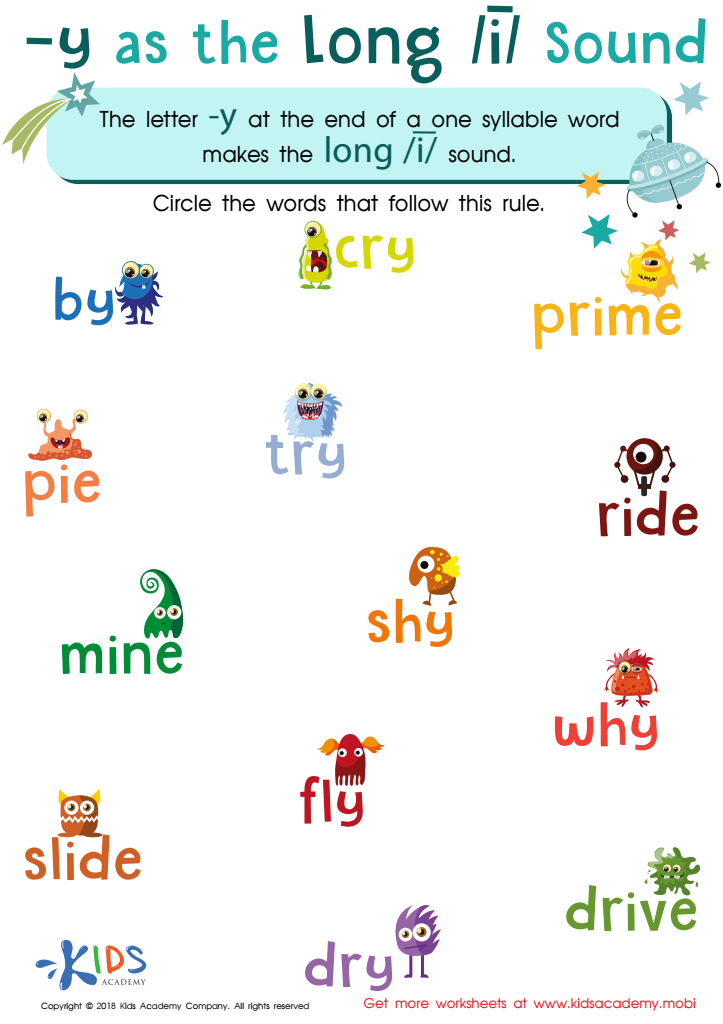
Reading: Y as Long I Worksheet





Phonics skills, particularly the understanding of normal vowels, are crucial for children aged 3-8 as they form the foundation for reading and language development. Mastering phonics helps children decode words, allowing them to sound out unfamiliar terms independently. This skill is essential for ensuring reading fluency, comprehension, and overall academic success.
When parents and teachers prioritize phonics skills improvement, they contribute to enhanced literacy, which is linked to a child's self-confidence and motivation in learning. Normal vowels, including a, e, i, o, and u, play a central role in constructing syllables and words; a firm grasp of these sounds enables learners to experiment with language, creating a springboard for writing as well.
Additionally, focusing on phonics can reduce literacy disparities. Early interventions in phonics instruction can help combat future reading difficulties and gaps that often arise during later schooling stages. Engaging with phonics through songs, games, and interactive activities can create a rich, positive, and enjoyable learning environment. Consequently, phonics skills not only enhance academic skills but also support emotional development by building resilience and encouraging a love for reading in children, setting them up for lifelong learning.