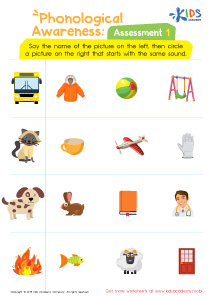
Reading development Normal Vowels Worksheets for Ages 3-8
3 filtered results
-
From - To
Unlock your child's reading potential with our "Reading Development Normal Vowels Worksheets for Ages 3-8". Suitable for early learners, these engaging and educational worksheets focus on identifying, pronouncing, and using normal vowels. As children work through these interactive sheets, they will master critical reading and phonics skills in a fun and dynamic way. Our carefully designed activities are perfect for preschool, kindergarten, and early elementary students, laying a solid foundation for future literacy. Foster a love for reading and build confidence with our expertly crafted resources, designed to support and enhance your child's reading journey.
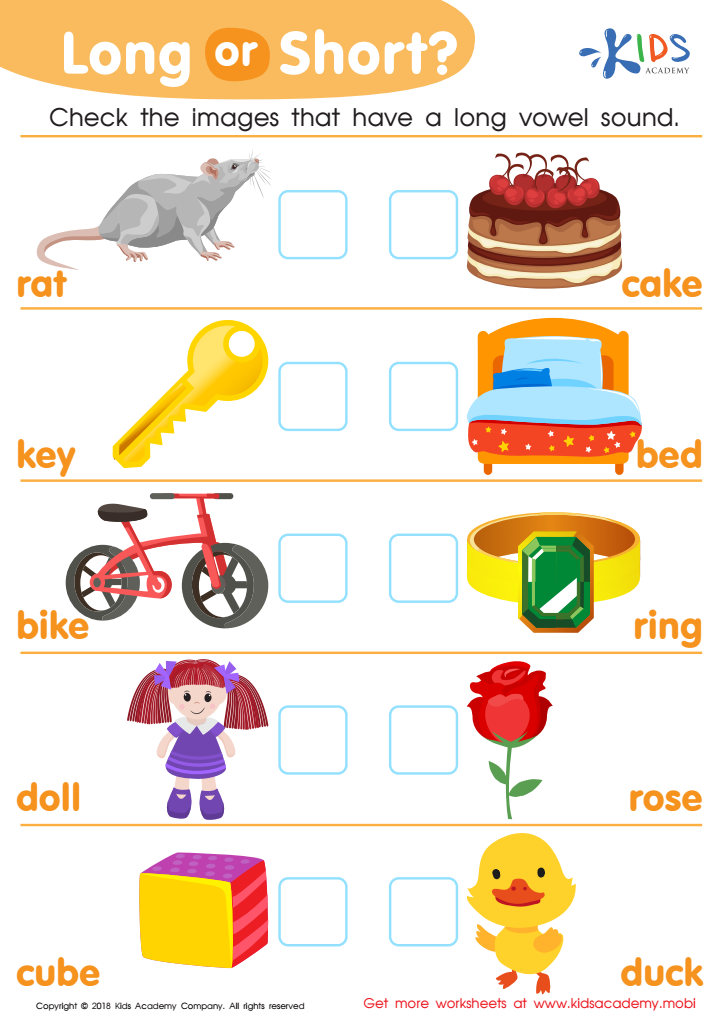
Long or Short Reading Worksheet
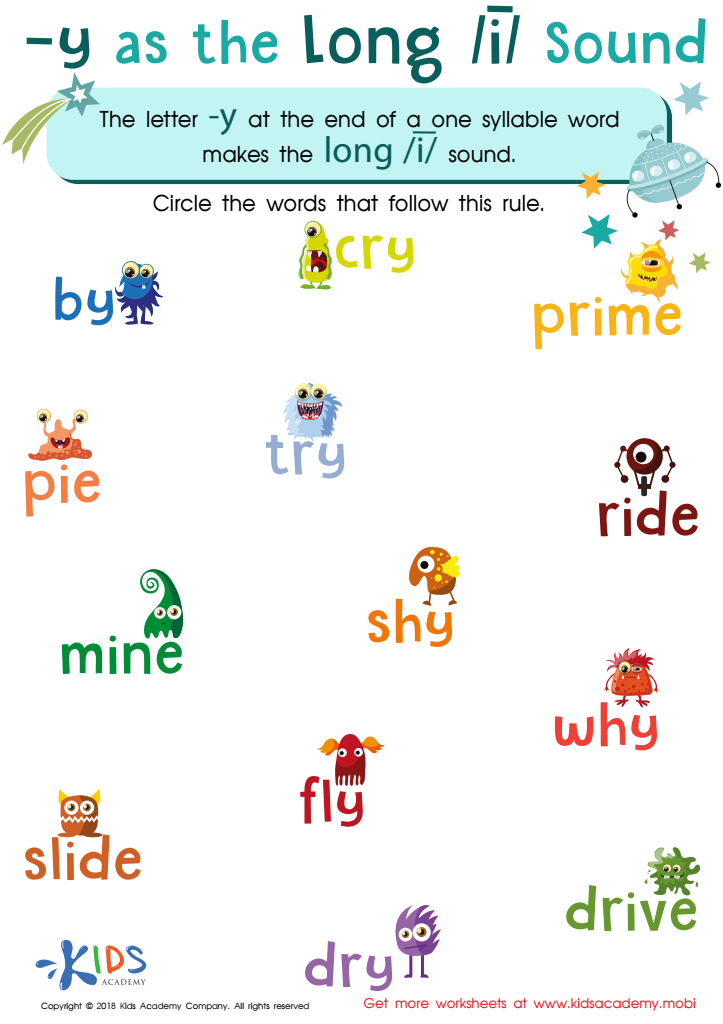
Reading: Y as Long I Worksheet
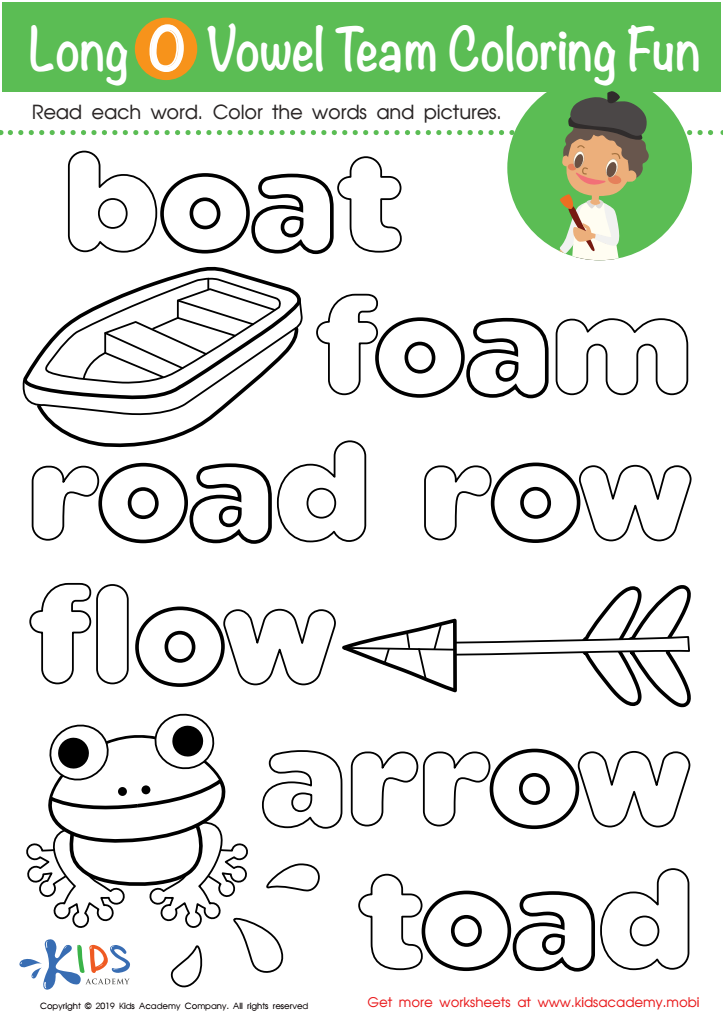
Long O Vowel Team Coloring Worksheet
 Assign to My Students





Reading development is crucial, particularly in the early years from ages 3-8. During this period, children's brains are incredibly receptive to learning and establishing foundational skills. One vital aspect of this learning is the understanding of normal vowels. Vowels are essential for word construction, phonetic awareness, and overall reading fluency.
Understanding vowels helps children pronounce words correctly, aiding in better comprehension and communication. For example, vowels can change the meaning of words entirely, like "hop" versus "hope." Mastery of vowel sounds thus enables children to decode unfamiliar words accurately, boosting their confidence and encouraging a positive reading experience.
Further, studies have shown that early reading proficiency directly correlates with future academic success. Children who grasp vowel sounds and overall phonetic concepts early are often better readers, which enhances their ability to learn across other subjects, such as math, science, and social studies.
Parents and teachers play a pivotal role in this development. By actively engaging in reading activities, singing vowel-sound songs, and using phonetic games, they create a rich linguistic environment. This interaction not only supports academic achievement but also fosters a lifelong love for reading. Therefore, caring about normal vowel development isn’t just about reading; it's about setting up children for a bright, literate future.