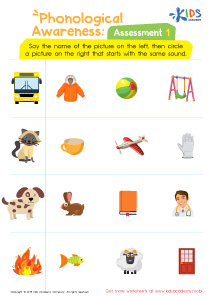
Sound differentiation Normal Vowels Worksheets for Ages 3-8
3 filtered results
-
From - To
Discover our engaging Sound Differentiation Normal Vowels Worksheets specifically designed for children ages 3-8! These worksheets are perfect for helping young learners identify and differentiate between normal vowel sounds in a fun and interactive way. Through a variety of activities, kids will enhance their phonetic skills, boost their confidence in reading, and develop a strong foundation for future literacy. With colorful illustrations and age-appropriate exercises, these resources make learning vowels exciting and effective. Unlock your child’s potential in sound recognition and pronunciation by exploring our comprehensive collection of worksheets today! Support their literacy journey with our expertly crafted materials!
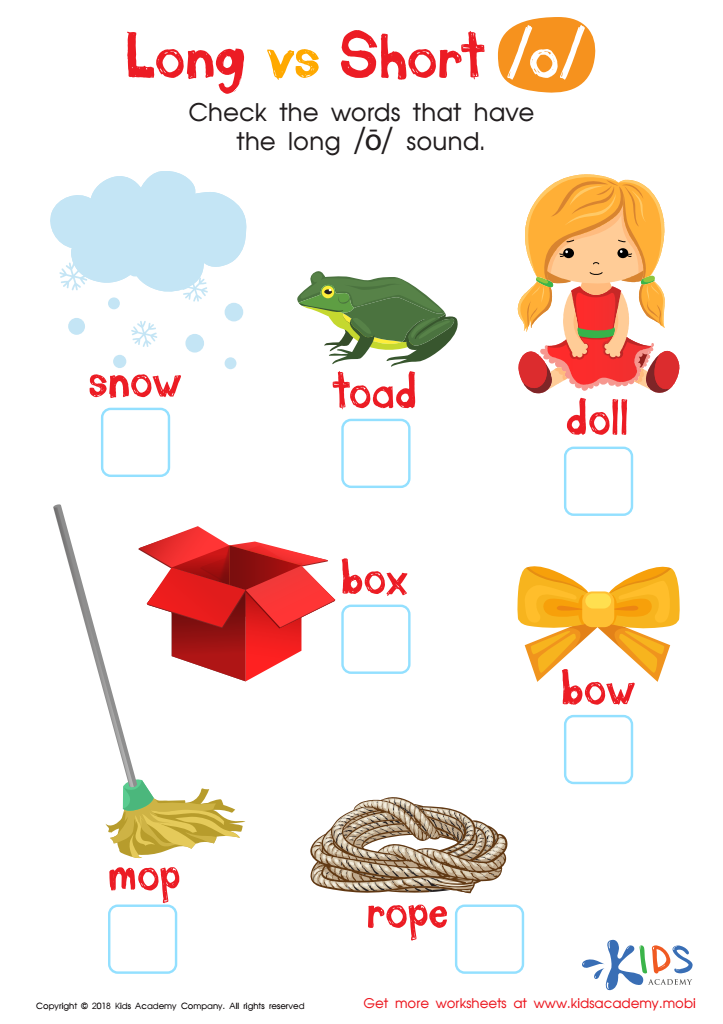
Long vs Short O Reading Worksheet
 Assign to My Students
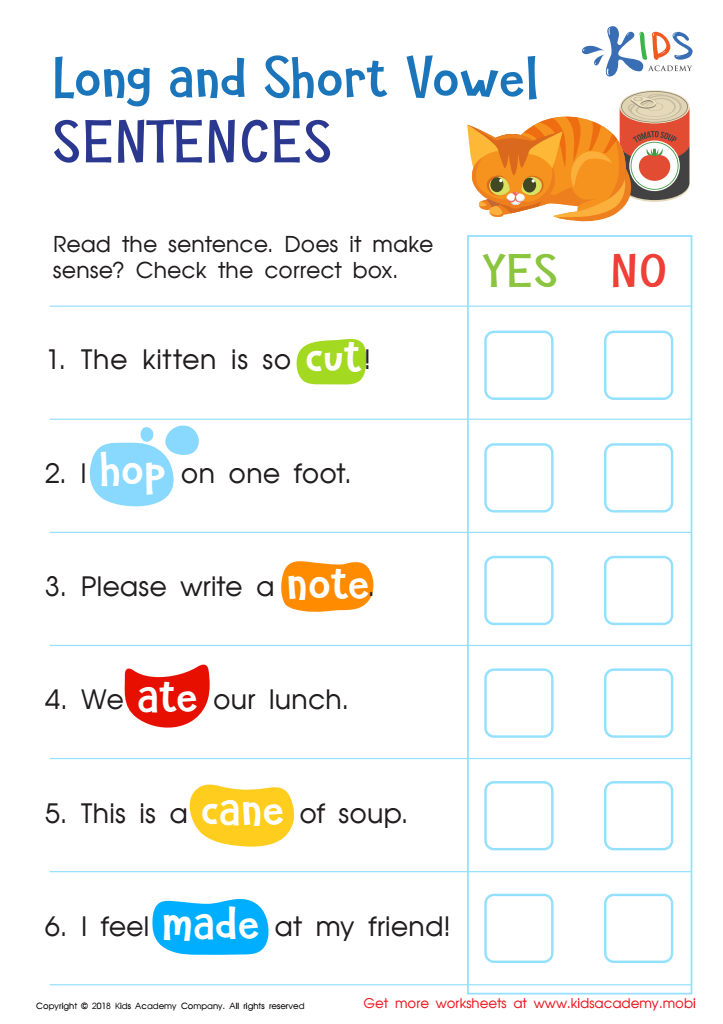
Long and Short Vowel Sentences: Assessment Worksheet
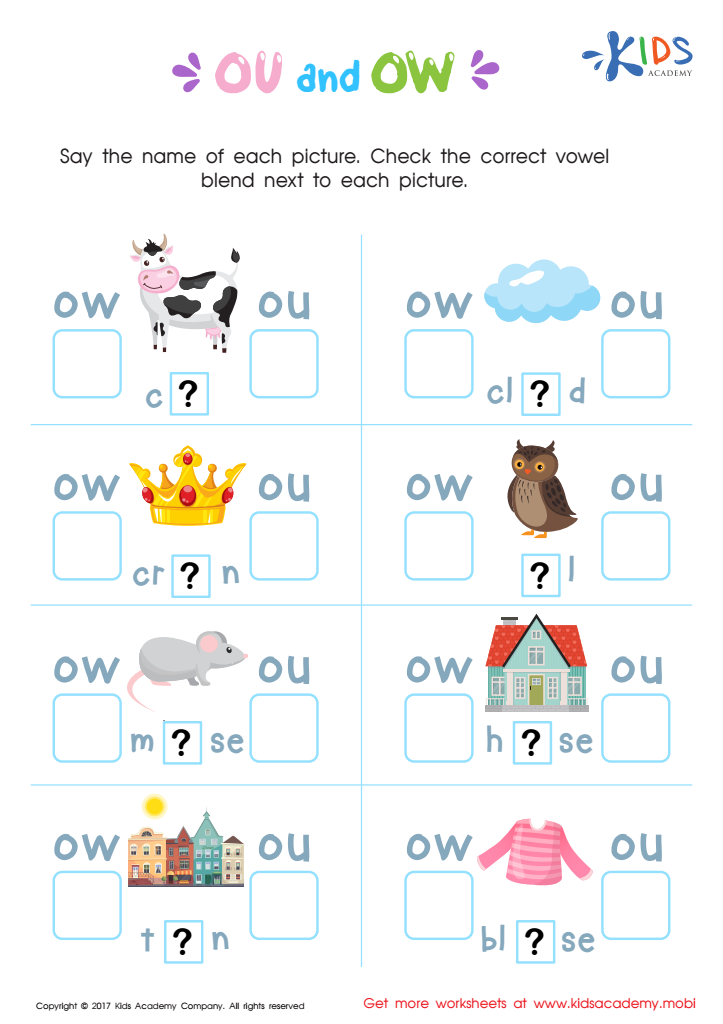
OU and OW Words Worksheet





Sound differentiation of normal vowels is crucial for children aged 3-8 as it lays the foundation for their reading and language development. During these formative years, children begin to understand the sounds associated with letters, which is essential for early literacy. Vowel sounds, being integral to word formation, help children decode new words, improving their reading fluency and comprehension.
When children can differentiate between vowel sounds, they develop phonemic awareness, a critical skill for successful reading. This ability helps them recognize the differences between similar-sounding words, such as "pat" and "pet," fostering better spelling and pronunciation. Moreover, effective differentiation can boost their vocabulary acquisition, enabling them to express themselves more clearly.
For parents and teachers, emphasizing vowel sound differentiation supports a structured and engaging learning environment. It allows them to identify children's strengths and challenges in language processing, guiding targeted interventions when necessary. Additionally, creating playful activities like rhyming games or singing vowel sounds can enhance engagement, making learning enjoyable.
In short, caring about sound differentiation of vowels in early education is an investment in a child's academic success and confidence in communication, setting the stage for lifelong language skills.