Color Identification Normal Worksheets for Ages 3-8 - Page 2
26 filtered results
-
From - To
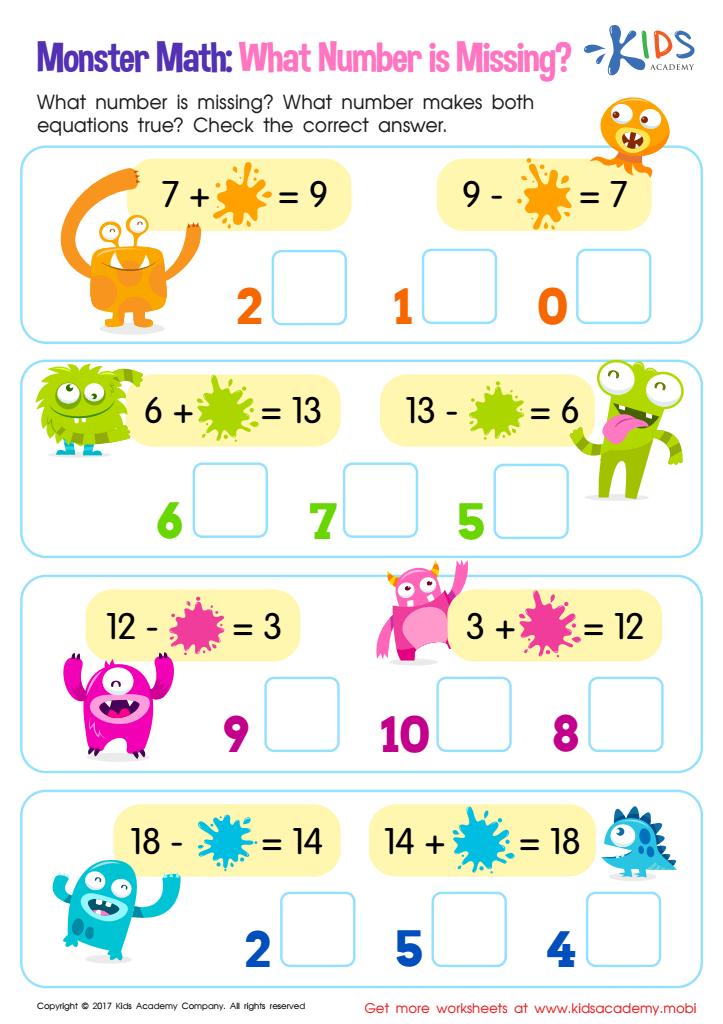
Missing Number: Monster Math Worksheet
 Assign to My Students
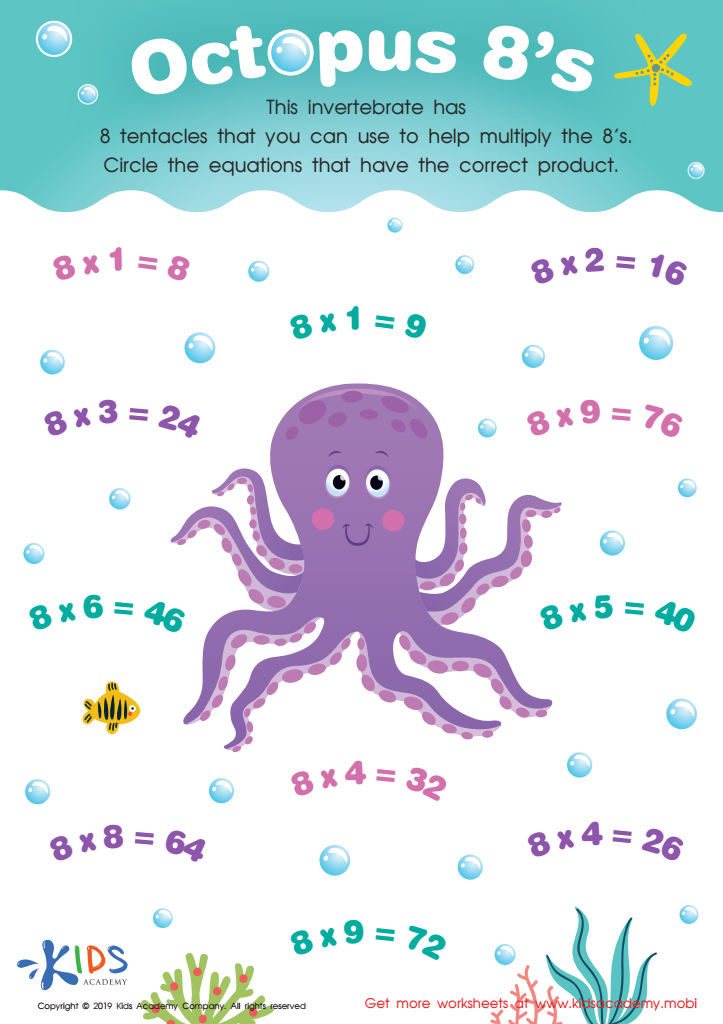
Octopus 8’s Worksheet







Color identification is a crucial developmental milestone for children ages 3-8, making it a key focus for both parents and teachers. Mastering color recognition enhances cognitive development by helping kids categorize and make sense of the world around them. It fosters creativity, allowing children to express themselves through art and imaginative play, as they explore color combinations and their effects.
Additionally, color identification is foundational for learning other concepts, such as sorting, categorizing, and even early math skills. For example, identifying colors can assist in understanding patterns, sequences, and relationships. This foundational knowledge not only boosts children's academic readiness but also provides opportunities for engaging classroom activities and home learning experiences.
Socially, mastering color identification can foster confidence as children participate in group activities, share art projects, and communicate their ideas. It can stimulate discussion and collaboration among peers.
Moreover, observing a child's ability to recognize colors can alert parents and teachers to possible developmental delays or learning challenges, enabling timely intervention. Ultimately, embracing color identification enriches children's educational experiences and nurtures their overall growth, making it an essential focus in early childhood development.








