Differentiating shapes Normal Worksheets for Ages 3-8
3 filtered results
-
From - To
Introducing our "Differentiating Shapes Normal Worksheets for Ages 3-8" – the perfect resource to spark early geometry skills in young learners! These engaging worksheets are designed to help children easily identify and differentiate various shapes through fun activities and exercises. They'll learn to recognize circles, squares, triangles, and more while building essential cognitive and fine motor skills. Ideal for preschoolers to second graders, these worksheets offer a playful approach to learning that keeps kids interested and motivated. Visit Kids Academy to download and print these fantastic worksheets today and give your child a head start in math and spatial awareness.
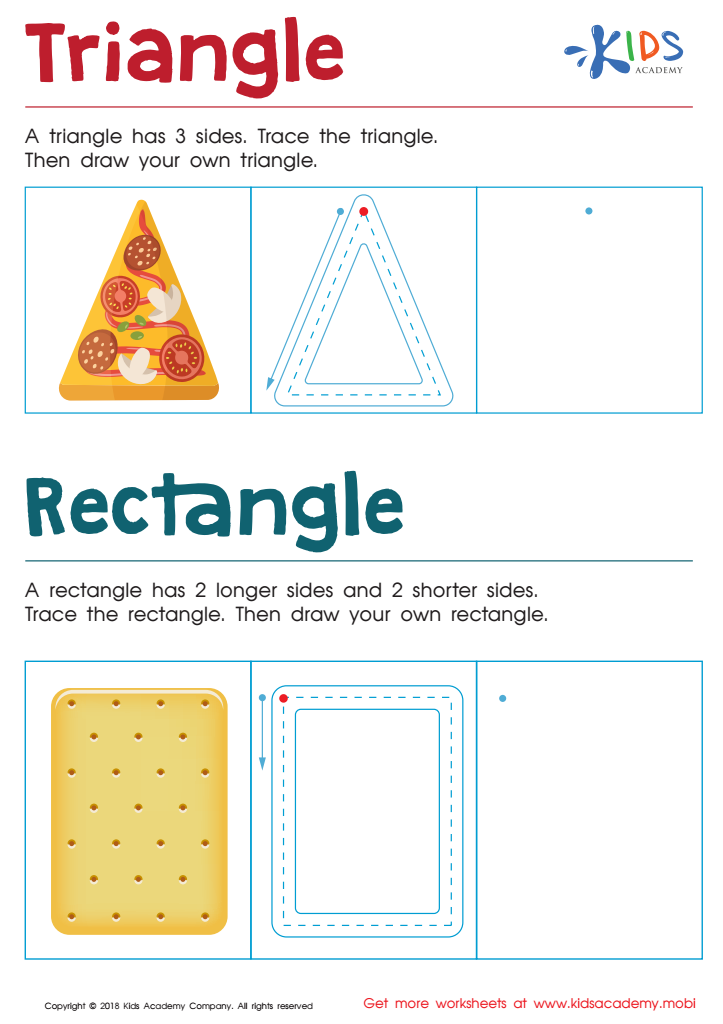
Triangle Rectangle Worksheet
 Assign to My Students
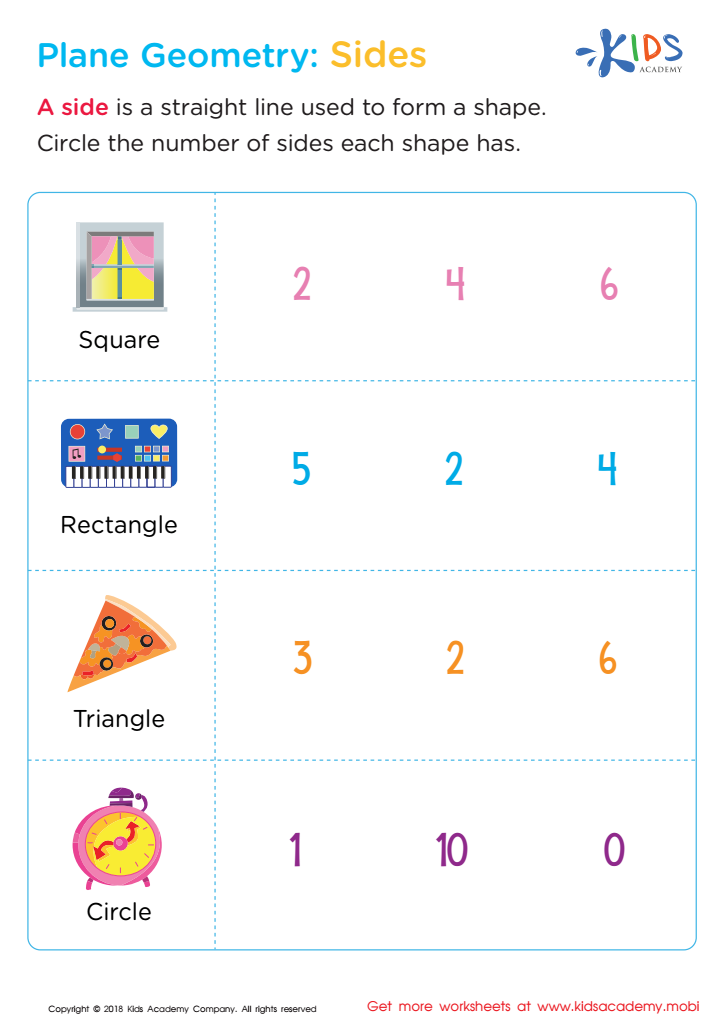
Plane Geometry: Sides Worksheet
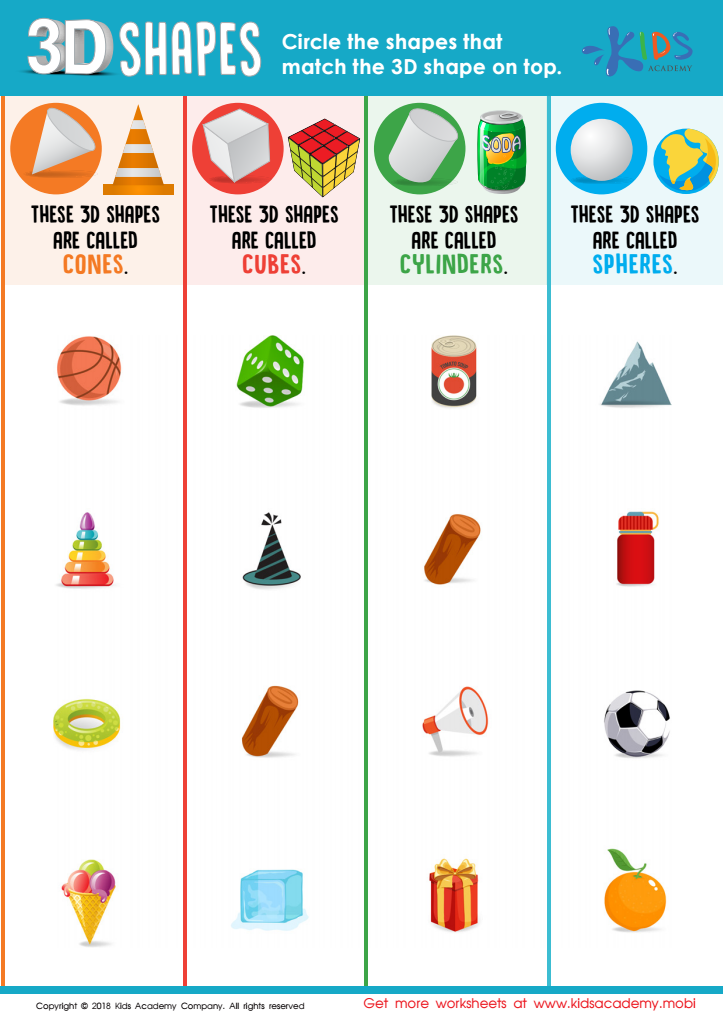
3D Shapes Worksheet







Differentiating shapes is crucial for young children between ages 3-8 as it lays the foundation for early math and cognitive development. At this stage, children are developing their observational skills and spatial awareness, which are vital components of their overall intellectual growth. Understanding and identifying different shapes helps to enhance their visual discrimination skills—the ability to notice and correctly identify similarities and differences, an essential skill for reading and writing.
Moreover, shape differentiation aids in the development of fine motor skills. Activities like tracing shapes or using blocks require precise hand movements, which strengthen muscle coordination and control. Recognizing and categorizing shapes can also improve children’s problem-solving abilities. For instance, when children play with puzzles, they learn to match shapes and see how they fit together, developing their logical reasoning.
Furthermore, it encourages language development. As children learn to name and describe shapes, they expand their vocabulary and communication skills. Parents and teachers should focus on these areas because they help to build a foundation of basic geometry concepts that will be critical in higher-level mathematics and real-life applications like navigating the world around them—all while making learning engaging and fun for young minds.








