Identifying Animals Normal Worksheets for Ages 3-8
3 filtered results
-
From - To
Discover our educational and fun "Identifying Animals" worksheets designed for children ages 3-8. These engaging printables are perfect for developing young learners' abilities to recognize and name various animals. Featuring colorful images and interactive activities, our worksheets aim to enhance observational skills, promote cognitive development, and build vocabulary. Ideal for both classroom and at-home learning, these resources foster curiosity about the animal kingdom and support early childhood education milestones. Make learning exciting and enjoyable for your kids with our expertly crafted worksheets at Kids Academy. Explore today and watch your child's knowledge grow!
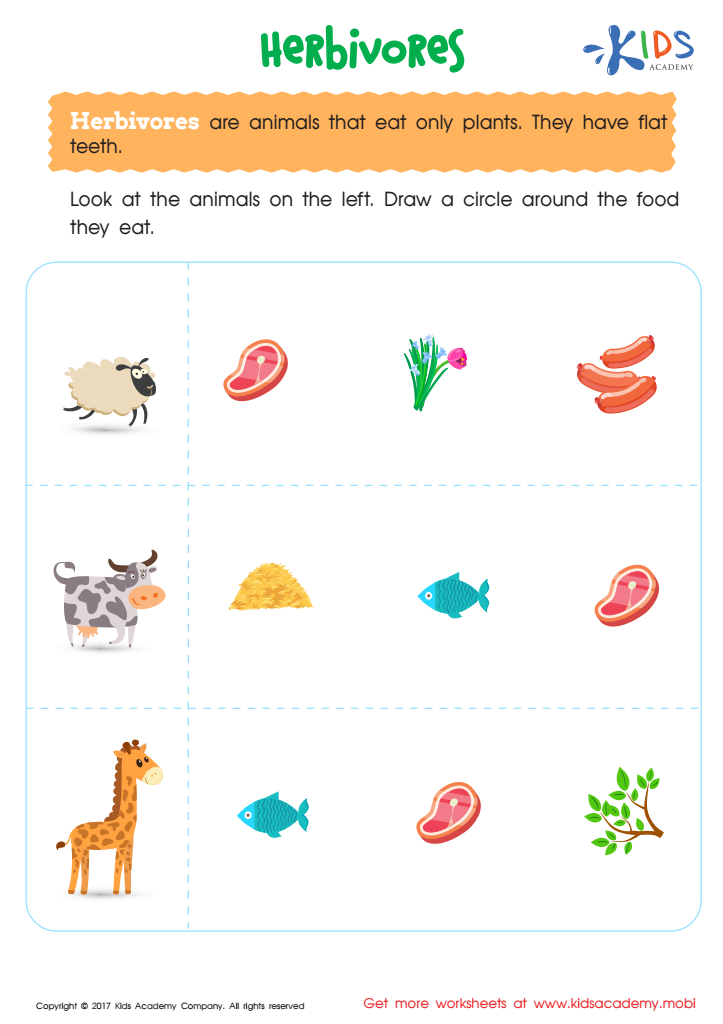
Herbivores Printable
 Assign to My Students
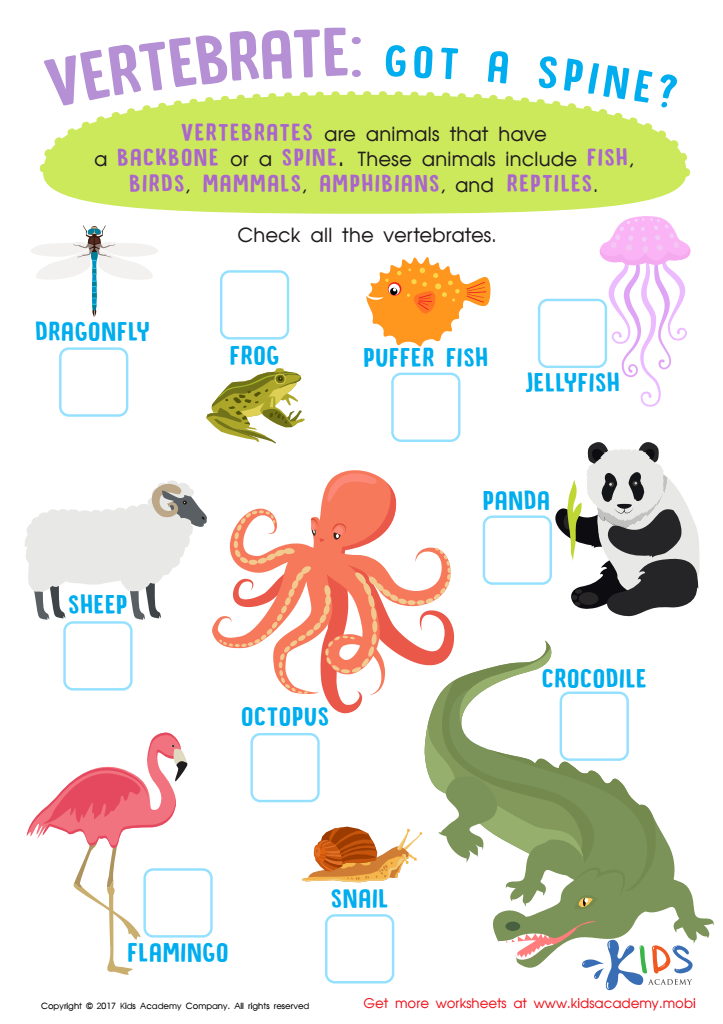
Vertebrates Animals Worksheet for 3rd Grade
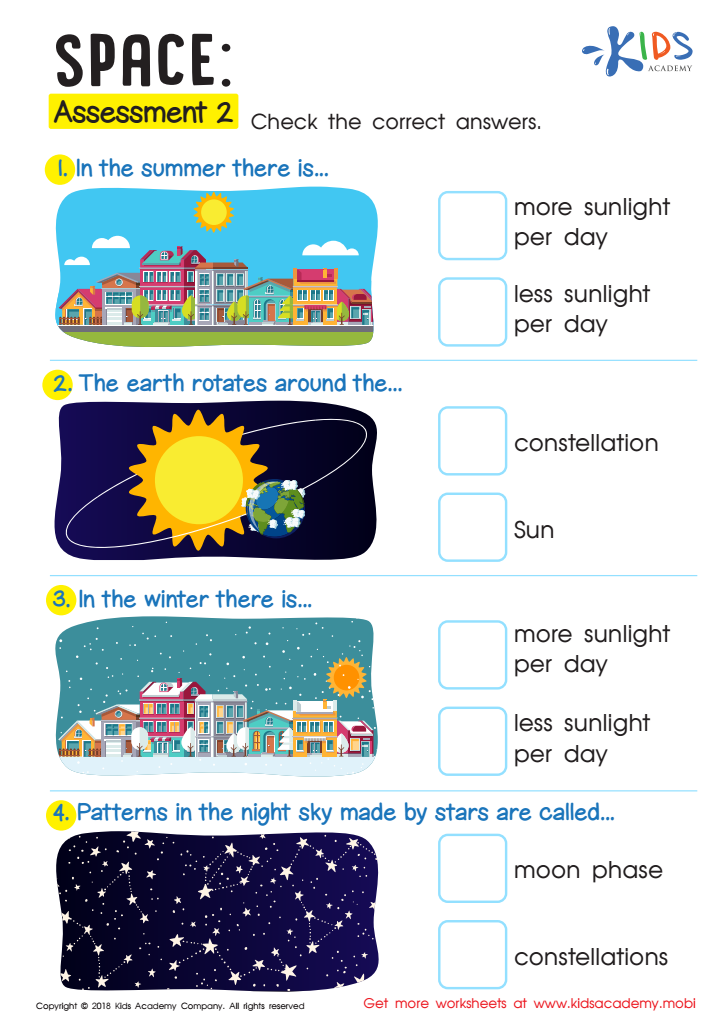
Space: Assessment 2 Worksheet




.jpg)


Understanding and identifying animals are fundamental building blocks in early childhood education, benefiting children ages 3-8 in multiple ways. Firstly, engaging with animals fosters a child's curiosity and enhances observational skills. By learning to differentiate various animals, children develop keen attention to detail and a better understanding of their environment.
Secondly, animal identification can significantly broaden a child's vocabulary. Terms related to different species, habitats, and characteristics enrich children's language skills, encouraging better communication and description abilities.
Additionally, learning about animals instills a sense of empathy and responsibility. Awareness of animal traits and behaviors can help children form connections that make them more compassionate and respectful towards living beings.
This knowledge also provides a boost to cognitive development. Recognizing patterns, such as similarities and differences among animals, sharpens analytical thinking and categorization skills. These early educational experiences serve as a precursor to more intricate scientific studies in later years.
Finally, identification activities can be fun and engaging, tasking young minds with playful yet structured learning. Nature walks, picture books, and interactive sessions make education a delightful adventure, fostering a love for learning and scientific inquiry from an early age.








