
Information retention Normal Worksheets for Ages 3-8
6 filtered results
Difficulty Level
Grade
Age
-
From - To
Subject
Activity
Standards
Unlock your child’s potential with our Information Retention Normal Worksheets for Ages 3-8! Designed to enhance memory and comprehension, these worksheets are tailored to support young learners in mastering the essential skills for retaining information. Each activity is crafted to make learning fun and engaging, using vibrant visuals and interactive tasks that cater to various learning styles. Perfect for both classroom and home use, our worksheets provide a balanced mix of challenges and enjoyment, ensuring your child remains motivated. Help your child build a strong foundational memory with these expertly designed retention enhancement tools. Visit us to explore more!
Favorites
With answer key
Interactive
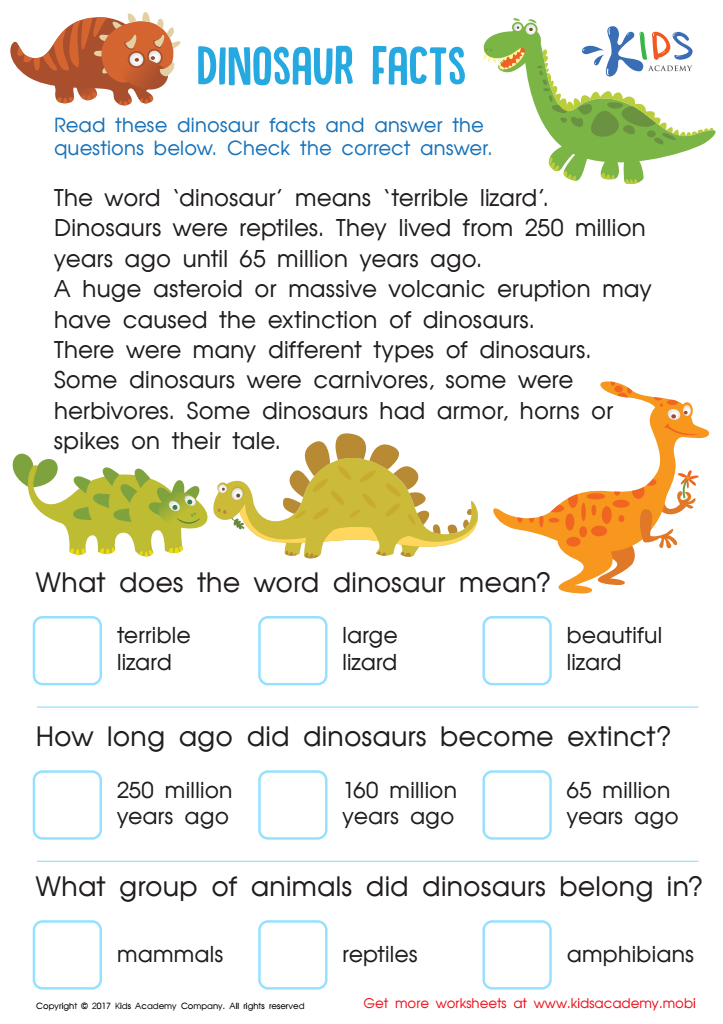
Dinosaur Facts Worksheet
Help your child improve reading skills with engaging nonfiction texts! This dinosaur facts worksheet will teach fun information and test kids on the key details. It'll keep them motivated and ready to learn!
 Assign to My Students
Dinosaur Facts Worksheet
Worksheet
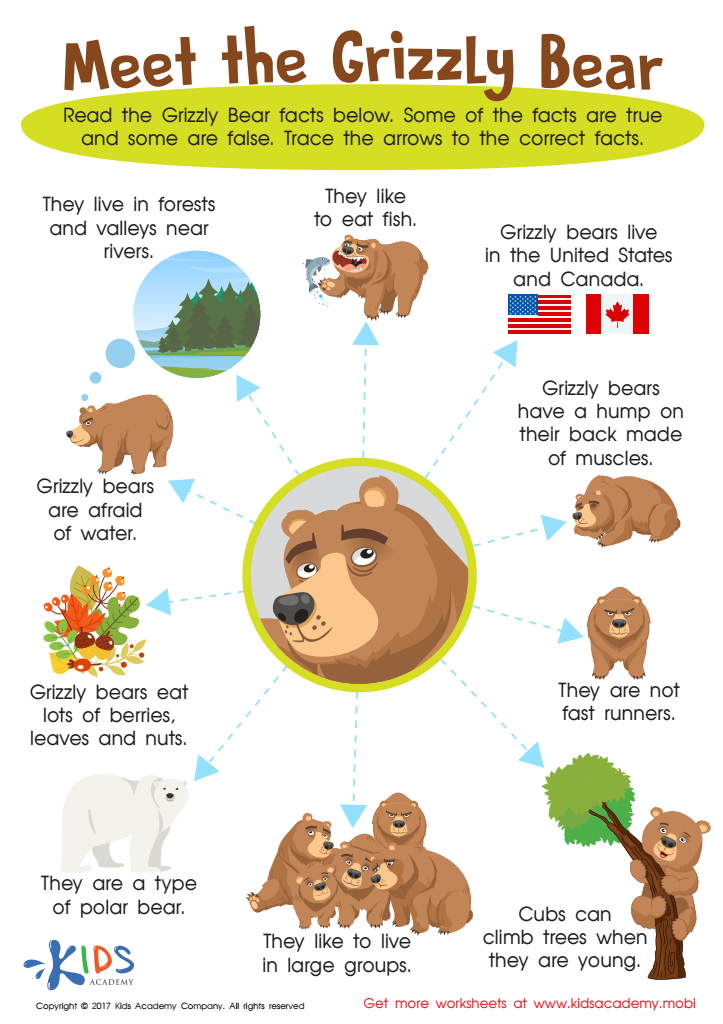
Grizzly Bear Facts Worksheet
Kids will separate truth from fiction in this engaging worksheet about the grizzly bear! Third graders will use their prior knowledge to read the facts and determine which are true and false. Give your child an interesting way to learn more with this vibrant worksheet!
Grizzly Bear Facts Worksheet
Worksheet
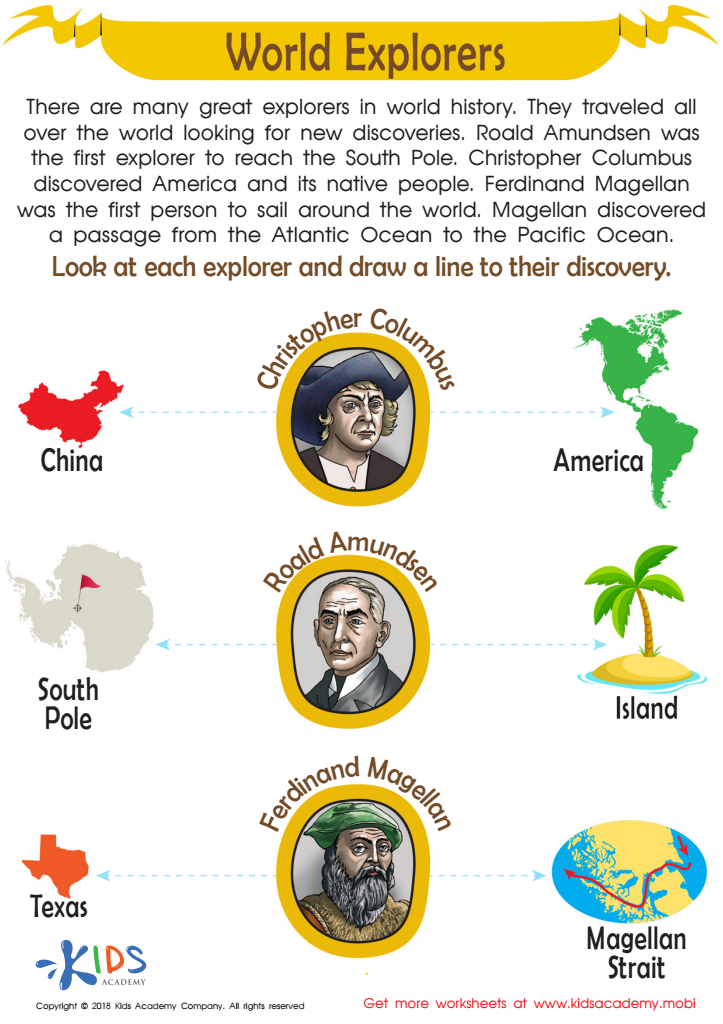
World Explorers Worksheet
Kids are citizens of the world, so it's important to teach them about different cultures and famous explorers. This social studies worksheet helps children learn about the great explorers of history and trace their travels. They'll link Ferdinand Magellan, Christopher Columbus and Roald Amundsen to the places they explored.
World Explorers Worksheet
Worksheet
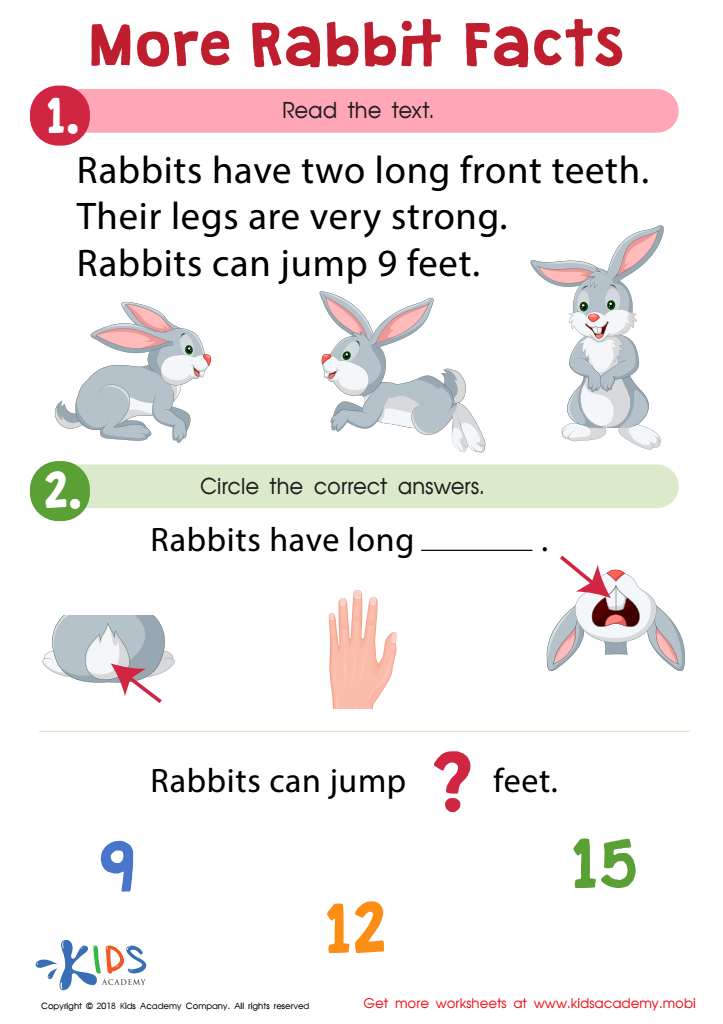
More Rabbit Facts Worksheet
Improve your child's reading comprehension skills with this fun worksheet! Read the paragraph at the top of the page, view the pictures and circle the correct answers indicating what was learned. Develop a better understanding of rabbits while learning how to recall important information from texts.
More Rabbit Facts Worksheet
Worksheet
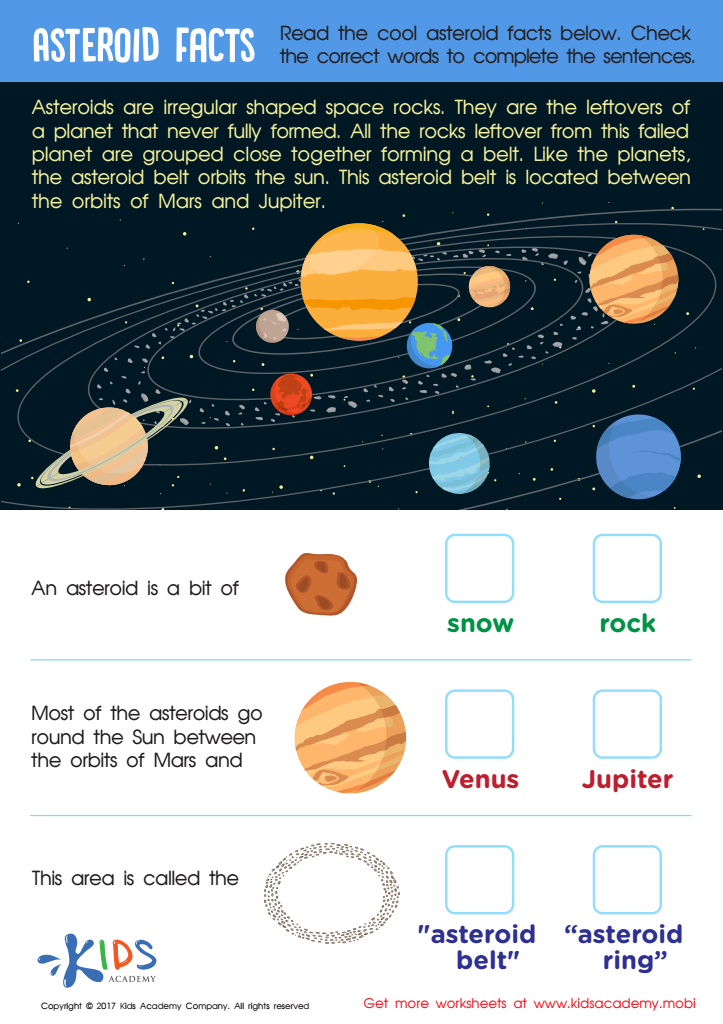
Asteroid Facts Worksheet
Your child can learn about asteroids and hone their comprehension skills with this 2nd-grade asteroid facts worksheet. They'll read a short non-fiction text and select the correct answers to demonstrate understanding of the orbit and properties of these fascinating objects!
Asteroid Facts Worksheet
Worksheet
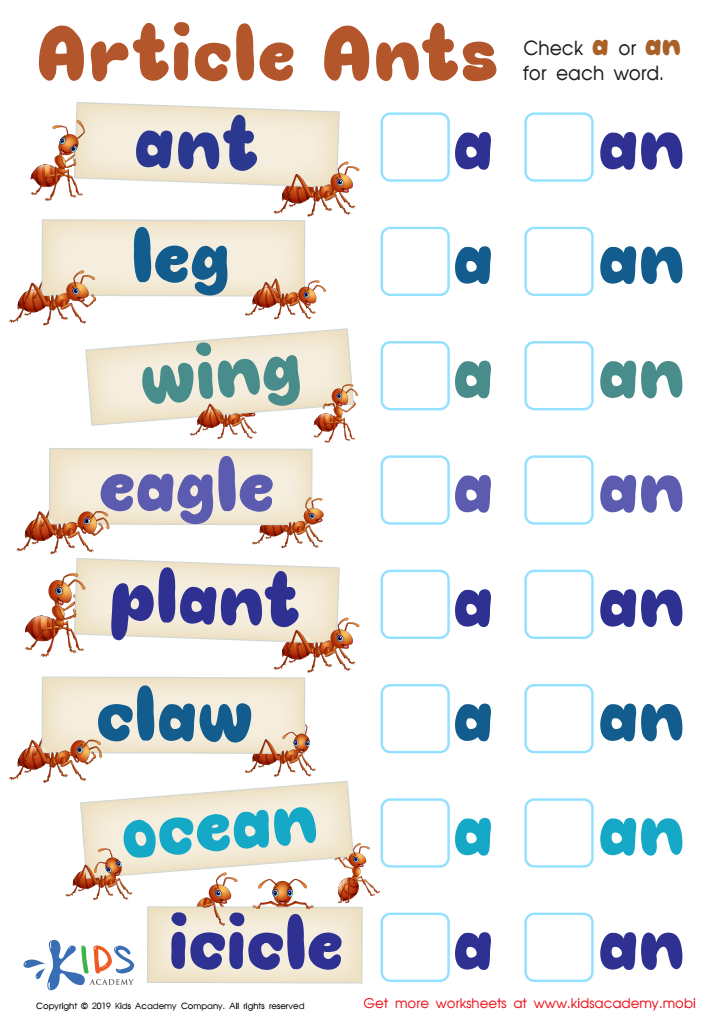
Article Ants Worksheet
Help your child master using "a" and "an" with this fun worksheet! Remind them that "an" goes with vowel sounds, while "a" is used for consonants. Have them check the right box next to each word to complete the activity.
Article Ants Worksheet
Worksheet
Join Kids Academy for Free
Who is primarily going to use this learning content?







Information retention during the early years, specifically ages 3-8, is crucial for a child's cognitive and emotional development. This period is marked by rapid brain growth, and the experiences and knowledge gained during these years lay the foundation for future learning. Parents and teachers have a pivotal role in facilitating and enhancing this process.
First, information retention directly impacts language development, problem-solving skills, and general knowledge acquisition. Children with better retention can build on previous knowledge, making it easier to grasp more complex concepts as they grow. This cyclical process forms a robust learning trajectory, ensuring children do not fall behind.
Second, strong retention abilities aid in social and emotional development. Remembering interpersonal interactions, societal norms, and emotional responses helps children navigate social settings successfully, fostering better relationships and reducing behavioral issues.
Third, diverse and stimulating environments promote healthy information retention. Parents and teachers can create enriching experiences, such as interactive storytelling, educational games, and explorative play, enhancing memory and cognitive skills.
Lastly, early intervention in cases of noticeable retention struggles is possible when caregivers are attentive. Recognizing and addressing these issues early can prevent long-term educational challenges, making early monitoring and support essential. Therefore, parents and teachers should prioritize and proactively support information retention to foster holistic development.








