
Learning addition Normal Worksheets for Ages 3-8
4 filtered results
Difficulty Level
Grade
Age
-
From - To
Subject
Activity
Standards
Discover a world of fun and engaging addition worksheets designed specifically for children ages 3-8! Our "Learning Addition Normal Worksheets" are perfect for young learners, helping them build essential math skills through interactive exercises. Each worksheet is crafted to cater to varying skill levels, making it easy for parents and educators to find the right resources for their child. These activities promote number recognition, counting, and basic addition in a playful and enjoyable manner, ensuring a positive learning experience. Download our printable worksheets today and let your child explore the exciting journey of mastering addition while having fun!
Favorites
With answer key
Interactive
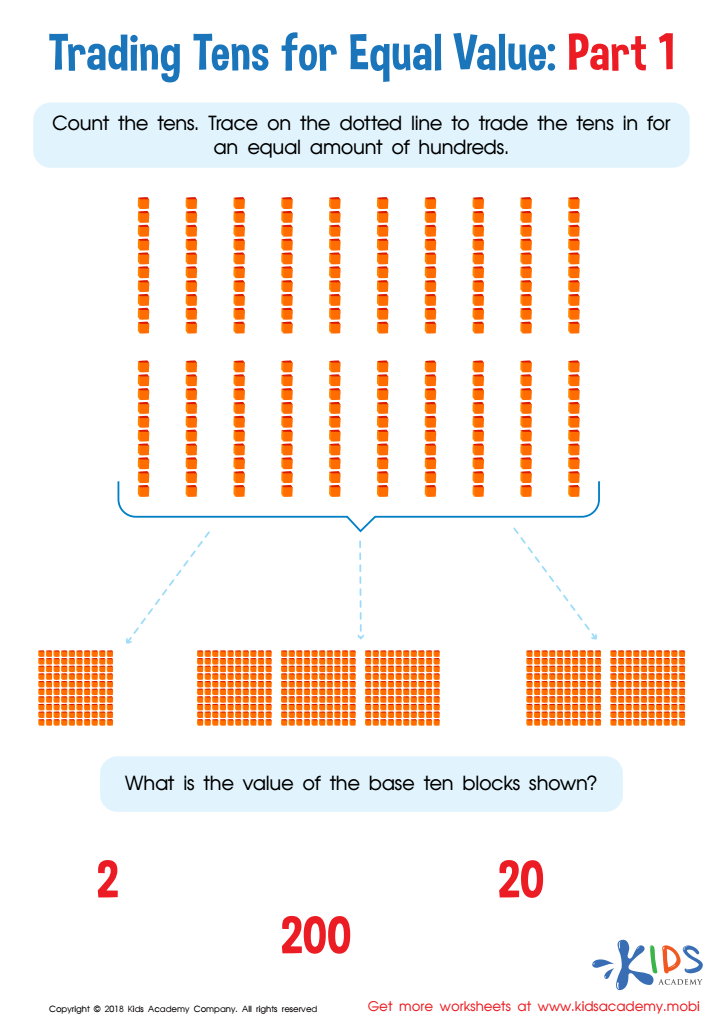
Trading Tens for Equal Value Worksheet: Part 1
This worksheet helps 3rd graders count large numbers and recognize base numbers. It lists 10 cubes and asks students to identify the hundreds, then circle the base blocks. This colorful pdf provides a fun, visual way to help students strengthen their math basics.
 Assign to My Students
Trading Tens for Equal Value Worksheet: Part 1
Worksheet
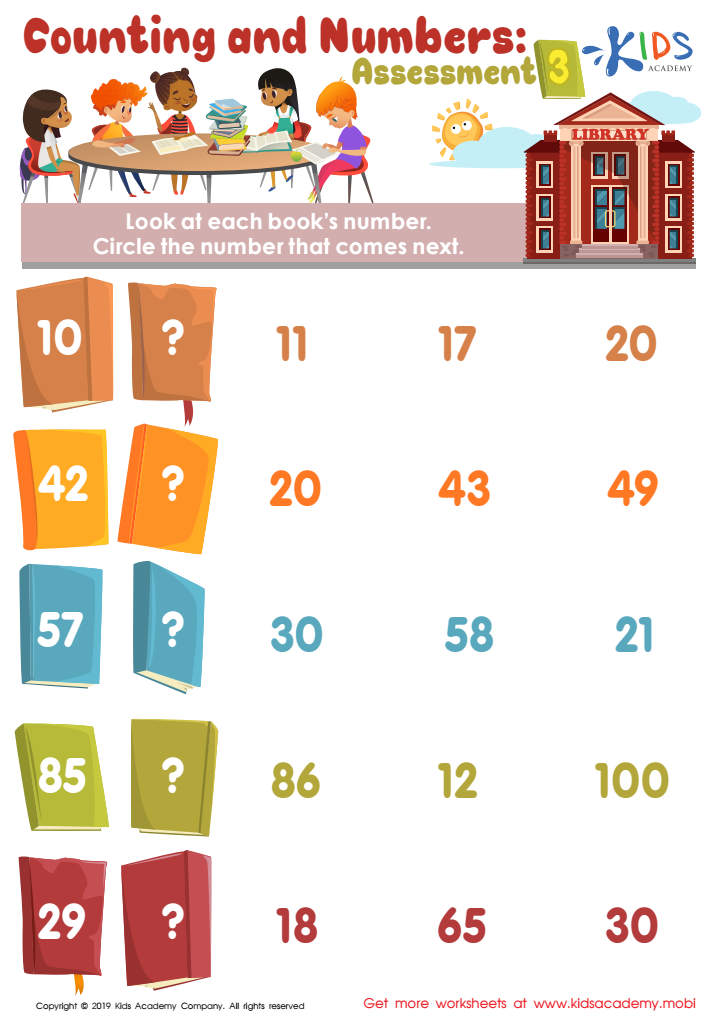
Counting and Numbers: Assessment Worksheet
Number line thinking is an essential math skill. Kids using this skill can compute math problems accurately and quickly. Our free assessment tests number line recognition; have your child pick the right number from the given options to follow the current number on the line. This assessment will give you an idea of their counting skills.
Counting and Numbers: Assessment Worksheet
Worksheet
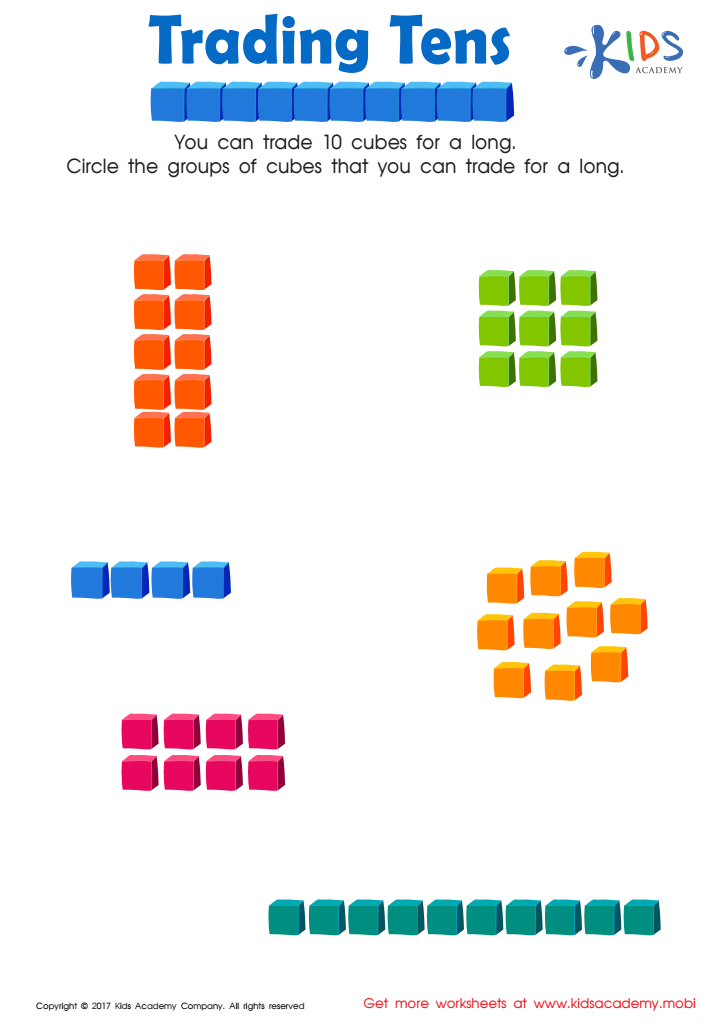
Trading Tens Worksheet
Students will hone their counting skills with this worksheet. They must identify groups of 10 cubes to trade for a long. The cubes are arranged in different ways, so students must rely on individual counting. Completing this printable pdf will help 1st graders develop problem-solving abilities and a better understanding of counting.
Trading Tens Worksheet
Worksheet
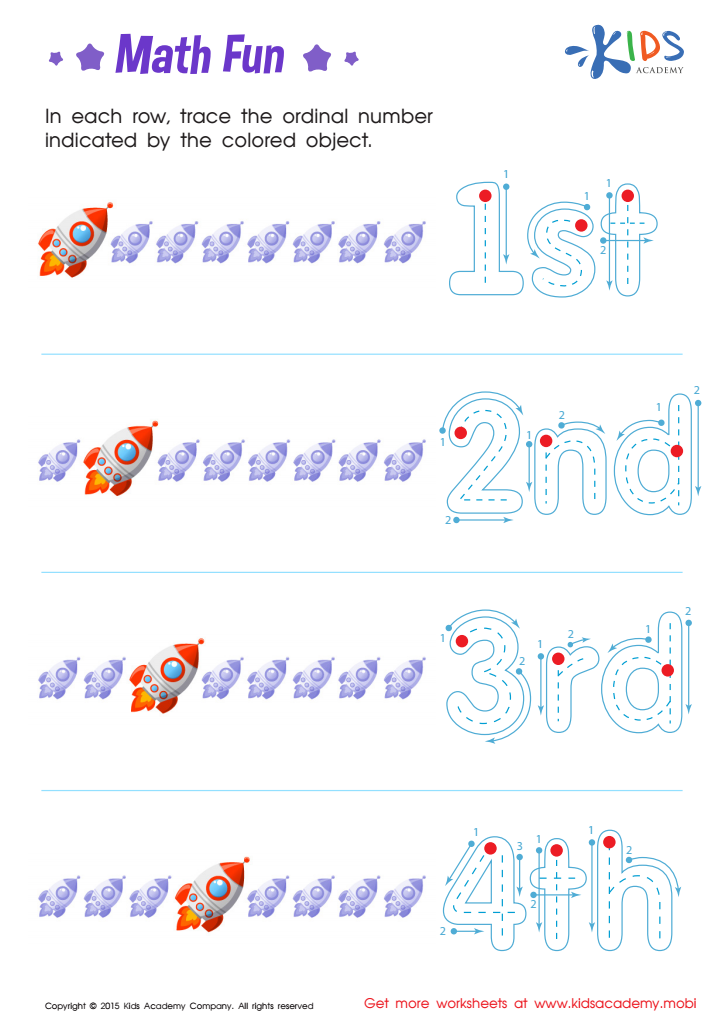
Ordinal Numbers: Math Fun Worksheet
Have fun learning ordinal numbers with our spaceship worksheet! Kids learn best while having fun and with repetition. Featuring vibrant spaceships, your child will understand placement, recognize and write ordinal numbers, and make connections. Understanding ordinal numbers leads to more advanced math concepts. Get your math whiz ready for preschool with our addition/subtraction worksheets! Have fun learning ordinal numbers and master them in no time!
Ordinal Numbers: Math Fun Worksheet
Worksheet
Join Kids Academy for Free
Who is primarily going to use this learning content?








Parents and teachers should prioritize teaching addition to children aged 3-8 because early mathematical skills lay the foundation for future academic success. Mastering addition not only enhances a child's numeracy skills but also promotes critical thinking and problem-solving abilities. These early lessons in addition help children develop a sense of numbers and quantities, fostering their confidence in mathematics.
Moreover, learning addition at a young age supports cognitive development. It encourages logical reasoning, which can positively influence academic performance across subjects, including reading and science. Engaging in addition activities enhances fine motor skills, particularly through hands-on methods like using counting blocks or drawing, making learning multisensory and enjoyable.
Additionally, developing strong mathematical skills early fosters a positive attitude toward math, countering the common anxieties children may feel about the subject as they progress in school. Teachers and parents can incorporate playful approaches, such as games and everyday situations, to make learning addition fun and relatable.
Ultimately, establishing a solid understanding of addition not only empowers children academically but also equips them with valuable life skills. This early foundation will support their learning journey as they encounter more complex mathematical concepts in later grades.








