Noun identification Normal Worksheets for Ages 3-8
4 filtered results
-
From - To
Discover our engaging Noun Identification Normal Worksheets designed for children ages 3-8! These creative educational resources help young learners identify and differentiate nouns in a fun and interactive way. Each worksheet features colorful illustrations and age-appropriate activities that enhance vocabulary skills and reinforce grammatical concepts. Ideal for homeschooling or classroom use, our worksheets support early literacy development through hands-on practice. Encourage your child's love for language while building their confidence in recognizing nouns. From pictures to simple sentences, our varied exercises make learning a joyful experience. Start exploring today and watch your child thrive in their understanding of nouns!
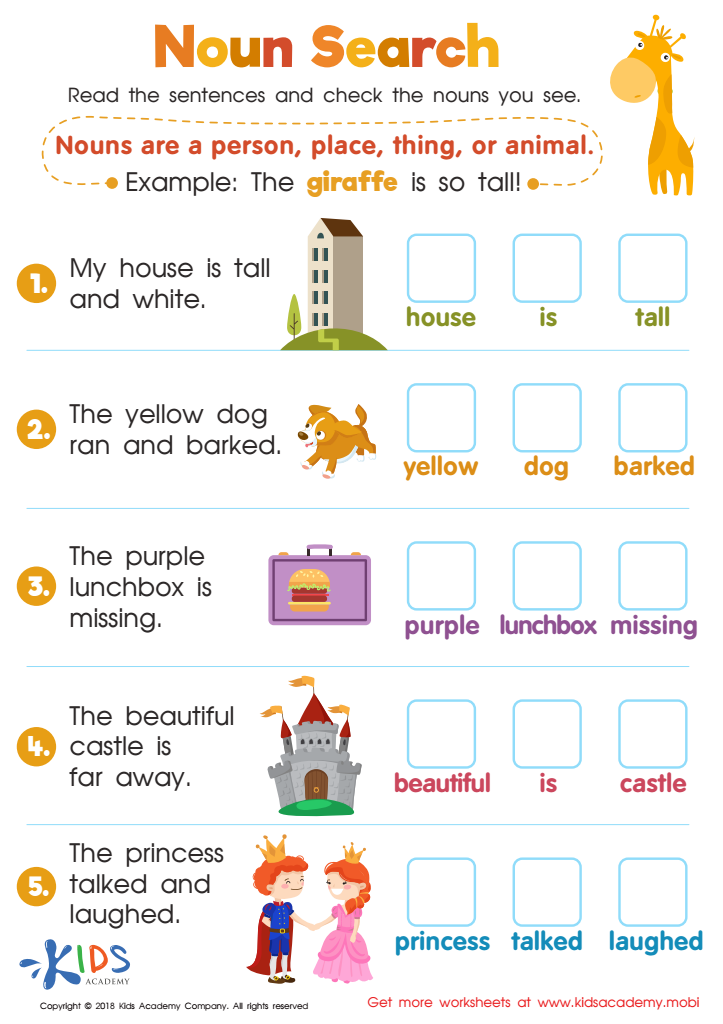
Noun Search Worksheet
 Assign to My Students
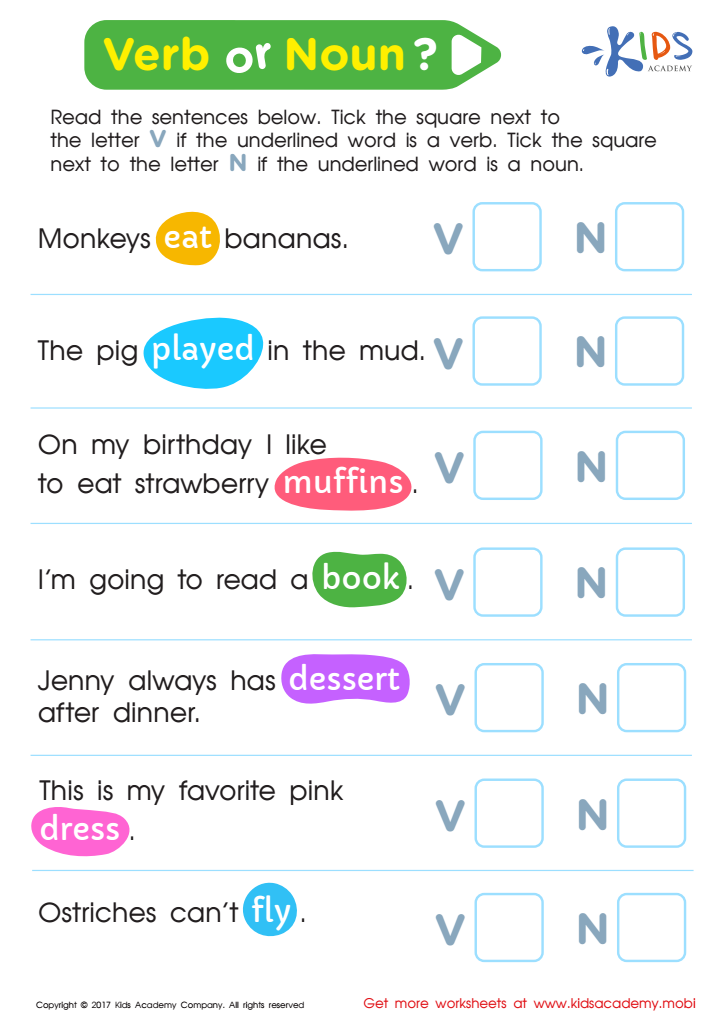
Verb or Noun Worksheet
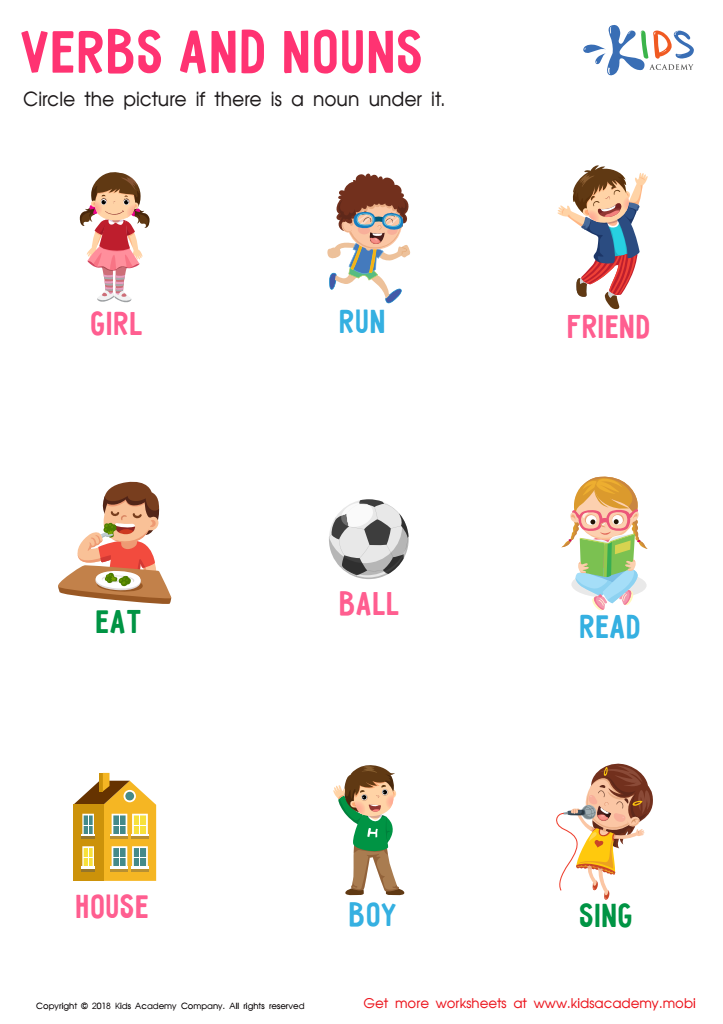
Verbs and Nouns Worksheet
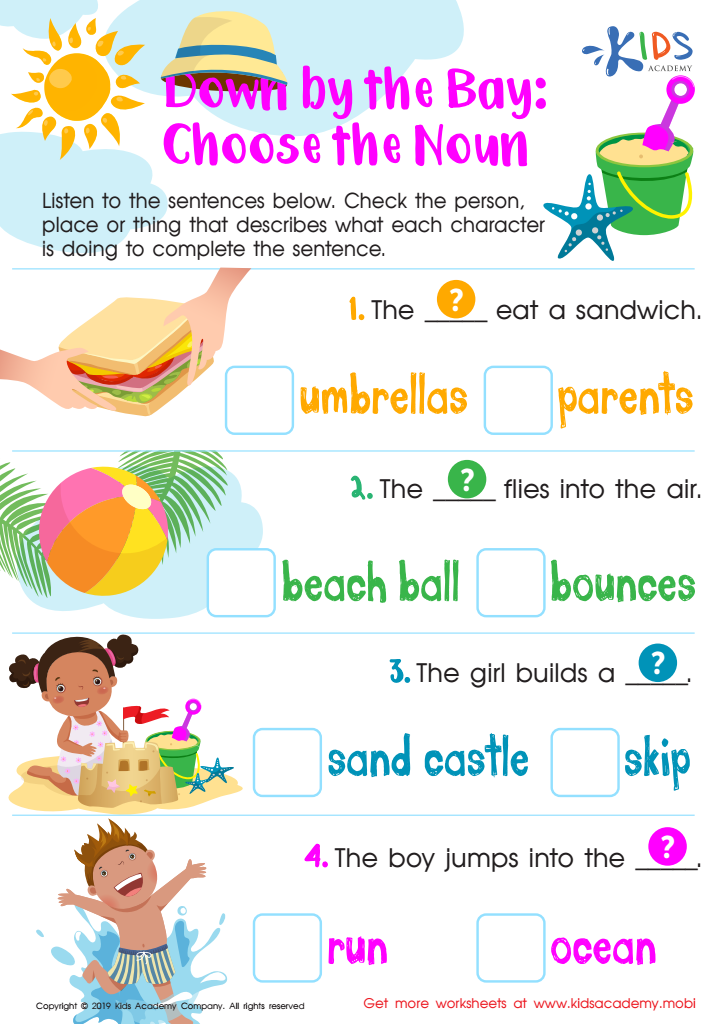
Down by the Bay: Choose the Noun Worksheet







Noun identification is a fundamental skill in early childhood education that significantly impacts a child's language development, literacy skills, and cognitive growth. For children aged 3-8, understanding nouns—the names of people, places, things, and ideas—forms the foundation for effective communication and storytelling. When parents and teachers prioritize noun identification, they facilitate vocabulary expansion, which helps children express themselves clearly and enhances their comprehension of spoken and written language.
This skill also promotes critical thinking as children start to categorize and relate different nouns, encouraging them to make connections about the world around them. By engaging in noun identification activities, children gain confidence in recognizing and using language, preparing them for more complex grammatical structures as they progress to later grades.
Moreover, early mastery of nouns lays the groundwork for reading and writing fluency. When children can easily identify and use nouns, they are better equipped to understand texts and create their own narratives. Encouraging noun identification through play, conversations, and interactive activities fosters a love for language and learning, ultimately enriching children's educational journeys and ensuring they are set for academic success. Thus, investing time in this skill is vital for holistic child development.








