Phonetic awareness Normal Worksheets for Ages 3-8
4 filtered results
-
From - To
Boost your child's phonetic awareness with our engaging Normal Worksheets, designed for ages 3-8. These carefully crafted exercises provide a fun and interactive way to develop foundational reading skills. Children will explore letter sounds, rhyming words, and blending activities that support early literacy. Our age-appropriate content ensures the right level of challenge, promoting confident readers. Whether for classroom use or at-home practice, these worksheets offer a structured approach to mastering phonetic principles, fostering a love for learning. Start your child's educational journey today with our comprehensive phonetic awareness worksheets, tailored to support early childhood development.
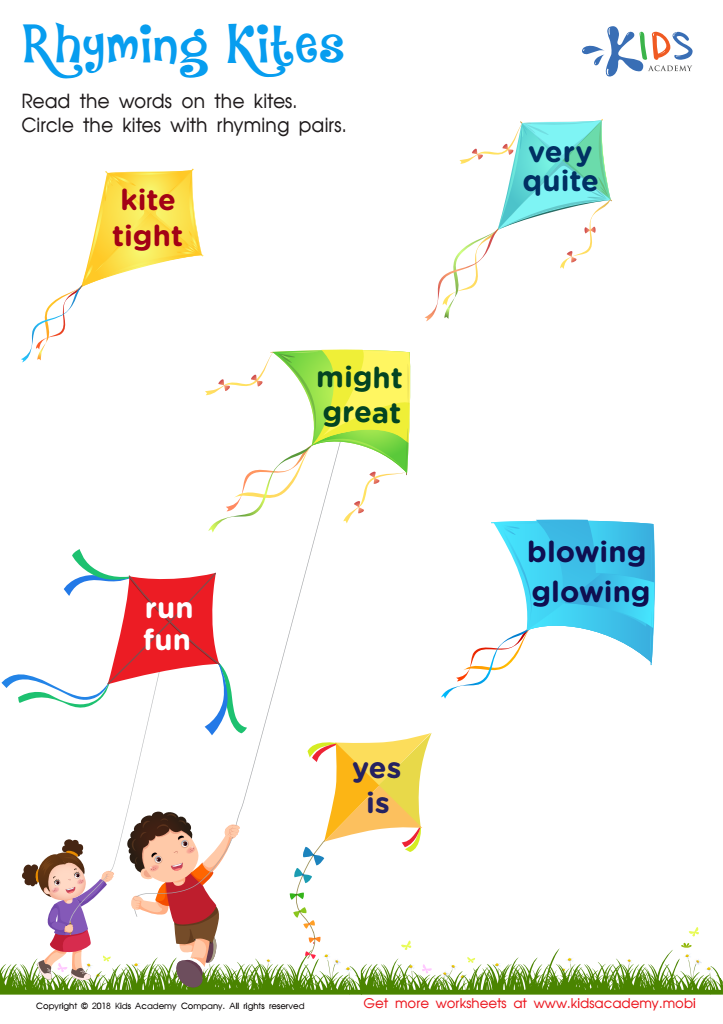
Rhyming Kites Worksheet
 Assign to My Students
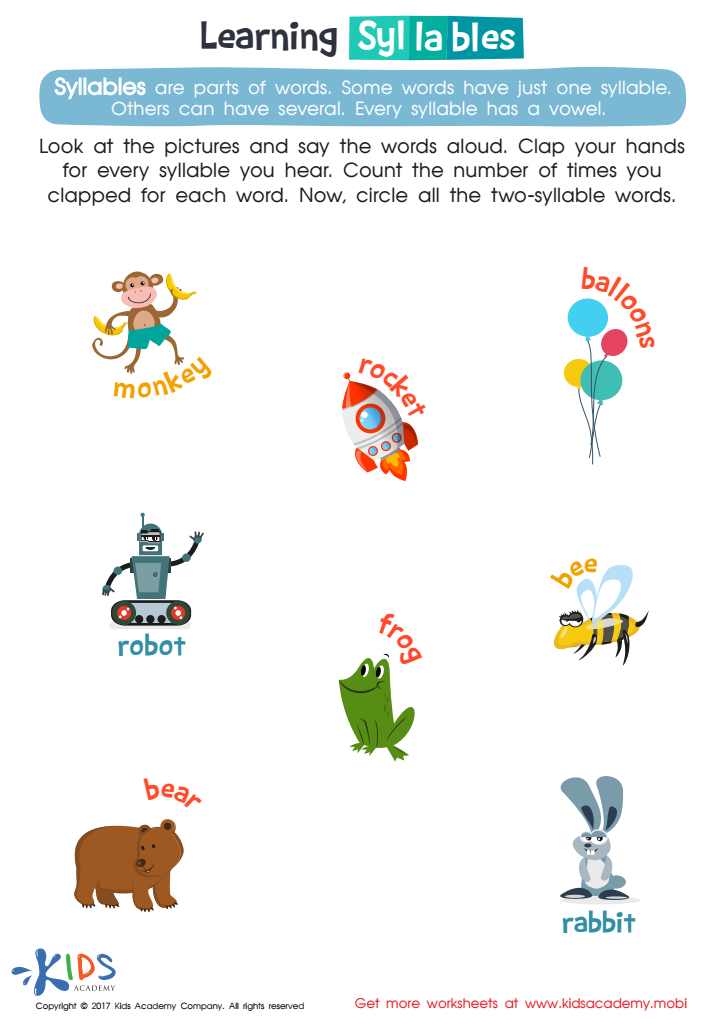
Learning Syllables Word Structure Worksheet
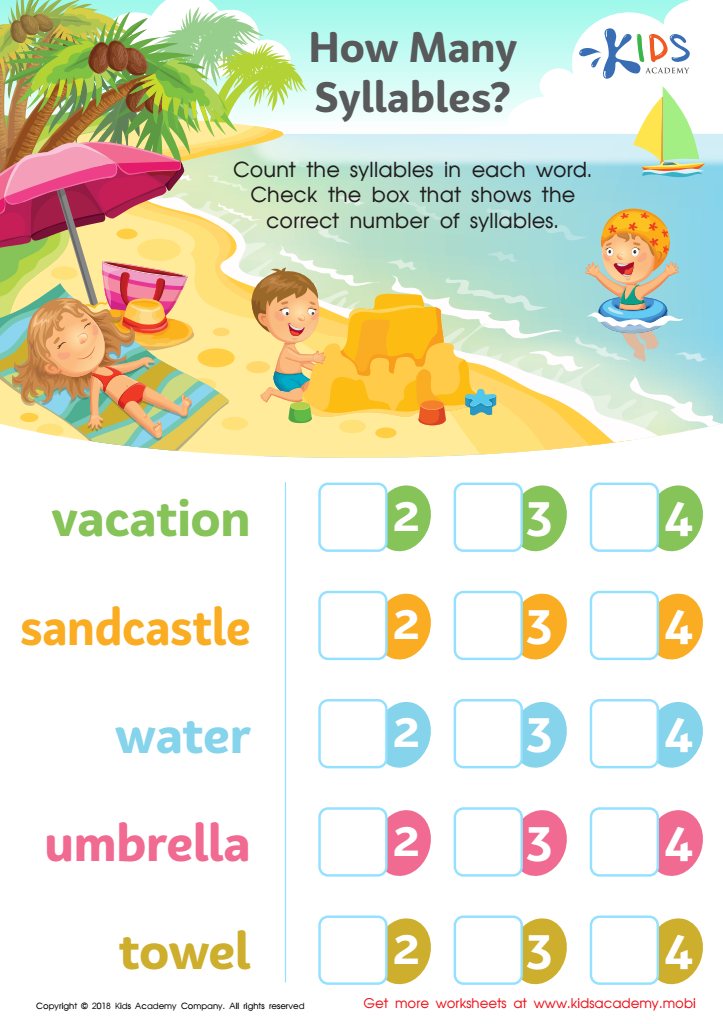
How Many Syllables Worksheet
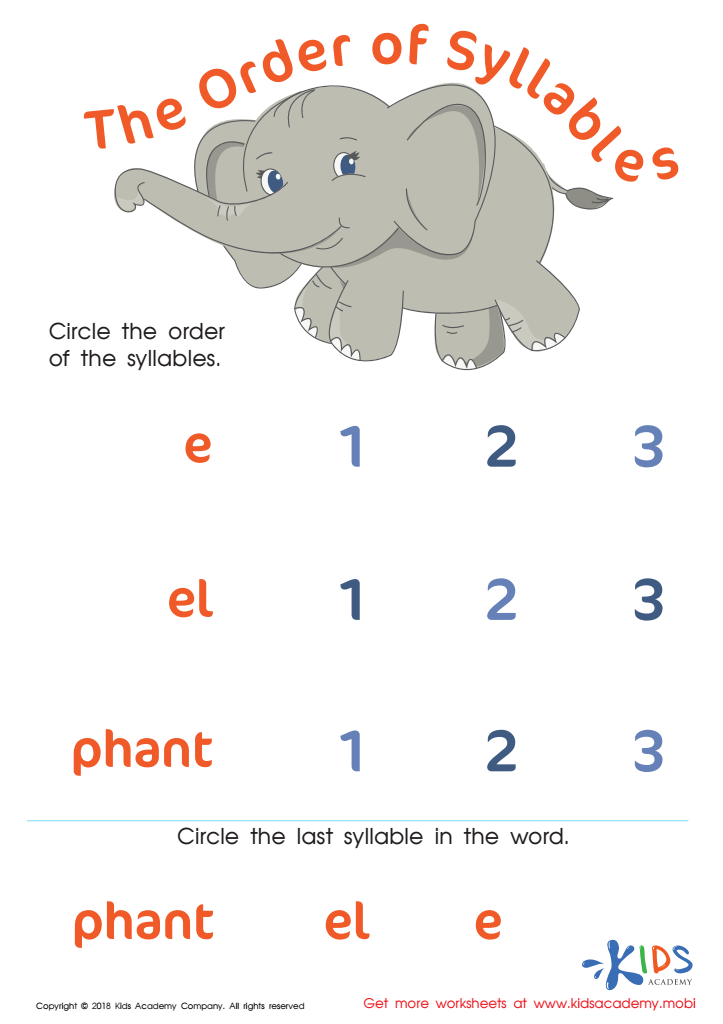
The Order of Syllables Worksheet








Phonetic awareness is a crucial foundational skill for young learners, typically developing between the ages of 3 and 8. This skill helps children recognize and manipulate sounds within words, which is essential for reading and writing proficiency. Parents and teachers should emphasize phonetic awareness to ensure children not only decode words effectively but also build a lifetime of strong literacy skills.
At a young age, phonetic awareness helps children understand the relationships between letters and sounds, fostering early reading success. This understanding aids in word recognition and reading fluency, making it easier for children to comprehend and enjoy the text. Without this foundational skill, children may struggle with reading challenges, such as dyslexia, which can hamper their academic progress and lead to frustration.
Additionally, cultivating phonetic awareness early on boosts cognitive development by enhancing memory, auditory processing, and attention to detail. It also strengthens vocabulary and language comprehension, enabling more effective communication and the ability to express thoughts and ideas clearly.
Overall, prioritizing phonetic awareness in early education sets children on a path to academic achievement, instills a love for reading, and contributes to their overall intellectual growth. For these reasons, educators and parents should consciously integrate phonetic activities and literacy-rich environments into their daily interactions with young learners.








