Phonics development Normal Worksheets for Ages 3-8
3 filtered results
-
From - To
Explore our comprehensive collection of phonics development worksheets for children ages 3-8, designed to foster early literacy skills through engaging activities. Our carefully crafted resources provide an assortment of fun exercises that enhance phonemic awareness, helping young learners recognize sounds and letters while building essential reading skills. From interactive letter sound games to colorful vowel recognition tasks, each worksheet supports cognitive development and language acquisition in a playful manner. Whether at home or in the classroom, these normal worksheets are ideal for nurturing a child's love for reading and setting a strong foundation for their educational journey. Download and start learning today!
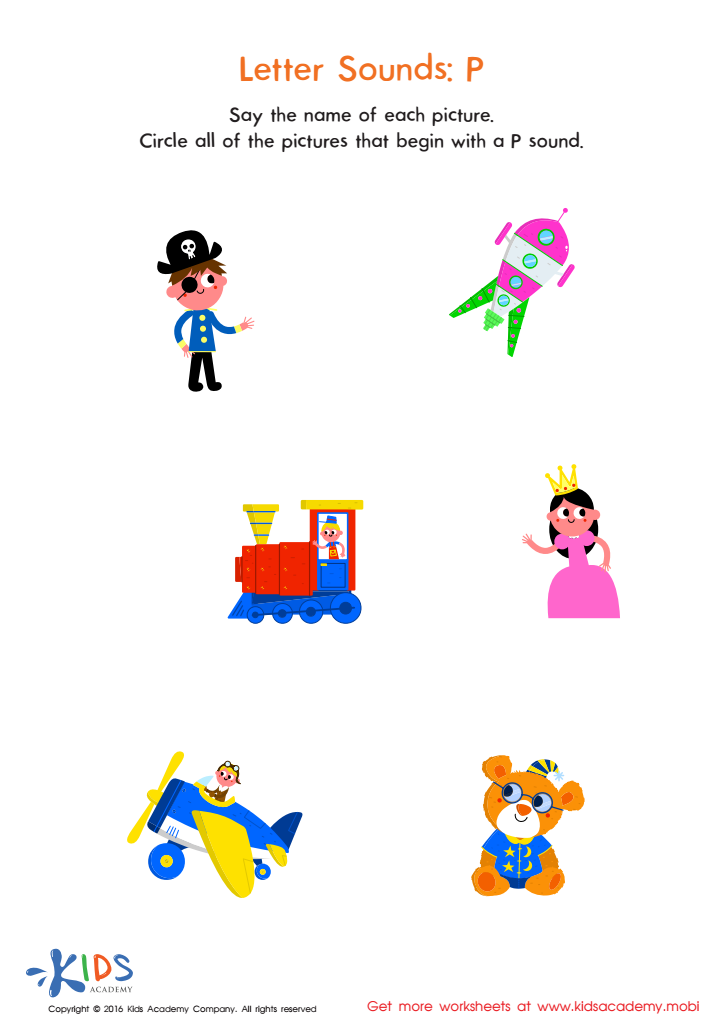
Letter P Sound Worksheet
 Assign to My Students
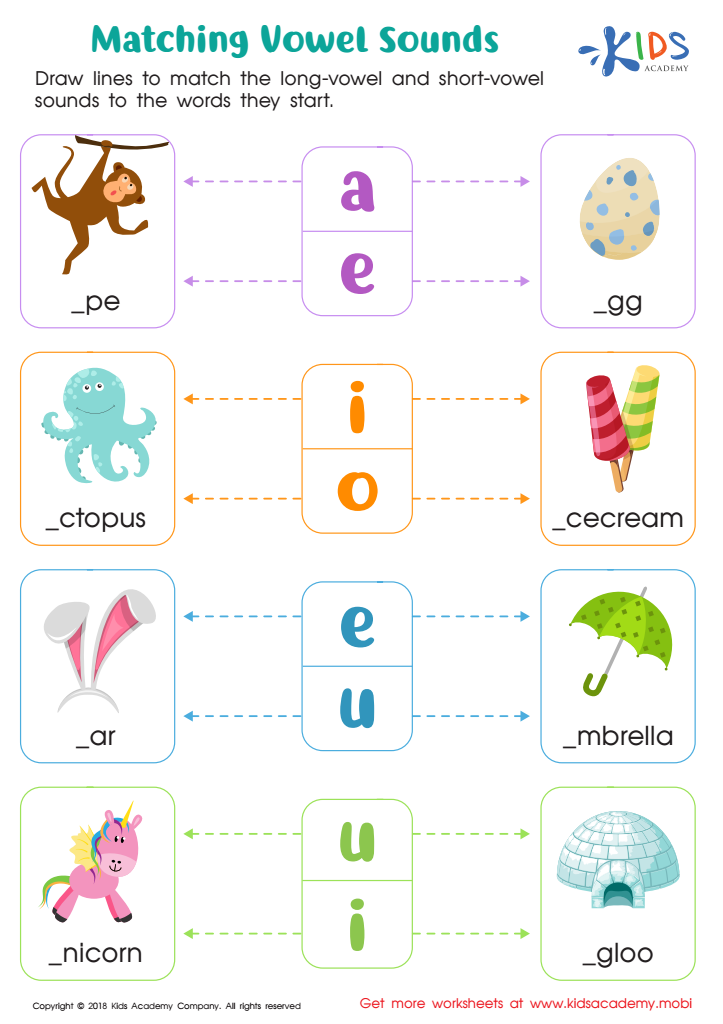
Matching Vowel Sounds Worksheet
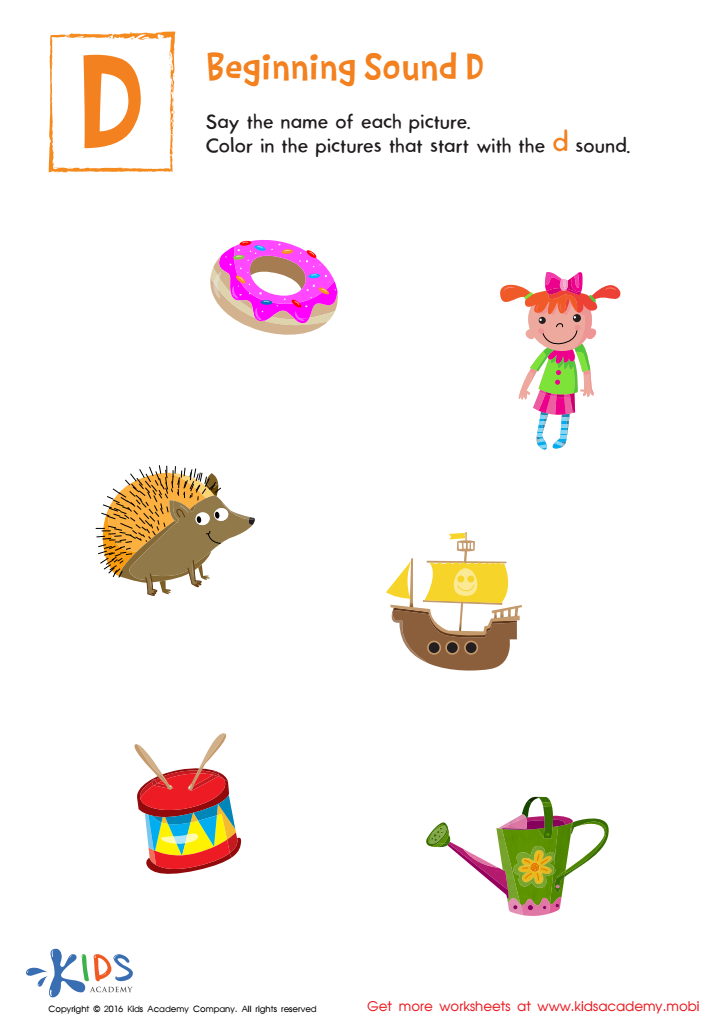
Beginning Sound D Worksheet







Phonics development is crucial for children aged 3-8 as it forms the foundation of reading and writing skills. During these formative years, children begin to understand the relationship between letters and sounds, which significantly enhances their ability to decode words. When children are equipped with phonics knowledge, they can tackle unfamiliar words, improving their reading fluency and comprehension.
Parents and teachers should care about phonics development because strong phonics skills are linked to overall academic success. Children who struggle with phonics may face challenges across various subjects, leading to frustration and decreased motivation. Early intervention through phonics instruction can help build confidence and a love for reading.
Moreover, phonics development fosters critical thinking skills and cognitive development. As children engage with text, they learn to analyze language and understand its nuances, which benefits their communication skills.
Encouraging a positive reading environment at home and in schools, filled with phonics-rich activities, ensures that children are not only prepared for academic challenges but also equipped for lifelong learning. Ultimately, investing in phonics development sets children on a path to literacy and opens doors to endless possibilities.








