Phonics skills enhancement Normal Worksheets for Ages 3-8
3 filtered results
-
From - To
Boost your child's reading abilities with our Phonics Skills Enhancement Worksheets, designed for ages 3-8. Kids Academy offers a variety of engaging, fun worksheets to help young learners master essential phonics skills, such as letter sounds, blending, and word recognition. These tailored activities not only improve literacy but also foster a love for reading. Perfect for both home and classroom learning, our phonics worksheets are crafted by educational experts to build a solid foundation for your child's academic success. Explore our wide range of resources and watch your child's confidence soar as they develop critical phonemic awareness.
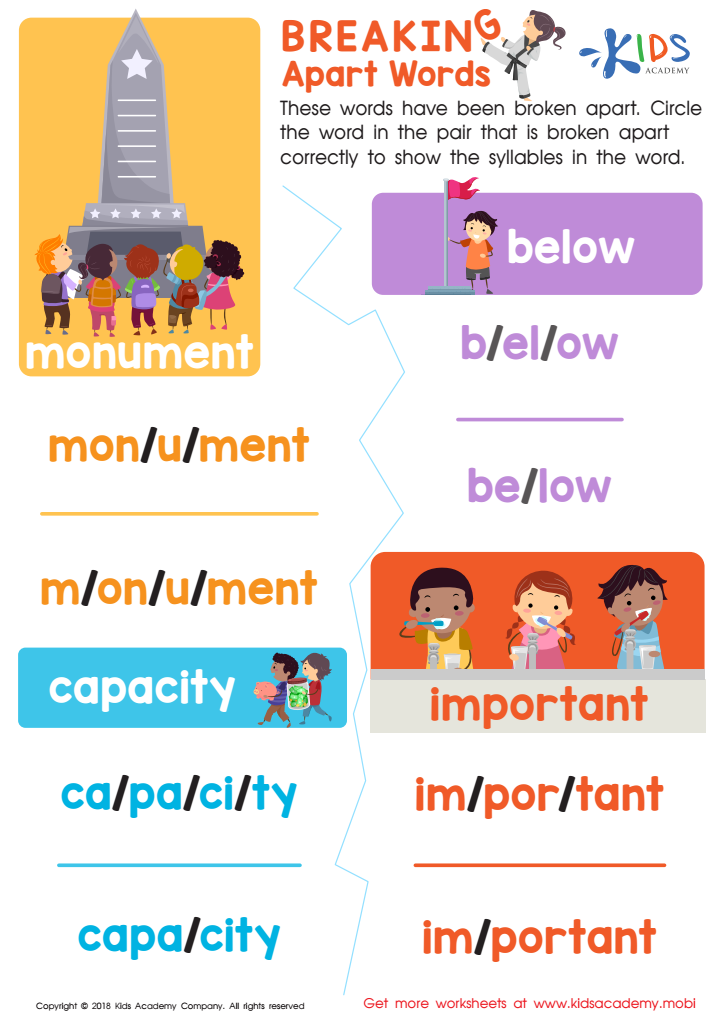
Breaking Apart Words Worksheet
 Assign to My Students
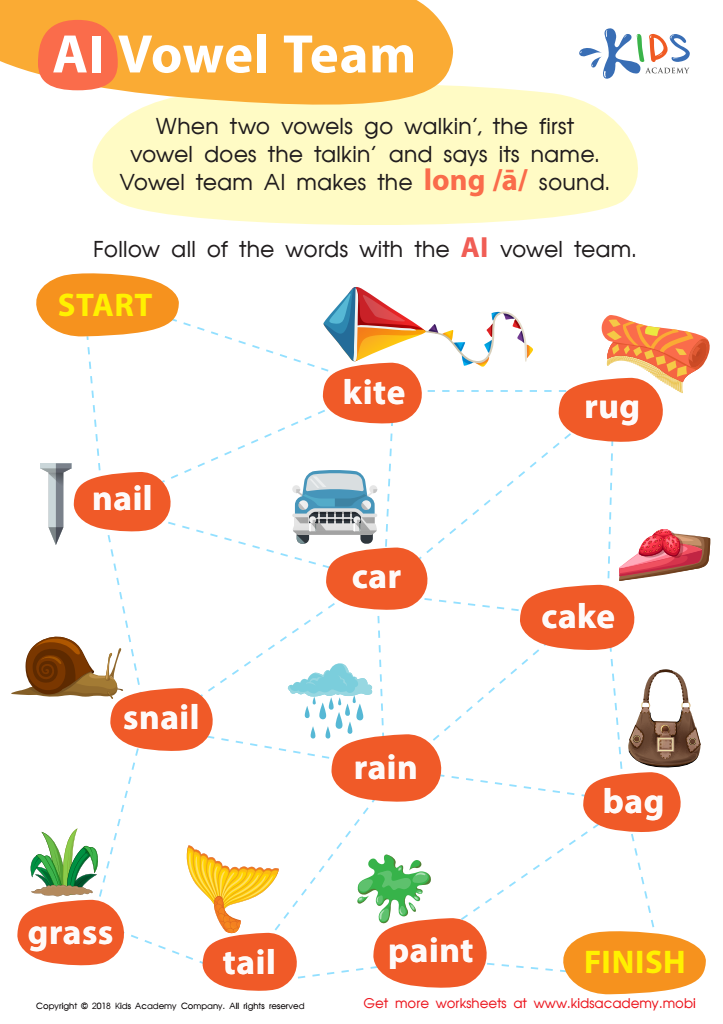
Reading: AI Vowel Team Worksheet
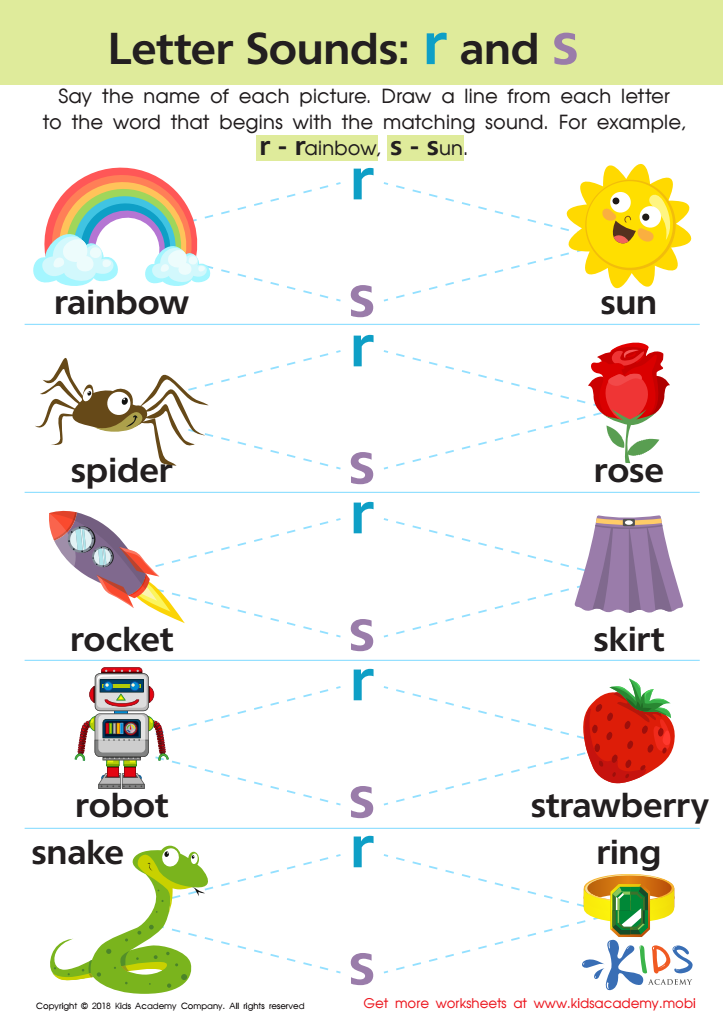
Letter R and S Sounds Worksheet






Phonics skills enhancement is critical for the development of young children, particularly those aged 3-8, as it lays the foundational framework for reading and writing. Parents and teachers should prioritize phonics instruction for several reasons.
First, phonics teaches children the relationship between letters and sounds, which is essential for decoding words. Understanding this relationship helps young learners to read new words independently and spells out words correctly. It builds confidence and promotes a love for reading. Early literacy skills are linked to academic success in later years, hence strong phonics skills can set children on a path toward long-term educational achievement.
Second, phonics instruction supports several linguistic and cognitive skills. Through engaging in phonics activities, children improve their listening skills, as they learn to identify distinct sounds. It also enhances their vocabulary and comprehension, enabling them to understand more complex texts as they progress academically.
Furthermore, difficulties in reading can lead to frustration and reduced self-esteem among young learners. By equipping children with strong phonics skills, parents and teachers can minimize these risks, creating a positive and encouraging learning environment.
In summary, investing in phonics skills enhancement for young learners not only facilitates immediate reading success but also contributes to their overall academic and personal growth, instilling a lifelong love for learning.








