Rhyme recognition Normal Worksheets for Ages 3-8
3 filtered results
-
From - To
Discover our engaging Rhyme Recognition Normal Worksheets designed for children aged 3-8. These worksheets foster essential literacy skills by encouraging young learners to identify and create rhyming words through fun activities. With vibrant illustrations and age-appropriate exercises, kids will enjoy exploring the joy of language while developing their phonemic awareness. Perfect for classroom use or at-home learning, these worksheets support early reading skills and enhance creativity. Give your child the tools they need to thrive in their reading journey with our easy-to-use, printable resources. Visit our site to access a variety of worksheets that transform learning into an enjoyable experience!
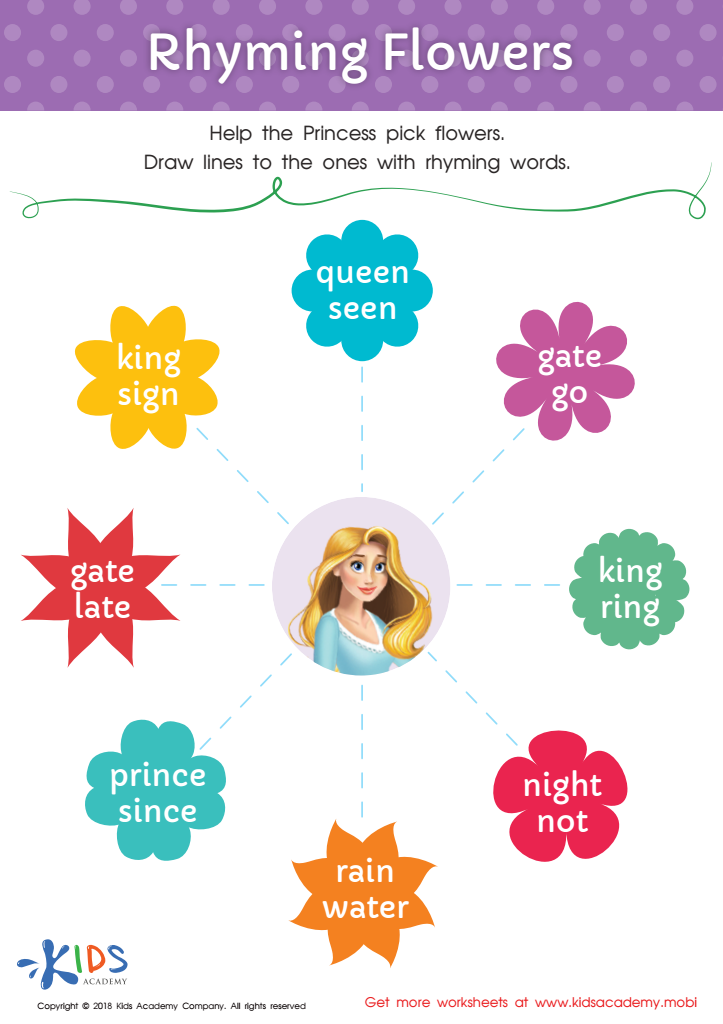
Rhyming Flowers Worksheet
 Assign to My Students
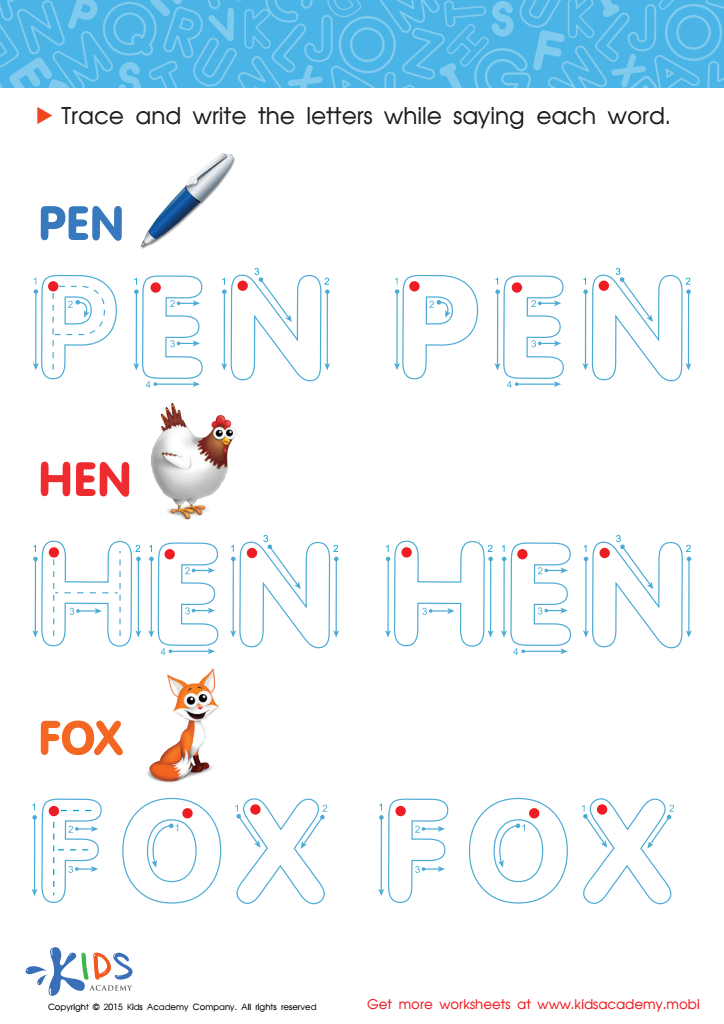
A Pen, a Hen and a Fox Spelling Worksheet
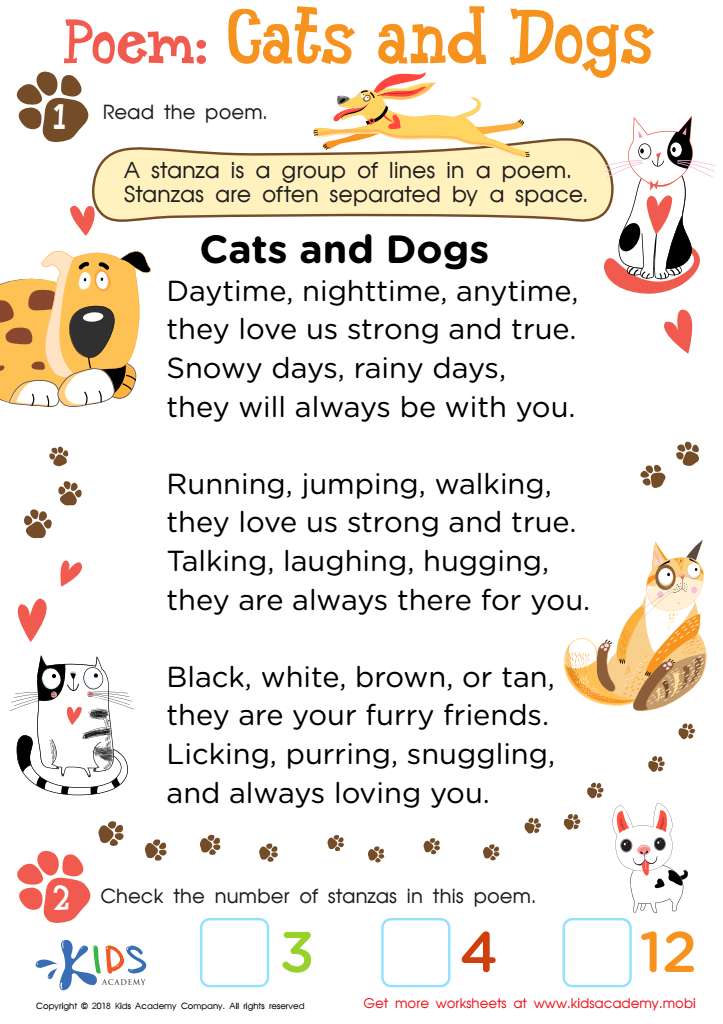
Poem: Cats and Dogs Worksheet







Rhyme recognition is a critical milestone in early literacy development for children aged 3-8. It involves recognizing and manipulating the sounds and patterns in words, an essential skill for phonological awareness. Parents and teachers should care about this because it forms the foundation for reading and writing abilities.
Rhyme recognition helps children understand the connection between sounds and letters, making it easier for them to decode words and develop their reading fluency. By engaging with rhymes, children also enhance their vocabulary and improve their listening skills, which are vital for effective communication. The playful nature of rhyming fosters a love for language and literature, making learning more enjoyable.
Furthermore, practicing rhyme recognition promotes cognitive development, as it encourages children to identify patterns and make associations. This skill can enhance their overall academic performance across subjects. For parents and teachers, incorporating rhyming activities—such as songs, poems, and games—into daily routines can significantly support a child’s literacy journey. By valuing and promoting rhyme recognition, caregivers contribute to building strong reading foundations that will benefit children throughout their educational experiences.








