Science vocabulary expansion Normal Worksheets for Ages 3-8
4 filtered results
-
From - To
Discover our "Science Vocabulary Expansion" worksheets, tailored for young learners aged 3-8! These engaging worksheets from Kids Academy are designed to boost your child’s science vocabulary and comprehension. Through fun and interactive activities, children will explore basic scientific concepts and terms, laying a strong foundation for future learning. Perfect for parents and educators, our worksheets support early language development, curiosity, and critical thinking skills. Whether at home or in the classroom, foster a love for science and expand young minds with these invaluable learning resources. Visit Kids Academy to start the adventure today!
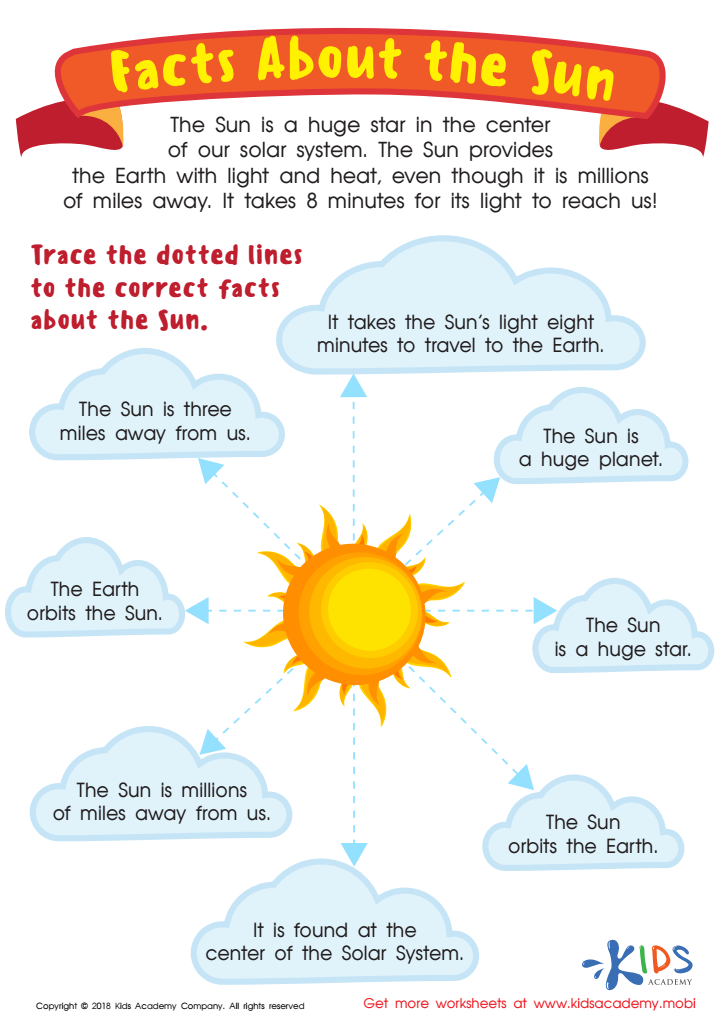
Facts About the Sun Worksheet
 Assign to My Students
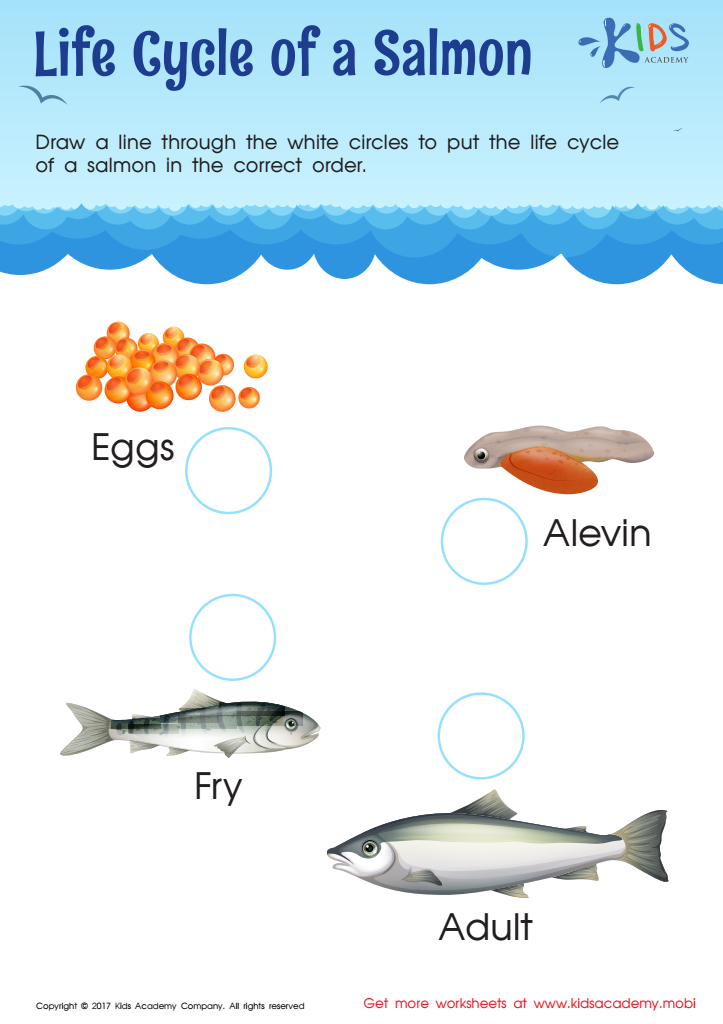
Cycle Of Salmon Worksheet
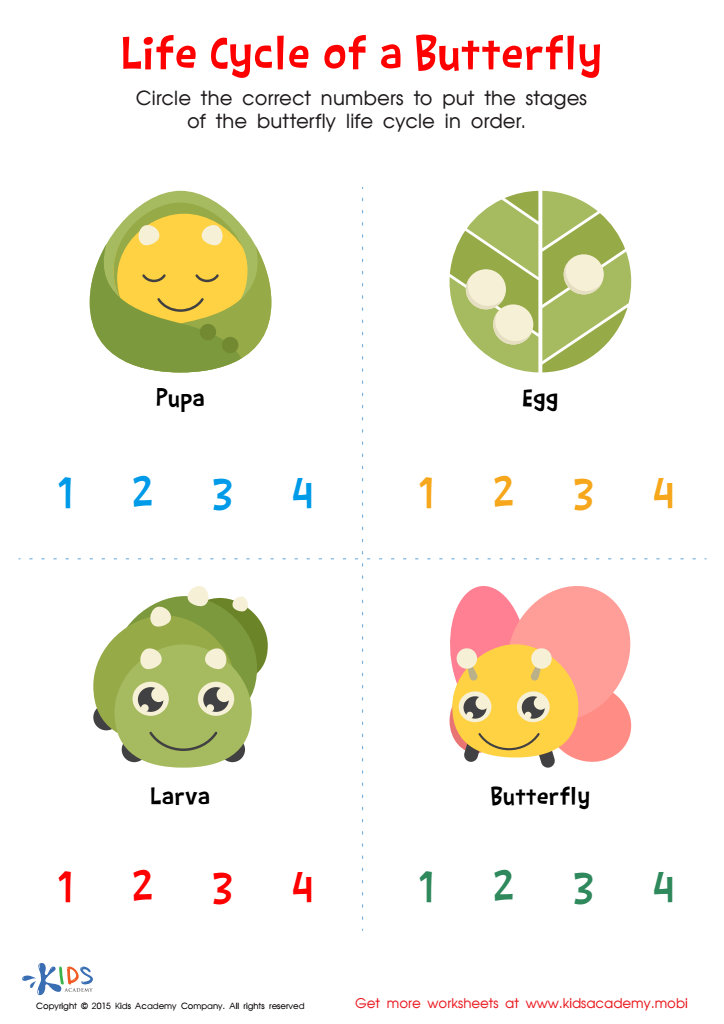
Life Cycle of Butterfly Printable
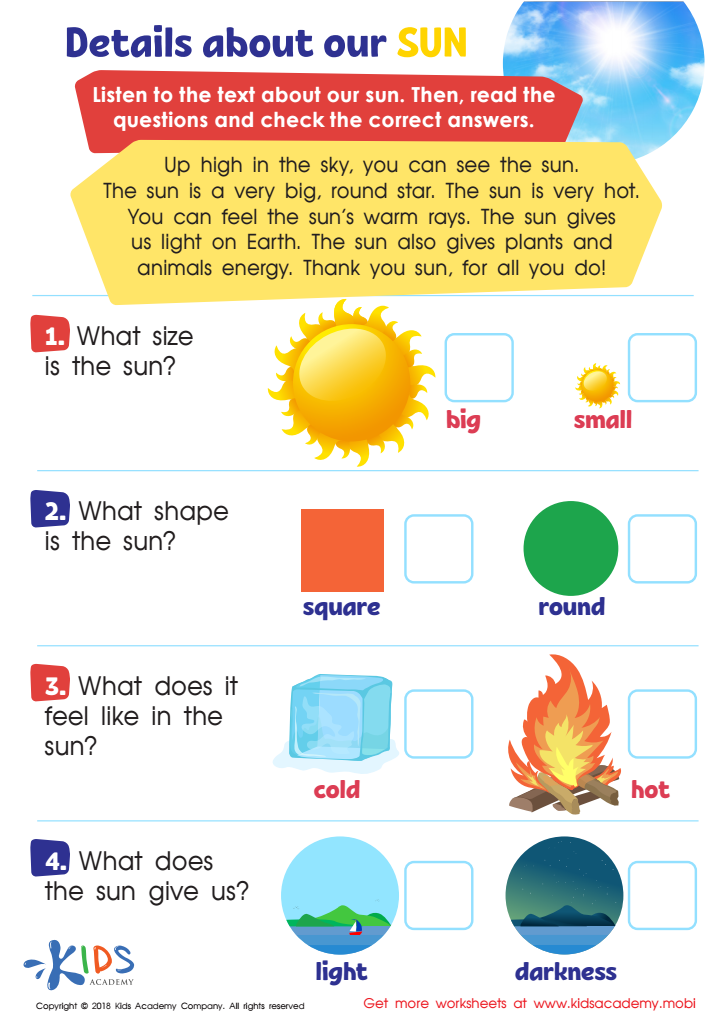
Details About Our Sun Worksheet








Fostering science vocabulary expansion in children aged 3-8 is crucial for several reasons. Firstly, children at this age are highly receptive and curious, making it an ideal time for vocabulary development. A strong foundation in science vocabulary not only aids in comprehension but also sparks interest in the subject, paving the way for future academic success.
By introducing scientific terms early, children become familiar with the language of science, which enhances their ability to understand and engage with scientific concepts. This early exposure demystifies science and makes it more accessible, reducing the intimidation often associated with the subject as they grow older.
Furthermore, developing a robust science vocabulary encourages critical thinking and inquiry-based learning. Children learn to ask questions, make observations, and describe phenomena more accurately. This improves their problem-solving skills and situational understanding, essential competencies in both academic and everyday contexts.
Parents’ and teachers’ involvement in expanding science vocabulary can also foster a love for learning, as children associate new words with fun experiments and exciting discoveries. By incorporating science vocabulary into daily activities, books, and conversations, adults can make learning a dynamic and enjoyable experience.
In conclusion, early science vocabulary expansion serves as a cornerstone for future educational achievements and nurtures a lifelong curiosity about the world. Parents and teachers play a critical role in this formative stage, and their efforts can yield significant benefits in a child's cognitive and emotional development.








