Sound Association Normal Worksheets for Ages 3-8 - Page 2
27 filtered results
-
From - To
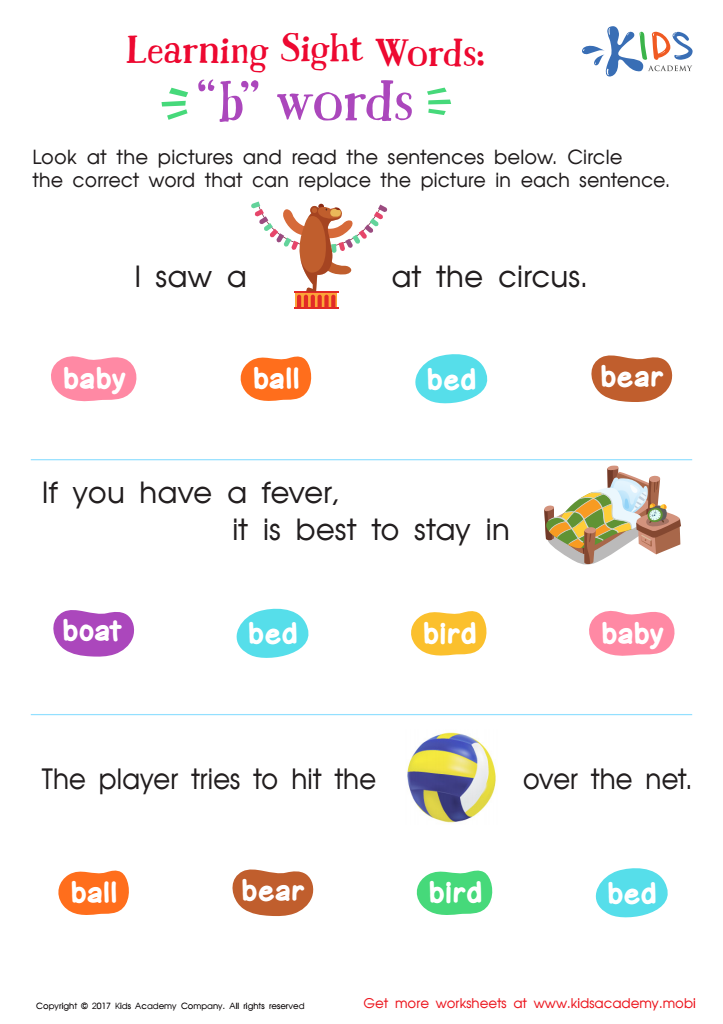
"B" Words Printable Sight Words Worksheet
 Assign to My Students
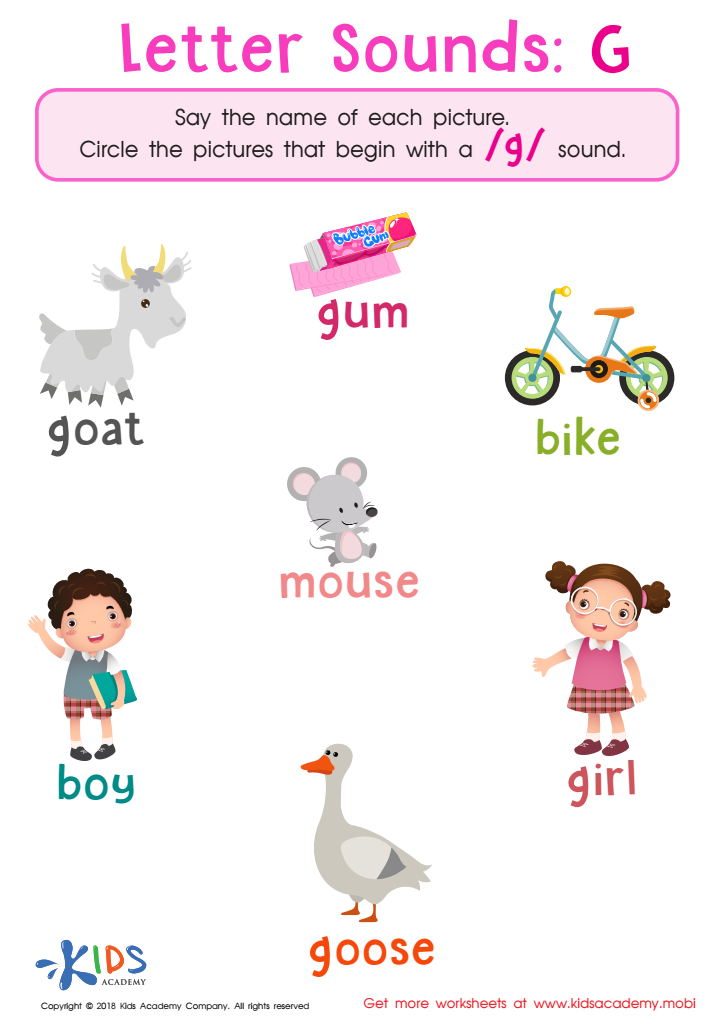
Letter G Sounds Worksheet
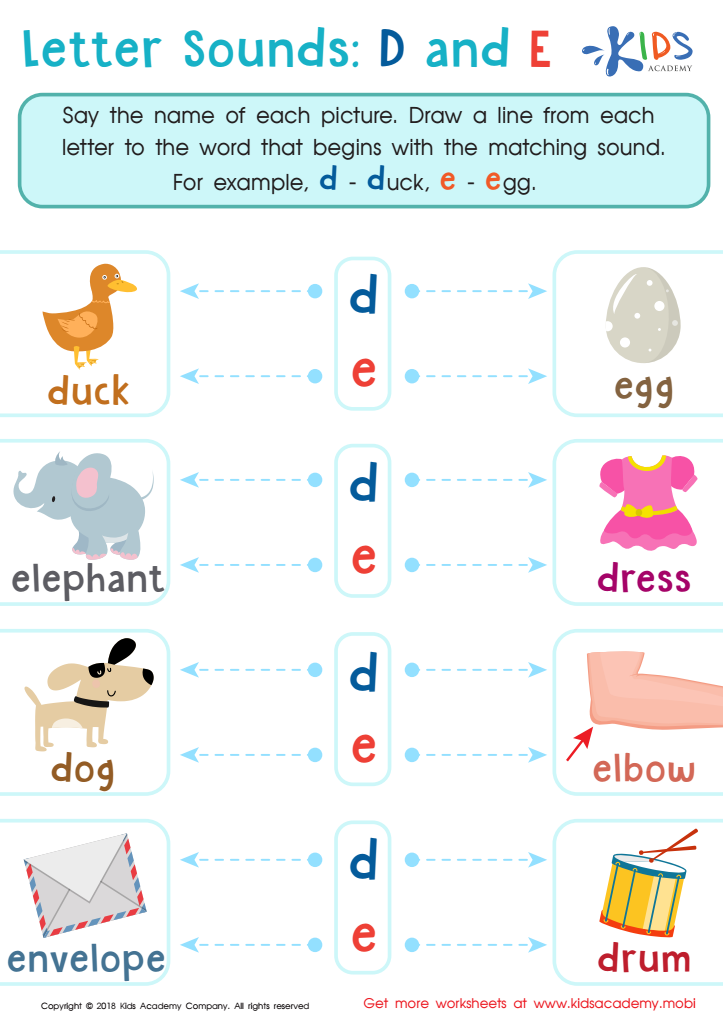
Letter D and E Sounds Worksheet








Sound association is the ability to connect sounds with their corresponding letters or groups of letters. For ages 3-8, this skill is crucial for early literacy and language development. Parents and teachers should deeply care about sound association for several reasons.
First, mastering sound-letter associations around these ages lays the foundation for effective reading and writing skills. Children who can accurately match sounds to letters (known as phonemic awareness) are better equipped to decode words when they begin reading. This competence fosters confidence and encourages a love of reading, which supports broader academic success.
Second, early sound association skills can predict later reading achievement. Studies show a strong correlation between phonemic awareness in early years and reading proficiency in later grades. Struggling with these skills can indicate potential reading challenges, such as dyslexia, allowing parents and educators to intervene early.
Lastly, sound association supports vocabulary development. Understanding the building blocks of words helps children spell and understand new words, enhancing both their communication skills and comprehension abilities.
By prioritizing sound association skills, parents and teachers ensure children receive a solid foundation for their future learning, setting them up for academic success and lifelong learning. Investing time in nurturing these abilities during the formative ages of 3-8 is, therefore, essential.








