Spatial understanding Normal Worksheets for Ages 3-8
3 filtered results
-
From - To
Unlock the potential of young minds with our "Spatial Understanding Normal Worksheets for Ages 3-8". These thoughtfully designed printable activities are tailored to foster spatial awareness, crucial for cognitive development in early learners. Each worksheet encourages children to explore and interact with shapes, patterns, and spaces, enhancing their problem-solving and critical-thinking skills. Perfect for both classroom settings and at-home practice, our worksheets cater to different learning paces and styles. Dive into a world of fun and education where kids aged 3-8 can thrive and build a strong foundation in spatial understanding, setting the stage for future academic success.
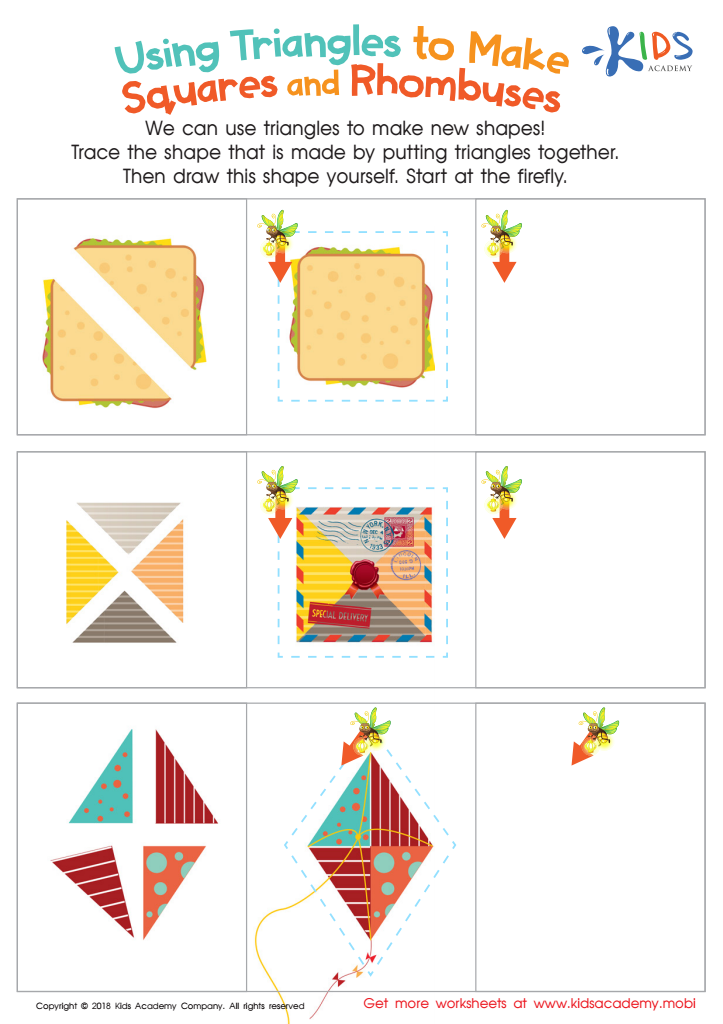
Using Triangles to Make Squares and Rhombuses Worksheet
 Assign to My Students
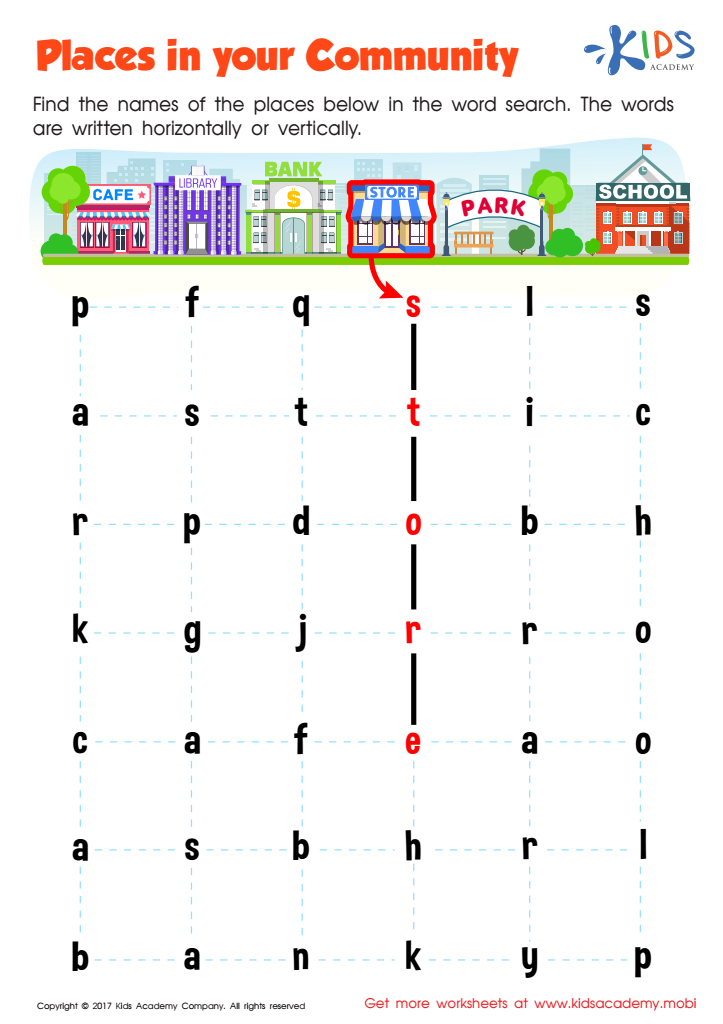
Places in Your Community Worksheet
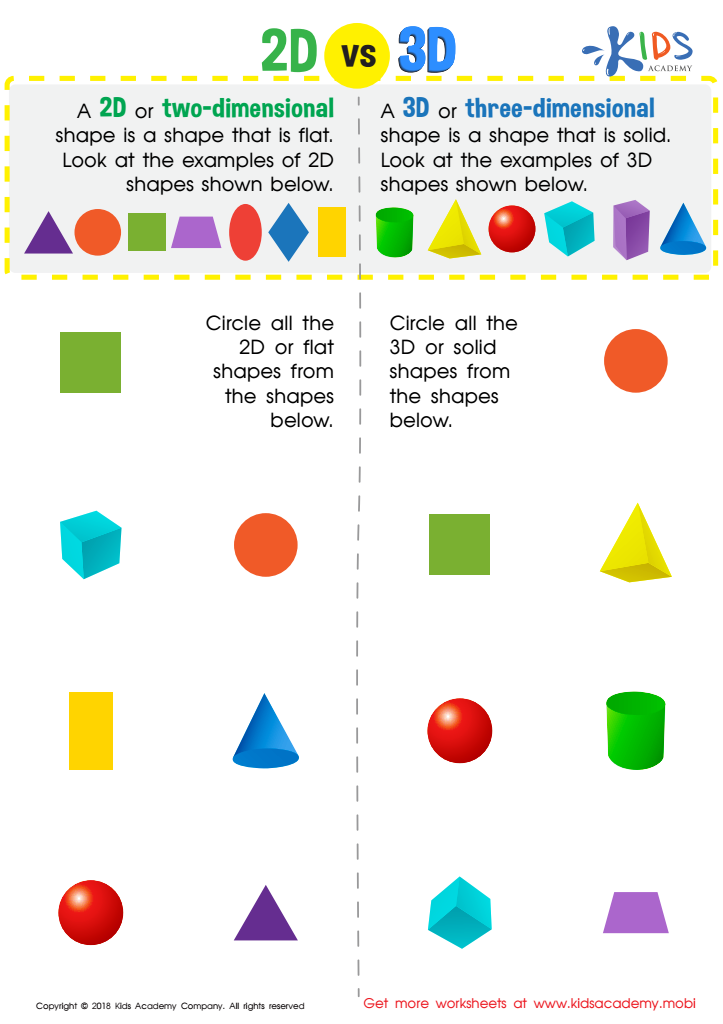
2D vs 3D Shapes Worksheet






Spatial understanding is a crucial cognitive skill that significantly impacts a child’s academic performance and daily life activities. For children aged 3 to 8, developing strong spatial skills is fundamental for several reasons, which parents and teachers should care deeply about.
Firstly, spatial understanding is closely linked to success in STEM (Science, Technology, Engineering, and Mathematics) fields. Early improvement in spatial skills can set the groundwork for better problem-solving abilities and mathematical reasoning. Simple activities such as puzzles, building blocks, and drawing can foster spatial intelligence.
Secondly, spatial skills are essential for daily navigation and interaction with the physical world. Understanding concepts like up/down, in/out, and left/right helps children perform tasks independently, such as organizing their rooms, following directions, and even tying their shoes.
Moreover, enhancing spatial skills aids in language development. Descriptive vocabulary about shape, size, and position becomes easier for children to grasp, thus bolstering their overall literacy.
Finally, spatial sense boosts creativity and artistic skills, allowing children to visualize and physically manifest their ideas and projects.
Hence, investing time to nurture spatial skills supports a child's holistic development – academically, practically, and creatively. By understanding the significance of spatial awareness and providing appropriate activities, parents and teachers can give children a valuable foundation for their future learning and everyday functioning.








