Understanding communities Normal Worksheets for Ages 3-8
6 filtered results
-
From - To
"Understanding Communities Normal Worksheets for Ages 3-8" offer engaging educational activities designed to help young learners explore the concept of community. Tailored to children aged 3-8, these printable worksheets aim to develop critical social and cognitive skills by introducing them to various community roles, settings, and interactions. Through fun and interactive exercises, children will learn about the importance of different community members, understand the functions of various places within a community, and nurture a sense of belonging and responsibility. These worksheets provide a foundation for young minds to appreciate and connect with the world around them. Perfect for at-home learning or classroom use!
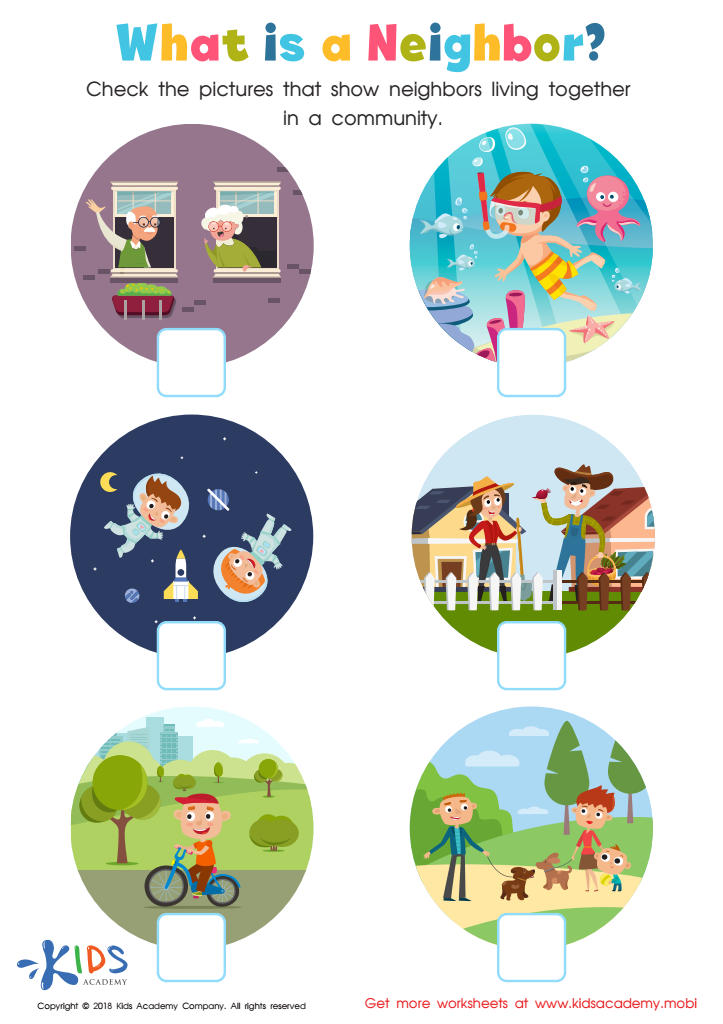
What is a neighbor Worksheet
 Assign to My Students
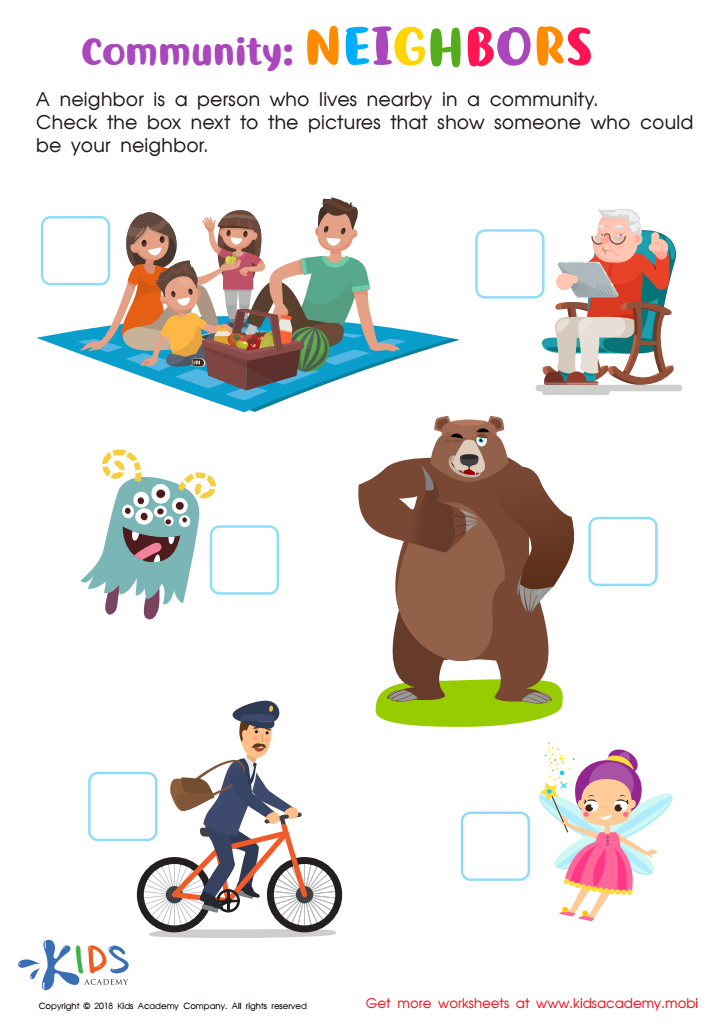
Community: Neighbors Worksheet
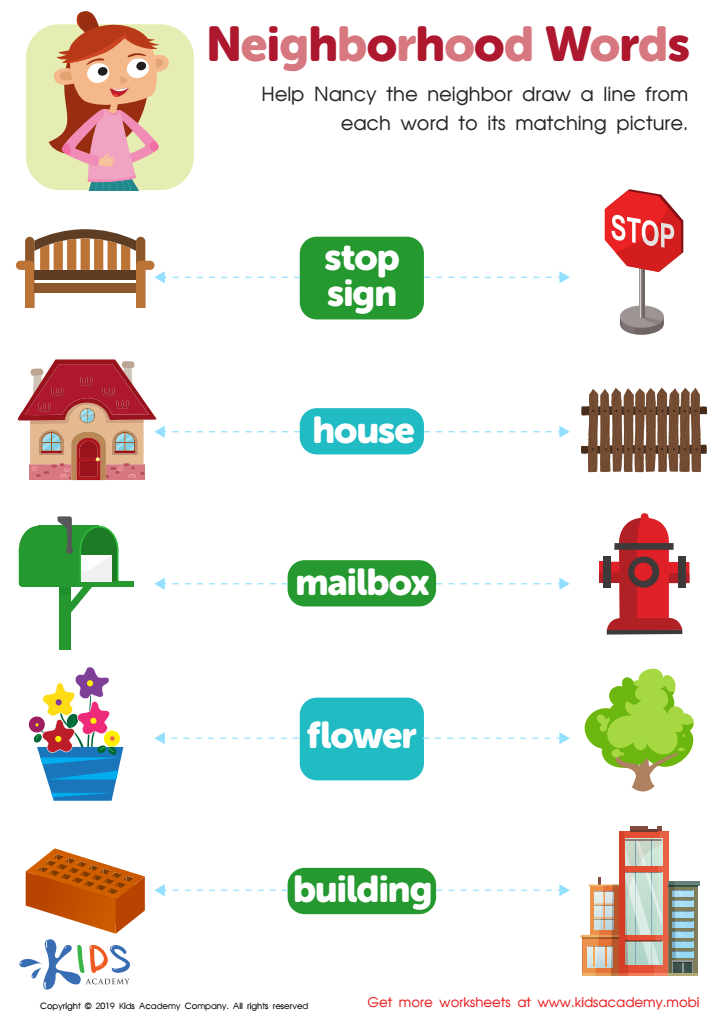
Neighborhood Words Worksheet
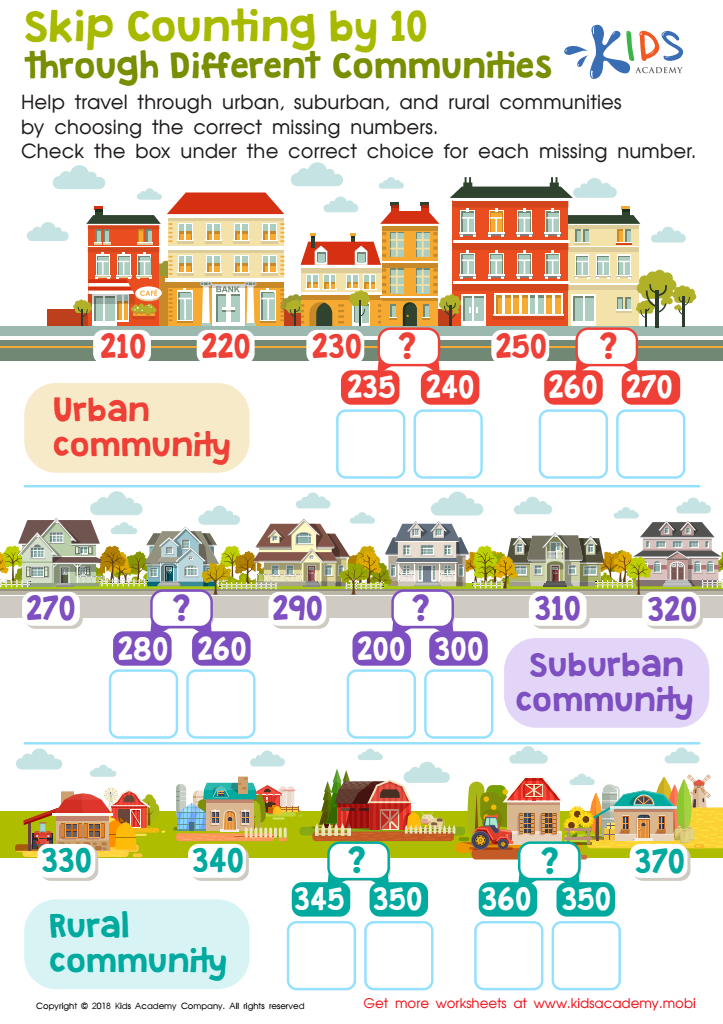
Skip Counting by 10 through Different Communities Worksheet
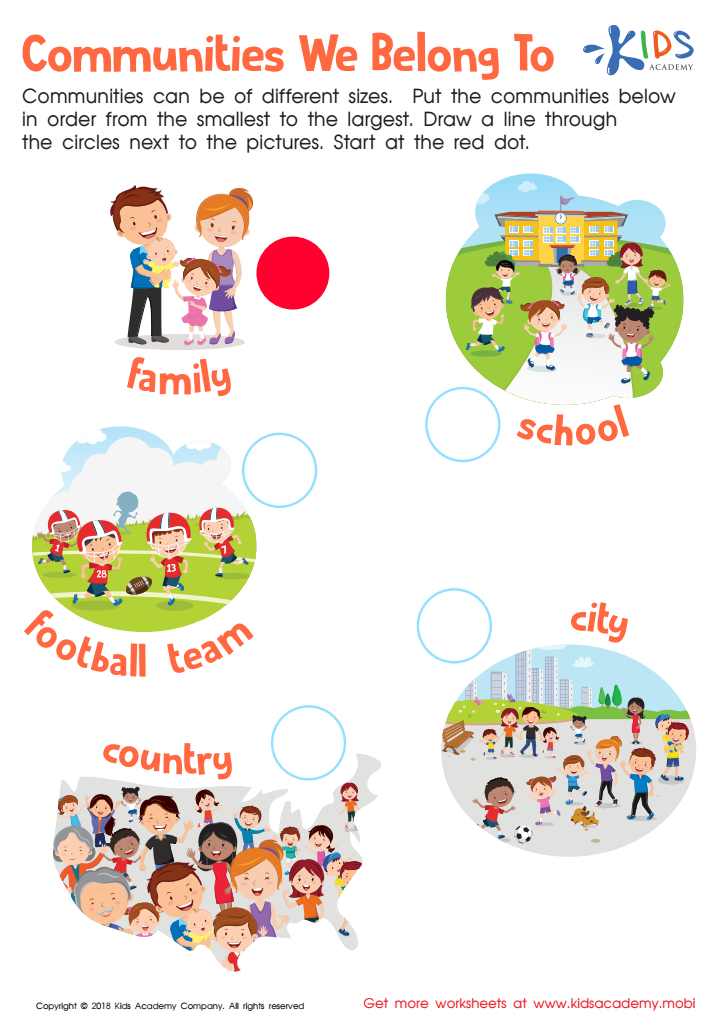
Communities We Belong to Worksheet
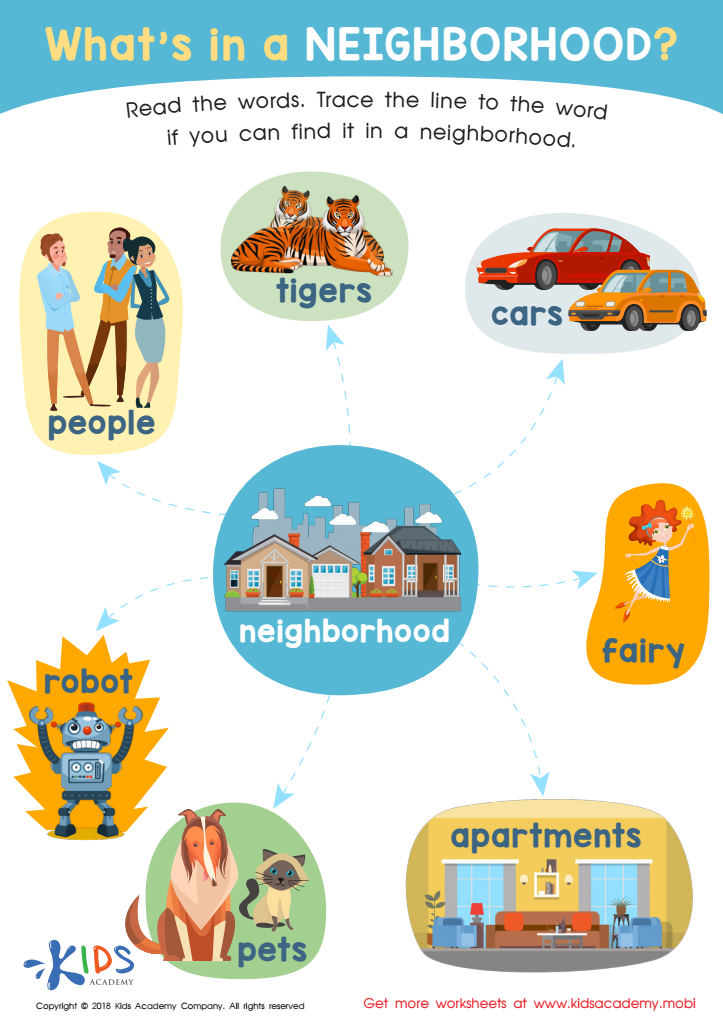
What's in a Neighborhood? Worksheet







Understanding communities is crucial for children aged 3-8 as it forms the foundation of their social development. Parents and teachers should prioritize this understanding to foster interpersonal skills, empathy, and a sense of belonging among young learners.
Knowing about different types of communities helps children recognize diversity and appreciate various cultures, traditions, and lifestyles. Early exposure to community dynamics allows children to see themselves as active participants in a broader society. This recognition inspires a sense of responsibility and cooperation, essential traits for future civic engagement.
Additionally, learning about community roles teaches children about various professions and services, enhancing their respect for different vocations. This knowledge builds an appreciation for the efforts of others, fostering gratitude and reducing instances of entitlement.
well, children feel a greater sense of inclusion when they understand their own community's norms and values. This reduces feelings of isolation or confusion and promotes a supportive environment where kids are more likely to thrive.
In essence, a solid grasp of community dynamics helps young children develop social awareness, responsible behavior, and emotional well-being. Parents and teachers play a crucial role in guiding this learning, setting the stage for children to become empathetic, informed, and cooperative members of society.








