Understanding regrouping Normal Worksheets for Ages 3-8
4 filtered results
-
From - To
Discover our "Understanding Regrouping Normal Worksheets" designed for children aged 3-8. These engaging worksheets make learning about regrouping fun and interactive, helping young learners grasp essential math concepts. With clear instructions and colorful visuals, children develop their skills in addition and subtraction while building confidence in their abilities. Our worksheets support early childhood education by using age-appropriate challenges that cater to diverse learning styles. Parents and educators can easily integrate these resources into their curriculum, enhancing classroom experiences or home learning sessions. Empower your child with the foundational math skills they need for future success. Explore our diverse collection today!
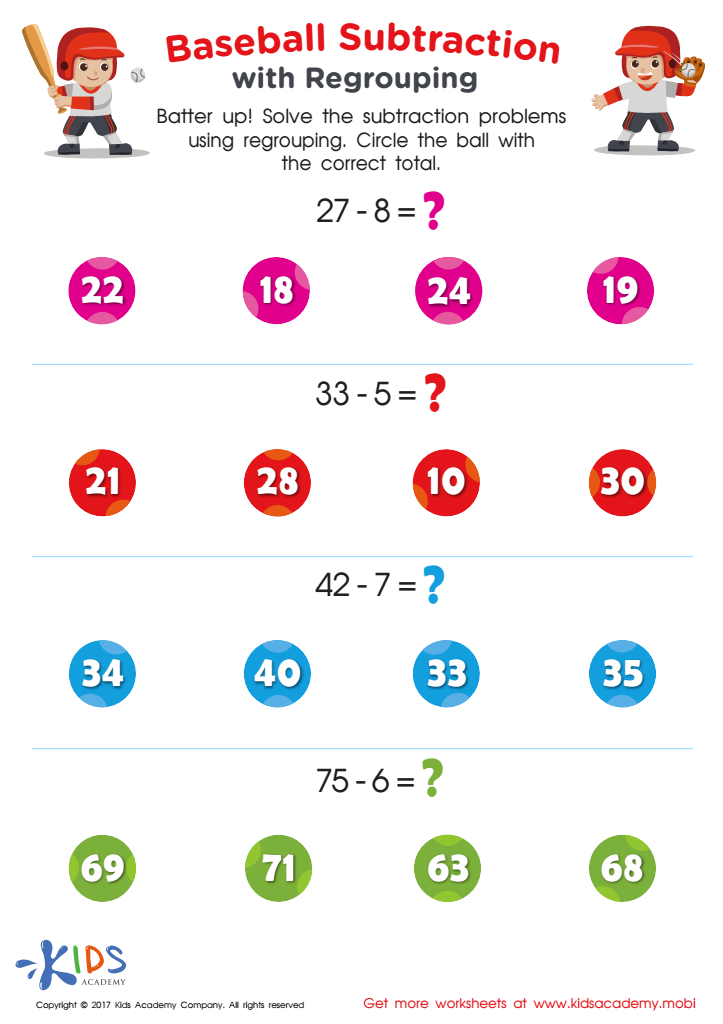
Subtraction With Regrouping for 2nd Grade Worksheet
 Assign to My Students
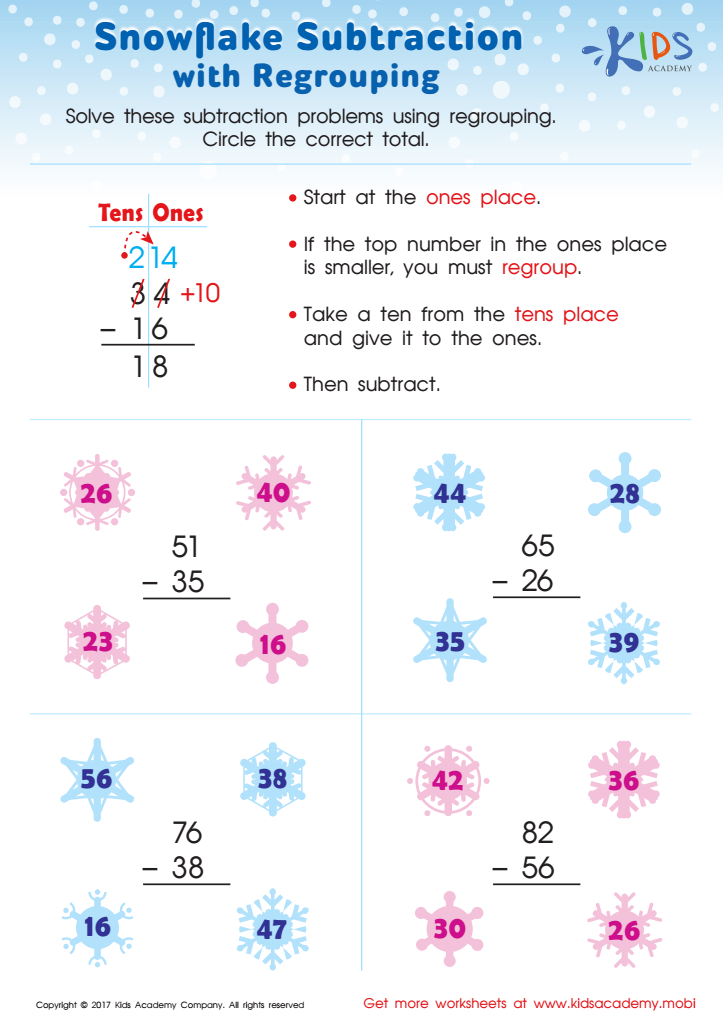
Subtraction With Regrouping Worksheet: Snowflake
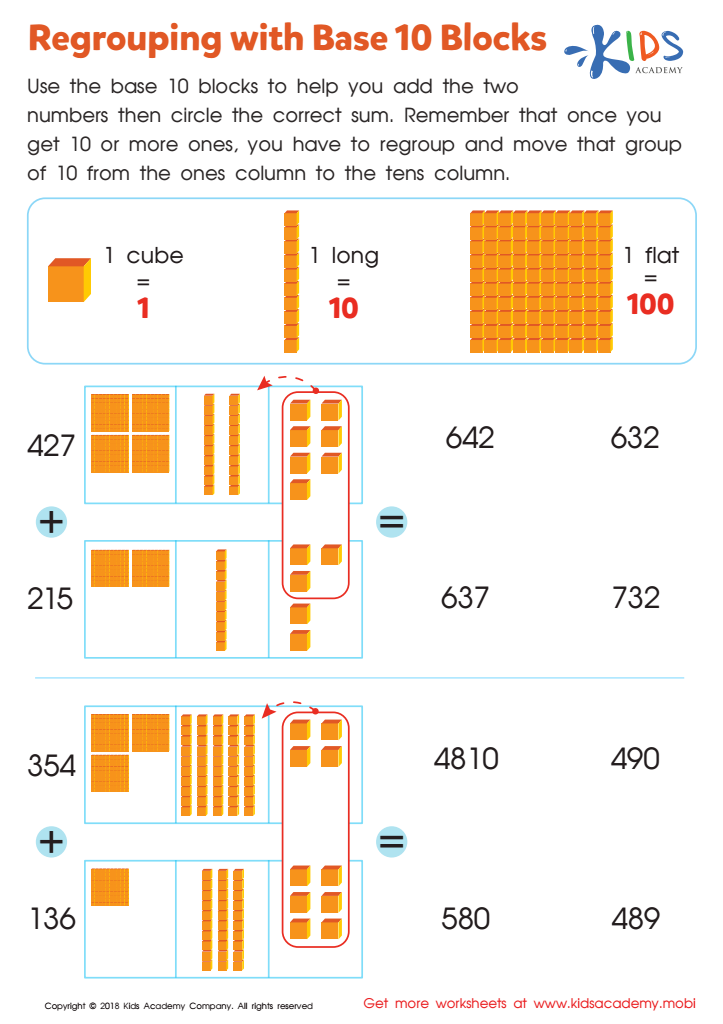
Regrouping with Base 10 Blocks Worksheet
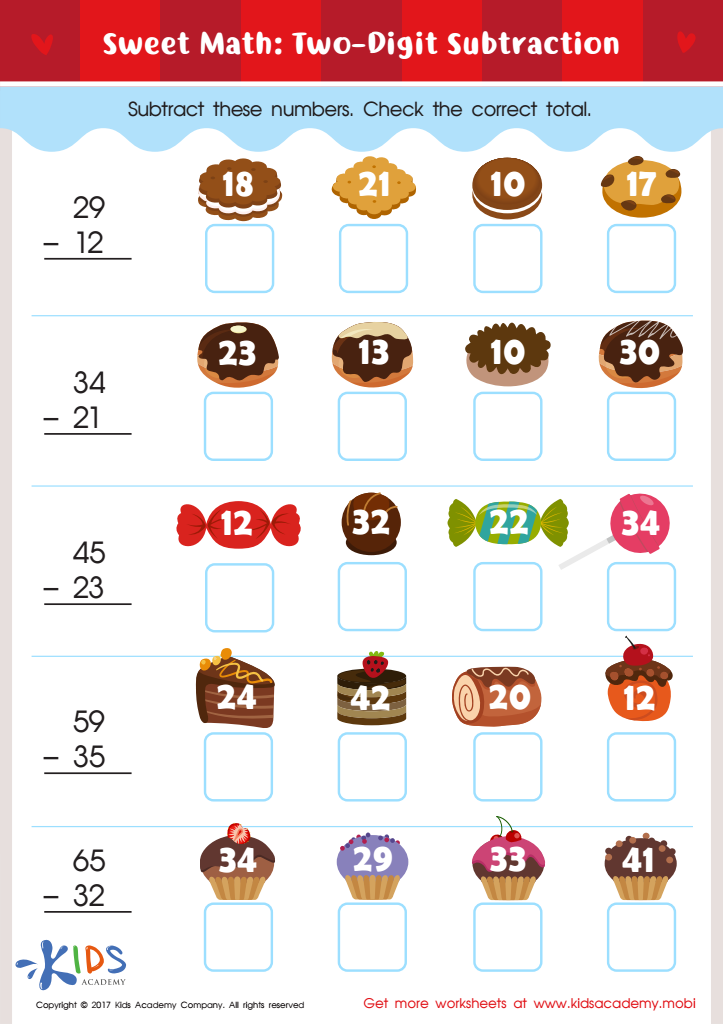
Two Digit Subtraction Worksheet








Understanding regrouping—especially in foundational math—plays a vital role for children aged 3 to 8. It forms the cornerstone of arithmetic, specifically in addition and subtraction, which are essential life skills. When parents and teachers emphasize regrouping, they help children develop a deeper understanding of numbers and their relationships.
For young learners, mastering regrouping fosters problem-solving skills and critical thinking. It allows them to break down complex mathematical concepts into manageable parts. This understanding not only prepares them for more advanced mathematics but also enhances their overall cognitive abilities.
Moreover, teaching regrouping nurtures a positive attitude towards math. Children often struggle with basic arithmetic, feeling overwhelmed when they encounter concepts that seem abstract. By explaining regrouping through tangible examples and manipulatives, educators can demystify math for these young learners. This encourages a growth mindset, which is essential for lifelong learning.
Finally, parental involvement in understanding regrouping can reinforce classroom lessons, creating a consistent learning environment. This partnership helps children feel supported and motivated, ultimately enhancing their mathematical confidence. By prioritizing regrouping, parents and teachers equip children with tools necessary for academic success and everyday problem-solving.








