Basic Arithmetic Normal Addition and Subtraction Word Problems Worksheets for Ages 3-8
4 filtered results
-
From - To
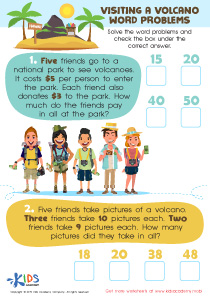
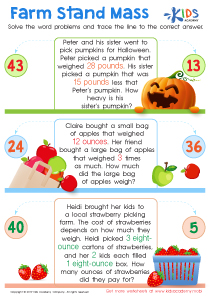
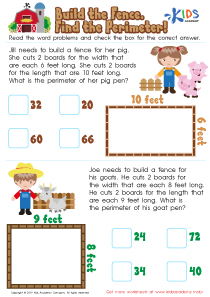
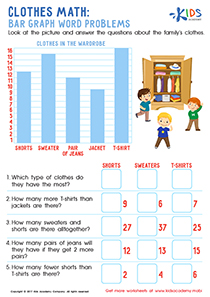
Introduce your child to the world of mathematics with our "Basic Arithmetic Normal Addition and Subtraction Word Problems Worksheets" designed for ages 3-8. These engaging worksheets are tailored to develop your child's problem-solving skills through age-appropriate addition and subtraction exercises. Each worksheet is filled with fun, relatable scenarios that make learning basic arithmetic enjoyable and practical. Perfect for early learners, these printable activities help build a solid math foundation, enhancing their confidence and academic performance. Visit our page to download and start nurturing your child's love for math today!
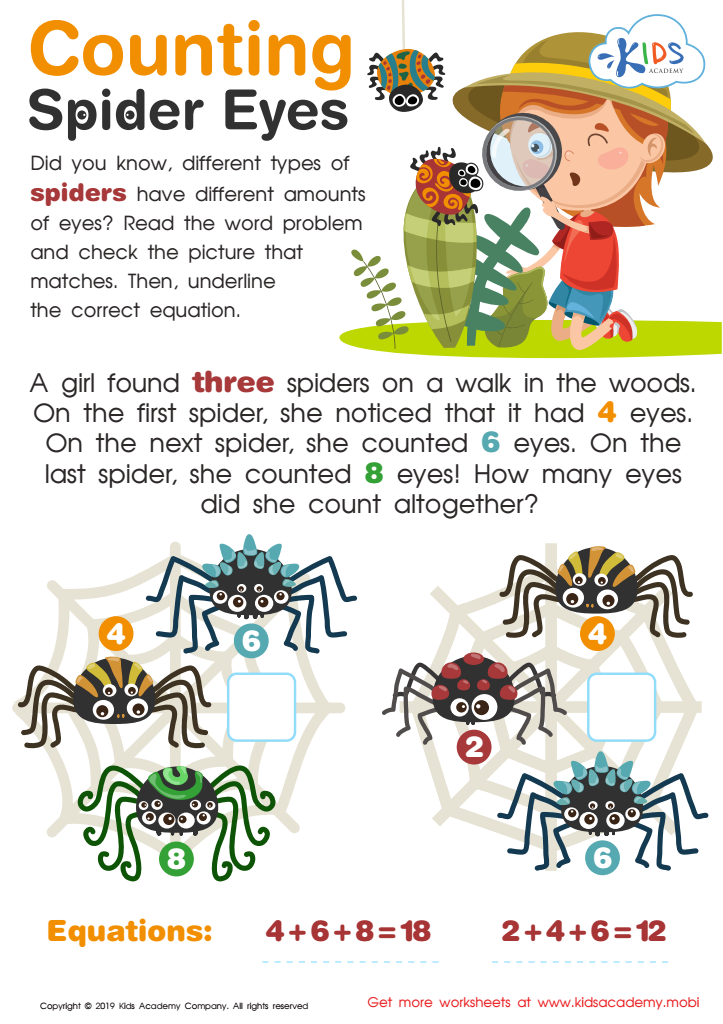
Counting Spider Eyes Worksheet
 Assign to My Students
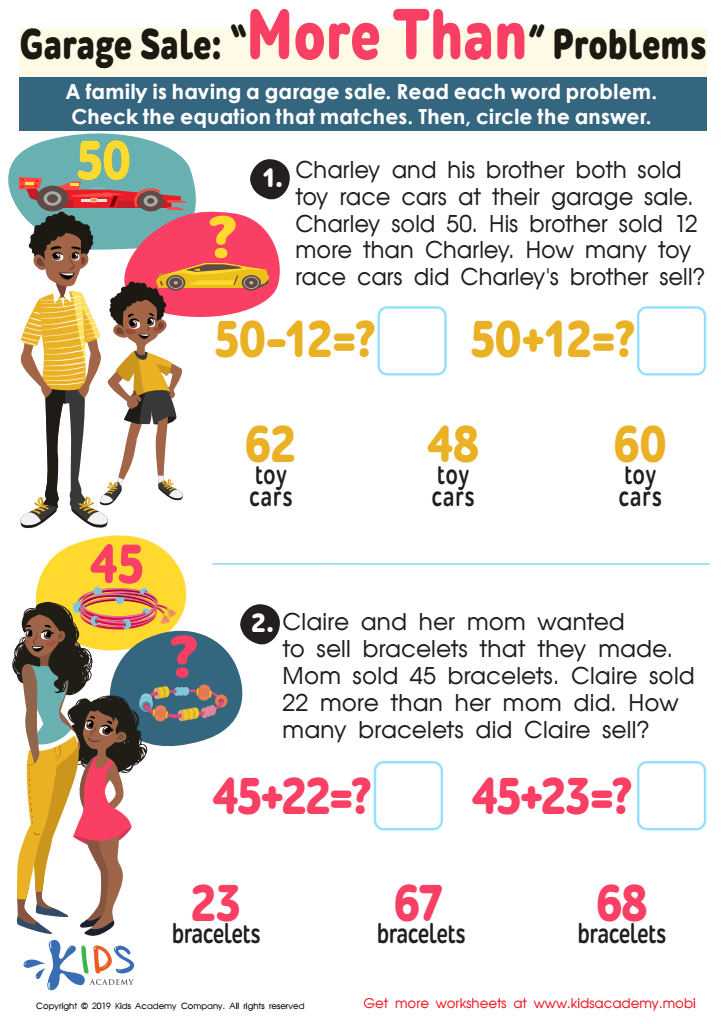
Garage Sale - More yhan Worksheet
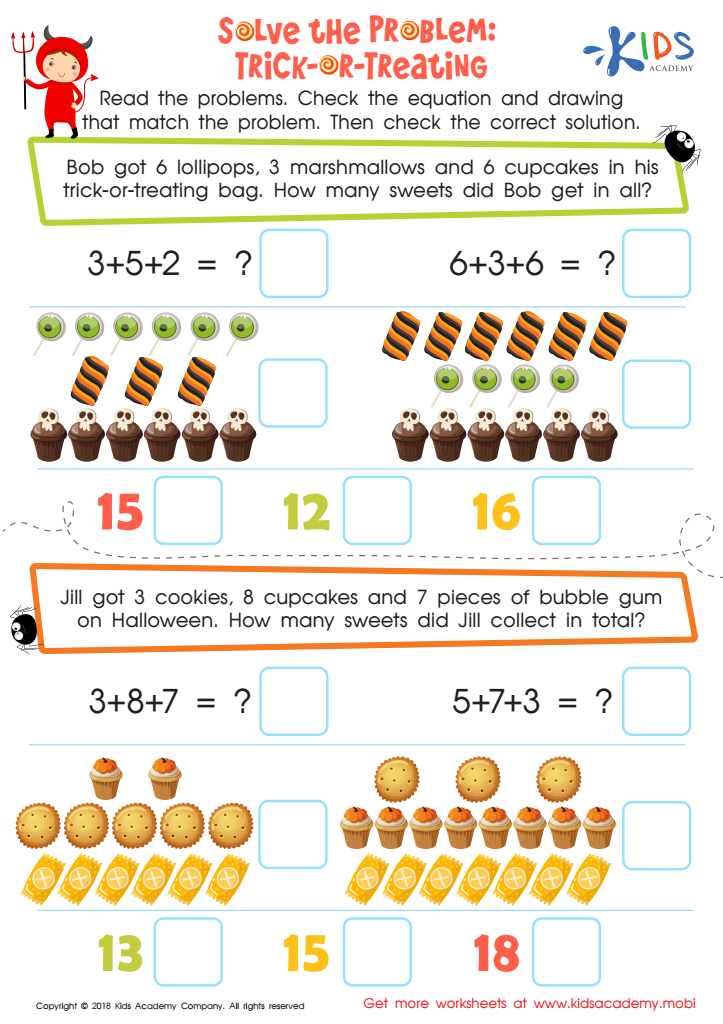
Solve the Problem: Trick–or–treating Worksheet
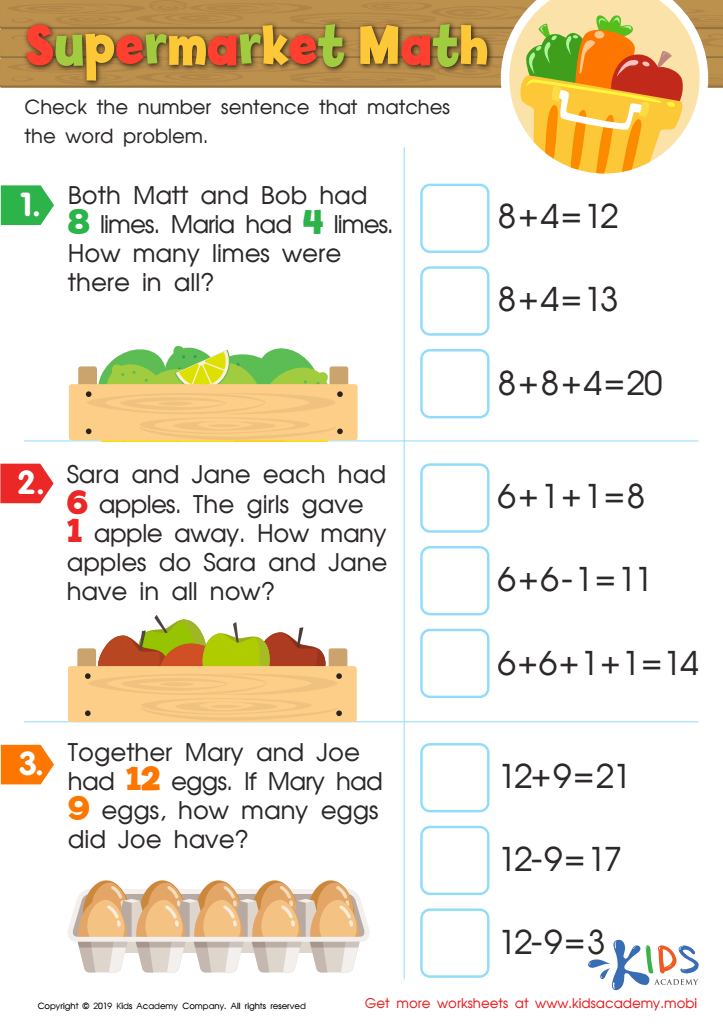
Supermarket Math Worksheet








Basic arithmetic, particularly addition and subtraction word problems for children ages 3-8, provides a vital foundation for later learning and life skills. At this developmental stage, children are naturally curious and absorb information rapidly. Introducing these fundamental math concepts early builds their numerical understanding and fosters critical thinking.
For parents and teachers, investing time and effort into these basic arithmetic skills is essential. Children who grasp these concepts tend to excel academically, since arithmetic underpins higher-level math and subjects requiring analytical thinking. It helps them to comprehend other subjects better and can make them more confident learners.
Moreover, basic arithmetic enhances problem-solving abilities and logical reasoning. Word problems, in particular, teach children to translate real-world scenarios into mathematical equations, promoting both literacy and numeracy skills. This dual emphasis prepares young learners for everyday tasks, sparking their interest in mathematics by showing its practical applications.
Lastly, early mastery of addition and subtraction boosts self-esteem and positivity towards learning. Success in arithmetic can make children feel more competent, encouraging a positive attitude towards challenges. Therefore, for parents and teachers, placing a priority on basic arithmetic word problems equips children with essential tools for both academic progress and lifelong success.