
Color Identification Normal Addition & Subtraction Worksheets for Ages 3-8
4 filtered results
Difficulty Level
Grade
Age
-
From - To
Subject
Activity
Standards
Discover our engaging Color Identification Normal Addition & Subtraction Worksheets designed for children ages 3-8! These printable worksheets not only introduce fundamental math skills through fun activities but also integrate colorful visuals to enhance learning. Perfect for early learners, these resources foster color recognition while practicing basic addition and subtraction concepts. Teachers and parents alike will appreciate the interactive approach that keeps young minds excited about learning. Whether in the classroom or at home, these worksheets are an excellent tool for developing foundational math abilities and improving cognitive skills in a playful, vibrant environment. Empower your child's learning journey today!
Favorites
With answer key
Interactive
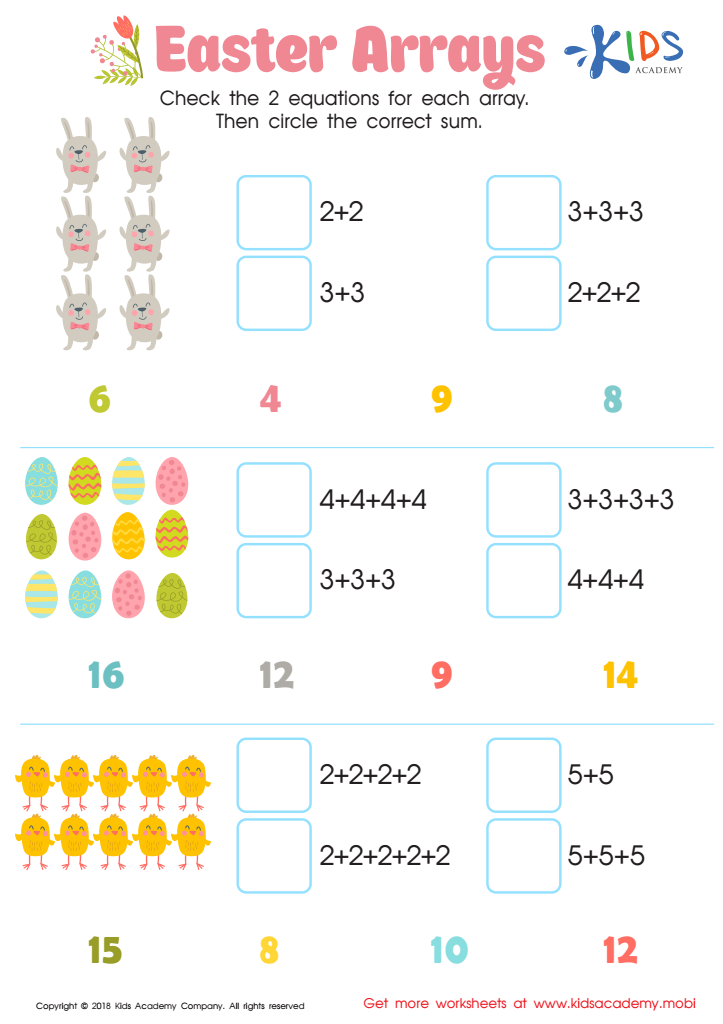
Easter Arrays Worksheet
Does your child love Easter? Do they adore the Easter bunny and egg hunts? Help them have fun with this worksheet! Go through it with them and check the equations for each array. Then, have them circle the correct sum. It's a great way to make the holiday extra exciting!
 Assign to My Students
Easter Arrays Worksheet
Worksheet
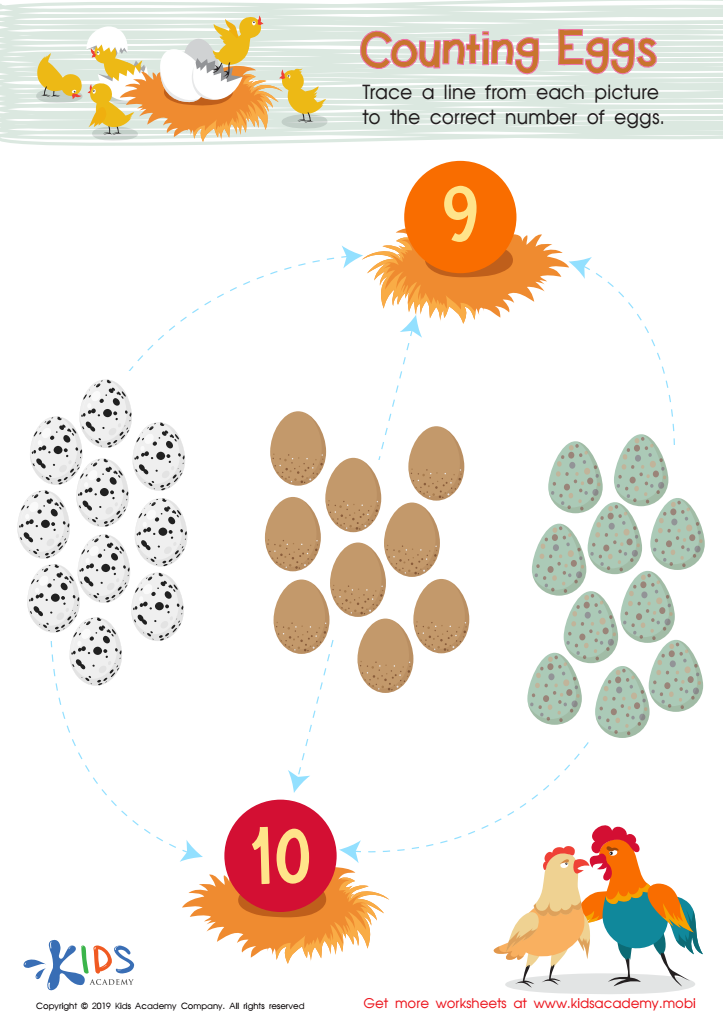
Counting Eggs Worksheet
This worksheet is great for teaching kindergarteners to count and add numbers. It includes colorful pictures of eggs with numbers to trace. Help students count the eggs and draw a line to the right number. This will make learning fun and easy!
Counting Eggs Worksheet
Worksheet
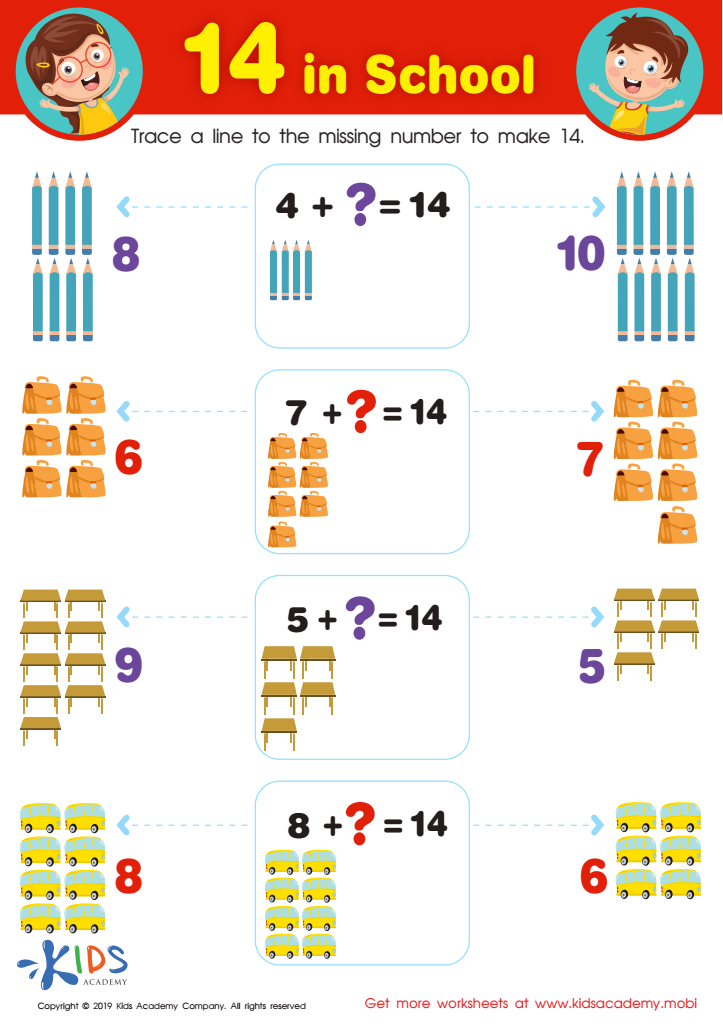
14 in School Worksheet
Remind your kids that adding different sets of numbers can give the same total (e.g. 2+3=5, 4+1=5). Ask them for more examples. Afterwards, work through the exercise. Help them count the objects and trace a line to the missing number that makes the total 14.
14 in School Worksheet
Worksheet
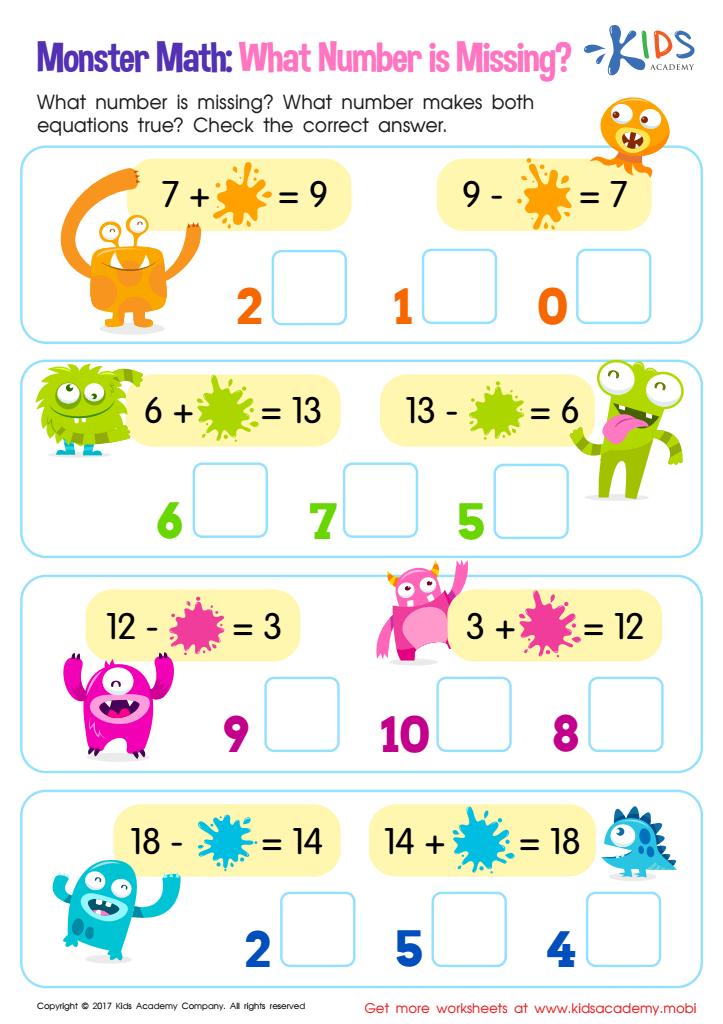
Missing Number: Monster Math Worksheet
Engage your child in monster math fun with a worksheet! They'll need to use their counting, addition and subtraction skills to solve equations on both sides. On the left side, they must complete an addition problem and on the right, the equation is in subtraction form. Assist them in selecting the right number out of the given options to make both equations true.
Missing Number: Monster Math Worksheet
Worksheet
Join Kids Academy for Free
Who is primarily going to use this learning content?








Color identification and the normal addition and subtraction skills are foundational components of early childhood education that play a crucial role in a child's cognitive development. For children aged 3-8, mastering color identification enhances their ability to categorize and compare objects, fostering critical thinking and observational skills. Recognizing colors encourages creativity and communication as children describe their surroundings, improving their vocabulary and language skills.
In parallel, normal addition and subtraction help develop early math competencies, which are essential for future academic success. These skills promote logical thinking and problem-solving abilities. Understanding basic arithmetic lays the groundwork for more complex mathematical concepts later on, influencing overall academic achievement.
Moreover, both exercises engage children in interactive learning, making education enjoyable and motivating. For teachers and parents, integrating these skills into everyday activities—such as playing games or crafting—makes learning practical and fun.
Additionally, positive reinforcement during these activities builds children's self-esteem and confidence, encouraging persistence and curiosity. Fostering color identification while introducing addition and subtraction creates a well-rounded educational experience, equipping children with essential skills that benefit their social, emotional, and academic growth for years to come. Ultimately, investing time in these foundational skills ensures a solid educational foundation for lifelong learning.








