Hand-eye Coordination Normal Addition & Subtraction Worksheets for Ages 3-8
3 filtered results
-
From - To
Enhance your child's learning experience with our Hand-eye Coordination Normal Addition & Subtraction Worksheets designed for ages 3-8. These engaging worksheets not only help young learners practice essential math skills but also improve their hand-eye coordination, essential for developing writing and fine motor skills. Each worksheet features vibrant illustrations and simple problems that make math fun and accessible, encouraging independent problem-solving. Ideal for classroom and home use, these resources foster confidence in arithmetic through interactive activities that captivate children's attention. Perfect for reinforcing math concepts while supporting physical skill development, our worksheets are a must-have for early education success!
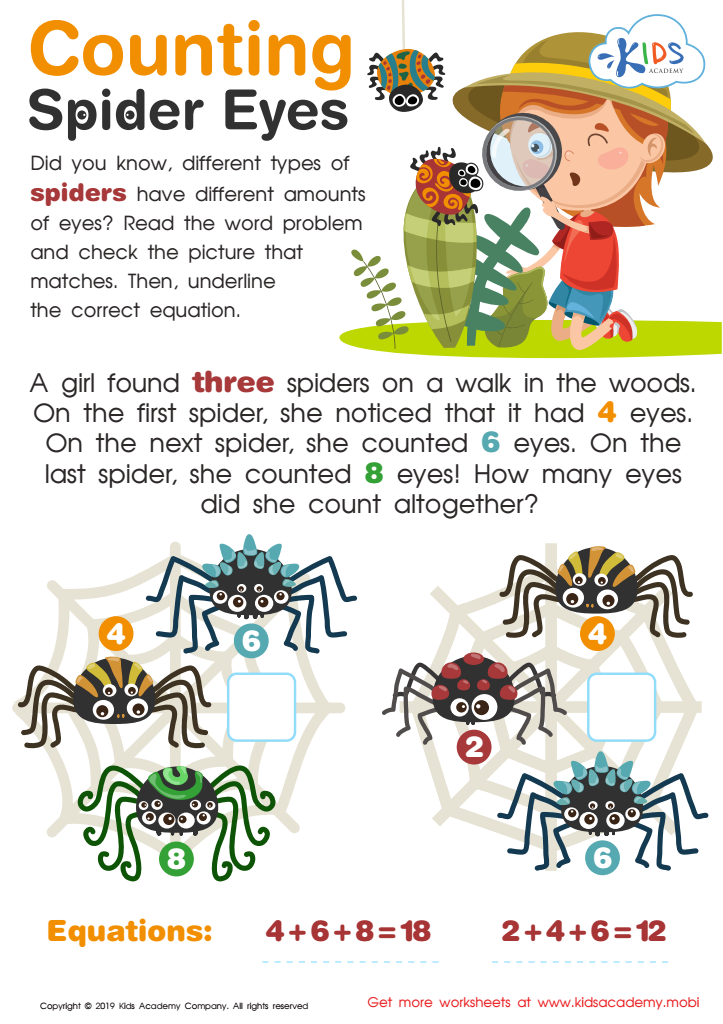
Counting Spider Eyes Worksheet
 Assign to My Students
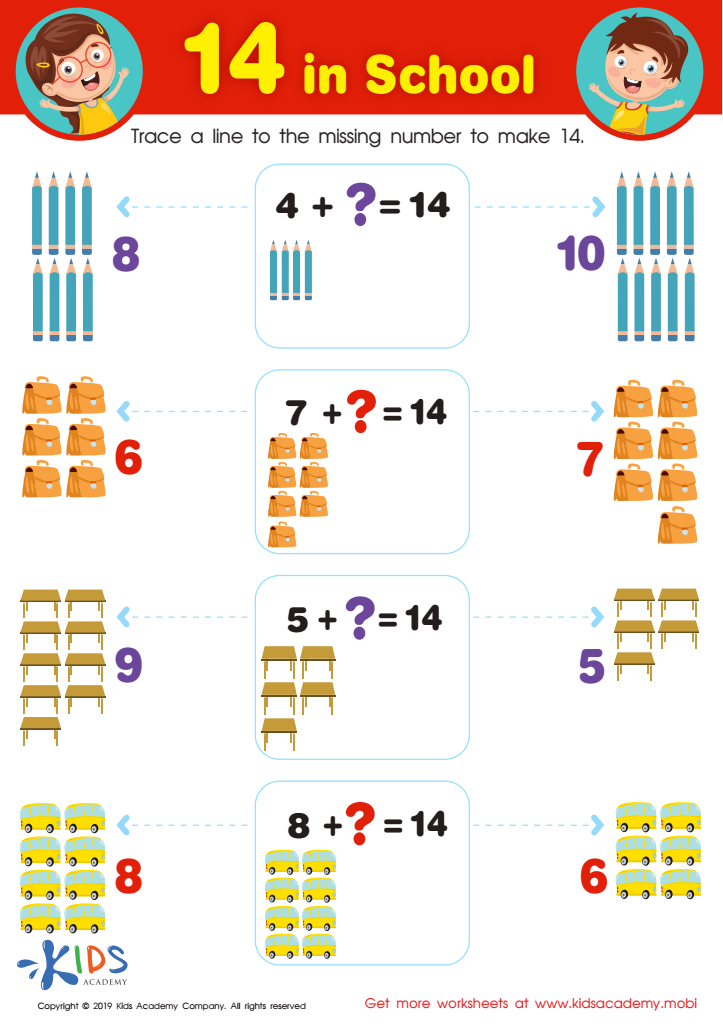
14 in School Worksheet








Hand-eye coordination and mastery of normal addition and subtraction are crucial skills for children aged 3-8, making them significant focal points for parents and teachers. Hand-eye coordination is the ability to synchronize visual input with physical movements, which is foundational for various activities like writing, drawing, and sports. It lays the groundwork for fine motor skills that children need for everyday tasks, boosting their confidence and independence.
Simultaneously, basic addition and subtraction are essential numeracy skills that form the bedrock for mathematics. At this age, children are not only learning to count but also beginning to understand the concepts of more and less, which are critical for problem-solving in everyday situations. Engaging with numbers through playful activities can enhance cognitive development and logical reasoning.
By focusing on these areas, parents and teachers aid in overall brain development and prepare children for future academic challenges. These skills promote concentration, discipline, and the ability to follow multi-step instructions—all necessary traits for academic success. Encouraging activities that foster hand-eye coordination while integrating math enhances learning experiences and allows children to grasp mathematical concepts more comfortably. Ultimately, both hand-eye coordination and numerical literacy significantly contribute to a child's holistic development.








