Filters

10 filtered results

Clear all filters
Favorites
With answer key
Interactive

10 filtered results

Difficulty Level

Grade


Enhance your child's math skills with our "Mathematical Reasoning Normal Addition & Subtraction Worksheets" designed for ages 3-8. These engaging worksheets focus on developing critical mathematical reasoning through fun and interactive activities. Children will learn foundational concepts of addition and subtraction while improving their problem-solving abilities. Our curriculum-aligned resources are perfect for homeschooling or classroom settings, allowing young learners to practice at their own pace. Each worksheet provides clear instructions and vibrant illustrations to captivate young minds, ensuring they build confidence in their math skills. Start your child's mathematical journey today and watch their reasoning abilities flourish!

Check out this FREE Trial Lesson on Addition & Subtraction for age 3-8!

More Word Problems

Favorites
With answer key
Interactive
  • 3-8
  • Mathematical reasoning
  • Addition & Subtraction
  • Normal
Tricky Problems Worksheet: Part 1

Tricky Problems Worksheet: Part 1

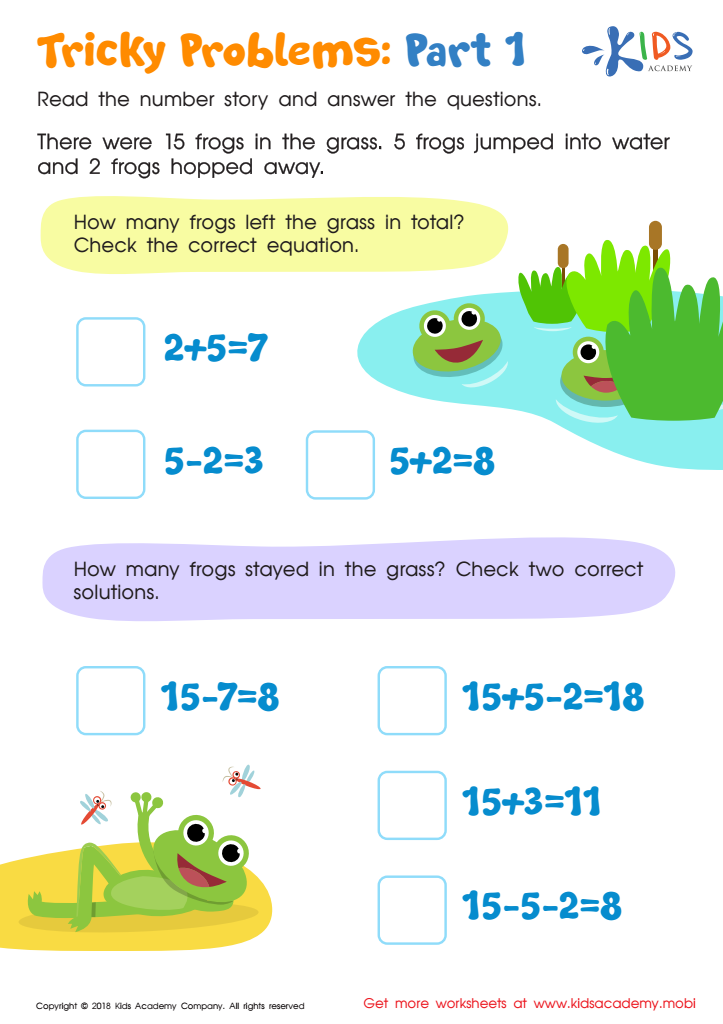
Visualizing word problems can help students solve them. This fun PDF worksheet encourages students to create mental images using math facts, then check boxes to match the equations for basic addition problems. It's a great way to build confidence in solving math.
Tricky Problems Worksheet: Part 1
Worksheet
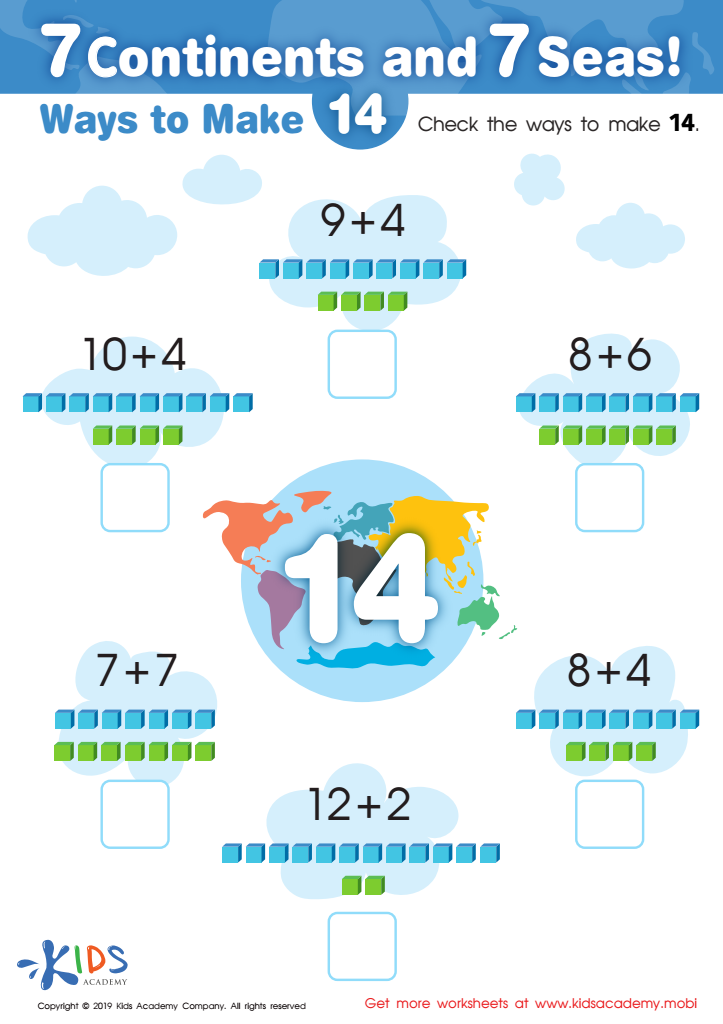
7 Continents and 7 Seas Worksheet

7 Continents and 7 Seas Worksheet

Remind kids of the continents and show them how different numbers can add up to the same figure. Give examples, like 2+2 =4, and 3+1 =4. Ask if they can provide other examples, then work through the simple additions in this worksheet with them. Ask them to circle all equations that make 14.
7 Continents and 7 Seas Worksheet
Worksheet
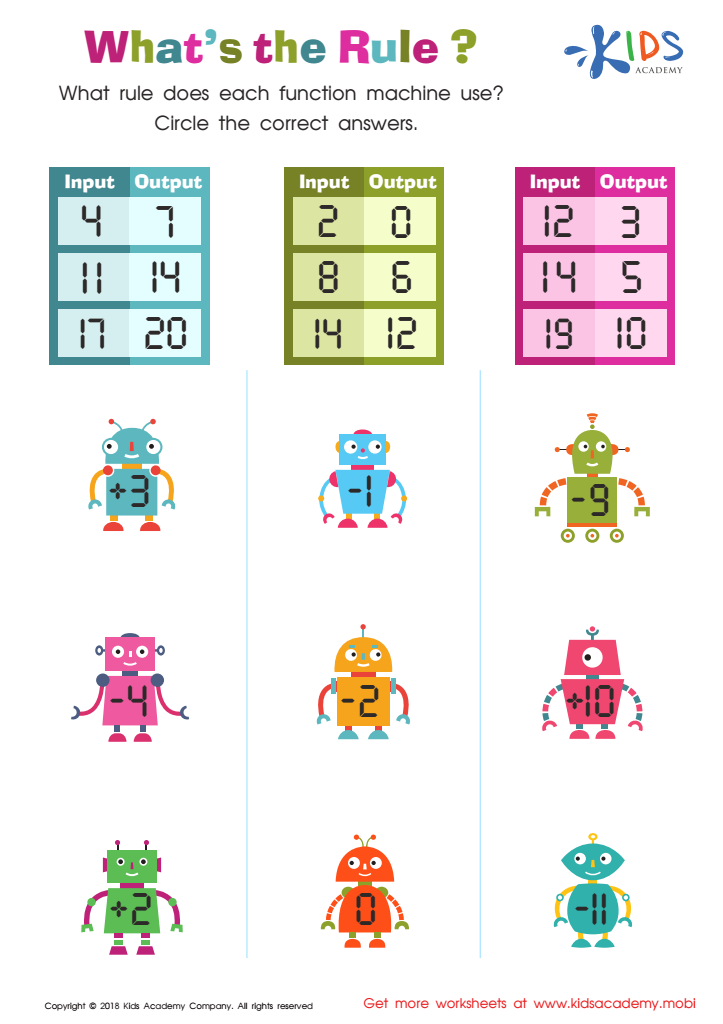
What's the Rule Worksheet

What's the Rule Worksheet

Robots are here to help your child find the relationship between each set of numbers! Adorably illustrated worksheets use vivid pictures that each contain a rule. Look at each function machine and find the pattern or relationship between the input and output. Then, complete the sheet by circling the correct answer!
What's the Rule Worksheet
Worksheet
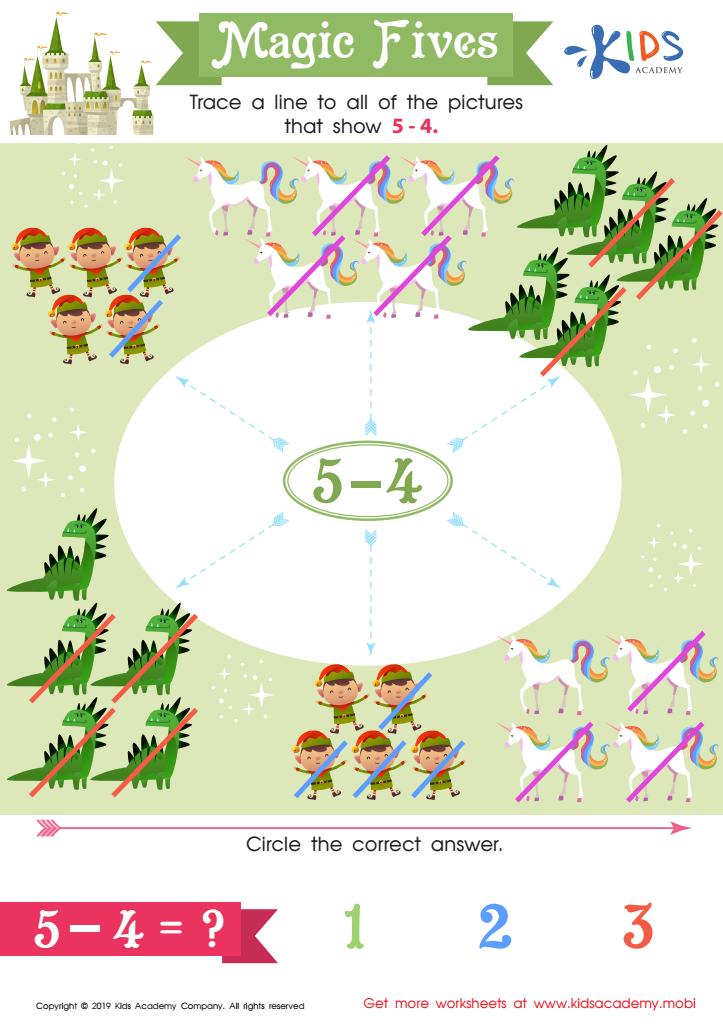
Magic Fives Worksheet

Magic Fives Worksheet

Help your students identify the objects & people in the worksheet. Point to the equation 5 -4 in the center, then get them to count the items and trace a line connecting those that add up to 5 - 4.
Magic Fives Worksheet
Worksheet
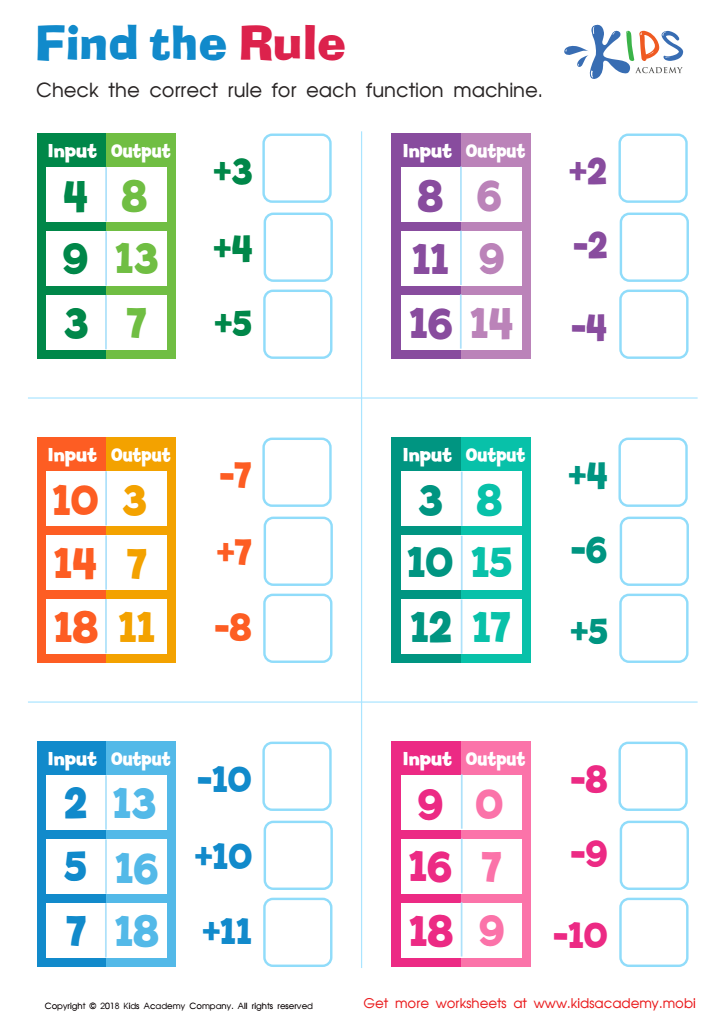
Find the Rule Worksheet

Find the Rule Worksheet

A function machine is an elementary math tool used to find an output by applying a rule, like addition or subtraction, to an input. Children use the diagram to understand the relationship between each input and output, with this worksheet helping them to analyze the machine and find the rule being used.
Find the Rule Worksheet
Worksheet
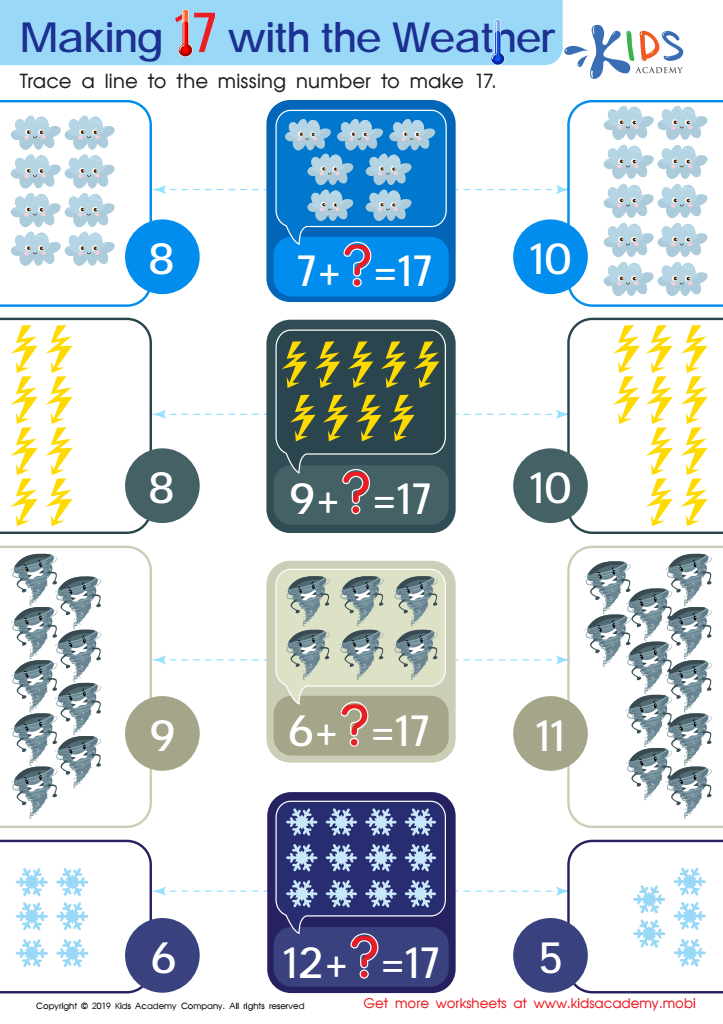
Making 17 with the Weather Worksheet

Making 17 with the Weather Worksheet

Show your kids the pictures in the worksheet and identify the weather. This exercise is to help them add simple numbers. There are 4 equations in the printout. Help them figure out the numbers to make 17, then trace a line to the missing number to complete the equation.
Making 17 with the Weather Worksheet
Worksheet
Count Back to Subtract

Count Back to Subtract Substraction Worksheet
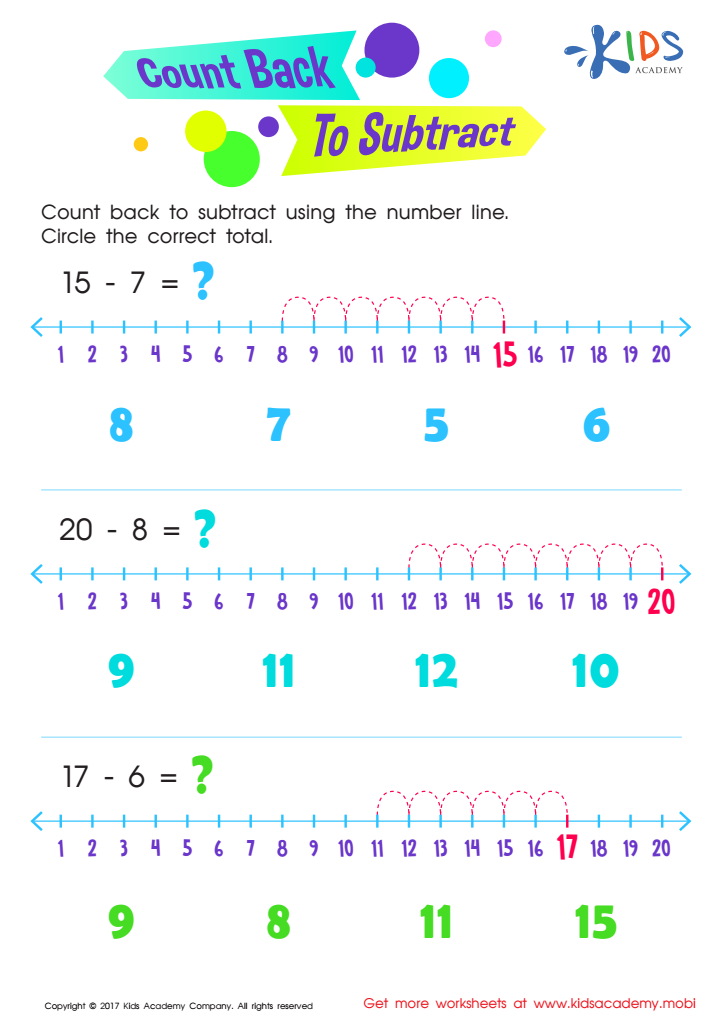
With this worksheet, your child can visually see and count each number they’re subtracting. This worksheet provides a number line to help your child master subtraction visually. Counting back on the line will give them a deeper understanding of the concept. It's a great way to teach subtraction and help children gain confidence with the subject.
Count Back to Subtract Substraction Worksheet
Worksheet
What Makes 13 Worksheet

What Makes 13 Worksheet

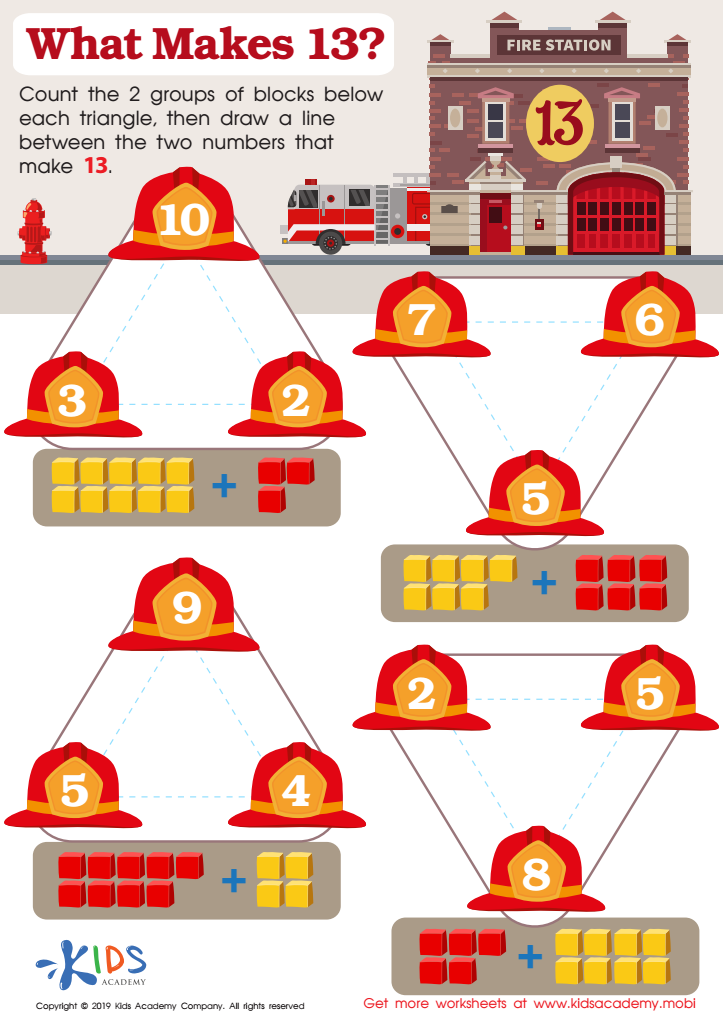
Help your kids practice maths with this worksheet! With colourful images and simple equations, your kids will be more engaged in learning. Go through the four equations and help them add up the numbers. Then, draw a line between the numbers that make 13. Doing this will aid their learning and understanding.
What Makes 13 Worksheet
Worksheet
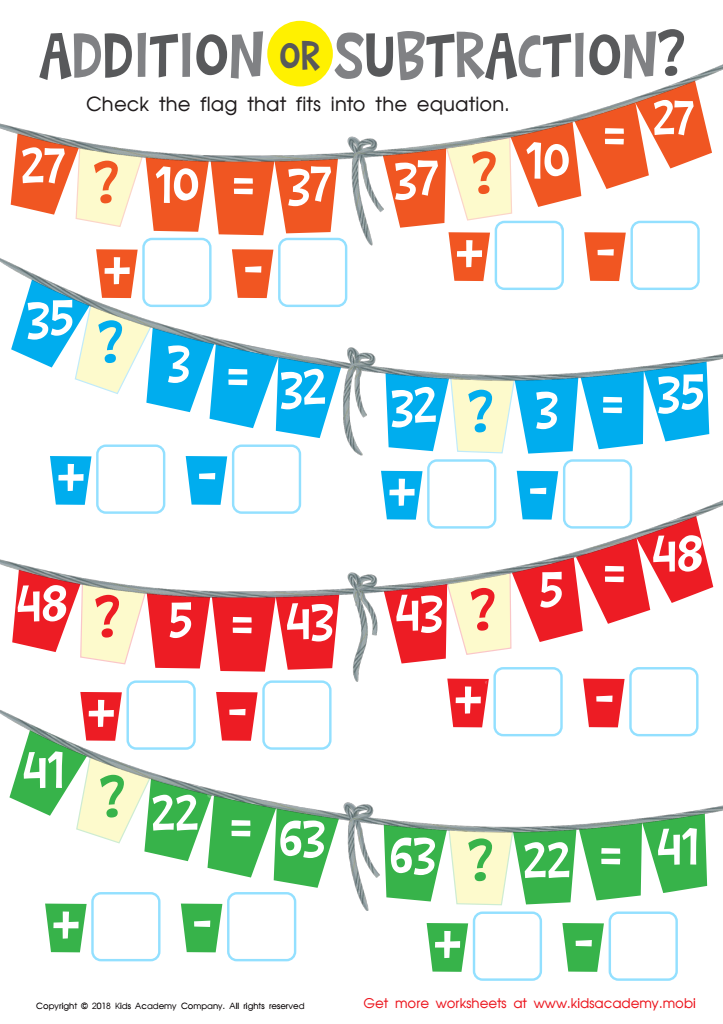
Addition or Subtraction? Worksheet

Addition or Subtraction? Worksheet

Help your math whiz's number skills advance with these colorful flag equations! With the free PDF, they'll learn to solve addition and subtraction facts by following the correct orders of operation. And the best part? They'll develop a deeper understanding of how the different operations work together within equations. Give it a try and watch their skills soar!
Addition or Subtraction? Worksheet
Worksheet
Free addition PDF worksheet for 3rd grade

Free Addition Worksheet

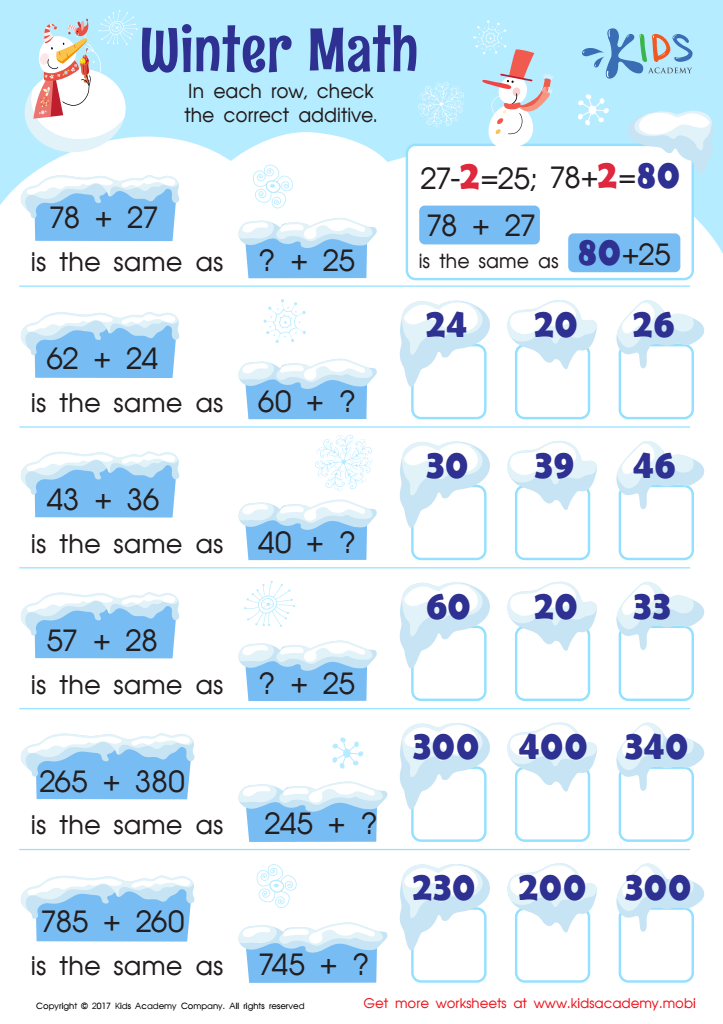
Perfect for a wintry day, challenge your 3rd grader to compare addition equations and fill in the missing numbers in the PDF. This winter-themed worksheet is sure to bring a smile while your 3rd grader practices their addition skills. Perfect for a blustery day, challenge your child to compare addition equations and complete the missing numbers in the PDF.
Free Addition Worksheet
Worksheet


Mathematical reasoning in normal addition and subtraction for children ages 3-8 is crucial for several reasons. First and foremost, it lays the foundation for a strong mathematical understanding that will be beneficial throughout their education. At this young age, children start developing critical problem-solving skills that help them understand numerical relationships and the concept of quantity. This stage of learning enhances cognitive development, allowing children to think logically and make sense of the world around them.

Moreover, mastering basic addition and subtraction promotes confidence in young learners. When children feel competent in their abilities, they are more likely to engage with mathematics and tackle more complex concepts in the future. This leads to a positive attitude towards math, reducing anxiety and fostering a love for learning.

Additionally, mathematical reasoning helps reinforce essential social skills, such as sharing and cooperation during group activities. As children work together to solve problems, they learn to communicate, ask questions, and support one another's learning.

By prioritizing mathematical reasoning in early education, parents and teachers create a nurturing environment that encourages exploration, curiosity, and a lifelong appreciation for mathematics—key elements for success in school and beyond.