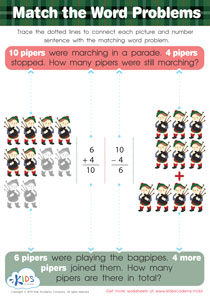
Logical thinking development Normal Addition Worksheets for Ages 3-8
3 filtered results
-
From - To
Enhance your child's logical thinking skills with our Normal Addition Worksheets designed for ages 3-8! These engaging worksheets provide a fun and interactive way for young learners to master basic addition concepts while developing critical problem-solving abilities. Each activity is thoughtfully crafted to challenge and stimulate your child's mind, encouraging them to think logically and creatively. Ideal for parents and educators, our worksheets promote cognitive development through colorful illustrations and varied exercises that keep children engaged. Download our age-appropriate addition worksheets today to support your child's learning journey and instill a love for math from an early age!
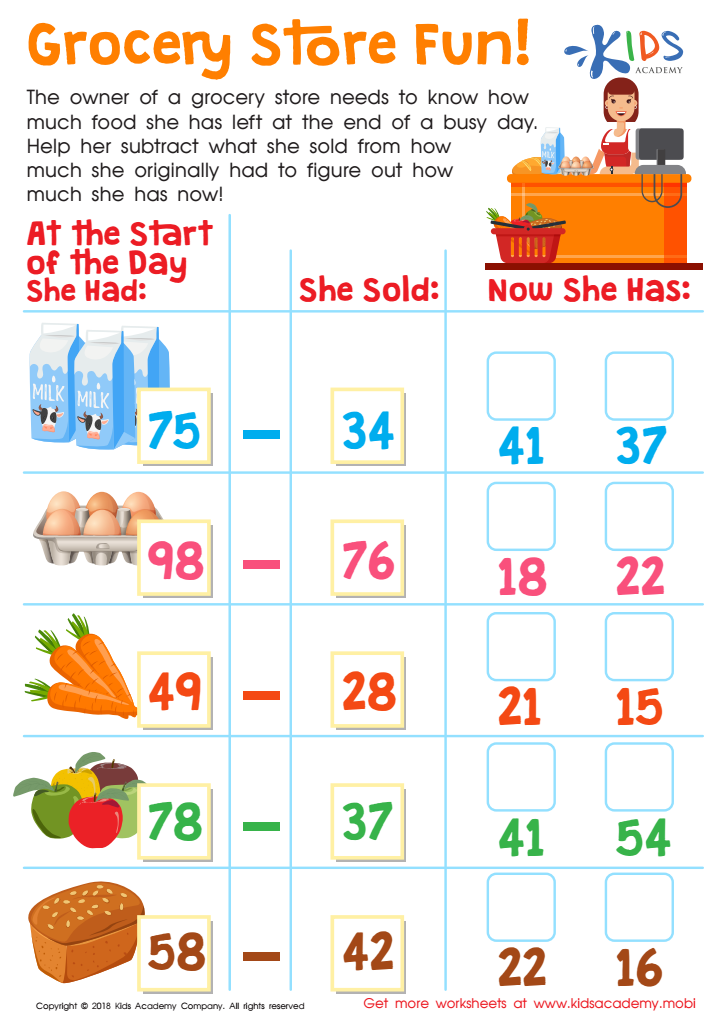
Grocery Store Fun! Worksheet
 Assign to My Students
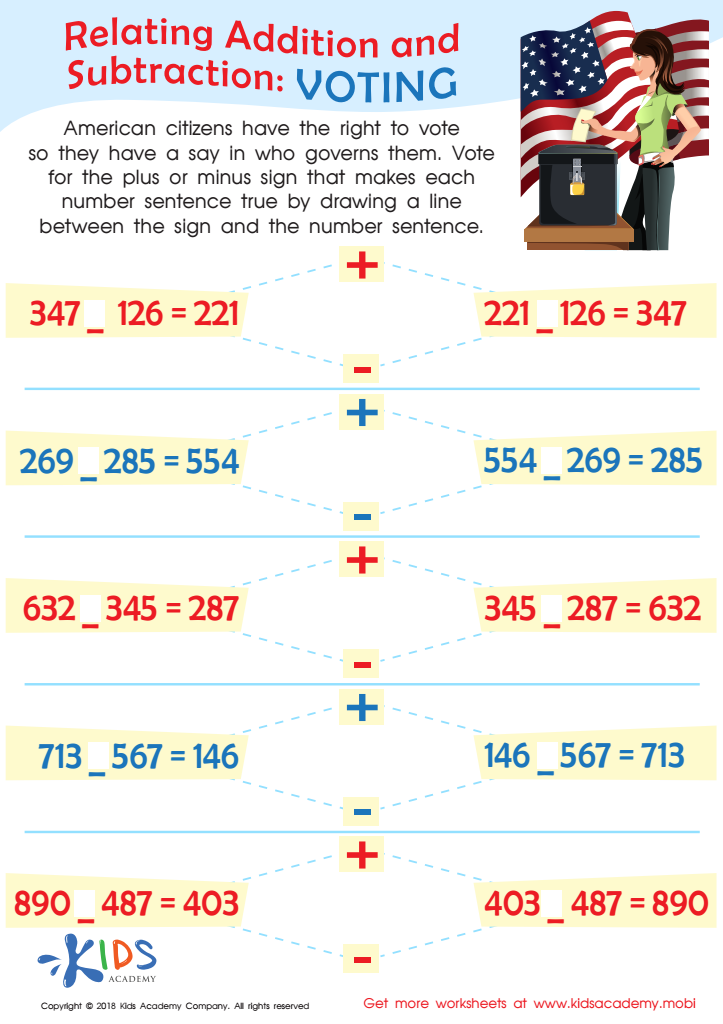
Voting Worksheet
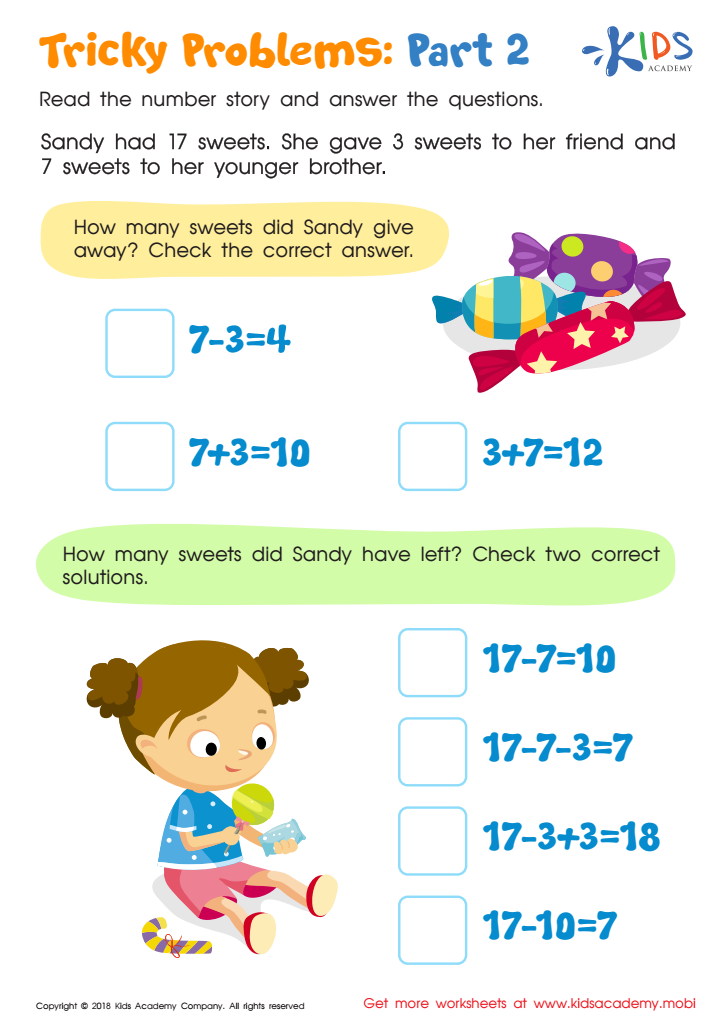
Tricky Problems Worksheet: Part 2








Logical thinking and addition skills are foundational elements in early childhood education, particularly for children aged 3-8. Developing these skills helps young learners build a solid cognitive framework that supports problem-solving, reasoning, and mathematical understanding. As they engage with logical thinking, children learn to recognize patterns, categorize objects, and make connections between concepts, which are essential for critical thinking later in life.
Normal addition, a key mathematical operation, intertwines with logical thinking by teaching children how to quantify and manipulate numbers. Mastering addition not only boosts arithmetic skills, but also fosters a sense of confidence and achievement. When children practice addition in playful settings or through everyday activities, they gain a deeper understanding of quantity and relationships between numbers.
Parents and teachers should care about these developmental milestones because they serve as stepping stones to more complex mathematical concepts and analytical skills. Early proficiency in logical thinking and addition can lead to increased academic success, improving overall engagement and motivation in learning. Furthermore, strong reasoning and numerical skills are crucial for life skills, influencing decision-making and critical assessment of information. Investing in these areas enriches children’s educational journeys and promotes lifelong learning.