Reading comprehension Normal Addition Worksheets for Ages 3-8
3 filtered results
-
From - To
Enhance your child's learning experience with our engaging "Reading Comprehension Normal Addition Worksheets" tailored for ages 3-8. Designed to improve both math skills and reading abilities, these worksheets help young learners master basic addition concepts through fun, relatable stories and questions. Each worksheet encourages critical thinking as children read simple passages and solve addition problems based on the provided context. Perfect for homeschooling or supplementary classroom activities, these worksheets foster a love for learning while developing essential skills. Encourage your child to explore numbers and narratives with our carefully crafted materials that make math enjoyable and accessible for early learners!
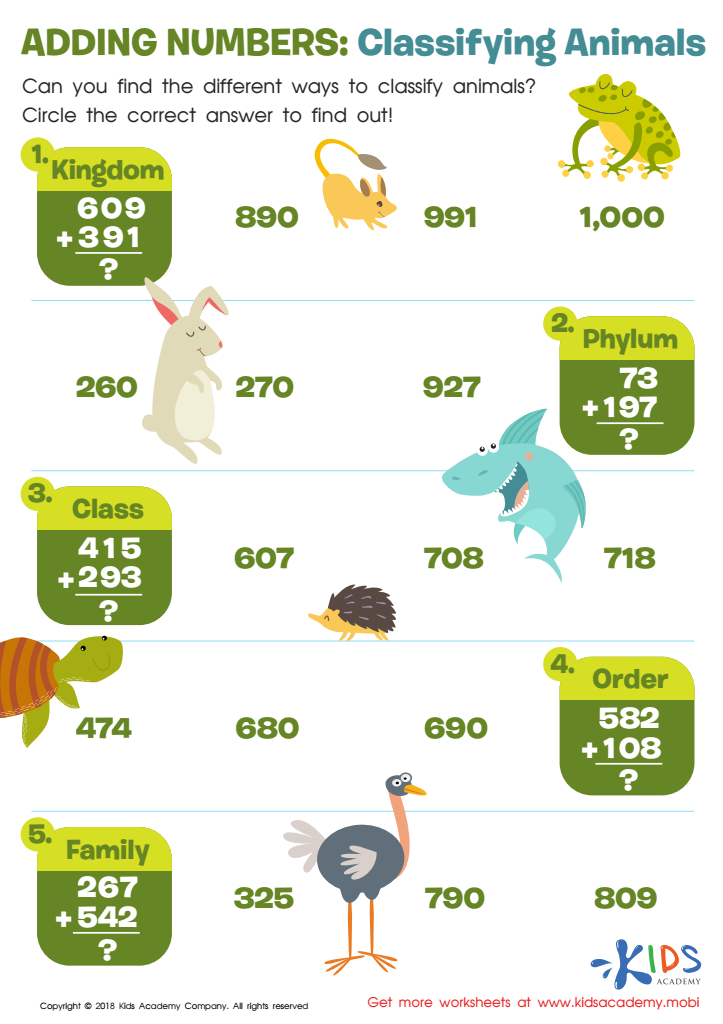
Adding Numbers: Classifying Animals Worksheet
 Assign to My Students
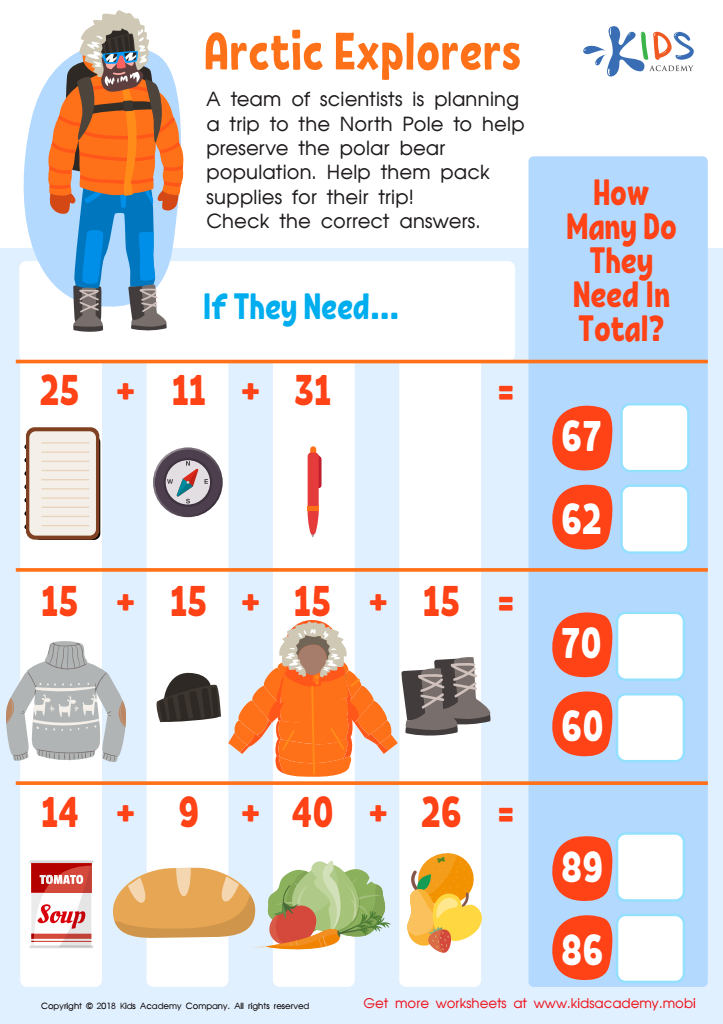
Arctic Explorers Worksheet
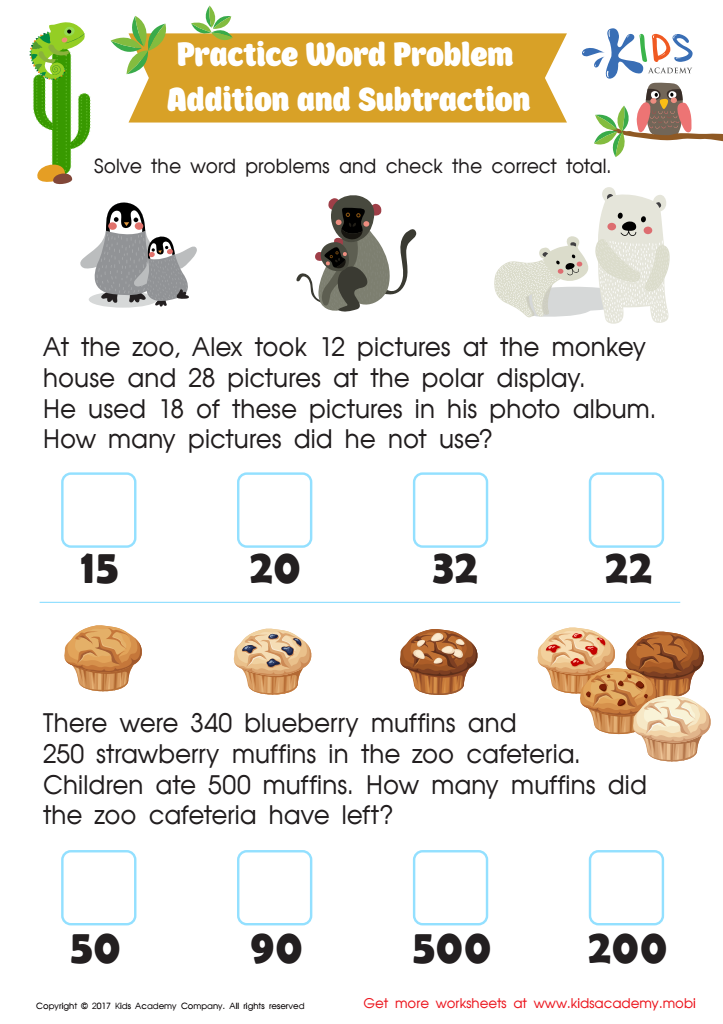
Addition and Subtraction: Word Problems Worksheet








Reading comprehension is a fundamental skill for children aged 3 to 8 that lays the foundation for future learning. For parents and teachers, understanding normal reading comprehension development is crucial, as it directly impacts a child's ability to engage with texts, express thoughts, and analyze information critically.
By age 3, children begin to recognize letters and sounds, while from ages 4 to 8, they start to connect words with meanings, predict outcomes, and comprehend stories. At this stage, comprehension is not just about reading but involves interacting with texts, retelling stories, and answering questions about them. This skill set benefits overall academic performance; strong readers tend to excel in all subjects, as they can navigate complex texts more easily.
Additionally, reading comprehension fosters a love for literature and lifelong learning, which are important emotional and social skills. Engaging with children in discussions about stories helps cultivate critical thinking, imagination, and communication abilities.
Ultimately, prioritizing reading comprehension ensures that children are not only able to read but are also capable of thoughtful reflection and connection-making, equipping them for success in school and beyond. Investing in these early stages of learning is vital for nurturing confident and capable learners.