Historical Knowledge Normal Arrays Worksheets for Ages 3-8
3 filtered results
-
From - To
Discover our engaging Historical Knowledge Normal Arrays Worksheets designed specifically for children aged 3-8! These worksheets provide a fun and interactive way for young learners to explore the world of historical facts and concepts while honing their math skills through the use of arrays. Each activity encourages critical thinking and enhances understanding of past events, figures, and cultures. Ideal for home and classroom use, these resources integrate history with foundational math principles, making learning enjoyable and impactful. Suitable for various learning styles, our worksheets foster curiosity and enhance retention in an age-appropriate format. Start the journey of exploration today!
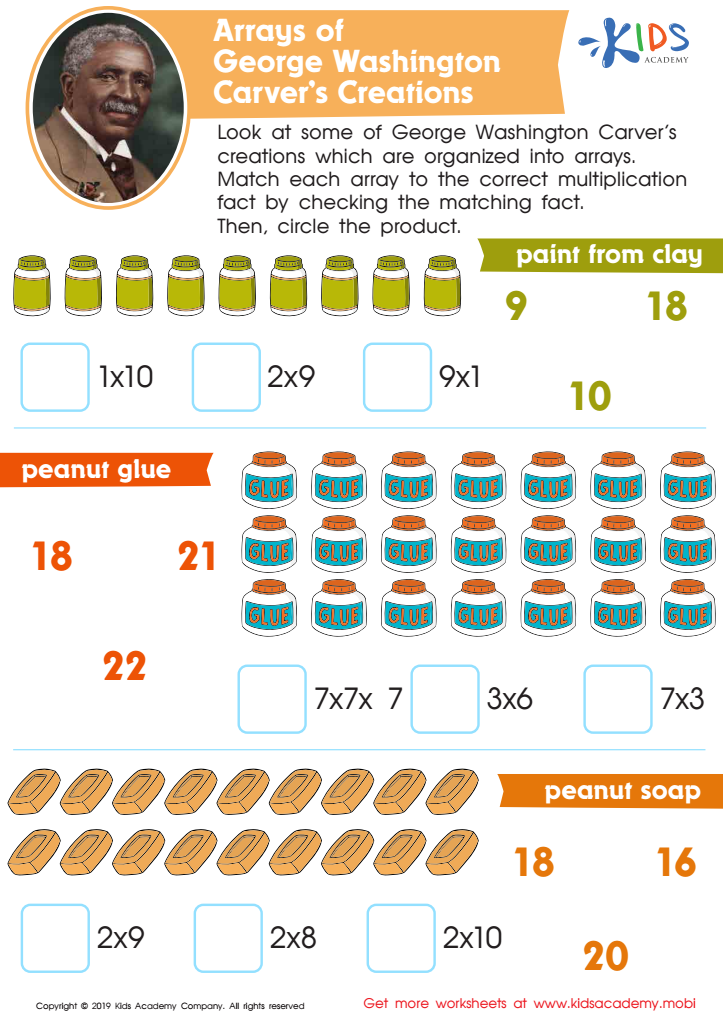
Arrays of George Washington Carver’s Creations Worksheet
 Assign to My Students
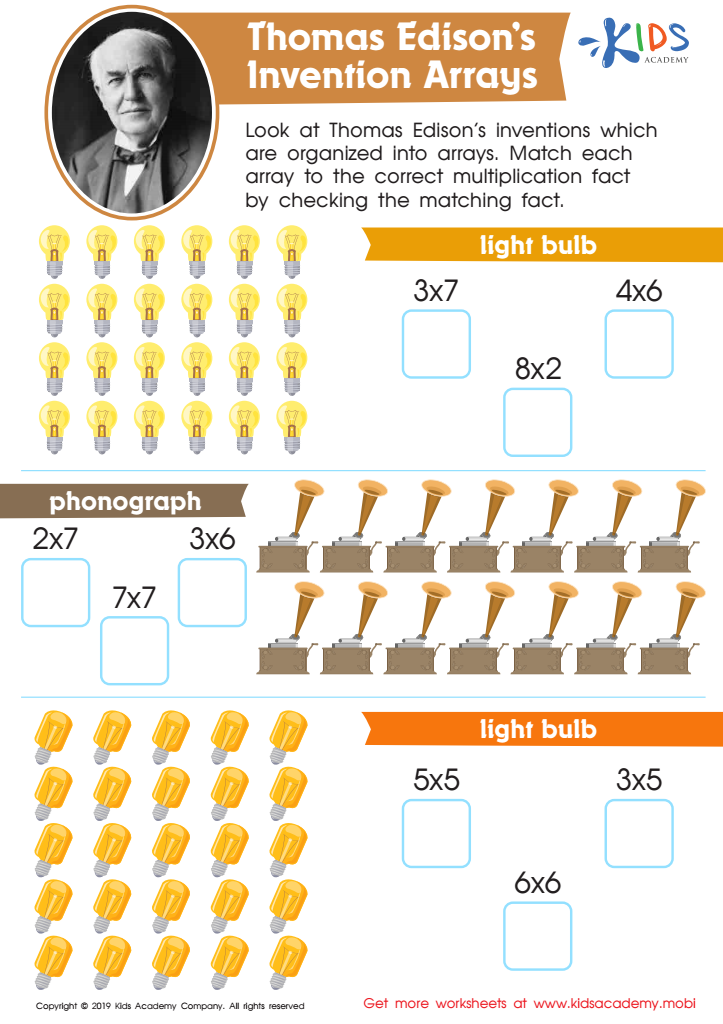
Thomas Edison’s Invention Arrays Worksheet
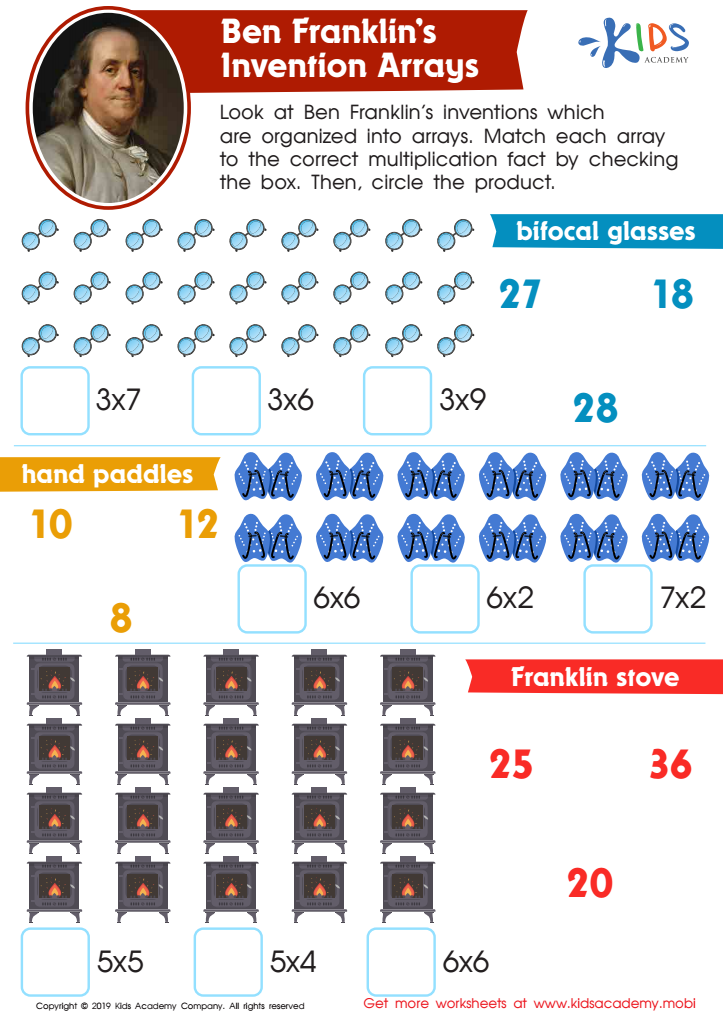
Ben Franklin’s Invention Arrays Worksheet







Historical Knowledge Normal Arrays (HKNA) are crucial for children aged 3-8 as they shape their understanding of the world. At this early stage, children's cognitive abilities are at their peak for absorbing information and forming foundational beliefs about their culture, history, and environment. Parents and teachers should care about HKNA because they facilitate a structured approach to introducing historical contexts that are developmentally appropriate.
By employing HKNA, educators can create engaging, age-appropriate narratives filled with relatable themes and characters, promoting empathy and social awareness. This method allows children to see relationships between past and present, helping them understand how history influences their lives today.
Furthermore, HKNA supports cognitive development by categorizing historical knowledge, which aids memory retention and retrieval. Engaging children with diverse historical perspectives fosters inclusivity and multicultural understanding, essential in today's global society.
Ultimately, an effective history education prepares children for responsible citizenship and informed decision-making in adulthood. By prioritizing HKNA, parents and teachers contribute significantly to nurturing curious, well-informed, compassionate individuals prepared to engage thoughtfully with the past, present, and future. This foundational knowledge lays the groundwork for lifelong learning and cultural appreciation.








