Problem-Solving Skills Normal Arrays Worksheets for Ages 3-8
3 filtered results
-
From - To
Discover engaging Problem-Solving Skills Normal Arrays Worksheets designed for children ages 3-8. These interactive worksheets, available at Kids Academy, encourage critical thinking and foster essential mathematical skills. Through fun activities like arranging arrays, young learners explore patterns, practice counting, and enhance their problem-solving abilities. Perfect for early math education, our carefully crafted worksheets provide a solid foundation in understanding arrays, promoting both creativity and logical reasoning. Ideal for classroom or at-home learning, these resources make mastering basic math concepts a delightful experience for your little ones. Visit Kids Academy today and start your child's problem-solving journey!
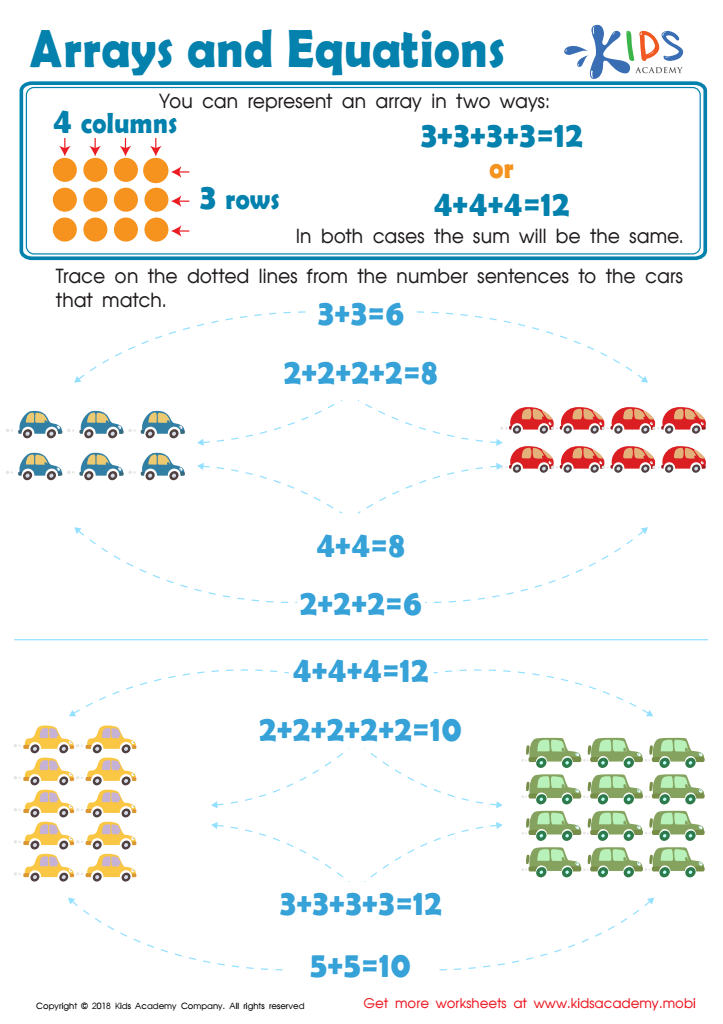
Arrays and Equations Worksheet
 Assign to My Students
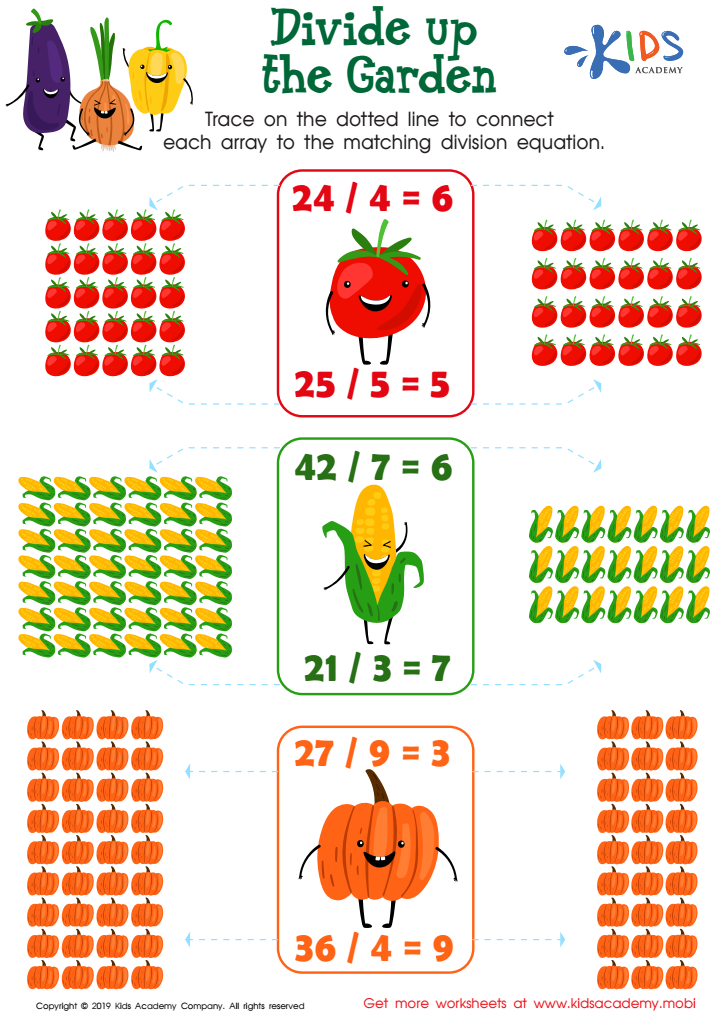
Divide up the Garden Worksheet
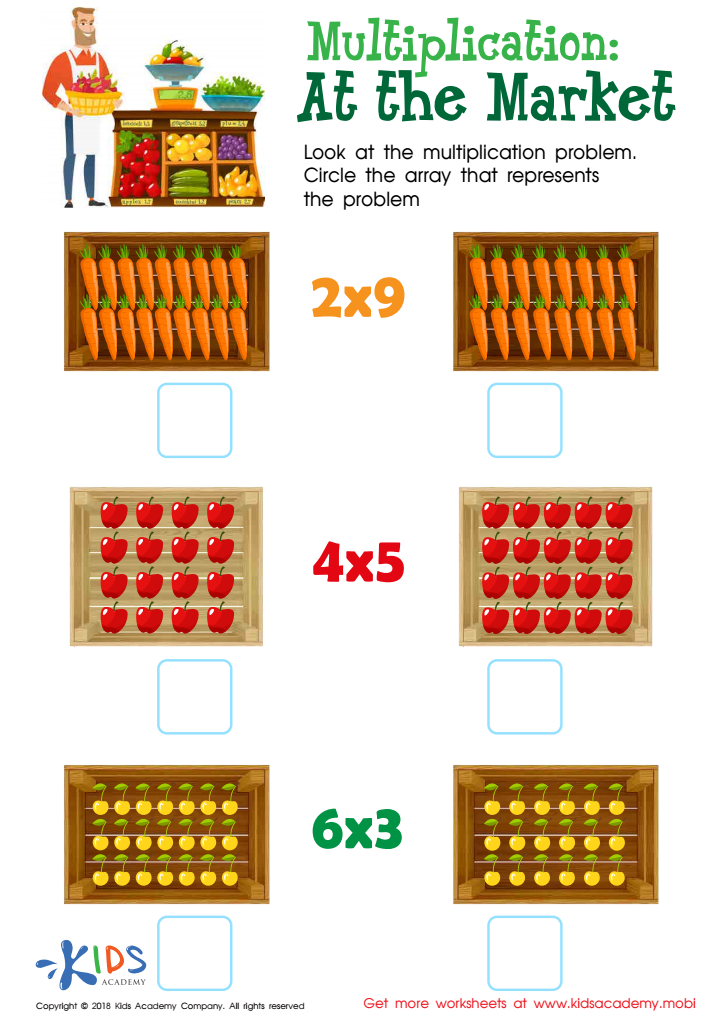
At the Market Worksheet








Problem-solving skills are pivotal to children's cognitive and emotional development, especially during the formative years of ages 3 to 8. At this early stage, children are developing foundational abilities that will serve them throughout their lives. Investing in Problem-Solving Skills Normal Arrays is vital for several reasons.
Firstly, research shows that problem-solving activities enhance critical thinking and creativity. As children encounter various challenges, they learn to analyze situations, plan strategies, and think outside the box. This mental flexibility is valuable across all subjects and life scenarios.
Additionally, problem-solving nurtures perseverance and resilience. When children tackle tasks and encounter difficulties, they learn to persist and adapt, understanding that failure is a stepping stone to growing and finding solutions. This builds a growth mindset, essential for lifelong learning and success.
Moreover, these skills foster social and emotional intelligence. Working on problems often involves communication and collaboration, teaching kids to express ideas, listen to others, and manage emotions effectively.
Finally, early encouragement in problem-solving cultivates a love for learning. When children experience the joy and satisfaction of overcoming obstacles, they develop curiosity and a positive attitude towards education.
Parents and teachers play a crucial role in facilitating these opportunities, setting the stage for children’s confident and competent future endeavors. In essence, incorporating problem-solving into early childhood education lays the groundwork for well-rounded, resourceful individuals.








