Differentiating shapes Normal Geometry Worksheets for Ages 3-8
3 filtered results
-
From - To
Explore our "Differentiating Shapes Normal Geometry Worksheets" tailored for children ages 3-8! These engaging, printable worksheets are designed to foster early math skills by helping young learners identify, sort, and compare various shapes. With vibrant illustrations and interactive activities, your child will develop a strong foundation in geometry while having fun. Perfect for home schooling, classrooms, or supplemental learning, our worksheets accommodate diverse learning styles and paces. Encourage your child's love for shapes and enhance their critical thinking skills today! Download the worksheets now to embark on an exciting mathematical journey filled with exploration and creativity!
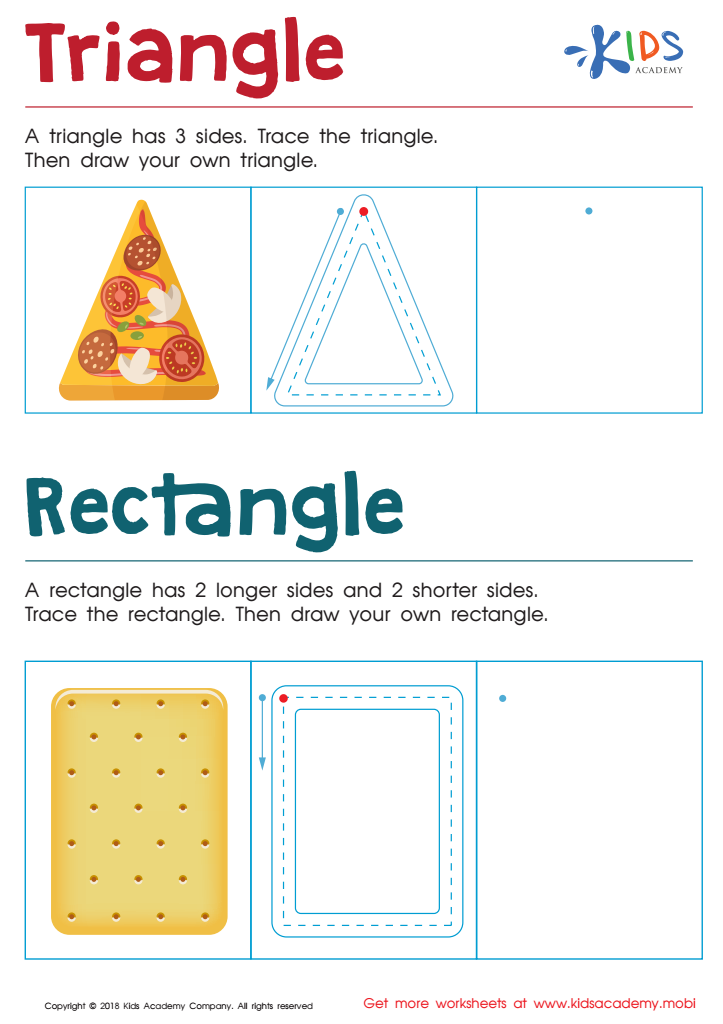
Triangle Rectangle Worksheet
 Assign to My Students











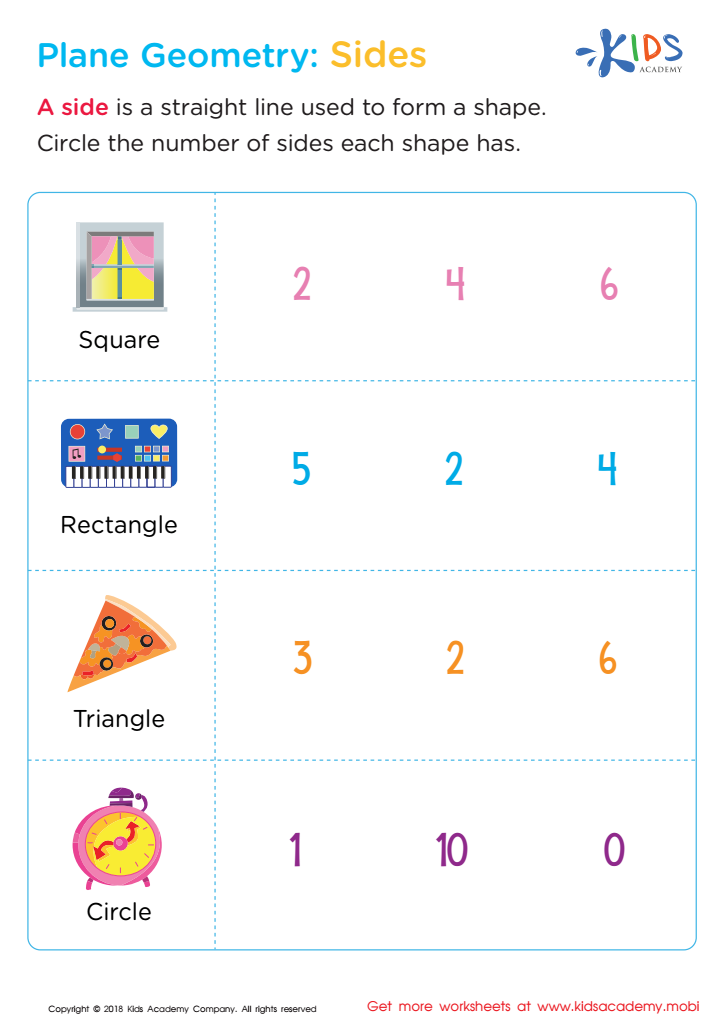
Plane Geometry: Sides Worksheet
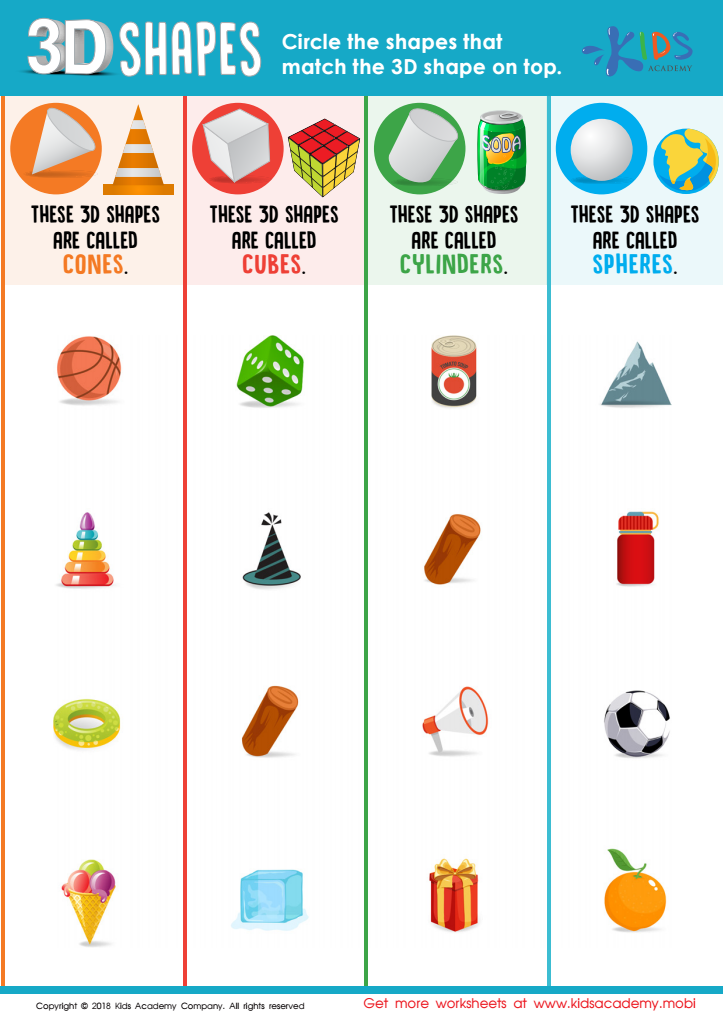
3D Shapes Worksheet








Differentiating shapes in early geometry education for children aged 3 to 8 is essential for fostering their cognitive development and foundational math skills. Understanding and identifying various shapes help children make sense of the world around them, enhancing their spatial awareness and reasoning abilities. When parents or teachers care about shape differentiation, they actively promote critical thinking and problem-solving skills through engaging activities tailored to individual learning needs.
Such differentiation allows educators to recognize the varied developmental stages among children, ensuring that each child receives personalized support. For younger learners, activities may involve sorting shapes by attributes or simple shape recognition games, while older children can delve deeper into concepts like symmetry and spatial relationships. This tailored approach not only boosts children’s confidence but also accommodates diverse learning styles—auditory, visual, and kinesthetic.
Moreover, a strong grasp of geometry lays the groundwork for more advanced mathematical concepts, teaching children to analyze and compare objects effectively. Ultimately, by prioritizing differentiated shape education, parents and teachers equip children with essential skills that extend beyond math, encouraging creativity, observation, and a lifelong love of learning.








