
Basic arithmetic skills Normal Math Worksheets for Ages 3-8
6 filtered results
Difficulty Level
Grade
Age
-
From - To
Subject
Activity
Standards
Discover fun and engaging Normal Math Worksheets designed for children aged 3-8 to master basic arithmetic skills! Our user-friendly resources include addition, subtraction, and counting exercises tailored to young learners. These worksheets feature vibrant illustrations and interactive activities that make math enjoyable while building confidence and understanding. Perfect for parents and educators, these printable materials aid in reinforcing essential math concepts in a playful manner. Help your child develop a solid foundation in arithmetic through practice and repetition, setting them up for future success in math. Explore our collection and unlock the joy of learning with our basic arithmetic skills worksheets today!
Favorites
With answer key
Interactive
 Assign to My Students
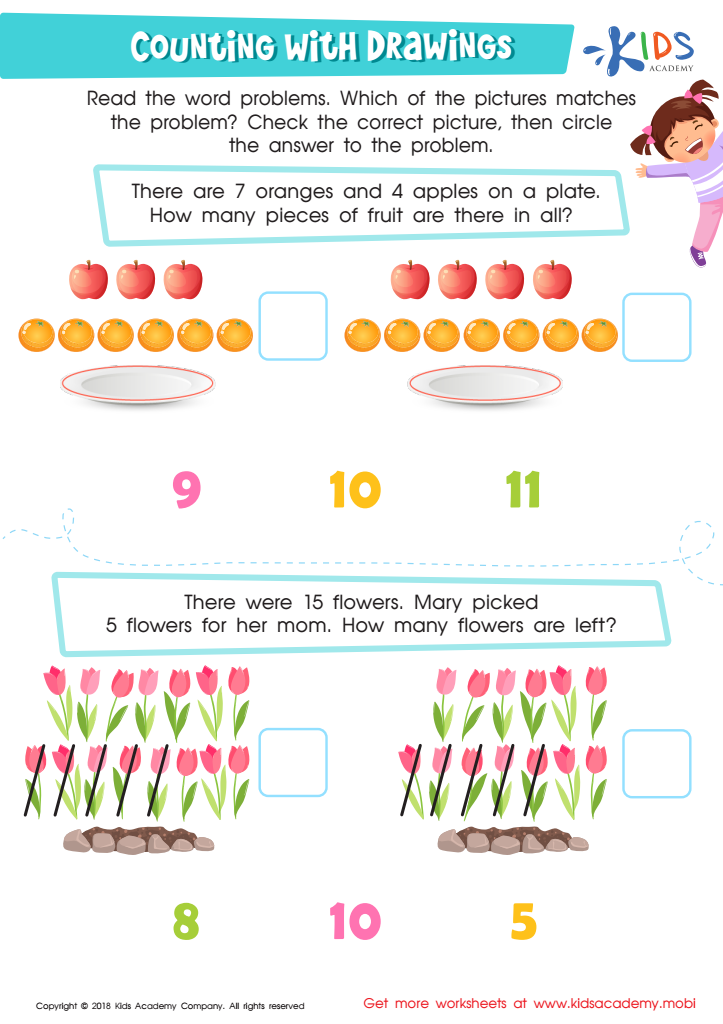
Counting with Drawings: Fruits & Chocolates Worksheet
Learning basic addition and subtraction has never been easier with this free worksheet! Young mathematicians can sort & count to get the right sum or difference for each problem. Plus, they'll practice fine motor skills by circling the correct answer. An ideal way to help kids build important visual recognition and discernment skills.
Counting with Drawings: Fruits & Chocolates Worksheet
Worksheet
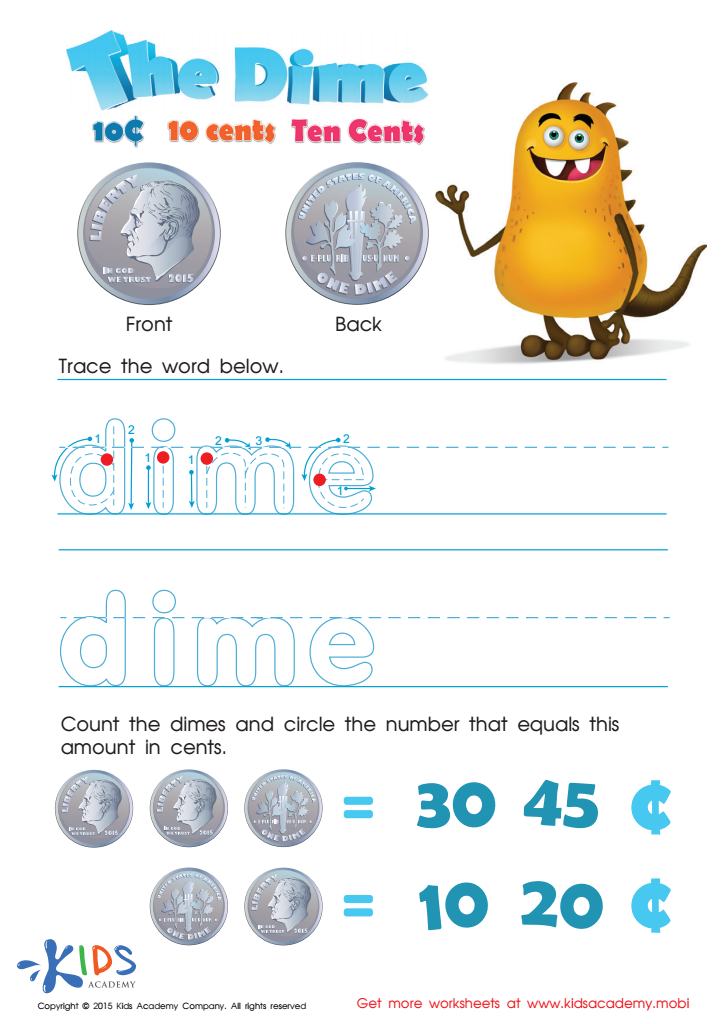
Ten Cents or the Dime Money Worksheet
Introduce your kids to coin games! Start with a dime: trace the word on both sides and count the dimes. Kids Academy has printable worksheets to help your kids learn how to count money.
Ten Cents or the Dime Money Worksheet
Worksheet
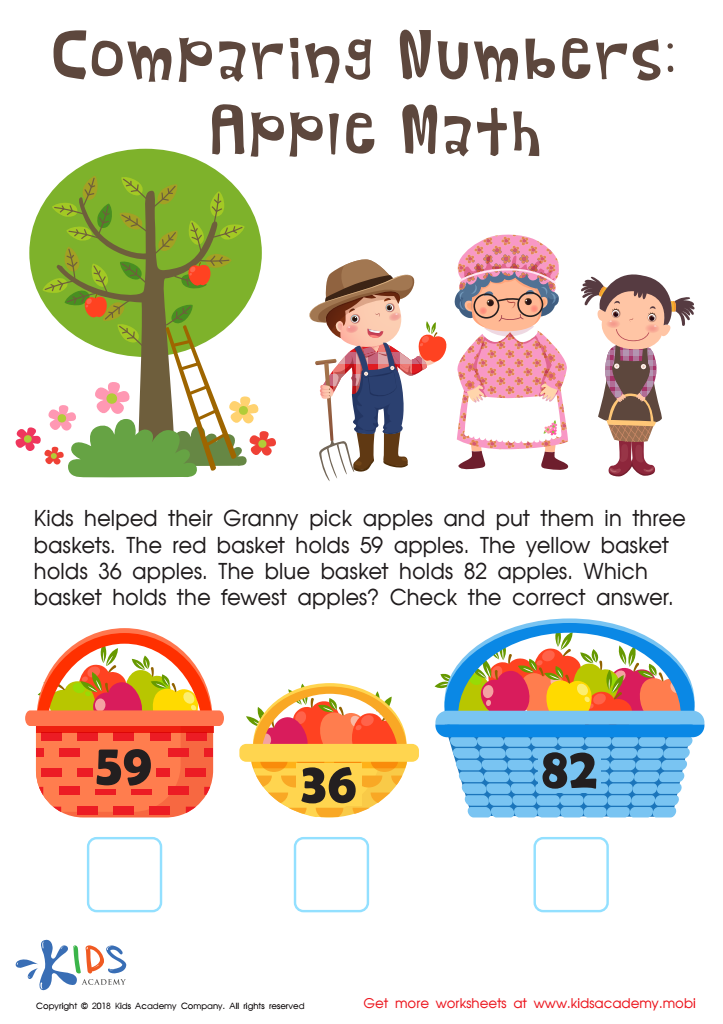
Apple Math Worksheet
Math is more than just counting, adding, subtracting, multiplying, and dividing. Your child may be feeling overwhelmed by all the complexities, like comparing numbers and their differences. But with this worksheet, you can make comparing numbers fun again!
Apple Math Worksheet
Worksheet
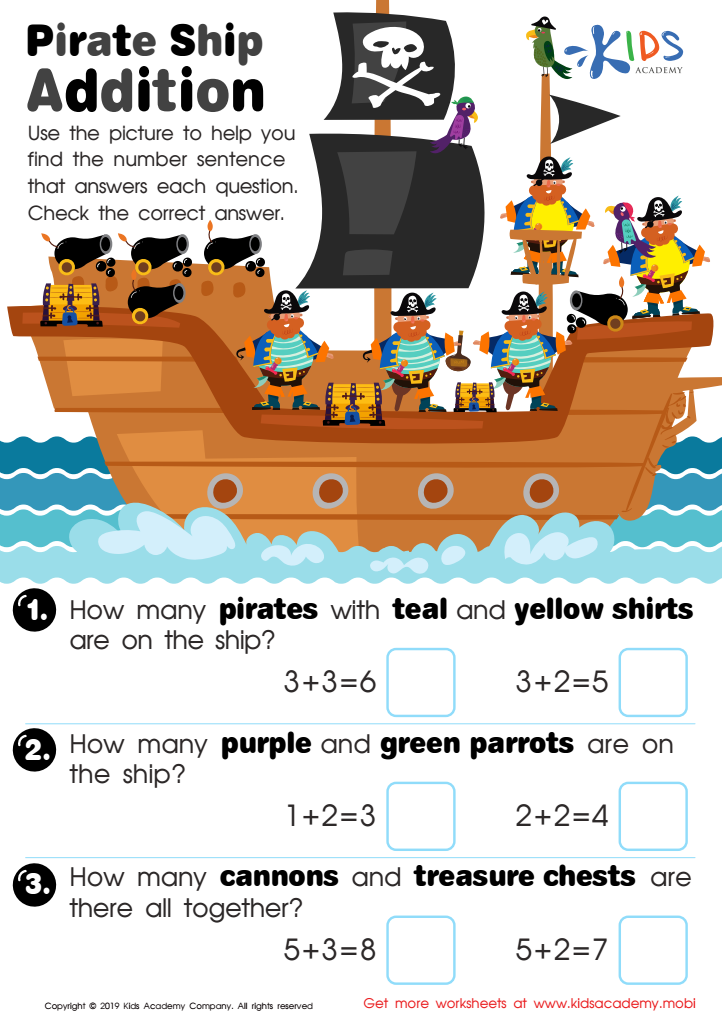
Pirate Ship Addition Worksheet
Does your family love pirate stories? Get your kids excited about this easy activity! Ask them to explain what makes pirate tales special, then look at the picture in the printout. Answer the three number questions at the bottom - use the picture to find the right number sentence. Help your kids check the correct answer. Max 80 words.
Pirate Ship Addition Worksheet
Worksheet
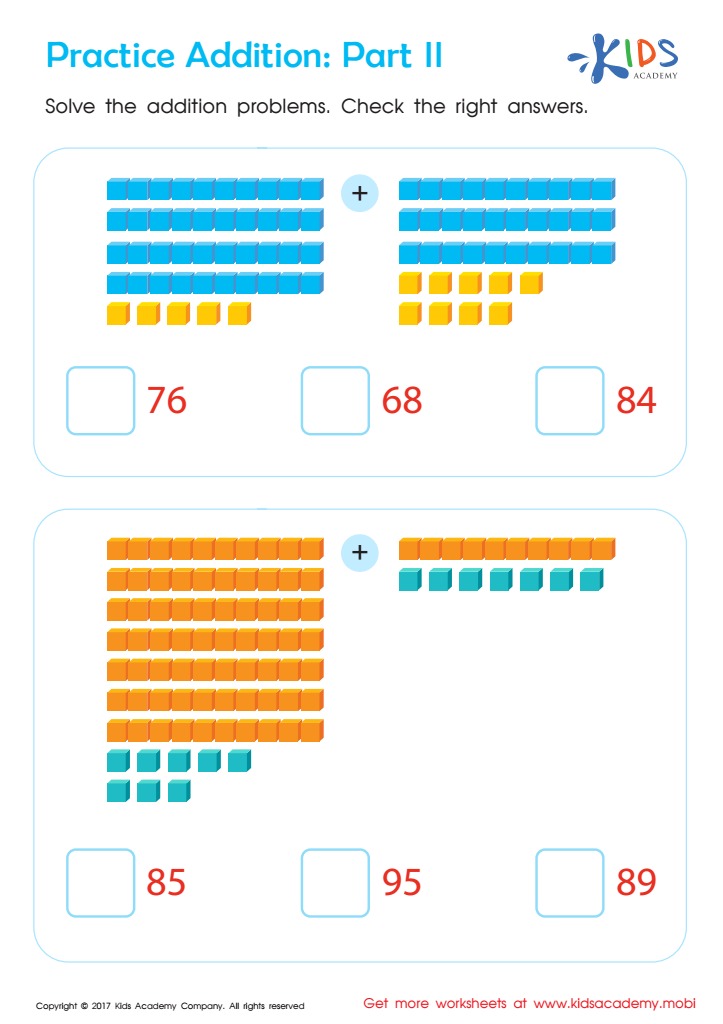
Practice Addition: Part 2 Worksheet
Try this printable worksheet to practice addition! It contains longer, tougher addition equations for 1st graders. Colorful blocks give kids the opportunity to visualize how big numbers are combined. Multiple choice answers help kids gain confidence in problem solving.
Practice Addition: Part 2 Worksheet
Worksheet
Join Kids Academy for Free
Who is primarily going to use this learning content?







Basic arithmetic skills are fundamental for children ages 3-8 as they lay the groundwork for all future mathematical learning and everyday decision-making. At this age, children begin developing cognitive abilities crucial for understanding numbers, quantities, and problem-solving. Early exposure to arithmetic fosters confidence and a positive attitude toward math, which can significantly impact academic success.
Parents and teachers play a vital role in nurturing these skills. Engaging children with playful, hands-on activities, such as counting objects, playing math games, or incorporating math into daily routines (like cooking or shopping), transforms learning into an enjoyable experience. These activities not only improve arithmetic understanding but also enhance critical thinking and reasoning skills.
Moreover, strong arithmetic foundations encourage a growth mindset, enabling children to view challenges as opportunities for learning. As math concepts become increasingly complex in later grades, a solid grasp of basic arithmetic helps prevent frustration and fear of math, contributing to long-term educational resilience.
Ultimately, prioritizing basic arithmetic in the early years is essential for developing numeracy and problem-solving skills that are essential in daily life, paving the way for academic achievement and success in an increasingly math-oriented world.








