Understanding number relationships Normal Math Worksheets for Ages 3-8
3 filtered results
-
From - To
Explore “Understanding Number Relationships” worksheets, perfect for children aged 3-8, designed to nurture foundational math skills through engaging activities. These Normal Math Worksheets enhance young learners' ability to recognize and comprehend number relationships, laying the groundwork for future arithmetic success. Featuring vibrant illustrations and age-appropriate exercises, these worksheets make learning fun and interactive. From simple comparisons to patterns and sequences, each activity promotes critical thinking and number sense while encouraging independent exploration. Ideal for home or classroom use, these worksheets are an invaluable resource for early math education. Jumpstart your child's math journey today with our comprehensive collection!
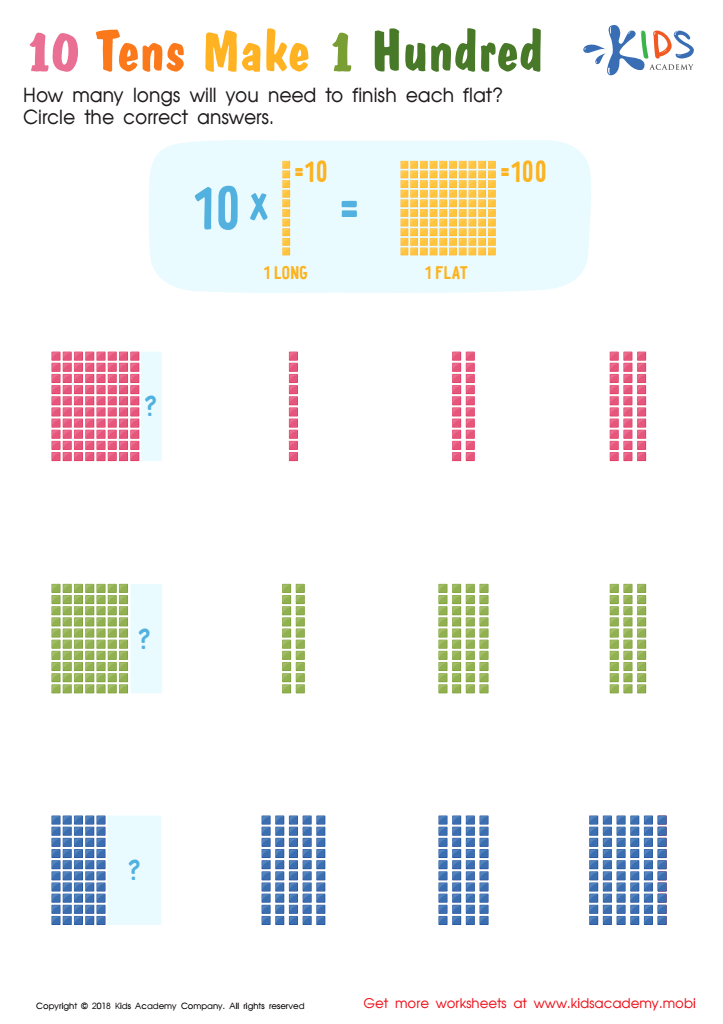
10 Tens Make 1 Hundred Worksheet
 Assign to My Students
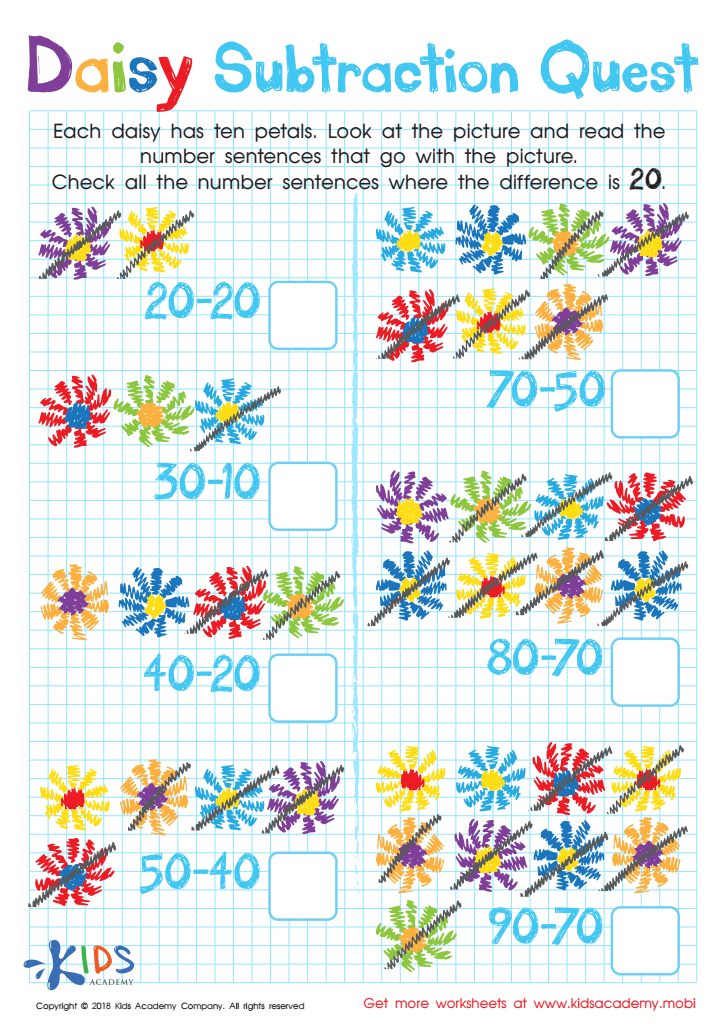
Daisy Subtraction Quest Worksheet
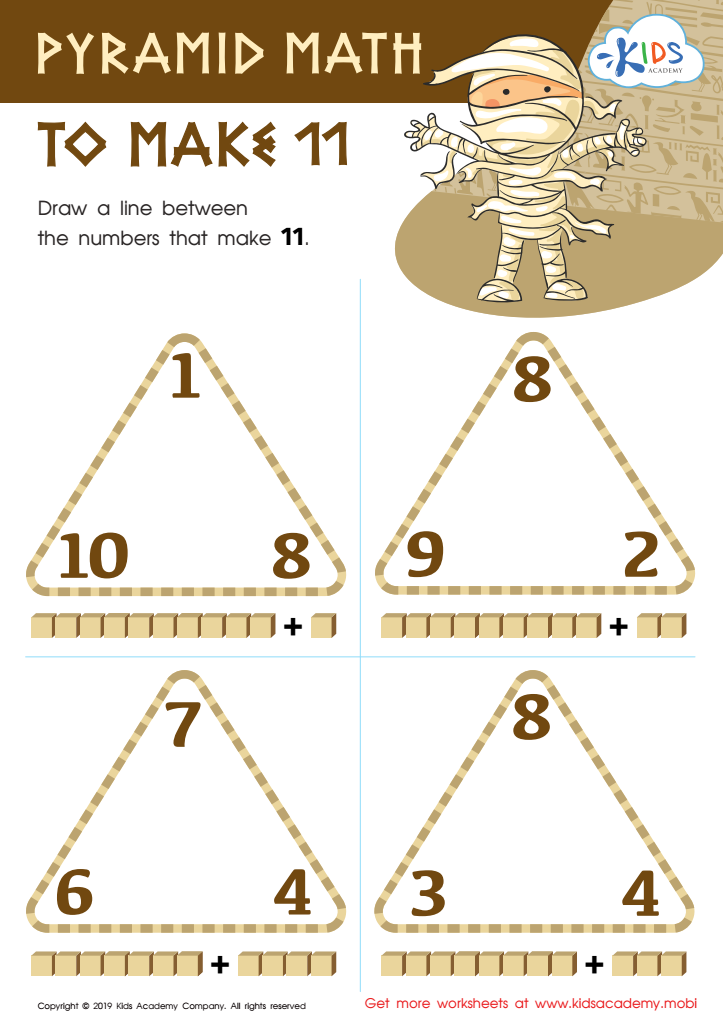
Pyramid Math to Make 11 Worksheet







Understanding number relationships is crucial for children aged 3-8 as it lays the foundation for their mathematical development and everyday problem-solving skills. During these formative years, students learn to recognize patterns, compare quantities, and grasp basic concepts of addition and subtraction. Teachers and parents should prioritize this understanding because it enhances not only fluency with numbers but also supports vital cognitive skills such as critical thinking and logical reasoning.
When children grasp number relationships, they develop a more intuitive sense of numbers, which is essential for more advanced mathematical concepts. By engaging in activities that promote number sense—like counting games, sorting exercises, or hands-on learning—they gain confidence and resilience in facing mathematical challenges.
Additionally, fostering number relationships promotes a positive attitude towards mathematics. If children view math as a natural and integrated part of their learning, they are less likely to develop anxiety about the subject in later years. Ultimately, a solid grasp of number relationships equips children with the necessary tools to excel in both academic environments and real-life situations, ensuring their overall success as lifelong learners and problem solvers. Thus, nurturing this understanding is essential for parents and educators alike.








