Reading comprehension Normal Multiplication Worksheets for Ages 3-8
5 filtered results
-
From - To
Enhance your child’s learning experience with our Reading Comprehension Normal Multiplication Worksheets, designed for ages 3-8. These engaging resources combine crucial reading skills with early multiplication concepts, ensuring a well-rounded educational approach. Each worksheet encourages children to read and comprehend fun, age-appropriate narratives while solving multiplication problems related to the text. This interactive method fosters critical thinking and improves both reading and math skills, making learning enjoyable and effective. Ideal for home or classroom use, our worksheets promote foundational literacy and numeracy through creative and engaging activities that captivate young minds. Jumpstart your child's educational journey today!
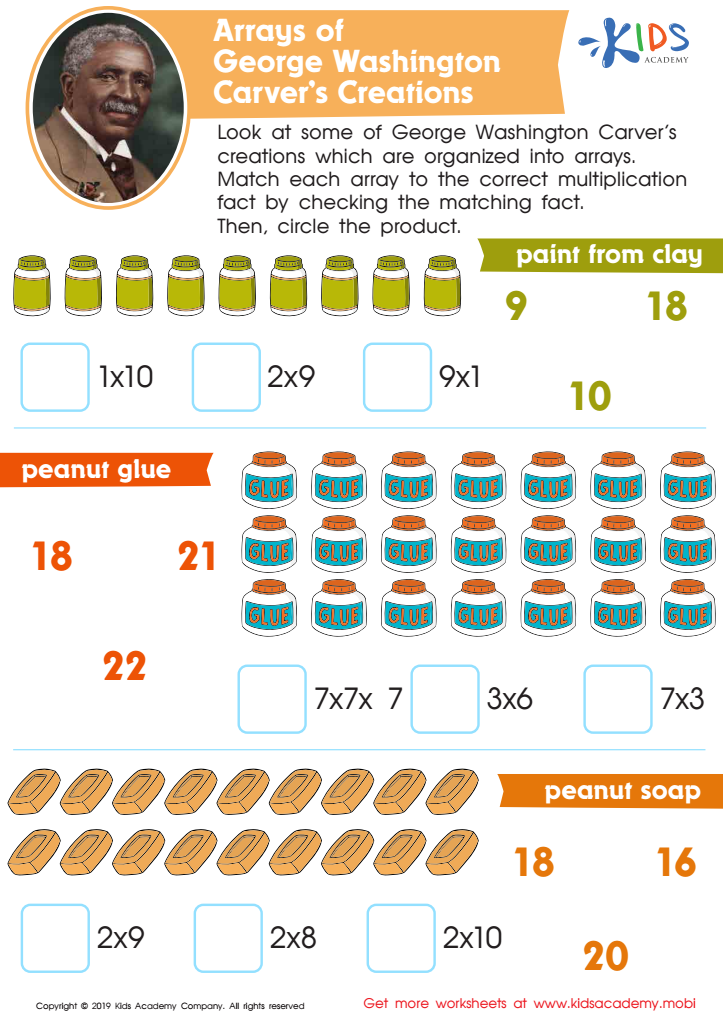
Arrays of George Washington Carver’s Creations Worksheet
 Assign to My Students
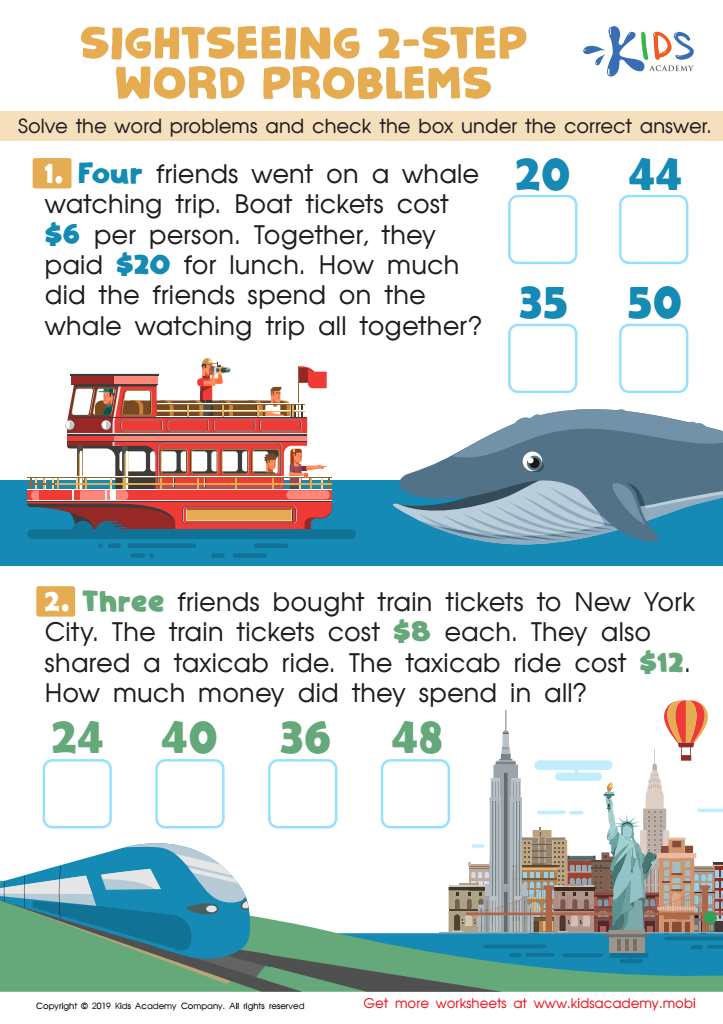
Sightseeing 2-Step Word Problems Worksheet
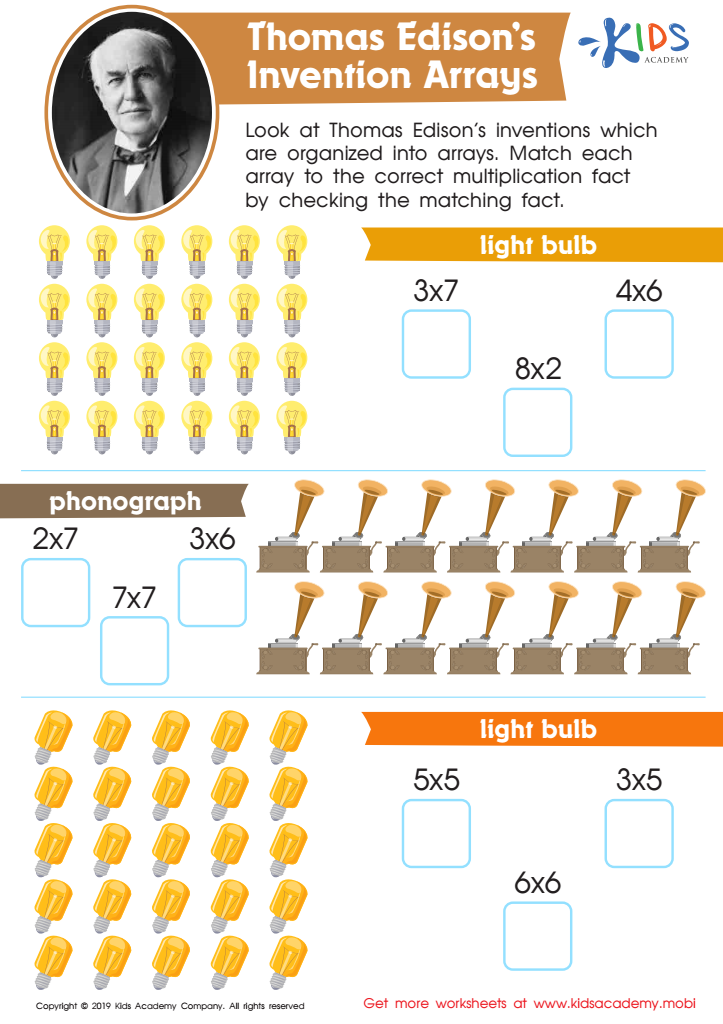
Thomas Edison’s Invention Arrays Worksheet
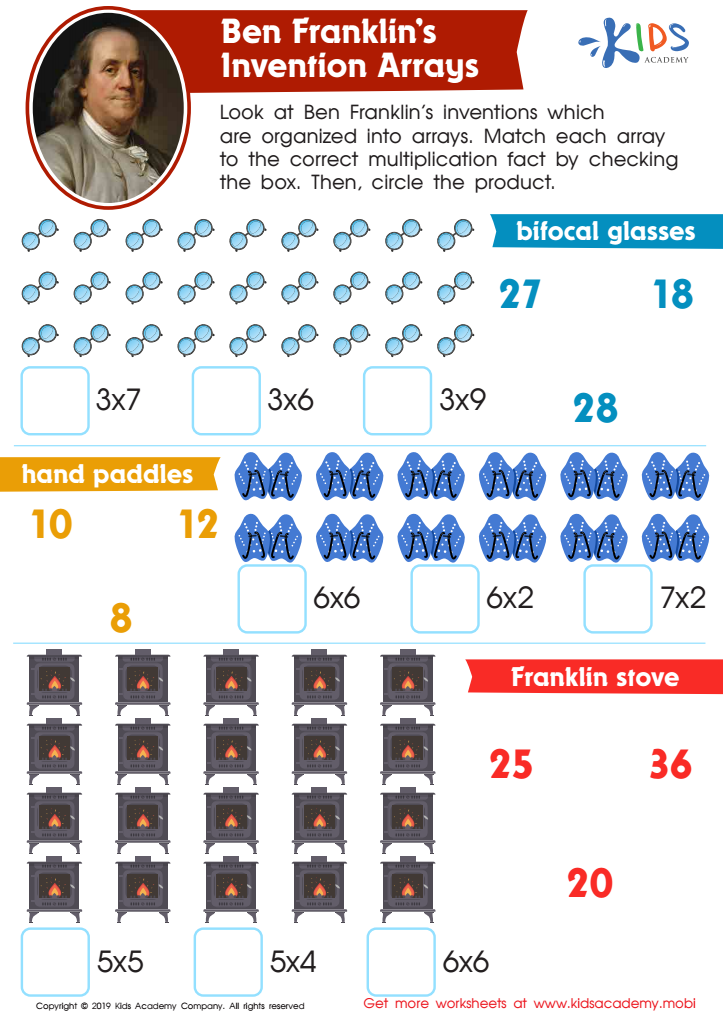
Ben Franklin’s Invention Arrays Worksheet
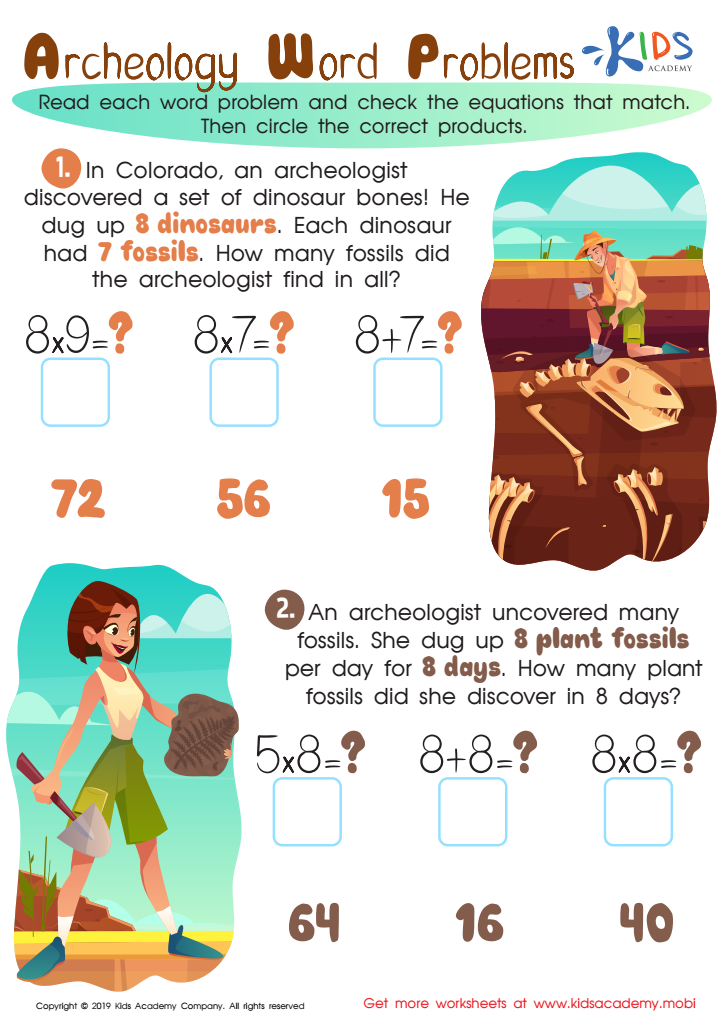
Archeology Word Problems Worksheet







Reading comprehension and foundational mathematical skills, such as normal multiplication, are crucial for children aged 3-8 as they lay the groundwork for lifelong learning. Parents and teachers should prioritize these skills because they are interconnected; strong reading skills enable children to understand and solve mathematical problems and engage with educational materials more effectively.
Reading comprehension helps children extract meaning from texts, develop critical thinking, and enhance their vocabulary, which is essential for academic success. For young learners, understanding stories and information improves their ability to express themselves and relate to others.
Similarly, an early grasp of multiplication fosters number sense and problem-solving skills. Introducing multiplication through stories or engaging activities supports cognitive development while making math fun. When children see connections between reading and math, they build confidence in both areas and become more adept learners.
Early exposure to these skills creates a solid foundation, making complex concepts more manageable as they progress through school. By focusing on reading comprehension and multiplication now, parents and teachers can enhance a child's educational journey, paving the way for greater academic achievements and a love of learning that lasts a lifetime.








