Understanding patterns Normal Multiplication Worksheets for Ages 3-8
3 filtered results
-
From - To
Unlock the magic of math with our "Understanding Patterns Normal Multiplication Worksheets" designed for ages 3-8! These engaging worksheets help young learners grasp the fundamentals of multiplication by recognizing and applying patterns in numbers. Our fun activities integrate colorful visuals and interactive challenges to make learning enjoyable. Ideal for reinforcing skills at home or in the classroom, these worksheets foster critical thinking and problem-solving abilities. Dive into a world of patterns as children build confidence and proficiency in multiplication! Download now to give your child the tools they need to succeed in math and beyond.
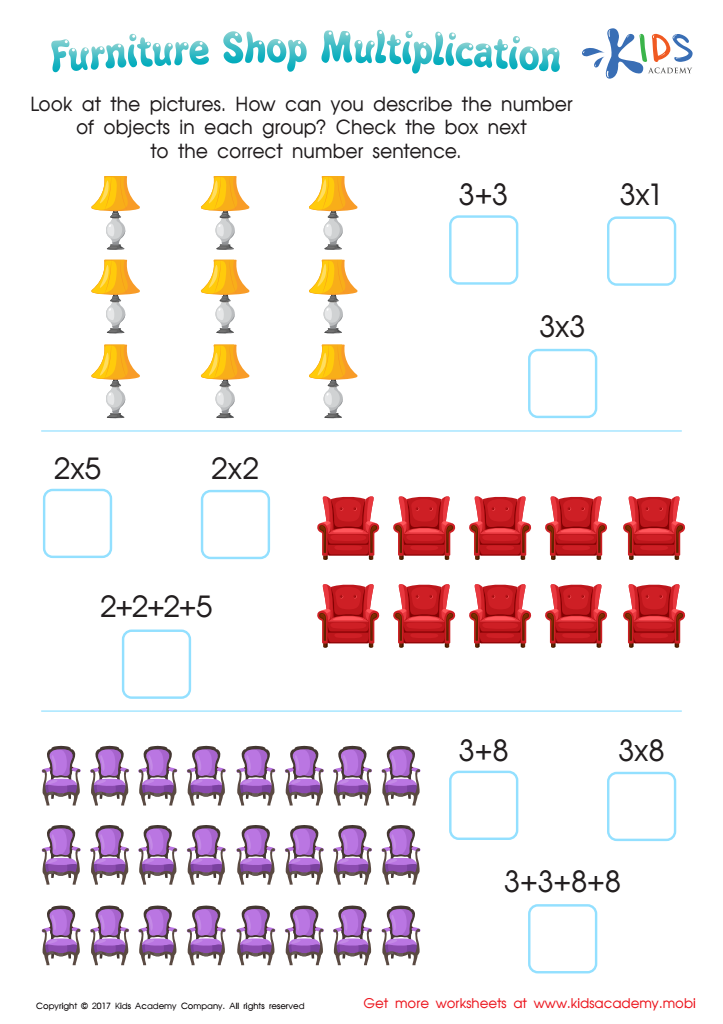
Furniture Shop Worksheet
 Assign to My Students
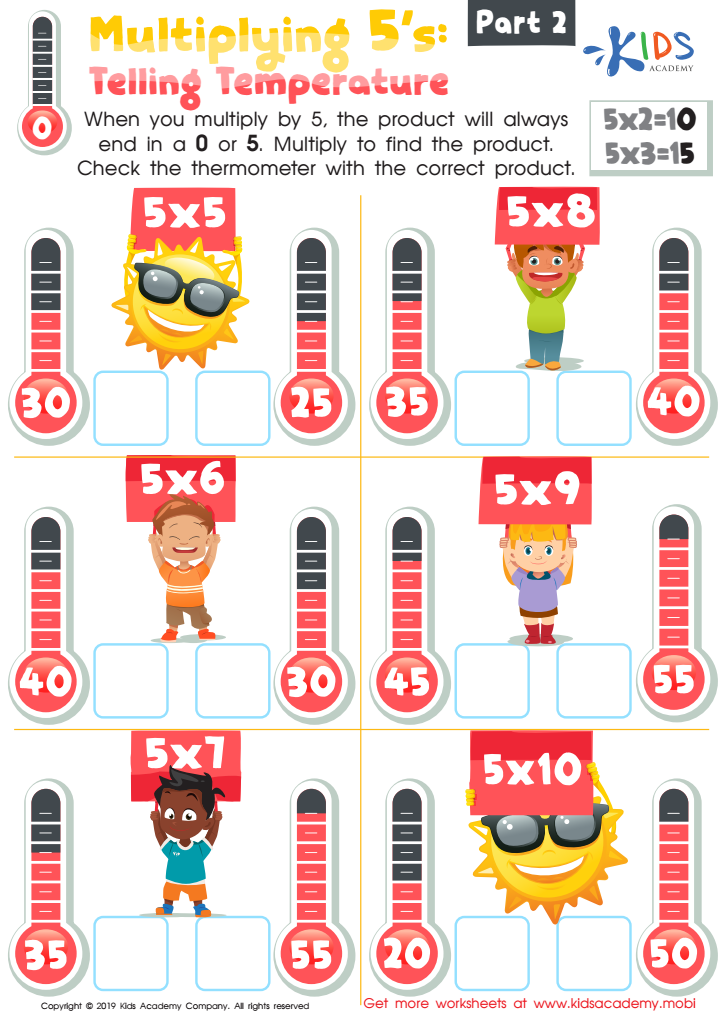
Multiplying 5’s: Telling Temperature Part 2 Worksheet
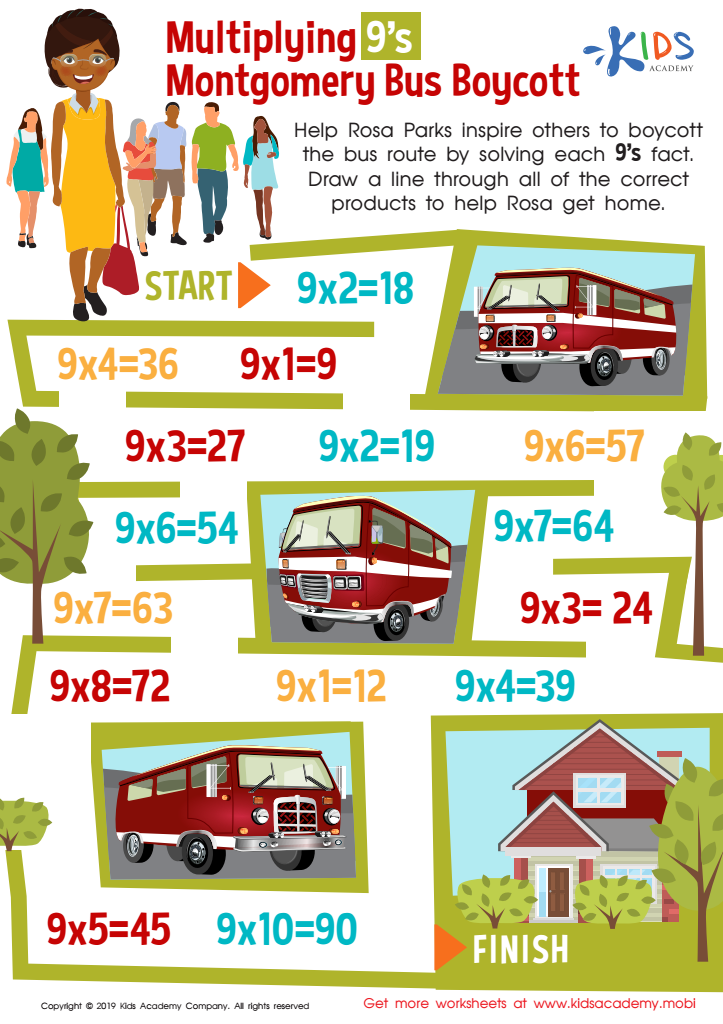
Multiplying 9’s Montgomery Bus Boycott Worksheet







Understanding patterns, including normal multiplication, is crucial for children aged 3-8 as it lays the foundation for mathematical reasoning and everyday problem-solving. At this early stage, children begin to recognize and explore patterns in numbers, shapes, and sequences. This recognition helps them develop critical thinking skills and enhances their ability to process information.
Patterns teach children logical thinking and problem-solving skills. For instance, when children notice patterns, they learn to anticipate outcomes, an essential step in understanding multiplication. When they recognize that multiplication is essentially repeated addition, they begin to see the connections between numbers that are foundational for later math skills.
Moreover, understanding patterns nurtures curiosity and fosters a love for learning. Engaging activities, such as using building blocks, puzzles, or simple games, can make learning about patterns enjoyable and can be integrated into daily routines easily.
Parents and teachers play a vital role in this learning process. By encouraging exploration of mathematical concepts in practical settings, they help nurture a child's confidence and competence in math. Ultimately, mastering foundational skills like pattern recognition and multiplication not only boosts academic performance but also supports overall cognitive development, serving as building blocks for future learning in mathematics and beyond.








